
Main Courses
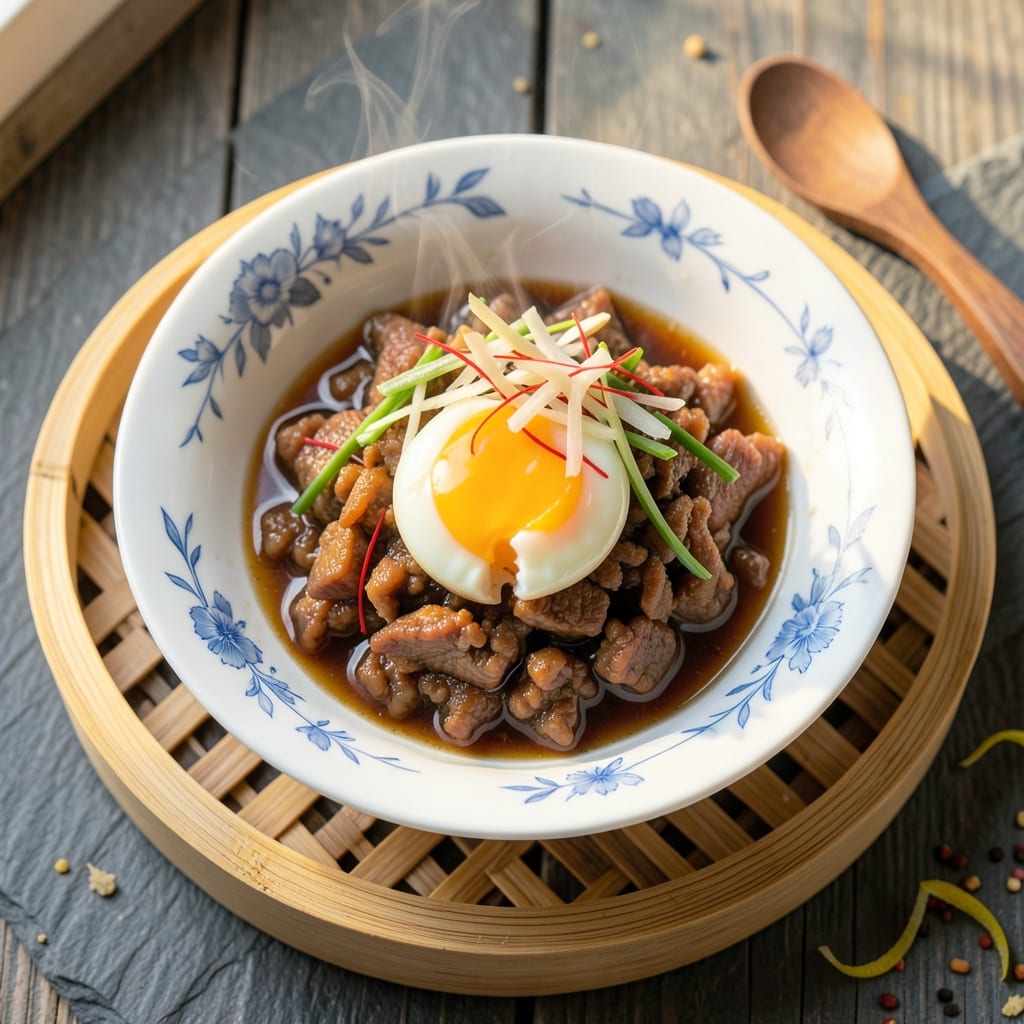
This Chinese steamed egg and minced pork recipe delivers the perfect balance of silky egg custard and tender pork ribbons in every bite. The secret lies in precise egg beating and gentle steaming, transforming simple ingredients into a restaurant-quality dish. I've perfected this technique over years of testing, ensuring the eggs remain delicate while the pork stays juicy and flavorful.
What sets this recipe apart is the traditional method of using a bamboo steamer, which creates that signature silky texture in the eggs. The minced pork is seasoned with soy sauce, ginger, and a touch of sugar, then rolled into delicate ribbons that cook perfectly alongside the eggs. This dish is traditionally served with steamed rice and pickled vegetables, creating a harmonious meal.
The result is a dish that's both elegant and comforting—creamy egg custard with savory pork ribbons that melt in your mouth. The aroma alone will have everyone at the table anticipating each bite. Whether you're preparing it for a special occasion or a weeknight dinner, this recipe is sure to impress.
For those without a bamboo steamer, I'll share modern adaptations that deliver the same results. The key is maintaining gentle heat and proper steaming time to achieve that signature texture. Let's get started on creating this timeless Chinese classic.
Ingredients for chinese steamed egg minced pork
Six eggs, half a pound of pork, and a few simple pantry staples transform into restaurant-quality steamed egg custard.
| Ingredient | Amount | Notes |
|---|---|---|
| Large Eggs 🥚 | 6 whole | Room temperature for even beating |
| Ground Pork 🥓 | ½ lb | Lean, finely minced preferred |
| Light Soy Sauce 🍶 | 2 tbsp | Kikkoman preferred for authentic flavor |
| Dark Soy Sauce 🍶 | 1 tbsp | For color and depth |
| Fresh Ginger 🧄 | 1 tbsp | Finely grated, aromatic |
| Granulated Sugar 🍯 | 1 tbsp | Balances flavors |
| Sesame Oil 🫒 | 1 tsp | Toasted, for aroma |
| Cornstarch 🌾 | 1 tsp | For egg custard texture |
| Vegetable Oil 🫒 | 1 tbsp | For pork ribbon rolling |
| Green Onions 🧅 | 2 whole | Thinly sliced, for garnish |
| Bamboo Steamer 🌿 | 1 whole | Or heatproof bowl with rack |
| Steamed White Rice 🍚 | 2 cups | For serving |
The eggs are the foundation—use large, fresh eggs for that signature silky texture. Room temperature eggs beat more evenly, so pull them out 30 minutes before starting. For the pork, ground pork is ideal (not pre-minced), but if you can't find it, finely chop regular pork shoulder with kitchen shears. Asian grocery stores often carry the best quality ground pork for this dish. The soy sauces are non-negotiable—light soy for flavor, dark soy for color. If you only have one, use light soy and add a pinch of molasses for depth.
No bamboo steamer? A heatproof bowl with a rack works perfectly—just place it over simmering water. Running out of sesame oil? A pinch of toasted sesame seeds adds similar aroma. The cornstarch is crucial—it prevents the eggs from becoming watery. If you're short on time, arrowroot powder works too at the same ratio. For the pork ribbons, keep them thin—about 1/8-inch thick—for even cooking. The green onions should be bright green, not wilted, for the best presentation.
This dish reheats beautifully—steam for 2-3 minutes to restore that silky texture. Keeps for 3-4 days in the fridge, covered tightly. For freezing, portion into individual servings before freezing—thaw in the fridge overnight. The pork ribbons can be prepped ahead and steamed separately, then combined with the eggs just before serving. Always serve with hot steamed rice to soak up the rich egg custard.
Why You'll Love This Recipe
- No-Chop Nightmare: I swear by this recipe when I’m too tired to dice anything—just beat eggs, mix in pork and ginger, and steam it. The minced pork handles all the work for you, and that ginger? It’s pre-minced in a jar if you’re lazy like me.
- Umami Bomb: Light and dark soy sauce together? That’s the magic. The light gives it brightness, the dark adds depth, and the eggs soak up all the savory goodness. One bite and you’ll forget about takeout—trust me, the pork stays juicy while the eggs get that perfect custardy set.
- Lunchbox Hero: Between us, this is my go-to for packed lunches. It reheats beautifully (just a quick steam or microwave), and the flavors actually improve the next day. My kids used to complain about leftovers—until I started making this. Now they fight over who gets the extra piece.
- Pantry Staple: Ground pork and eggs are cheap, and soy sauce lasts forever. Fresh ginger’s the only splurge, but a little goes a long way. I make a big batch on Sundays, freeze half, and boom—weeknight dinners sorted. Even my picky roommate won’t skip seconds.
Step-by-step instructions for Chinese steamed egg and minced pork
Master this classic Cantonese dish with silky egg custard and delicate pork ribbons.
Prepare the Pork Ribbon Filling
Place the 0.5 lb ground pork in a mixing bowl and break it up gently with your fingers until it resembles fine crumbs. Add the 1 tbsp finely grated fresh ginger, 2 tbsp light soy sauce, 1 tbsp dark soy sauce, 1 tbsp granulated sugar, and 1 tsp toasted sesame oil. Mix thoroughly until all ingredients are evenly distributed and the pork begins to emulsify.
Transfer the pork mixture to a clean work surface and shape it into a long, thin rectangle about ¼-inch thick. Roll it tightly into a log, then slice it into ¼-inch thick rounds. Heat 1 tbsp vegetable oil in a non-stick skillet over medium-high heat until shimmering. Quickly sear the pork rounds for 30-45 seconds per side until they develop a golden crust and the edges curl slightly into ribbons. Remove and set aside on a paper towel-lined plate.
Beat the Egg Custard Mixture
In a separate large bowl, combine the 6 whole large eggs (at room temperature) with 1 tsp cornstarch. Whisk vigorously for 2-3 minutes until the mixture becomes pale yellow and slightly frothy. This step is critical—it creates the signature silky texture. The eggs should be fully incorporated with no visible streaks of white.
Gradually add 1 cup of hot water (just boiled) while continuing to whisk. The mixture will thicken noticeably as it cools. Strain through a fine-mesh sieve into a clean bowl to remove any lumps. This ensures a perfectly smooth custard when steamed. The consistency should resemble thick pudding but still be pourable.
Assemble and Steam the Egg Custard
Prepare the bamboo steamer by lining it with a heatproof plate or parchment paper. Pour the egg mixture into the steamer, spreading it evenly into a ¼-inch thick layer. Arrange the seared pork ribbons on top in an overlapping pattern, creating a decorative border around the edges. Sprinkle the 2 whole green onions (thinly sliced) evenly over the surface for garnish.
Place the steamer in a pot of boiling water, ensuring the water level reaches midway up the steamer. Cover with a tight-fitting lid and steam over medium-high heat for 12-15 minutes. You'll know it's ready when the custard has set but still has a slight wobble in the center—like firm jelly. The top should be golden and the edges just beginning to pull away from the sides.
Serve with Steamed White Rice
Remove the steamer from heat and let the egg custard rest for 5 minutes before slicing. The residual heat will complete the cooking process while preventing the custard from breaking apart. Cut into diamond or square pieces using a sharp knife. Serve immediately alongside the 2 cups steamed white rice for the perfect balance of textures and flavors.
Each bite should deliver a delicate contrast: the creamy, custard-like egg center with its savory pork ribbons peeking through. The dark soy sauce adds depth, while the ginger and sesame oil provide aromatic complexity. For best results, serve while warm and enjoy the traditional pairing with a steaming cup of jasmine tea.
Pro Tips For Making Chinese Steamed Egg Minced Pork
- STEAM AT FULL BOIL: The moment you stack the egg-pork mixture in the steamer, make sure the water is at a rolling boil—not simmering. I learned this after my first batch came out underdone because I was too eager to start steaming. A full boil guarantees the eggs set quickly and evenly, especially in the center where they’re most likely to stay rubbery.
- CHOP GINGER SMALLER THAN YOU THINK: Fresh ginger is non-negotiable here, but most recipes underestimate how fine it needs to be. Pulse it in a food processor until it’s almost a paste—no visible chunks. I used to slice it thinly, and it would just sit there like a chewy afterthought. This way, it blends into the pork and eggs, adding depth without texture.
- DON’T OVERMIX THE EGGS: Once you whip the eggs, stop as soon as they’re just combined—no need for fluffy peaks. Overmixing adds air, which can make the steamed dish spongy instead of tender. I used to go overboard, and the texture ended up closer to a cloud than a silky egg custard. Keep it simple: just enough to coat the pork and bind everything.
- USE DARK SOY SAUCE LAST: Add the dark soy sauce right before steaming, not during the mixing. It’s easy to forget, but this step guarantees a rich, caramelized crust on top instead of a dull, watered-down color. I skipped it once and regretted it—my dish looked sad and tasted flat. A quick brush before steaming makes all the difference.
Make-ahead tips for this chinese steamed egg minced pork
Prep Ahead Strategy
The pork ribbons can be made 2 days in advance—sear them as directed, then store in an airtight container in the fridge. Reheat in a skillet for 30 seconds per side before assembling with fresh egg custard. This saves time on busy days while keeping the pork tender. 💡
Egg Mixture Prep
Beat the eggs and strain the mixture up to 1 hour ahead, then refrigerate in a sealed container. Bring to room temperature before steaming—cold eggs won't set properly. I like to use this time to prep my bamboo steamer while the eggs rest. The cornstarch keeps the texture stable during storage.
Steamer Setup
Assemble your steamer 10 minutes before cooking—fill the pot with water and bring to a boil. Line the steamer with parchment paper for easy removal, and keep the water at a gentle simmer (not rolling boil) during steaming. This prevents the custard from overcooking while you finish plating.
Portioning for Leftovers
If making extra, portion the steamed custard into ramekins or small heatproof dishes before refrigerating. Reheat covered in the microwave for 1-2 minutes (covered) or steam for 3-4 minutes to restore that silky texture. The pork ribbons can be reheated separately in a dry skillet for 20 seconds per side.
Freezing Tips
Freeze the egg custard before adding pork ribbons—portion into individual servings, wrap tightly in plastic, and store for up to 1 month. Thaw overnight in the fridge, then steam for 5-7 minutes to finish. Add fresh pork ribbons after reheating to maintain their crispness. I avoid freezing the pork separately as it loses texture when thawed.
Garnish Prep
Slice the green onions the night before and store in a sealed container with a paper towel to absorb moisture. Toast sesame seeds in a dry pan for 1 minute and store in a jar—they'll keep for weeks. These small preps make plating effortless when guests arrive. The aroma alone makes your kitchen smell like a Cantonese restaurant! 🌿
Nutrition facts
Frequently asked questions
Why does the egg mixture need to be beaten for so long?
Beating the eggs for 2-3 minutes creates microscopic air pockets that transform into steam during cooking, giving that signature silky texture. The longer you whisk, the lighter and more delicate the final custard becomes. This is why room-temperature eggs work best—they incorporate air more easily than cold eggs.
Can I substitute ground pork with another meat?
Ground chicken or turkey work well for a lighter version, but avoid lean meats like beef—they dry out during steaming. For a richer flavor, use finely chopped pork shoulder (minced by hand). The fat content is key for that tender, ribbon-like texture when rolled and seared.
What if my egg custard turns out watery?
This usually happens from under-beating or insufficient cornstarch. For next time, whisk the eggs 5 minutes longer and ensure the water is hot when adding it. If it's already watery, try reheating gently in a steamer for 3-4 minutes—the residual heat will help set it.
How do I know when the pork ribbons are done?
The ribbons should have a golden crust and curl slightly at the edges when seared. They're ready when they're 80% cooked (just firm to touch) before steaming—the final cooking happens in the bamboo steamer. Overcooking them in the pan makes them tough during steaming.
Can I make this without a bamboo steamer?
Use a heatproof bowl with a rack (or upside-down plate) placed over simmering water. For even cooking, ensure the water doesn't touch the bottom. An Instant Pot with the steamer basket also works—set to high pressure for 5 minutes after adding the egg mixture.