
Sauces & Condiments
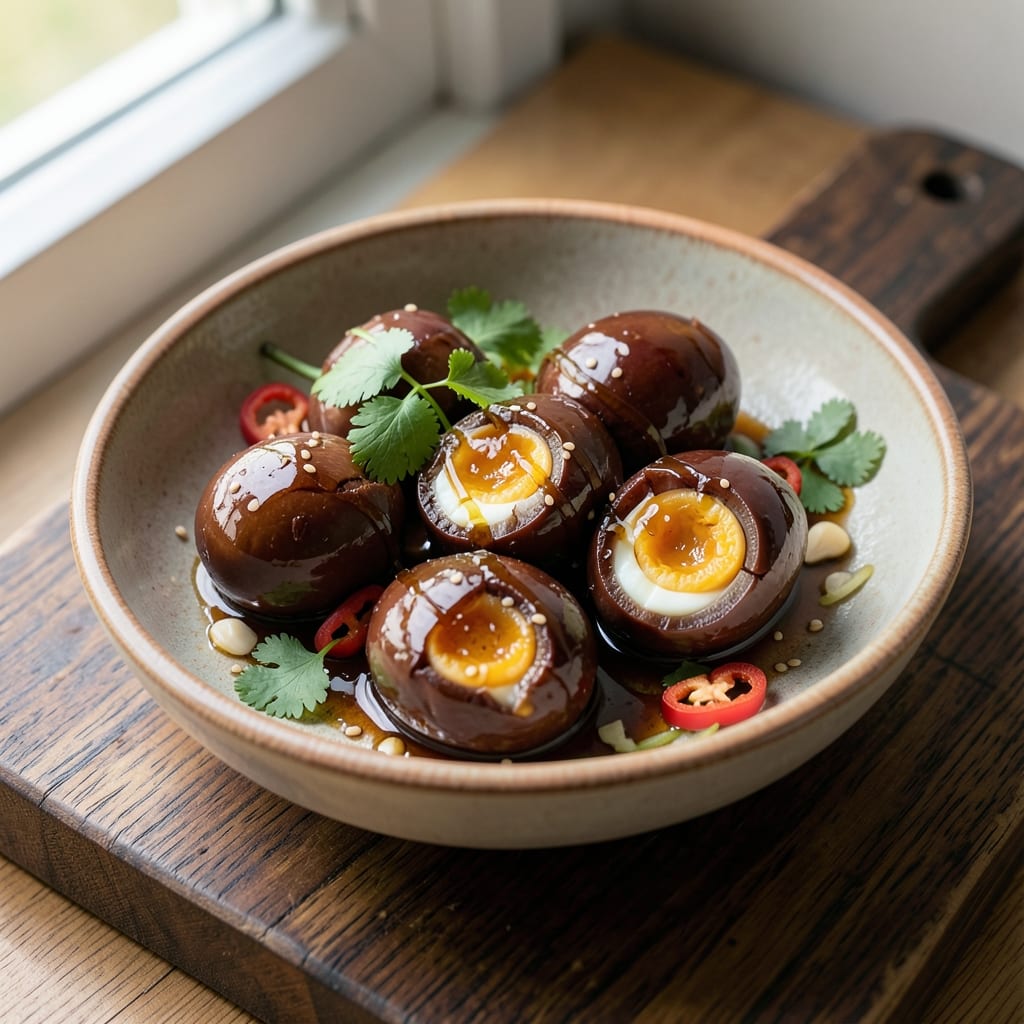
Transform your hard-boiled eggs from ordinary to extraordinary with this umami-packed soy sauce marinade—a simple yet game-changing condiment that elevates every bite. The secret lies in balancing salty soy with aromatic garlic, ginger, and a touch of sesame oil, creating a silky, flavorful coating that clings perfectly to the eggs' surface. I developed this recipe after realizing store-bought marinades often lacked depth, so I crafted one that delivers restaurant-quality flavor with minimal effort.
This marinade transforms basic boiled eggs into a bold, savory snack or appetizer, ideal for parties, meal prep, or snacking. The ingredients—soy sauce, rice vinegar, sesame oil, and a pinch of sugar—work together to create a harmonious blend of saltiness, tang, and nuttiness. What sets this apart is the optional addition of garlic and ginger, which add layers of complexity without overpowering the delicate egg texture.
Ready in just 15 minutes, this marinade requires no cooking—just whisk, pour, and let the eggs soak. The result is eggs with a glossy, flavorful exterior that stays intact even when sliced. Whether you're serving them at a gathering or packing them for lunch, this marinade ensures every bite is packed with umami richness. The best part? It keeps well in the fridge for up to a week, so you can always have a quick, flavorful snack on hand.
For extra depth, try adding a splash of mirin or a dash of chili flakes. Pair with steamed rice or fresh vegetables for a complete meal, or enjoy them solo as a satisfying, protein-rich treat. Let’s get started!
Ingredients for boiled egg soy sauce marinade
Pantry staples meet umami magic—just 10 ingredients transform bland eggs into restaurant-worthy bites.
| Ingredient | Amount | Notes |
|---|---|---|
| Low-Sodium Soy Sauce 🥢 | ½ cup | High-quality, preferably Japanese style |
| Rice Vinegar 🍶 | ¼ cup | Unseasoned for clean tang |
| Toasted Sesame Oil 🫒 | 1 tbsp | For nutty aroma, not cooking oil |
| Granulated Sugar 🍚 | 1 tbsp | Balances saltiness perfectly |
| Fresh Garlic Cloves 🧄 | 3 cloves | Minced for aromatic punch |
| Fresh Ginger 🌿 | 1 tsp | Grated, optional but recommended |
| Sesame Seeds 🌰 | 1 tsp | Toasted for crunchy texture |
| Red Chili Flakes 🌶️ | ½ tsp | Optional for subtle heat |
| Mirin 🍶 | 1 tbsp | For sweet umami depth (optional) |
| Hard-Boiled Eggs 🥚 | 6 whole | Peeled and cooled for marinating |
The soy sauce is non-negotiable—Kikkoman or Yamasa deliver that perfect balance of salt and depth. Rice vinegar should be unseasoned (the Mushroom or Seasoned varieties add unwanted sweetness). For sesame oil, grab the toasted kind from Trader Joe's or Asian markets—it's worth the extra few cents for that nutty aroma. Fresh garlic and ginger are ideal, but powdered versions work in a pinch (use half the amount). The sesame seeds? Toast them in a dry pan for 30 seconds—they add a delightful crunch that store-bought marinades miss.
No soy sauce? Coconut aminos in a 1:1 swap, though flavor will differ slightly. Skip the rice vinegar? Apple cider vinegar works but adds fruitiness. The mirin is truly optional—if you can't find it, a mix of sugar and water (1 tbsp sugar + 1 tbsp water) mimics its sweetness. For the ginger, if you're using powdered, toast it first to deepen the flavor. Chili flakes can be swapped for a pinch of cayenne, but go easy—this marinade is about umami, not heat. The eggs should be fully cooled before marinating to prevent condensation from diluting the flavors.
This marinade keeps for up to 1 week in the fridge, but the eggs themselves stay fresh for 3-4 days once marinated. Store both in airtight containers—separately if you're not using them together. For extra longevity, freeze the marinade (without eggs) for up to 3 months. When ready to serve, simply pour the marinade over the eggs and let them soak for 15-30 minutes. Pro tip: Sprinkle the toasted sesame seeds over the eggs right before serving—they stick to the glossy surface like magic.
Why You'll Love This Recipe
- Five-Ingredient Magic: I swear by this combo—just soy sauce, vinegar, sesame oil, sugar, and garlic. That’s it. No fancy pantry trips, no last-minute grocery runs. The sugar cuts the saltiness while the garlic and sesame oil add layers that make these eggs taste like they simmered for hours.
- Umami Bomb: The moment the eggs hit that marinade, it’s like a flavor explosion. The low-sodium soy sauce keeps it savory without overpowering, and the toasted sesame oil gives it that nutty depth. Honestly, I’ve tried store-bought versions, and this one wins every time—crispy shell, silky inside, and that je ne sais quoi from the garlic.
- Office Snack Hero: Between us, these are my go-to for lunchboxes or last-minute work snacks. They hold up perfectly for 3-4 days in the fridge, and I just toss a few in a container with some crackers or rice. No reheating, no fuss—just grab and go. My coworkers still ask where I get them.
- Budget Stretch: A dozen eggs plus a handful of pantry staples? That’s under $5 for a week’s worth of protein. I make a big batch on Sundays, and suddenly I’ve got breakfast, snacks, or a quick bite ready without breaking the bank. Plus, the leftovers? Even better the next day.
Step-by-step instructions for umami-packed soy sauce egg marinade
Transform ordinary boiled eggs into extraordinary flavor bombs with this simple, aromatic marinade.
Prepare the Eggs for Maximum Flavor Absorption
Start with the 6 whole hard-boiled eggs you've already peeled and cooled. I recommend using room-temperature eggs for even marinade penetration—cold eggs can cause condensation and dilute the marinade's intensity. Pat each egg dry with paper towels to remove any surface moisture, which helps the marinade cling rather than bead up.
Place the eggs in a single layer in a shallow dish or glass container. This arrangement ensures each egg gets fully coated and allows easy turning later. If using a glass container, I prefer wide-mouth jars for better access to all sides. The key here is surface area—more contact means more flavor infusion.
Create the Flavor Base with Soy and Vinegar
In a small bowl, whisk together the 0.5 cup low-sodium soy sauce and 0.25 cup rice vinegar until completely combined. This mixture forms the foundation of your marinade, delivering that perfect balance of salty umami and bright tang. Let it sit for 1 minute to allow the flavors to meld slightly—you'll notice the vinegar mellows just enough to complement the soy's depth.
This combination works magic on eggs because the acidity in the vinegar helps break down the proteins just enough to create that signature "marinated" texture. Don't skip this step—raw, unblended ingredients create an uneven marinade that misses flavor spots on your eggs.
Build the Aromatic Layer with Garlic and Ginger
Using a microplane or fine grater, zest the 1 tsp fresh ginger and mince the 3 cloves fresh garlic cloves into a paste-like consistency. The goal is to maximize surface area—this ensures the flavors infuse deeply into the eggs. Add these to your soy-vinegar mixture along with the 1 tbsp granulated sugar, which balances the acidity and enhances the umami.
Stir everything together until the sugar dissolves completely. Here's where the real flavor magic happens: the ginger adds a subtle warmth while the garlic delivers that irresistible aromatic punch. You'll smell the transformation immediately—the marinade should take on a complex, inviting aroma that makes your mouth water.
Finish with Oil, Mirin, and Seasonings
Pour in the 1 tbsp toasted sesame oil, 1 tbsp mirin, and 0.5 tsp red chili flakes (if using), then stir vigorously to combine. The sesame oil adds nutty depth while the mirin contributes sweet umami complexity. The chili flakes provide just a hint of heat that brightens the entire marinade. Taste the mixture now—it should be perfectly balanced with salt, acid, sweetness, and just a touch of spice.
This is the moment to adjust seasoning if needed. If it tastes too acidic, add a pinch more sugar. Too salty? A splash of water helps. Too bland? A tiny extra pinch of chili flakes wakes it up. The marinade should coat the back of a spoon with a glossy sheen—this indicates proper emulsification for even flavor distribution.
Marinate and Develop the Flavor
Pour the marinade over the eggs in their container, making sure each egg is completely submerged. Cover and refrigerate for at least 4 hours, though I recommend overnight (up to 24 hours) for maximum flavor development. The longer they marinate, the more the flavors penetrate the eggs' surface, creating that signature marbled appearance and intense flavor.
I like to gently turn the eggs every 2 hours during the first 8 hours of marinating. This ensures even flavor distribution and prevents any one side from becoming over-marinated. After the initial 8 hours, the eggs can stay undisturbed until ready to serve. The marinade will thicken slightly as it absorbs into the eggs—this is normal and actually enhances the texture.
Pro Tips For Making Boiled Egg Soy Sauce Marinade
- Boil Eggs 1 Minute Past Perfect: Set a timer for 9 minutes total—yes, even if the whites look set at 7. That extra minute guarantees yolks stay runny and creamy, not that sad, overcooked gray. I used to pull them too soon, and the texture was always off.
- Mince Garlic Like It’s 1999: Skip the press—it bruises the garlic and muddies the flavor. Use a sharp knife and chop it into a fine paste instead. Freshly minced garlic releases its oils properly, and your marinade won’t taste like garlic powder.
- Warm the Soy Sauce First: Stir the low-sodium soy sauce with the sugar and vinegar in a small saucepan over low heat for 30 seconds—just until the sugar dissolves. Cold marinades clump and taste flat, and you’ll miss the depth of caramelized notes.
- Rest Eggs Before Peeling: Drain the boiled eggs into an ice bath for 5 minutes, then peel them under cool running water. This trick keeps the whites intact and makes peeling effortless—no more rubbery or broken eggs ruining your presentation.
Troubleshooting this dish
Marinade Too Thin?
If your marinade looks watery after mixing, it's likely because the eggs released too much moisture. This happens when eggs aren't fully cooled before marinating. My fix? Add 1 tbsp cornstarch to thicken it—just whisk it in and let sit for 5 minutes before using. For a natural solution, simmer 2 tbsp of the marinade in a small saucepan until reduced by half, then cool before combining. 💡
Eggs Absorbing Wrong?
If your eggs end up with uneven flavor distribution, they probably weren't fully submerged. Use a glass baking dish instead of a plastic container—it lets you see what's happening. For extra insurance, place eggs in a single layer and pour marinade over them gradually. If using a deep container, add a small plate to keep eggs submerged without touching the bottom. 🥚
Marinade Too Salty?
Soy sauce can sneak up on you with saltiness. If your marinade tastes overpowering, dilute it with 1 tbsp water or rice vinegar. For a more elegant fix, add 1 tsp honey or sugar to balance the salt. Taste as you go—the marinade should be bold but not harsh. This is especially important if using low-sodium soy sauce, which can sometimes be deceptively salty. ✨
Eggs Turning Gray?
Gray eggs mean oxidation from the sulfur in the whites reacting with air. To prevent this, add 1 tbsp lemon juice to your marinade—it creates a protective barrier. For already-gray eggs, soak them in ice water for 5 minutes before marinating. The cold slows oxidation temporarily. This is normal chemistry, but the lemon juice trick works like magic to keep them looking fresh. 🌟
Sesame Oil Separating?
Sesame oil wants to separate from the other ingredients because it's less dense. To fix this, whisk in ½ tsp xanthan gum (found in baking aisles) or 1 tsp honey to act as an emulsifier. For a quick fix, shake the container vigorously for 30 seconds before using. The key is to combine everything thoroughly before pouring over the eggs. This keeps the flavors cohesive and prevents a greasy texture. 💫
Flavor Fading Too Fast?
If your marinated eggs lose flavor after 24 hours, the marinade needs refreshing. Make a new batch and marinate the eggs for just 2-3 hours in the fresh marinade. For extra staying power, store eggs and marinade separately in airtight containers. Re-marinate for 1 hour before serving to revive the flavors. This works especially well if you're prepping for parties or meal prep. 🔥
Nutrition facts
Frequently asked questions
Can I use this marinade on soft-boiled eggs?
Yes, but with caution! Soft-boiled eggs have delicate yolks that can break during marinating. Use a gentle approach—submerge them for only 1-2 hours (not overnight) and avoid turning them. The marinade will still cling beautifully, but the texture will be creamier inside. For best results, serve immediately after marinating to prevent yolk separation.
What if I don't have sesame oil?
No problem! Swap it for 1 tbsp neutral oil (like avocado or vegetable oil)—it won't add flavor but keeps the marinade cohesive. For extra depth, add ½ tsp toasted sesame seeds (finely ground) directly to the eggs before serving. The marinade will still work, though the nutty aroma will be milder.
How do I make this marinade spicier?
Double the red chili flakes to 1 tsp or add ½ tsp cayenne pepper for heat. For smoky depth, stir in ½ tsp smoked paprika. If you love Asian flavors, try 1 tsp gochujang (Korean chili paste)—it adds a sticky, fermented kick. Always taste first, as spices intensify during marinating.
Can I use this marinade for other proteins?
It works wonderfully on grilled chicken, shrimp, or tofu—just reduce marinating time to 30-60 minutes (proteins absorb flavors faster). For vegetables like cucumber or bell peppers, marinate for 15-20 minutes to avoid over-salting. The soy-vinegar base is versatile, but delicate items (like fish) may need a shorter soak.
Why does my marinade smell stronger than it tastes?
This happens when the garlic and ginger overpower the soy's umami. Try reducing them to 2 cloves garlic and ½ tsp ginger. The smell fades faster than taste—let the marinade sit for 10 minutes before using. If the aroma lingers, add 1 tsp sugar to balance it. The eggs will still taste great, just more subtly aromatic.