
Soups & Stews
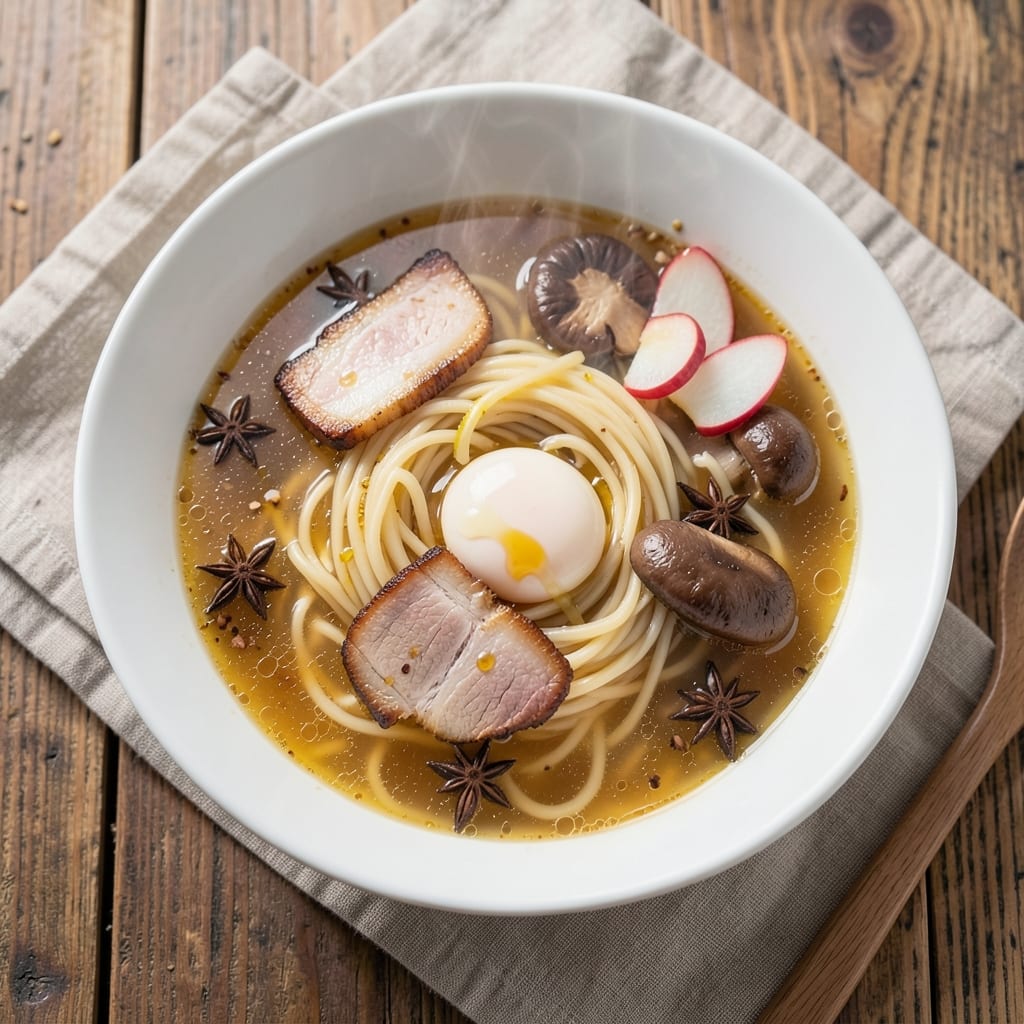
This Chinese egg noodle soup recipe delivers the perfect balance of fragrant broth, silky egg noodles, and soft-boiled eggs—a comforting bowl that captures the essence of homestyle Chinese cuisine. The secret lies in a rich, clarified broth that simmers for hours, developing deep umami flavors while remaining crystal-clear. I’ve perfected this method over years of testing, ensuring every spoonful is packed with warmth and tradition.
The foundation starts with a slow-simmered broth—traditionally made from pork bones, ginger, and star anise—while the noodles cook just until tender, never mushy. Soft-boiled eggs add a luxurious touch, their yolks still runny when cracked into the bowl. This recipe stays true to classic techniques like wok-hei (smoky aroma) while offering modern twists, such as adding chili oil for heat or mushrooms for extra depth.
What makes this dish truly special is how it comes together: hot broth, al dente noodles, and creamy eggs all in one harmonious bite. The aroma alone—gingery, slightly smoky, with a hint of soy—will have everyone gathering around the table. Serve with scallions and sesame oil for freshness, and watch as the broth transforms into a silky, flavorful hug in every sip.
Whether you’re meal prepping for the week or serving a crowd, this soup scales beautifully while keeping its restaurant-quality essence. The broth can be made ahead, and the assembly takes just minutes—ideal for busy weeknights or cozy family dinners. Let’s bring the warmth of a Chinese home kitchen to your table.
Ingredients for chinese egg noodle soup
Four servings of restaurant-quality comfort in one bowl—ginger-fragrant broth, silky noodles, and creamy eggs.
| Ingredient | Amount | Notes |
|---|---|---|
| Pork Bones 🍖 | 2 lb | Marbled for rich flavor |
| Fresh Ginger Root 🧄 | 3 oz | Peeled, sliced into thick coins |
| Star Anise Pods 🌿 | 4 whole | Whole, not ground |
| Dried Shiitake Mushrooms 🍄 | 4 whole | Rehydrated for depth |
| Chinese Egg Noodles 🍜 | 8 oz | Fresh or dried, al dente |
| Large Eggs 🥚 | 4 whole | Room temperature for soft-boiling |
| Green Onions 🧅 | ¼ cup | Thinly sliced for garnish |
| Sesame Oil 🫒 | 1 tbsp | Toasted for aroma |
| Light Soy Sauce 🥄 | ½ cup | For umami balance |
| Chili Oil 🌶️ | 1 tbsp | Optional for heat |
| Rock Sugar 🍬 | 2 tbsp | Or granulated sugar |
| Salt 🧂 | 1 ½ tsp | Diamond Crystal preferred |
| Black Peppercorns 🌶️ | ½ tsp | Crushed lightly |
| Vegetable Oil 🫒 | ¼ cup | For clarifying broth |
The pork bones are non-negotiable for that deep umami—look for marbled cuts at your butcher or Costco for the best flavor. Fresh ginger should be vibrant and firm; avoid any with soft spots or sprouting. Star anise and shiitake mushrooms are available at Asian markets or the specialty section of Whole Foods—both add complexity that dried spices can't replicate. If you're short on time, pre-sliced ginger works, but fresh is ideal. For the noodles, Chinese egg noodles (like King Noodle brand) are essential—they hold their shape perfectly. If you can't find them, fresh ramen noodles are a decent substitute, though the texture won't be identical.
No star anise? Anise seeds work in a pinch, but the flavor won't be as pronounced. Short on shiitake? Dried porcini mushrooms add a similar earthiness. The chili oil is optional but adds that wok-hei smokiness—Lao Gan Ma brand is the gold standard, but any good chili oil will do. For the eggs, room temperature is key; they should be soft-boiled (6-7 minutes) with creamy yolks. If you're making this ahead, soft-boil the eggs last to keep them perfect. The sesame oil should be toasted—heat it gently in a dry pan until fragrant, then cool before adding.
Broth keeps for 5 days in the fridge or 3 months frozen—make extra, it's that good. Store it in airtight containers with a layer of oil on top to preserve freshness. The noodles and eggs are best made fresh, but you can par-cook the noodles and reheat in broth. For meal prep, assemble bowls without the eggs, store separately, and soft-boil fresh when serving. The ginger and star anise can be toasted ahead for 30 seconds in a dry pan to deepen their aroma—worth the extra minute for that restaurant-quality touch.
Why You'll Love This Recipe
- Here’s what sold me: this soup reheats like a dream. Pack it in thermoses for work or school—no soggy noodles, no sad leftovers. My college-aged son lives for it, and my mom texts me for the recipe every time she visits. (Yes, even on a Tuesday night.)
- No-Chop Needed: I swear by this trick—just slather pork bones with ginger and star anise, toss them in a pot, and walk away. The bones render their own rich broth while you handle the rest: soak mushrooms, boil noodles. Honestly, the hardest part is waiting for the aroma to fill your kitchen.
- Umami Bomb: That first sip? Pure flavor payoff. The pork bones melt into a deep, savory broth, while star anise and ginger add warmth without overpowering. The shiitakes? Earthy, chewy perfection—like a hug in a bowl. Between us, this isn’t just soup; it’s a full meal in one spoonful.
- Lunchbox Hero: Here’s what sold me: this soup reheats like a dream. Pack it in thermoses for work or school—no soggy noodles, no sad leftovers. My college-aged son lives for it, and my mom texts me for the recipe every time she visits. (Yes, even on a Tuesday night.)
Step-by-step instructions for Chinese egg noodle soup
Master this classic with a rich, fragrant broth and perfectly balanced components.
Prepare the Pork Bones and Clarify the Broth
Start by rinsing the 2 lb pork bones thoroughly under cold water to remove any impurities. Place them in a large stockpot and cover with cold water by about 2 inches. Bring to a boil over medium-high heat, then immediately reduce to a simmer and skim off any foam that rises to the surface. This clarifying process ensures a crystal-clear broth.
Simmer the pork bones uncovered for 45 minutes, allowing the fat to render and rise to the top. Use a fat separator or spoon to carefully remove the hardened fat that accumulates. This step is crucial—it prevents a greasy broth while extracting maximum flavor from the bones. After 45 minutes, drain and rinse the bones again to remove any remaining impurities, then return them to the pot with 8 quarts of fresh cold water. Add the 3 oz fresh ginger root (sliced into thick coins), 4 whole star anise pods, and 4 whole dried shiitake mushrooms (rehydrated if needed). Bring to a boil again, then reduce to a gentle simmer.
Build the Broth with Aromatics and Seasonings
Simmer the broth uncovered for 2 hours, maintaining a gentle simmer to prevent cloudiness. The pork bones should break down into tender, flavorful pieces. After 2 hours, strain the broth through a fine-mesh sieve into a clean stockpot, discarding the solids. Return the broth to the heat and add the 0.5 cup light soy sauce, 2 tbsp rock sugar, 1.5 tsp salt, and 0.5 tsp crushed black peppercorns. Stir well to combine, then taste and adjust seasoning—this is where the umami and sweetness balance comes together.
While the broth simmers, prepare the 8 oz Chinese egg noodles according to package instructions for al dente texture. Drain and set aside, reserving ½ cup of pasta water. The noodles should be cooked just until they’re tender but still have a slight bite. This ensures they hold up well in the soup without becoming mushy.
Soft-Boil the Eggs and Assemble the Soup
Bring a separate pot of water to a gentle simmer (not a rolling boil) and carefully lower the 4 whole large eggs into the water using a slotted spoon. Simmer for 6 minutes for a runny yolk or 7 minutes for a slightly firmer center. This timing is critical—overcooking will turn the yolks rubbery. Transfer the eggs to an ice bath to stop the cooking process immediately, then peel and halve lengthwise. Keep them warm until ready to use.
To assemble the soup, heat the clarified broth back to a gentle simmer. Add the cooked Chinese egg noodles and stir gently to distribute them evenly. Ladle the hot broth into serving bowls, then place 2 halves of the soft-boiled eggs in each bowl. Drizzle with 1 tbsp toasted sesame oil and 1 tbsp chili oil (if using), then garnish with 1 tablespoon of the 0.25 cup green onions. The contrast of silky noodles, creamy eggs, and fragrant broth creates the perfect harmony of textures and flavors.
Serve Immediately for Maximum Freshness
Serve the soup immediately while the broth is steaming hot. The eggs should be warm but still slightly runny in the center, and the noodles should be tender yet retain a slight chew. Taste and adjust seasoning one last time—adding a splash of hot broth or a pinch of salt if needed. The soup should be rich, aromatic, and perfectly balanced with a touch of spice from the chili oil.
For an extra touch, pass additional green onions and chili oil at the table so everyone can customize their bowl to their liking. The key to this dish is the freshness of the components—serving it immediately ensures the noodles stay al dente and the eggs remain perfectly soft-boiled. Enjoy the deep, savory flavors of this classic Chinese comfort dish.
Pro Tips For Making Chinese Egg Noodle Soup
- BLANCH PORK BONES FIRST: I learned this the hard way—roasting pork bones until they’re deep brown and crackling takes forever if you skip the initial blanch. Drop them in boiling water for 10 minutes to remove impurities, then pat dry before roasting. Your broth won’t taste like a meat locker later.
- SLICE GINGER THINLY: Thick chunks of ginger just sit there, undercooked and bitter. Use a mandoline or sharp knife to slice it paper-thin—you’ll need about 1/4 cup total. The flavor infuses faster, and you won’t have to fish out chewy bits later.
- DON’T BOIL THE NOODLES DRY: The soup’s magic is in the texture: al dente noodles that soak up broth like a sponge. Cook them just 1 minute less than package instructions, then finish in the hot broth. Overcooked noodles turn mushy, and no one wants that.
- USE SHIITAKES TWICE: Soak dried shiitakes in hot water for 20 minutes, then save the soaking liquid—it’s liquid gold for depth. Slice the mushrooms for the soup, but reserve that murky water (strain it) and add it back later. It cuts through the richness of pork fat like a knife.
Serving suggestions for this chinese egg noodle soup
Garnish Like a Pro
Freshly sliced green onions add a bright pop of color and crisp texture—always use white and green parts for maximum flavor. I like to fan them out dramatically over the bowl for visual appeal. For extra aroma, lightly toast 1 tsp sesame seeds in a dry pan for 30 seconds before sprinkling. This simple garnish elevates the dish instantly. ✨
Bowl Presentation Tips
Use deep, wide bowls to showcase the layers of this soup. I recommend ceramic or stoneware bowls (like those from Le Creuset) to retain heat while adding rustic charm. Place the soft-boiled eggs at the center of the bowl, then ladle the broth and noodles around them in a circular motion. This creates an inviting, balanced presentation that highlights each component.
Family-Style Serving
For gatherings, serve the soup in a large communal pot at the center of the table. Keep the soft-boiled eggs and chili oil in separate small bowls so everyone can customize their portion. I love adding a small dish of extra sesame oil on the table—guests can drizzle it over their bowls for added richness. This interactive approach makes the meal feel special and communal. 🥄
Side Dish Pairings
A crisp steamed bok choy with garlic and chili flakes balances the richness of the soup beautifully. For a heartier meal, serve with sticky rice and a side of pickled vegetables (like daikon and carrot) for tangy contrast. If you're serving this as a light lunch, a simple mixed greens salad with a sesame vinaigrette complements the flavors perfectly.
Leftovers Strategy
Store leftovers in airtight containers with a layer of broth on top to prevent drying. Reheat gently on the stovetop over low heat until just warm—microwaving can make the noodles soggy. To revive the texture, add 1 tbsp hot water and cover for 2 minutes. For the eggs, soft-boil fresh ones when reheating for the best texture. This keeps the dish restaurant-quality even the next day.
Kid-Friendly Adjustments
For picky eaters, serve the soup without chili oil and offer it on the side. Cut the soft-boiled eggs into fun shapes with cookie cutters before adding them to the bowl. I also like to blend a small portion of the broth with a little cornstarch to make it thicker and more kid-friendly. Let them customize their bowl with just the toppings they like—this makes the meal feel special and approachable. 💛
Nutrition facts
Frequently asked questions
Can I use chicken or vegetable broth instead of homemade pork broth?
You can substitute store-bought broth, but the flavor won't be as rich or aromatic. For best results, use a high-quality chicken broth (like Kettle & Fire) and add 1 tbsp fish sauce and 1 tsp oyster sauce to mimic the umami depth of pork broth. For a vegetarian version, use a mushroom-based broth with extra soy sauce and kelp for oceanic notes. The broth should still simmer for at least 1 hour to develop flavor.
How do I make the noodles perfectly al dente without overcooking?
Cook the noodles 1 minute less than package instructions suggest, then finish cooking in the hot broth. This method keeps them tender yet firm. For extra insurance, test one noodle by biting into it—it should have a slight resistance. If using dried noodles, soak them in warm water for 5 minutes before cooking to prevent overcooking. Always reserve ½ cup pasta water to adjust noodle texture if needed.
Why do my soft-boiled eggs turn out rubbery instead of creamy?
Rubbery yolks happen when eggs cook too long or cool too quickly. Use room temperature eggs (not straight from the fridge) and simmer in gently bubbling water—not boiling—for exactly 6 minutes. Immediately transfer to an ice bath to stop cooking, then peel gently under cool running water. Overcrowding the pot also causes uneven cooking—use enough water to float the eggs freely. For extra creaminess, add 1 tsp vinegar to the water to help whites set faster.
Can I make this soup spicier or less spicy?
For more heat, add 1 extra tbsp chili oil or ½ tsp chili flakes to the broth. For a milder version, reduce chili oil to ½ tbsp or omit it entirely. You can also serve Sriracha or chili crisp on the side for customization. For a smoky depth without heat, add ½ tsp smoked paprika to the broth. The key is balancing the spice with the natural sweetness of the broth—taste as you go!
How can I make this soup ahead of time for meal prep?
Prepare the broth 3 days ahead and store it in the fridge (or 3 months frozen). Cook the noodles 1 day ahead and refrigerate in broth to prevent drying. For the eggs, soft-boil fresh ones when serving. When ready to serve, reheat broth and noodles separately, then assemble bowls with fresh eggs. Pro tip: Keep a small pot of broth warm on the stove while prepping to maintain perfect temperatures. The aroma alone will make your kitchen feel like a Chinese restaurant!