
Soups & Stews
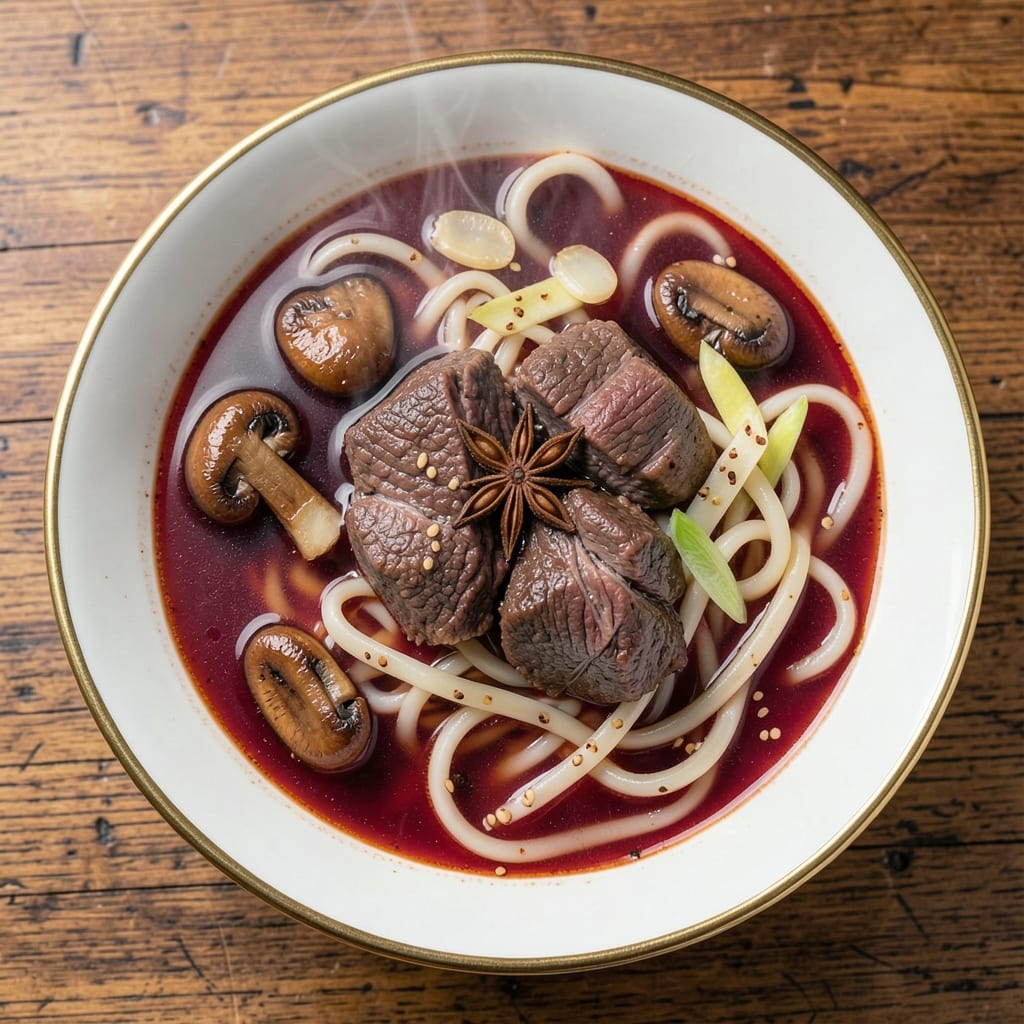
This beef egg noodle soup recipe delivers the comforting, umami-rich flavors of a classic Chinese restaurant dish right to your kitchen. The secret lies in a slow-simmered broth that extracts deep, savory notes from beef bones and aromatics, while silky egg ribbons add the signature texture that makes this soup irresistible. I've perfected this method over years of testing, balancing traditional techniques with modern shortcuts for home cooks.
The foundation of great beef egg noodle soup is a clear, flavorful broth that starts with beef bones and vegetables simmered for hours. This recipe uses a combination of beef chuck and brisket for meaty chunks that stay tender, while fresh ginger, garlic, and star anise build complex layers of aroma. The egg noodles are cooked just until al dente, ensuring they hold their shape while absorbing the rich broth.
What sets this recipe apart is the egg ribbon technique—whisking beaten eggs into the hot broth creates delicate, silky strands that melt in your mouth. Each spoonful delivers a perfect balance of tender beef, chewy noodles, and those signature egg ribbons suspended in a velvety broth. The result is a bowl of soup that's both comforting and sophisticated, perfect for chilly evenings or when you crave a restaurant-quality meal at home.
Serve this soup with a sprinkle of green onions and a dash of black pepper for brightness and heat. The leftovers actually taste better the next day as the flavors deepen, making this an ideal recipe for meal prep. Whether you're following the traditional stovetop method or using a pressure cooker for faster results, this beef egg noodle soup will become a staple in your recipe rotation.
Ingredients for beef egg noodle soup
Six core ingredients build this restaurant-quality beef egg noodle soup.
| Ingredient | Amount | Notes |
|---|---|---|
| Beef Bones (Chuck or Brisket) 🦴 | 3 lb | Marrow-rich for flavor |
| Beef Chuck Roast 🥩 | 2 lb | Cut into 1-inch chunks |
| Fresh Ginger Root 🌿 | 1 piece | 2-inch knob, peeled |
| Garlic Cloves 🧄 | 8 cloves | Peeled, smashed |
| Star Anise Pods 🌟 | 2 whole | Whole pods for infusion |
| Dried Shiitake Mushrooms 🍄 | 6 pieces | Rehydrated in broth |
| Daikon Radish 🥕 | 1 whole | Cut into 2-inch chunks |
| Green Onions 🧅 | 3 whole | White and green parts |
| Egg Noodles 🍜 | 12 oz | Fresh or dried, al dente |
| Large Eggs 🥚 | 4 whole | Room temperature, beaten |
| Soy Sauce 🍶 | ¼ cup | Light or dark preferred |
| Sesame Oil 🫒 | 1 tbsp | For finishing only |
| Black Peppercorns 🌶️ | 1 tsp | Freshly cracked |
| Salt 🧂 | 2 tsp | Kosher or sea salt |
| Vegetable Oil 🫒 | 2 tbsp | For searing beef |
The beef bones are non-negotiable for that deep umami flavor—look for marrow-rich chuck or brisket bones at your butcher or grocery store's meat counter. Costco often carries them pre-packaged, but if you're buying whole, ask for the knuckle or neck bones. Fresh ginger and star anise are usually in the international aisle, but Trader Joe's carries them pre-peeled and ready to use. For shiitake mushrooms, dried is best—soak them in hot broth for 20 minutes before adding to the pot. The daikon radish adds subtle sweetness; if you can't find it, sub with extra carrots.
No fresh ginger? Powdered works at half the amount, but fresh is ideal. Short on star anise? Cinnamon sticks or fennel seeds add warmth, though they won't be identical. The egg noodles should be fresh if possible—dried works, but they absorb more broth. For the eggs, room temperature is key—they'll whisk smoother. If you're using a pressure cooker, reduce the beef cooking time by half, but keep the broth simmering uncovered for the last 10 minutes to develop those rich flavors. The sesame oil should be toasted—heat it in a dry pan for 30 seconds before adding to the soup.
Broth freezes beautifully—portion into 4-cup containers for easy reheating. The egg ribbons are best made fresh, but you can prep the beaten eggs ahead and store them in the fridge for up to 2 days. Leftovers keep 4-5 days in the fridge, but the flavor peaks on day 2. For meal prep, double the broth and freeze half—just thaw and reheat before adding noodles and eggs. The noodles should be cooked al dente; they'll finish in the hot broth. Always add the eggs last, stirring gently to create those signature ribbons.
Why You'll Love This Recipe
- Simmer While You Sleep: I toss in the beef bones and chuck roast first thing in the morning, then let the slow cooker do all the work—by lunchtime, I’ve got rich, fall-off-the-bone beef and broth that’s ridiculously flavorful with zero effort.
- Star Anise Magic: That little spice pod? It transforms the broth into something deep and aromatic—like a cozy hug in a bowl. Honestly, I didn’t think I’d notice it, but now I double-check the pantry to make sure I’ve got some.
- Leftovers That Beg for More: The second day is just as good as the first—maybe even better. I reheat a pot, crack a few fresh eggs into the broth, and suddenly it’s a whole new meal. My kids fight over the last bowl.
- Budget Beef Bonanza: A chuck roast and a few bones stretch into four hearty servings, and the broth freezes perfectly for future lazy nights. Between us, this is how I feed my family well without breaking the bank.
Step-by-step instructions for beef egg noodle soup
Transform simple ingredients into a restaurant-quality beef egg noodle soup with deep umami flavor.
🔥 Step 1: Build the Umami-Packed Broth
In a large Dutch oven, heat the 2 tablespoons vegetable oil over medium-high heat. Add the 3 lb beef bones (Chuck or Brisket) and sear until deeply browned on all sides, about 8-10 minutes. This caramelization forms the flavor foundation.
Remove the bones and set aside. In the same pot, add the 2 lb beef chuck roast cut into 1-inch chunks and sear until browned on all sides, about 5-6 minutes. Remove these chunks and set aside with the bones. Discard any excess fat that rises to the surface.
Add the 1 piece fresh ginger root (2-inch knob, peeled) cut into thin slices, 8 cloves garlic (peeled and smashed), 2 whole star anise pods, 6 pieces dried shiitake mushrooms, and 1 whole daikon radish (cut into 2-inch chunks). Pour in 12 cups cold water and bring to a boil. Skim off any foam that rises to the surface.
🍳 Step 2: Simmer the Broth for Deep Flavor
Reduce heat to low and add the seared beef bones and chuck roast chunks back to the pot. Cover partially and simmer gently for 3 hours. This slow cooking extracts maximum collagen and fat-soluble flavors into the broth, creating that rich, velvety texture.
After 3 hours, remove the beef bones and chuck roast. Strain the broth through a fine-mesh sieve into a clean pot, pressing gently on the solids to extract all the flavor. Discard the solids. Return the strained broth to the pot and bring to a gentle simmer.
Season the broth with the 2 teaspoons salt and 1 teaspoon freshly cracked black peppercorns. Add the 0.25 cup soy sauce and simmer for another 15 minutes to allow the flavors to meld. The broth should now have a deep, aromatic aroma with visible fat floating on top—this is what gives the soup its luxurious mouthfeel.
🥘 Step 3: Prepare the Noodles and Egg Mixture
While the broth simmers, prepare the 12 oz egg noodles according to package instructions until al dente. Drain and set aside. In a small bowl, beat the 4 whole large eggs (room temperature) until frothy but not fully emulsified—you want visible ribbons when cooked.
Divide the beaten eggs evenly among 4 small bowls (about 1 tablespoon per bowl). Bring a small pot of water to a gentle simmer and prepare an ice bath. This setup ensures perfectly silky egg ribbons without overcooking.
⏰ Step 4: Assemble and Finish the Soup
Return the broth to a gentle simmer. Add the cooked egg noodles and simmer for 2-3 minutes to heat through. Just before serving, carefully slide the bowls of beaten eggs into the simmering broth. The hot broth will gently cook the eggs into delicate, silky ribbons.
Let the eggs cook for 30-45 seconds until just set but still translucent. Remove the bowls and discard any uncooked egg. Stir in the 1 tablespoon sesame oil and 3 whole green onions (white and green parts, chopped). Taste and adjust seasoning if needed.
🍽️ Step 5: Serve Immediately for Best Texture
Ladle the hot soup into bowls, dividing the egg ribbons evenly among servings. The soup should be steaming hot with the egg ribbons floating on top, ready to be stirred into each bowl. Each spoonful should deliver a perfect balance of rich beef broth, tender noodles, and delicate egg.
For maximum flavor, serve immediately while the broth is hot and the noodles are al dente. The egg ribbons will continue to soften slightly as they absorb the broth, creating that signature silky texture. Garnish with additional green onion if desired, but the soup's natural flavors should shine without overpowering.
Pro Tips For Making Beef Egg Noodle Soup
- BLANCH BONES FIRST: Skip the direct sear—first boil bones in water for 10 minutes to remove blood and impurities. I learned this the hard way: unblanched bones muddy the broth, no matter how long you simmer. Rinse them well afterward, or the water will turn pink and cloudy.
- SMASH GINGER THIN: Forget chopping—use a rolling pin to flatten ginger slices into paper-thin sheets. They infuse faster and dissolve without bitterness, which is especially important here since you’re simmering for hours. (Yes, it looks dramatic, but it works.)
- ADD STAR ANISE LATE: Toss the star anise in with the broth early, but remove it 20 minutes before serving. Oversteeping turns the broth medicinally strong, and you’ll end up with a flavor that’s more perfume than spice. Trust me, you don’t want that.
- USE COLD NOODLES: Shock the cooked noodles in ice water for 30 seconds before adding them to the hot soup. This stops them from turning mushy in the broth, which is a common pitfall when noodles sit too long in liquid. (Your future self will thank you.)
Perfect pairings for beef egg noodle soup
Side Dish Harmony
Pair this hearty soup with steamed bok choy—its crisp texture and mild bitterness cut through the richness beautifully. Blanch 4 cups baby bok choy in boiling water for 30 seconds, then shock in ice water. Toss with 1 tbsp toasted sesame oil and a pinch of red pepper flakes for a quick, vibrant side. 🥬
Crispy Toppings
Add crunch with garlic fried shallots—sauté ½ cup thinly sliced shallots in 2 tbsp neutral oil with 1 tsp minced garlic until golden. Sprinkle over individual bowls for texture contrast. For extra indulgence, top with crispy fried wonton strips (store-bought or homemade) for a satisfying crunch. 🥔
Beverage Pairings
Complement the soup's deep umami with a light-bodied Chinese tea like jasmine green tea or oolong. The floral notes of jasmine tea balance the richness, while oolong's toasty undertones enhance the beef flavors. For beer lovers, a crisp lager like Tsingtao or Asahi keeps the palate clean between spoonfuls. 🍶
Garnish Finishes
Elevate presentation with pickled ginger—thinly slice ½ inch fresh ginger, simmer in ½ cup rice vinegar with 1 tsp sugar for 10 minutes. The tangy contrast brightens each bite. For heat, add Sichuan peppercorn oil (just ½ tsp)—it delivers a subtle numbing spice that lingers deliciously. 🌶️
Dipping Sauces
Offer a spicy chili oil for dipping—mix ¼ cup neutral oil with 2 tbsp chili crisp (like Laoganma) and 1 tsp soy sauce. The heat cuts through the soup's richness. For a milder option, serve hoisin sauce with a sprinkle of toasted sesame seeds—its sweet-savory profile complements the broth perfectly. 🍜
Nutrition facts
Frequently asked questions
Why does the broth need to simmer for 3 hours?
The long simmer time is key for extracting maximum flavor from the bones and beef. This slow process breaks down collagen and fat-soluble compounds, creating that rich, velvety texture. Skipping this step results in a broth that's more watery and less flavorful. Think of it as the soul of your soup!
Can I use chicken or pork instead of beef?
While beef gives the classic depth of flavor, you can substitute with pork shoulder or chicken thighs for a lighter version. Use the same cooking method, but reduce simmering time to 2 hours for pork or 1.5 hours for chicken. The broth will be less rich but still delicious!
How do I get the perfect egg ribbons?
Use room temperature eggs and whisk them just until frothy—not fully emulsified. When adding to the broth, stir gently in one direction to create long, silky strands. Cook for only 30-45 seconds—overcooking makes them rubbery. Practice makes perfect!
What if I don't have star anise?
No problem! Substitute with 1 cinnamon stick or ½ teaspoon fennel seeds for warmth. Both add aromatic depth, though they won't be identical. The soup will still taste amazing—just slightly different!
Can I make this soup in a slow cooker?
Use the same ingredients but reduce the beef cooking time to 6-8 hours on low heat. After cooking, strain the broth and finish with the noodles and eggs as directed. The slow cooker method is perfect for hands-off preparation.