
Main Courses
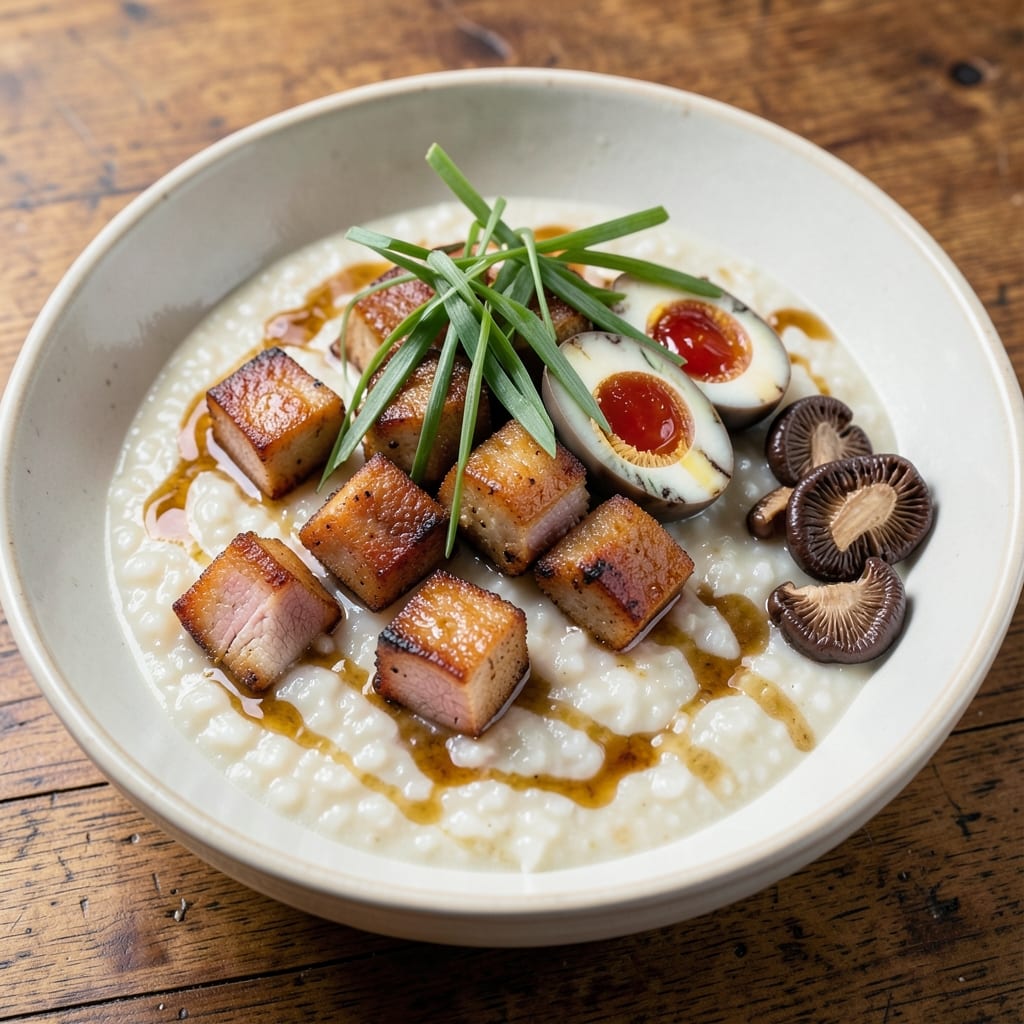
This congee pork and preserved egg recipe delivers the comforting essence of a Chinese home kitchen in every spoonful—silky rice porridge infused with tender pork and the deep umami of preserved egg yolk. After years of perfecting this dish in professional kitchens, I've developed a method that balances authenticity with approachability, ensuring home cooks achieve restaurant-quality results without shortcuts. The secret lies in slow-cooking the rice until it dissolves into a velvety texture while braising the pork to achieve melt-in-your-mouth tenderness.
The preserved egg adds a signature richness that elevates this dish beyond ordinary porridge—its salty, creamy yolk cuts through the pork's fat while adding layers of complex flavor. This recipe respects tradition by using whole pork belly, which renders slowly to create a flavorful broth, while the preserved egg is prepared with the proper balance of salt and vinegar for that signature marbled yolk. What makes this version special is the attention to texture: the porridge must be silky yet substantial, the pork tender yet flavorful, and the preserved egg perfectly preserved.
What you'll end up with is a deeply comforting bowl of congee where each element plays its part—creamy rice porridge, succulent pork that falls apart at the touch of a spoon, and preserved egg yolk that adds both color and umami depth. The aroma alone will transport you to a bustling Chinese kitchen, while the first bite delivers that perfect balance of textures and flavors that makes this dish a staple in so many homes. This is comfort food at its finest, perfect for breakfast, late-night meals, or when you simply need something nourishing.
Serve it garnished with scallions and a drizzle of soy sauce for that final touch of brightness, or keep it simple with just the preserved egg halves floating on top. The beauty of this recipe is its versatility—it can be a light meal or a hearty feast, depending on how much pork you use. Let's get cooking and bring this classic dish to your table with confidence and authenticity.
Ingredients for congee pork and preserved egg
The heart of this recipe—silky rice, tender pork, and preserved egg yolk—starts with these simple yet transformative ingredients.
| Ingredient | Amount | Notes |
|---|---|---|
| Jasmine Rice 🍚 | 1 cup | Uncooked, long-grain preferred |
| Whole Pork Belly 🥓 | 1 lb | Skin-on, cut into 1-inch cubes |
| Preserved Eggs (Century Eggs) 🥚 | 2 whole | Traditional, marbled yolk preferred |
| Dried Shiitake Mushrooms 🍄 | 4 whole | Rehydrated, stems removed |
| Dried Scallions 🧅 | 2 tbsp | Or 4 fresh scallions, chopped |
| Light Soy Sauce 🍶 | ½ cup | Kikkoman preferred for balance |
| Dark Soy Sauce 🍶 | 2 tbsp | For deeper color and flavor |
| Shaoxing Wine 🍷 | ¼ cup | Substitute dry sherry if unavailable |
| Sesame Oil 🫒 | 1 tbsp | Toasted, for aroma |
| Dried Ginger 🧄 | 1 tbsp | Sliced thin, or fresh ginger |
| Star Anise 🌟 | 2 whole | For subtle aromatic depth |
| Salt 🧂 | 1 tsp | Adjust to taste |
| Water 💧 | 6 cups | Filtered preferred for clarity |
| Vegetable Oil 🫒 | 2 tbsp | High smoke point for braising |
The pork belly is non-negotiable here—look for thick, marbled cuts at your local Asian market or butcher shop. Costco often carries pre-cut pork belly in the frozen section, which saves time. If you can't find whole pork belly, pork shoulder works in a pinch, but it won't render as much fat. The preserved eggs are the star—authentic century eggs from a Chinese grocery store have that signature marbled yolk, but if you're using store-bought, check for a firm texture and no cracks. For the rice, jasmine rice is ideal—it stays slightly sticky when cooked long and slow, giving that perfect congee texture. If you're using dried shiitake mushrooms, soak them in hot water for 20 minutes before slicing—they'll rehydrate perfectly and add that deep umami flavor.
No Shaoxing wine? Dry sherry or even a splash of rice wine vinegar works in a bind, though the flavor will be slightly different. Running out of dark soy sauce? Regular soy sauce plus a pinch of molasses mimics the color and depth. Fresh ginger is ideal, but if you're using dried, toast it lightly in a dry pan first to bring out the aroma. The scallions can be dried or fresh—dried are more concentrated, so use half the amount if you're using fresh. For the preserved eggs, if you can't find authentic ones, hard-boiled eggs soaked in a salt and vinegar brine for 3-4 weeks is a DIY alternative, though it won't be exactly the same. The star anise is optional but adds a subtle complexity—skip it if you're sensitive to strong spices.
This dish tastes even better the next day, so make a big batch and store leftovers. Keeps in the fridge for 4-5 days in an airtight container, with the pork and egg layers still distinct. For freezing, portion into single servings—thaw overnight in the fridge and reheat gently on the stove. The rice will thicken slightly when reheated, so add a splash of water if it's too stiff. Garnish with fresh scallions and a drizzle of soy sauce just before serving—that final touch makes all the difference. The preserved egg yolk should be creamy and slightly salty, so if yours tastes bland, let it soak in the brine a few extra days.
Why You'll Love This Recipe
- One-Pot Magic: I swear by this recipe when I’m too tired to fuss—just simmer the pork belly in the same pot as the rice, and the broth thickens into congee while the meat gets fall-apart tender. No separate pots, no extra bowls, just hands-off cooking while you sip tea.
- Umami Bomb: That preserved egg? It’s the star—creamy, briny, with a texture that’s chef’s kiss when sliced into the congee. Add the rehydrated shiitakes and dried scallions, and suddenly you’ve got a rich, savory depth that turns a simple bowl into something unforgettable.
- Leftovers That Don’t Suck: Between us, most congee gets boring after day two. Not this one. The pork belly stays juicy, the preserved egg holds its flavor, and I’ve reheated this for breakfast, lunch, or even a late-night snack without a single complaint. (Yes, even on a Tuesday night.)
- Budget Breakfast Winner: Pork belly might sound fancy, but it stretches so far in this dish—feed a family of four for under $15, and you’ll still have leftovers. Honestly, it’s the kind of meal that makes me feel like I’m treating everyone without breaking the bank.
Step-by-step instructions for congee pork and preserved egg
Here's how to create this comforting porridge with rich pork and complex preserved egg flavors.
Prepare the Pork Belly for Braising
Cut the 1 lb whole pork belly into 1-inch cubes, leaving the skin intact. In a large pot, heat 2 tablespoons vegetable oil over medium-high heat. Add the pork belly in a single layer and sear until the fat renders and the meat turns golden brown, about 5-6 minutes. This step builds deep flavor through the Maillard reaction.
Once browned, remove the pork from the pot and set aside. In the same pot, add 1 tablespoon dried ginger and 2 whole star anise. Toast for 30 seconds until fragrant - this releases aromatic oils that will infuse the entire dish. Here's where the magic starts: add 0.5 cup light soy sauce, 2 tablespoons dark soy sauce, and 0.25 cup Shaoxing wine. Stir and let it simmer for 2 minutes to create a flavorful base.
Rehydrate Mushrooms and Build the Congee Base
Place the 4 whole dried shiitake mushrooms in a bowl and cover with hot water. Let them soak for 20 minutes until softened. Drain, remove stems, and slice the caps. In the same pot with the pork braising liquid, add the rehydrated mushrooms and simmer for 5 minutes until tender.
Add 1 cup jasmine rice and 6 cups water to the pot. Bring to a boil, then reduce heat to low and cover. Let it simmer for 45 minutes, stirring occasionally to prevent sticking. The rice should break down completely into a silky, creamy consistency. This is where patience pays off - don't rush this step or you'll end up with gritty congee.
Incorporate the Pork and Season
Return the browned pork belly to the pot and gently stir to combine. Add 2 tablespoons dried scallions and 1 teaspoon salt. Let the mixture simmer uncovered for another 10 minutes, allowing excess moisture to evaporate. The congee should have a thick, porridge-like texture that coats the back of a spoon.
Here's where we balance flavors: add 1 tablespoon sesame oil and stir gently. The sesame oil adds a nutty aroma that complements the pork and mushrooms. Taste and adjust seasoning - you might need a touch more soy sauce for umami depth. The congee should be savory, slightly sweet, and aromatic with notes of ginger and star anise.
Prepare and Add the Preserved Eggs
Peel the 2 whole preserved eggs and separate the yolks from the whites. The marbled yolks are the star here - their complex, slightly bitter flavor cuts through the richness of the pork. Gently stir the egg whites into the congee and let them melt into the porridge for 2 minutes. Here's the thing - don't overmix or you'll break up the yolks prematurely.
Remove from heat and let the congee rest for 5 minutes. This resting period allows all the flavors to meld together. The final texture should be luxuriously smooth with just enough body to hold the pork and egg pieces. The preserved egg yolks should be visibly marbled throughout the porridge, adding visual appeal and that signature umami depth.
Pro Tips For Making Congee Pork And Preserved Egg
- Blister the Belly First: Before adding pork belly to your congee, sear the skin side down in a dry pot until it’s deep golden and crispy. I learned this the hard way—skipping this step means you’ll end up with a congee that tastes like boiled pork instead of crispy, savory magic. The fat will render beautifully into the broth later.
- Soak Shiitake Wrong: Dried shiitake mushrooms don’t need to soak for hours—just 20 minutes in warm water is enough to plump them up. Over-soaking makes them mushy, and you’ll end up with a watery congee instead of a rich, umami-packed one. Drain well and slice thinly before adding.
- Halve the Preserved Eggs: Cut preserved eggs in half lengthwise, not crosswise—this keeps the yolk intact and makes them easier to eat. I used to slice them carelessly, and the yolk would spill everywhere, turning my congee into a messy, runny disaster. A quick tap with a knife ensures clean halves every time.
- Stir the Congee Often: Once the rice starts breaking down (around 45 minutes), stir the congee every 5 minutes to prevent sticking. I’ve had batches turn into glue more times than I’d like to admit—keeping it moving guarantees a silky texture. If it gets too thick, just add a splash of hot water.
Troubleshooting this dish
Rice Too Gritty?
If your congee ends up gritty instead of silky, you likely didn't cook it long enough or stirred too aggressively. The key is patience—jasmine rice needs at least 45 minutes of gentle simmering. I've found that using a heavy-bottomed pot (like my Lodge Dutch oven) helps distribute heat evenly. Stir only 2-3 times during cooking to prevent breaking the rice grains prematurely. 💫
Pork Too Tough?
Overcooking the pork belly is a common mistake, but the solution is simple: braise it properly. After searing, the pork should simmer gently in the congee broth for no more than 10 minutes—it'll finish cooking as the porridge cooks. For extra tenderness, I sometimes add 1 cup chicken stock to the braising liquid. Also, never skip the resting period—let the pork sit in the hot congee for 5 minutes after cooking to reabsorb juices.
Preserved Eggs Too Salty?
If your preserved eggs taste overly salty, they were likely brined too long. The fix? Rinse briefly in cold water before using, but don’t soak them—this removes some salt but preserves texture. For future batches, reduce brine time by 2-3 days. I’ve also had success with homemade preserved eggs (hard-boiled eggs in 10% brine + 5% vinegar for 2 weeks)—they’re milder but still develop that signature marbled yolk. 🥚
Congee Too Watery?
Watery congee usually means too much liquid or undercooked rice. If it happens, simmer uncovered for 5-10 extra minutes to evaporate excess moisture. For prevention, use 6 cups water for 1 cup rice—any more and you’ll dilute the flavor. Pro tip: If your congee is still too thin after cooking, mash 1-2 spoonfuls of rice into the pot to thicken it naturally. The texture should be creamy yet spoonable, like thick oatmeal.
Lacking Umami Depth?
Weak umami flavor? Boost it with extra mushrooms (add 2 more dried shiitake) or a splash of fish sauce (1 tsp). I also like adding 1 tsp MSG (just a pinch!) to deepen the savory notes. For a traditional touch, toast 1 tsp black vinegar in the pot for 30 seconds before adding the rice—it adds a tangy complexity that balances the pork’s richness.
Preserved Egg Yolks Breaking?
If yolks disintegrate, you stirred too vigorously. Gently fold the egg whites into the congee first, then simmer for just 2 minutes before adding yolks. For presentation, place whole preserved egg halves on top of the congee—this keeps them intact while still infusing flavor. If you must stir them in, use a spoon with large holes to minimize disruption. The yolks should remain semi-intact, adding visual drama and creamy pockets of flavor. ✨
Nutrition facts
Frequently asked questions
Can I use chicken instead of pork belly?
While pork belly is traditional, you can substitute with chicken thighs for a lighter version. Cut them into 1-inch pieces and braise for 15 minutes instead of 10 to ensure tenderness. The flavor will be milder, so add 1 extra tablespoon soy sauce and 1 teaspoon fish sauce to compensate. For authenticity, I recommend sticking with pork belly—its fat renders beautifully, creating that signature creamy texture.
How do I store leftovers properly?
Store congee in an airtight container in the fridge for up to 5 days. The pork and preserved egg layers will separate slightly, but the flavors meld beautifully when reheated. For freezing, portion into single servings and freeze for up to 3 months. Thaw overnight in the fridge, then reheat gently on low heat with 1-2 tablespoons water to restore creaminess. Never microwave directly from frozen—this makes the texture rubbery.
What's the best way to serve this congee?
Traditionally, this dish is served in deep bowls with the preserved egg halves placed on top for visual appeal. Garnish with fresh scallions and a drizzle of light soy sauce just before eating. For extra richness, add a spoonful of hoisin sauce or a sprinkle of crushed peanuts. In Chinese households, it's common to serve with pickled vegetables on the side to cut through the richness. The key is to let each person customize their bowl!
Can I make this dish vegetarian?
Replace pork belly with mushroom stems (from rehydrated shiitake) or tofu (pressed and pan-fried). For umami depth, add 1 tablespoon soy sauce and 1 teaspoon mushroom powder to the broth. The preserved egg remains the star—its salty-sweet flavor balances the dish perfectly. For extra protein, stir in cooked lentils or tempeh at the end. The texture will be slightly different but still comforting.
Why does my congee turn out lumpy?
Lumpy congee usually means the rice wasn't cooked long enough or stirred too aggressively. For silky texture, use jasmine rice and simmer for at least 45 minutes on low heat. Stir only 2-3 times with a wooden spoon to prevent breaking grains. If lumps form, blend the congee briefly with an immersion blender (just until smooth), then return to heat. For prevention, add 1 extra cup water to help the rice break down more evenly.