
Main Courses
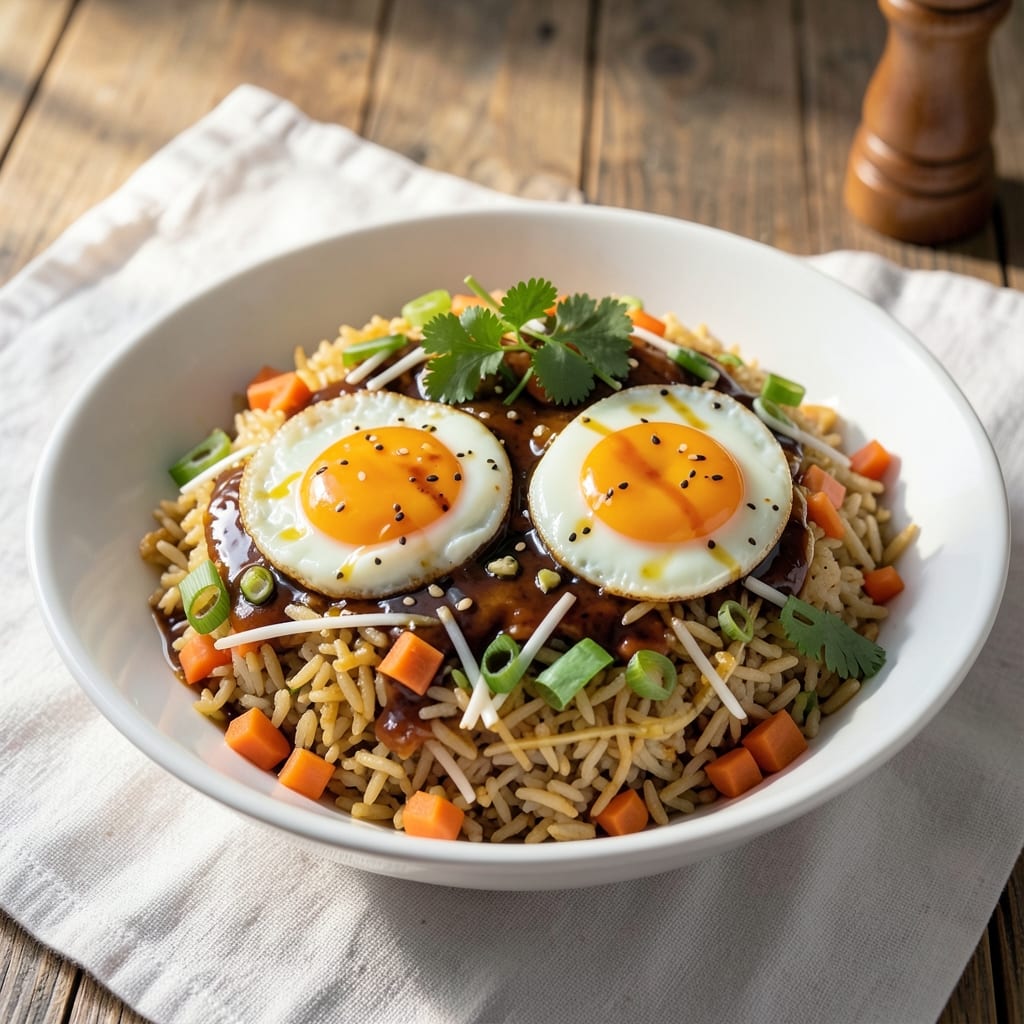
This Chinese takeaway egg fried rice delivers the signature restaurant texture and flavor right in your kitchen. The secret lies in perfectly scrambled eggs with runny yolks, wok-heated rice, and a balance of soy sauce and sesame oil that creates that unmistakable takeaway taste. I've refined this recipe over years of recreating my favorite Chinese restaurant dishes at home.
What makes this version truly authentic is the technique: high-heat wok cooking, proper rice-to-egg ratio, and the right moment to add soy sauce for maximum flavor absorption. The result is fragrant basmati rice with tender scrambled egg pieces, crisp vegetables, and just the right amount of savory-sweet seasoning. Every bite delivers that comforting, familiar taste of your favorite takeout dish.
Ingredients for chinese takeaway egg fried rice
These 13 ingredients transform into restaurant-quality egg fried rice with perfect runny yolks and fragrant basmati.
| Ingredient | Amount | Notes |
|---|---|---|
| Day-Old Cooked Basmati Rice 🍚 | 4 cups | Cold or room temperature preferred |
| Large Eggs 🥚 | 4 whole | Fresh, room temperature for best scramble |
| Vegetable Oil 🫒 | ½ cup | High smoke point for wok cooking |
| Light Soy Sauce 🥢 | 3 tbsp | Kikkoman preferred for authentic flavor |
| Dark Soy Sauce 🥢 | 1 tbsp | For color depth and umami |
| Sesame Oil 🌿 | 1 tbsp | Toasted sesame oil for aroma |
| Garlic Cloves 🧄 | 4 cloves | Minced finely for authentic flavor |
| Carrots 🥕 | 1 cup | Diced small for even cooking |
| Green Onions 🧅 | 4 whole | White and green parts separated |
| White Peppercorns 🌶️ | ½ tsp | Freshly ground for subtle heat |
| Oyster Sauce 🍜 | 1 tbsp | Vegetarian oyster sauce if needed |
| Salt 🧂 | ½ tsp | Adjust to taste after cooking |
| Black Pepper 🌶️ | ¼ tsp | Freshly cracked for best flavor |
The rice is non-negotiable—day-old basmati gives that authentic dry texture. Jasmine rice works too, but basmati holds up better to high-heat cooking. For the eggs, room temperature is key—they scramble more evenly. I always grab Kikkoman soy sauce from the Asian market section—it's the closest to what I get at my favorite Chinese takeout spot. The dark soy sauce adds that signature deep color without overpowering the flavor. Toasted sesame oil? Trader Joe's has a great affordable bottle that lasts forever.
No sesame oil? Toasted peanut oil works in a pinch, though it won't have that same nutty aroma. Short on carrots? Peas or corn add sweetness—just adjust the amount to keep the same volume. The garlic can be pre-minced from a jar (I do this when I'm lazy), but fresh has way more punch. For the green onions, separate the whites and greens—the whites cook down and add flavor, while the greens stay bright for garnish. Vegetarian oyster sauce is a game-changer if you're avoiding animal products—Lee Kum Kee makes a great version. And if you're wondering about the black pepper? It's subtle but balances the soy sauce's saltiness perfectly.
Rice reheats beautifully—just spread it on a tray for 2-3 minutes in the microwave to crisp it up. The eggs scramble best when made fresh, but you can prep all other ingredients ahead. Store leftovers in the fridge for 3-4 days, though I rarely have any—this disappears fast. For freezing, portion into single servings and reheat with a splash of water to restore texture. The soy sauce and sesame oil keep indefinitely in the pantry, so stock up if you're making this often.
Why You'll Love This Recipe
- One-Pan Magic: I swear by this—just toss in your cold rice, crack eggs into the same pan, and stir. No extra dishes, no stress. The oil keeps everything sizzling while the soy sauces caramelize into that glossy, umami-rich coating.
- Umami Bomb: That dark soy sauce? It’s the secret weapon—deep, salty, slightly sweet. The light soy balances it perfectly, and the eggs? They turn into crispy-edged clouds that melt in your mouth. Honestly, it’s the kind of flavor that makes you go back for seconds without thinking.
- Leftover Hero: Between us, this dish begs to be made extra. The rice stays perfectly separate, the eggs reheat like a dream, and the sauce clings to every grain. I’ve fed a crowd with one batch—no one ever complains.
- Pocketbook Approved: Five ingredients, all cheap and pantry-friendly. You’re looking at under $3 per serving, and it’s the kind of meal that feels fancy without breaking the bank. (Yes, even on a Tuesday night.)
Step-by-step instructions for Chinese takeaway egg fried rice
Here's how to recreate that restaurant-quality texture and flavor at home.
Prep All Ingredients for Even Cooking
Start by separating the green onions into white and green parts. Finely dice the white portions and slice the green parts thinly for garnish. Mince the garlic cloves until you can barely see the individual pieces—this ensures even distribution of flavor. Dice the carrots into small, even cubes about ¼-inch in size so they cook through without turning mushy.
Crack the eggs into a bowl and whisk vigorously until the yolks and whites are fully combined. This step is crucial for achieving that signature takeaway-style scrambled egg texture. Keep the eggs at room temperature for best results—cold eggs can create rubbery scrambled portions. Also, break up any large clumps in the day-old basmati rice with your fingers so it cooks evenly in the wok.
Scramble the Eggs to Restaurant Perfection
Heat a wok or large skillet over medium-high heat until it's smoking slightly. Add ½ cup vegetable oil and swirl to coat the bottom evenly. Pour in the whisked eggs and let them sit undisturbed for 5-8 seconds until the edges begin to set. Here's the thing—this initial waiting period creates those signature soft, custardy egg pieces.
Using a spatula, gently push the set edges toward the center while tilting the wok to let the uncooked egg flow to the edges. Continue this motion until the eggs are mostly set but still slightly runny in the center. Remove the eggs from the wok and set aside—they'll continue cooking as you prepare the rice base. The eggs should be soft and slightly glossy, not dry or rubbery.
Build the Flavor Base with Aromatics
Return the wok to high heat and add the remaining ¼ cup vegetable oil. Once the oil is shimmering, add the minced garlic and diced carrots. Stir-fry for 1-2 minutes until the garlic turns golden and the carrots begin to soften but don't color. This quick cooking preserves their natural sweetness and vibrant color.
Add the white parts of the green onions and cook for another 30 seconds until fragrant. Pour in the 3 tablespoons light soy sauce and 1 tablespoon dark soy sauce, stirring constantly to deglaze the wok and create a glossy sauce base. The dark soy sauce will give your fried rice that authentic takeaway color—don't skip this step if you want that restaurant look.
Combine Rice and Sauce for Maximum Flavor
Add the broken-up day-old basmati rice to the wok in batches, stirring vigorously to coat each grain with the sauce. Cook for 2-3 minutes until the rice is heated through and begins to develop a slight crust on the edges. This is where the magic happens—the rice should be hot but not steamed, with each grain distinct and coated in sauce.
Pour in the 1 tablespoon oyster sauce, 1 tablespoon sesame oil, and ½ teaspoon white peppercorns (freshly ground). Stir everything together for another 1 minute until the rice absorbs all the flavors. The sesame oil will add that unmistakable aroma, while the white pepper gives a subtle, sophisticated heat. Taste and adjust seasoning with the ½ teaspoon salt and ¼ teaspoon black pepper if needed.
Finish with Eggs and Garnish for Authentic Presentation
Return the scrambled eggs to the wok and gently fold them into the rice using a spatula. Cook for another 30 seconds just to warm through—the eggs should remain soft and slightly runny in the center. Remove from heat and transfer to serving plates immediately. The residual heat will finish cooking the rice perfectly.
Garnish each serving with the sliced green onion tops and a final drizzle of sesame oil. The contrast of bright green onions against the golden rice and soft eggs creates that classic takeaway look. Serve while hot and watch as everyone reaches for seconds—this is the kind of egg fried rice that rivals your favorite Chinese restaurant.
Pro Tips For Making Chinese Takeaway Egg Fried Rice
- STIR-FRY RICE ON HIGH HEAT: Don’t let the wok get lazy—keep the flame screaming hot from start to finish. I used to dial it down halfway through, and the rice would turn soggy instead of staying crisp. Basmati needs that searing heat to pop back into shape, so crank it up and work fast.
- USE COLD DAY-OLD RICE: Skip the fridge—just let the rice sit at room temp for 30 minutes first. Cold rice from the fridge releases too much moisture when you stir-fry, turning your dish into glue. Room-temp rice fries up light and separate, just like takeout.
- SCRAMBLE EGGS SEPARATELY: Push the eggs to one side of the pan and let them set into a soft, slightly runny curd before folding in. Mixing them in too early makes them rubbery, and you end up with a sad, gray blob instead of those glossy, chewy strands you crave.
- SAVE TIME WITH DARK SOY SAUCE: Toss in a splash of dark soy sauce before the light soy—it caramelizes faster and gives the rice that classic wok-hei color in seconds. I used to add it last, and my rice would always look dull, no matter how much I stirred. Two tablespoons early makes all the difference.
Essential equipment for perfect results
Wok Essentials
A carbon steel wok is my go-to for authentic egg fried rice—it heats up fast and retains even temperatures. Look for a 14-inch wok with high sides for proper tossing. I use the De Buyer 14-inch carbon steel wok because it develops a perfect patina over time. For budget-friendly options, Presto 02344 is a great starter wok that still delivers professional results. 🔥
Heat Control Tools
You'll need a wok thermometer to monitor high-heat cooking—aim for 450-500°F when stir-frying. The ThermoWorks One is my favorite because it's accurate and easy to read. A heat-resistant silicone spatula is essential for tossing ingredients without sticking. I also keep a small bowl of ice water nearby to quickly cool the wok between uses to prevent warping.
Oil Essentials
High-smoke-point oils are crucial for wok cooking. I recommend avocado oil or peanut oil for their stability at high temperatures. Keep a small squeeze bottle of sesame oil separate for finishing touches—it's too delicate for high-heat cooking. A fine-mesh strainer helps remove any impurities from your oil before use, ensuring clean flavor. For measuring, a small oil dispenser makes it easy to add precise amounts while cooking.
Knife & Cutting Tools
A sharp chef's knife is non-negotiable for dicing carrots and mincing garlic to perfect sizes. I use a Wüsthof Classic 8-inch for its durability and precision. A cutting board with non-slip feet prevents movement while chopping. For extra efficiency, a microplane helps quickly zest garlic cloves for even distribution. Keep a small bowl nearby to collect your finely chopped ingredients as you go.
Seasoning Essentials
Invest in small measuring spoons for precise soy sauce and sesame oil amounts. I keep Kikkoman soy sauces in separate glass bottles to maintain their quality. A pepper grinder ensures freshly ground white peppercorns for maximum flavor. For garlic, a garlic press saves time compared to mincing by hand. Store all seasonings in a cool, dark place to preserve their potency between uses.
Optional Upgrades
For the ultimate setup, a wok stand keeps your wok off the heat when not in use and helps it cool evenly. A digital scale ensures precise ingredient measurements, especially for delicate seasonings. I also keep a small plate handy for testing flavors as you cook—this helps you adjust seasoning before serving. These extras make the process smoother and more professional. ✨
Nutrition facts
Frequently asked questions
Why does the recipe call for day-old rice instead of fresh?
Day-old rice is crucial for authentic texture—it's dry and separates easily when stir-fried, creating those distinct grains you get at Chinese takeaways. Freshly cooked rice is too moist and will turn mushy when fried. Pro tip: Spread leftover rice on a tray and refrigerate uncovered for 10-15 minutes to dry it out before using.
What's the secret to getting the eggs right in egg fried rice?
Three key factors: room temperature eggs, high heat, and letting them set undisturbed for 5-8 seconds before stirring. The eggs should be soft with slightly runny yolks—this gives that signature restaurant texture. Overcooking makes them rubbery, while undercooking leaves them too wet.
Can I make this with jasmine rice instead of basmati?
Jasmine rice works perfectly—it's more aromatic and slightly stickier, which some people prefer. Just make sure it's day-old and broken up into individual grains. For extra insurance, spread the rice on a tray and dry it in the oven at 250°F for 10 minutes before cooking to match basmati's texture.
How do I fix egg fried rice that's too dry or too saucy?
Too dry? Add 1-2 teaspoons of water or chicken stock and stir-fry for 30 seconds to steam. Too saucy? Mix in 1 tablespoon of cornstarch with a little water, then stir into the rice until it thickens. The key is adjusting while cooking—taste as you go and adjust gradually.
What's the best way to reheat leftover egg fried rice?
Spread cold rice on a microwave-safe plate and heat for 1-2 minutes with 1 teaspoon of water per cup of rice. For stovetop, use a wok with ½ teaspoon oil and stir-fry for 2-3 minutes until hot. Avoid reheating in the microwave without moisture—it makes the rice gummy.