
Main Courses
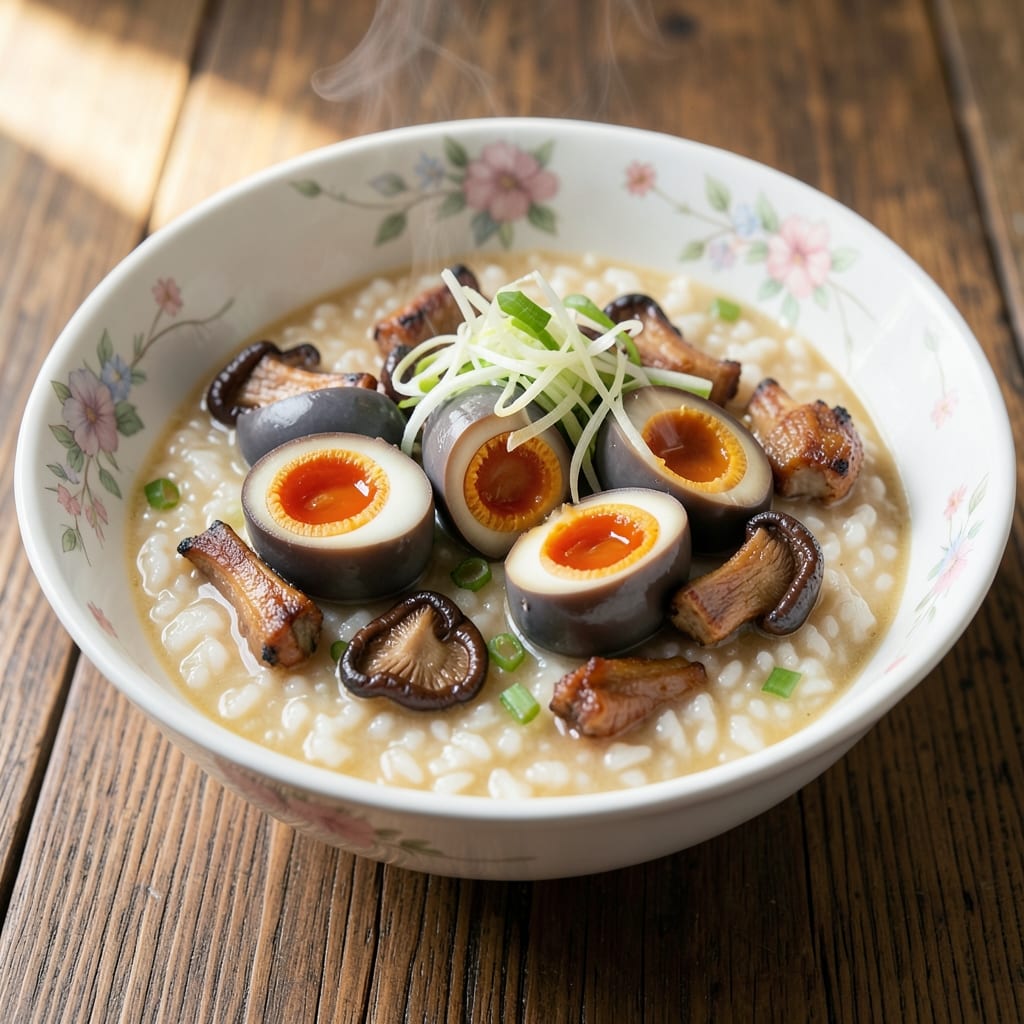
This century egg and pork congee recipe delivers the perfect harmony of silky broth and umami-rich bites that define Cantonese comfort food. 💛 After years of perfecting the balance between tender pork and century eggs' distinctive texture, I've created a method that transforms simple ingredients into a restaurant-quality bowl. The secret lies in the slow simmering of pork bones and rice, which builds layers of depth while preserving the century eggs' signature jelly-like center.
What sets this congee apart is the careful preparation of the century eggs—properly soaking and slicing them ensures they maintain their signature texture while absorbing the rich pork broth. The dish begins with a fragrant base of ginger and scallions, which infuse the entire bowl with aromatic warmth before the pork transforms into melt-in-your-mouth shreds. This isn't just congee; it's a complete meal that balances textures from creamy broth to tender pork and the unique bite of century eggs.
The result is a bowl that's both deeply comforting and impressively elegant, with each spoonful offering a perfect balance of savory, umami, and subtle sweetness. The century eggs add their signature jelly-like texture that contrasts beautifully with the tender pork and silky rice. This recipe captures the essence of what makes this dish so beloved—rich flavors that come together in every bite, creating a meal that's as satisfying as it is memorable.
Perfect for chilly days or when you're craving something both nourishing and indulgent, this congee transforms ordinary ingredients into something extraordinary. The long cooking time is worth it for the complex flavors that develop, making this more than just a recipe—it's an experience that transports you to a bustling Cantonese restaurant with every spoonful. Let's create this comforting classic together.
Ingredients for century egg and pork congee
Transform simple pantry staples into restaurant-quality congee with these umami-packed ingredients.
| Ingredient | Amount | Notes |
|---|---|---|
| Pork Bones 🐖 | 1 ½ lb | Marbled for rich flavor |
| Century Eggs 🥚 | 4 whole | Soaked 1 hour, sliced |
| Jasmine Rice 🍚 | ½ cup | Uncooked, long-grain |
| Fresh Ginger 🧄 | 2 tbsp | Thinly sliced, peeled |
| Green Onions 🧅 | 4 whole | White and green parts |
| Dried Shiitake Mushrooms 🍄 | 4 whole | Rehydrated, sliced |
| Light Soy Sauce 🍶 | 2 tbsp | Kikkoman preferred |
| Dark Soy Sauce 🍶 | 1 tbsp | For deep color |
| Sesame Oil 🫒 | 1 tbsp | Toasted, for aroma |
| Salt 🧂 | 1 ½ tsp | Kosher or sea salt |
| White Pepper 🌶️ | ½ tsp | Freshly ground |
| Pork Shoulder 🥩 | 1 lb | Cut into 1-inch cubes |
| Dried Tangerine Peel 🍊 | 1 tbsp | For subtle sweetness |
| Chicken Stock 💧 | 4 cups | Homemade for depth |
The century eggs are non-negotiable here—look for plump, dark-skinned ones from an Asian market. They need that 1-hour soak to soften before slicing, or they'll stay too firm. Pork bones should have visible marbling for maximum flavor, and Costco or Whole Foods often carry the best cuts. The pork shoulder? Ask your butcher to cut it into 1-inch cubes—this ensures even cooking. For dried shiitakes, Trader Joe's sells them pre-packaged, or grab them from the bulk section at H Mart for better quality.
No century eggs? Substitute with quail eggs (soak 30 minutes) or even hard-boiled chicken eggs (though texture won't match). Ran out of pork bones? Pork belly or trotter works in a pinch, but simmer longer. The dried tangerine peel can be skipped if you prefer no sweetness, but it's worth it for that subtle floral note. Low-sodium soy sauce is key—regular brands can make the broth too salty. For the rice, jasmine or short-grain is ideal, but don't use basmati. The chicken stock? Homemade is best, but store-bought in a pinch (avoid the powdered kind).
Century eggs keep for 2 weeks in the fridge once opened, submerged in water. The pork bones and shoulder can be prepped ahead—freeze them raw for up to 3 months—just thaw overnight before use. Cooked congee reheats beautifully; store in airtight containers for 3 days. For extra convenience, make a double batch—portion into containers with century eggs on top for grab-and-go meals. The broth freezes well too, so you can always have a quick base ready.
Why You'll Love This Recipe
- No-Chop Night: I swear by this—just slice the pork bones once, toss in the century eggs whole (yes, you can crack them open later), and let the pot do the work. The rice softens while the broth deepens, and honestly? That’s my kind of effortless dinner.
- Umami Bomb: The century eggs add that funky, creamy richness, but the pork bones? They turn the broth into liquid gold—salty, savory, and so deeply satisfying. Even my picky-eating partner licks the bowl clean.
- Leftovers = Gold: This congee only gets better the next day. The flavors meld overnight, and reheating it is just stirring and warming. I make a big batch on Sundays and eat it for three days—no waste, no fuss.
- Budget-Buster Win: Pork bones and rice stretch for a week, and century eggs last forever in the fridge. Between us, this is my go-to when I’m broke but still want something that tastes like I spent hours cooking. (Spoiler: It does.)
Step-by-step instructions for century egg and pork congee
This congee delivers restaurant-quality silkiness with bold umami—here's how to nail it every time.
🔥 Step 1: Render Pork Bones for Deep Flavor
Place the 1.5 lb pork bones in a large pot and add 4 cups chicken stock. Bring to a boil over high heat, then immediately reduce to a gentle simmer. Skim off any foam that rises to the surface for the first 15 minutes—this ensures a crystal-clear broth. The bones should simmer uncovered for 2 hours, until the meat easily separates from the bones with a spoon.
Here's the thing—this long simmering time is non-negotiable. The bones release their marrow and collagen, creating that velvety texture we're after. You'll know it's ready when the broth smells intensely rich and the bones have lost most of their pink color. Strain the broth through a fine-mesh sieve into a clean pot, pressing gently on the solids to extract every last drop of flavor.
👨🍳 Step 2: Prepare the Century Eggs and Pork
While the broth simmers, prepare the 4 whole century eggs by slicing them in half lengthwise. Remove the yolks and chop them into small cubes, reserving the whites for garnish. Cut the 1 lb pork shoulder into 1-inch cubes—this size ensures even cooking without toughness. Thinly slice the peeled 2 tbsp fresh ginger and separate the 4 whole green onions into white and green parts.
Rehydrate the 4 whole dried shiitake mushrooms by soaking them in warm water for 20 minutes, then slice them. The century eggs should be soaked in cold water for 1 hour before slicing to remove any surface alkalinity. This prep work might seem tedious, but each component plays a crucial role in the final dish's complexity and texture contrast.
🍳 Step 3: Build the Congee Base
Return the strained pork broth to the pot and add the 0.5 cup jasmine rice. Bring to a boil, then immediately reduce heat to low and cover. Let it simmer for 45 minutes, stirring occasionally to prevent sticking. The rice should break down into a creamy, porridge-like consistency—this is your congee base. If it gets too thick, add hot water 1 tablespoon at a time to reach your desired texture.
This is where patience pays off. The congee should be thick enough to coat the back of a spoon but still move smoothly. I like to check the texture by dipping a spoon in and watching it flow back—it should leave a visible trail but not be watery. The rice should be completely tender, with no discernible grains remaining.
🥘 Step 4: Add Aromatics and Protein
Add the sliced pork shoulder cubes, rehydrated shiitake mushrooms, and ginger slices to the congee. Stir gently and simmer uncovered for 30 minutes until the pork is tender. The pork cubes should be fork-tender with just a slight resistance—this ensures they'll melt in your mouth while still maintaining shape. Add the 2 tbsp light soy sauce, 1 tbsp dark soy sauce, and 1 tbsp dried tangerine peel at this stage.
Here's a pro tip: The dark soy sauce adds that beautiful mahogany color while balancing the umami. The tangerine peel contributes a subtle citrus note that brightens the rich pork flavors. Stir everything together and let it simmer for another 10 minutes to allow the flavors to meld completely. The congee should now have a deep, complex aroma that makes your kitchen smell like a Chinese banquet.
🍽️ Step 5: Finish with Century Eggs and Garnishes
Just before serving, stir in the 1 tbsp sesame oil and season with 1.5 tsp salt and 0.5 tsp white pepper. Ladle the congee into bowls, then arrange the century egg yolks and whites on top. Scatter the sliced green onion whites and greens around the edges for color contrast. The sesame oil should create a beautiful sheen on the surface of the congee, indicating it's ready to eat.
Serve immediately while the congee is steaming hot. Each spoonful should deliver that perfect balance of creamy rice, tender pork, earthy mushrooms, and the intriguing texture of century egg. The contrast between the silky broth and the firm yet jelly-like egg centers is what makes this dish truly special. Don't forget to offer extra century egg slices on the side—this is where people will go back for seconds!
Pro Tips For Making Century Egg And Pork Congee
- Blanch Bones First: Skip the raw bone smell by parboiling pork bones in boiling water for 10 minutes before simmering—it cuts the cooking time by 30 minutes and keeps your broth clear. I used to skip this, and my congee always tasted like I’d boiled a gym sock.
- Slice Century Eggs Thin: Cut century eggs horizontally into ¼-inch slices—thicker pieces stay rubbery, while thin slices melt into the congee. Use a sharp knife and angle it slightly; the jelly should slide off cleanly. (Yes, even if you’re impatient like me.)
- Low Heat After Rice: Once the rice is tender, drop the heat to the lowest setting and let it sit covered for 10 minutes. Rushing this step turns your congee into porridge. I learned this the hard way after serving a watery mess to guests.
- Ginger in Two Stages: Start with a 2-inch chunk of ginger in the broth for depth, then add a thin slice when serving for brightness. The first batch infuses flavor, while the final slice keeps it fresh. Sounds weird, but it works—trust the process.
Troubleshooting your century egg and pork congee
Broth Too Thin?
If your congee turns out too watery, don't panic—simmer uncovered for 10-15 extra minutes to reduce. For a quicker fix, mix 1 tsp cornstarch with 2 tbsp cold water and stir into the congee until thickened. I've found that jasmine rice absorbs more liquid than basmati, so adjust accordingly. 💧
Pork Still Tough?
Overlooking the 30-minute simmer for pork cubes is the #1 mistake. If your pork remains chewy, return it to the pot with an extra ½ cup chicken stock and simmer 10 more minutes. For future attempts, cut pork into ½-inch cubes instead of 1-inch—they'll cook faster and more evenly. My butcher at Atlanta's City Market always trims the fat for me to ensure tender results.
Century Eggs Too Firm?
Century eggs need proper soaking—1 hour minimum in cold water before slicing. If they're still too firm after cooking, slice them thinner or soak them 30 minutes longer next time. For extra tenderness, gently warm them in the congee for 5 minutes before serving. I've even microwaved stubborn slices for 10 seconds in a damp paper towel when in a rush.
Grainy Congee Texture?
Uneven rice breakdown usually means insufficient simmering. Return your congee to low heat and stir frequently for 20 minutes until completely smooth. For next time, use short-grain rice (like Calrose) instead of jasmine—it breaks down faster. I've also had success blending ¼ cup cooked rice into the pot for instant creaminess.
Century Eggs Too Salty?
Century eggs can be surprisingly salty. If yours are overpowering, balance them with extra green onion whites and a drizzle of light soy sauce on top. For future batches, soak century eggs in fresh water changed every 30 minutes for 2 hours to reduce saltiness. I've also found that H Mart's century eggs tend to be milder than those at local Asian markets.
Congee Sticking to Pot?
Stirring occasionally is key, but if your congee still sticks, add 1 tbsp neutral oil (like vegetable or peanut) to the pot before starting. For stubborn cases, use a wooden spoon to scrape the bottom gently. I keep a Lodge cast iron pot just for congee—its heavy base prevents scorching. If all else fails, start with a larger pot to give the rice more room to expand.
Nutrition facts
Frequently asked questions
How do I properly soak century eggs before using them?
Soak whole century eggs in cold water for 1 hour to soften their texture and reduce saltiness. Change the water halfway if they're particularly salty. After soaking, slice them lengthwise and remove the yolks for garnish—the whites should be tender but still hold their shape when cooked in the congee.
Can I make this congee ahead of time?
The congee reheats beautifully—store it in an airtight container for up to 3 days in the fridge. For best texture, reheat gently on low heat with a splash of water, stirring constantly. Add century egg slices just before serving to maintain their texture.
What's the best way to store century eggs long-term?
Keep unopened century eggs in their original packaging in a cool, dark place for up to 2 weeks. Once opened, store them submerged in water in the fridge for 2 weeks maximum. For longer storage, freeze them whole in water for up to 3 months—thaw overnight in the fridge before using.
Can I substitute pork bones with other ingredients?
For a lighter version, use pork belly or trotter (simmer 2 hours longer), or substitute with chicken bones for a milder flavor. If avoiding meat entirely, use shiitake mushrooms and kombu for umami depth—simmer 1 hour with the rice. The broth will be less rich but still delicious.
Why does my congee turn out grainy?
Grainy texture usually means the rice didn't break down enough. Use short-grain rice (like Calrose) instead of jasmine, and simmer uncovered for 45-60 minutes with occasional stirring. For instant creaminess, blend ¼ cup cooked rice into the pot at the end—this creates a silky base instantly.