
Soups & Stews
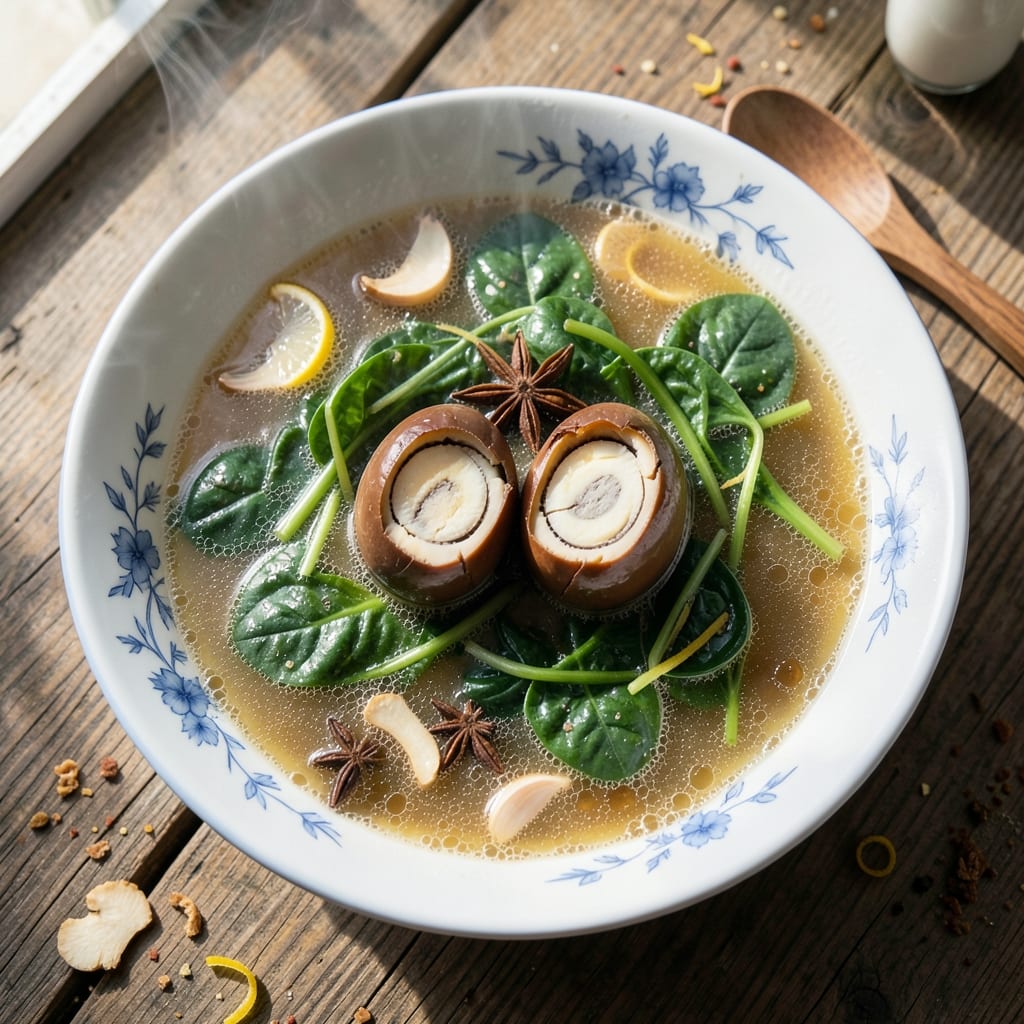
This Chinese spinach soup with century egg delivers the perfect harmony of textures and flavors—silky broth, tender spinach, and the bold umami of preserved century eggs. 💛 The recipe balances traditional techniques with approachable steps, ensuring you achieve restaurant-quality results at home. What makes this dish special is the century egg's unique salty, creamy center that contrasts beautifully with the fresh spinach and aromatic broth.
The foundation of this soup lies in its silky broth, infused with ginger, garlic, and star anise, which creates a fragrant base. Century eggs, with their distinctive dark shells and pale, jelly-like centers, add a rich umami depth that elevates the dish. The spinach, added at the last moment, retains its vibrant color and crisp texture, providing a refreshing contrast to the hearty broth.
What you'll end up with is a bowl of soup that's both comforting and sophisticated—each spoonful offers a mix of creamy, crunchy, and tender elements. The century egg's salty, slightly sweet center melts in your mouth, while the spinach adds a fresh, bright note. This dish is perfect for special occasions or when you want to impress guests with a taste of authentic Chinese cuisine.
Whether you're serving this as a starter or a light main course, the balance of flavors and textures makes it a standout dish. The recipe is designed to be approachable, with clear steps for handling the century eggs and cooking the spinach just right. Let's get started on creating this restaurant-quality soup at home.
Ingredients for chinese spinach soup with century egg
Fresh spinach, preserved century eggs, and aromatic broth create this restaurant-quality Chinese soup.
| Ingredient | Amount | Notes |
|---|---|---|
| Century Eggs 🥚 | 4 whole | Preserved, dark-shelled, pale center |
| Baby Spinach 🌿 | 4 cups | Fresh, loosely packed |
| Fresh Ginger 🧄 | 1 inch | Peeled, sliced thinly |
| Garlic Cloves 🧄 | 4 cloves | Minced for aroma |
| Star Anise 🌶️ | 2 whole | Lightly crushed |
| Dried Shiitake Mushrooms 🍄 | 2 pieces | Rehydrated, sliced |
| Chicken Stock 💧 | 4 cups | Homemade or quality store-bought |
| Sesame Oil 🫒 | 1 tbsp | Toasted, for finishing |
| Light Soy Sauce 🍶 | 1 tbsp | For depth of flavor |
| Dark Soy Sauce 🍶 | 1 tsp | For color and richness |
| Cornstarch 🌾 | 1 tsp | For broth thickening |
| Sesame Seeds 🥜 | 1 tsp | Toasted, for garnish |
| Salt 🧂 | ½ tsp | To taste, adjust carefully |
| White Pepper 🌶️ | ¼ tsp | Freshly ground for heat |
Century eggs are the star here, and authentic ones are worth hunting down. Look for the dark, glossy shells at Asian markets or specialty stores—avoid the pale, rubbery ones that scream 'tourist trap.' The pale, jelly-like center is what you're after, so don't be put off by the weird appearance. Fresh ginger and star anise give that signature fragrant base, so grab organic ginger if you can—it's brighter. For shiitake mushrooms, dried is best—they add depth that fresh can't match. I always buy mine in bulk from Trader Joe's or H Mart.
No century eggs? Salty duck eggs are a decent substitute, but they won't have that same creamy, jelly-like center. Short on shiitake? Dried porcini mushrooms work in a pinch, but they're more earthy. The soy sauces matter—light soy for flavor, dark soy for color. If you only have one, use light and add a pinch of sugar. For the broth, homemade chicken stock is ideal, but Swanson or Pacific brand work fine in a pinch. Just avoid anything with MSG if you're sensitive. The spinach needs to stay vibrant, so add it last—no wilting allowed!
This soup tastes even better the next day as flavors meld. Store in an airtight container in the fridge for up to 3 days. For leftovers, I like to portion into small bowls so each serving is ready to reheat. Freezes beautifully for 3 months—just thaw in the fridge overnight. The century eggs keep indefinitely in their brine, so no rush there. Garnish with toasted sesame seeds right before serving—they add crunch and aroma that takes it from good to great.
Why You'll Love This Recipe
- No-Chop Nightmare: I swear, this soup only needs three things chopped—ginger, garlic, and spinach. The century eggs just sit there, looking mysterious and ready to do all the work. Honestly, I’ve made it after a 12-hour shift and still had time to scroll TikTok while it simmered.
- Umami Bomb: That first spoonful? Chef’s kiss. The century egg’s creamy-yet-briny center melts into the broth, while the star anise and ginger add this deep, aromatic warmth. Baby spinach wilts just enough to soak up every last drop—no sad, watery greens here.
- Office Lunch Hero: Between us, this is my go-to for meal prep. The flavors only get better the next day, and it reheats like a dream. Pack it in a thermos, and you’ll be the coworker everyone envies—and the one who actually eats lunch.
- Pocketbook Victory: Century eggs last forever in the fridge, and a single jar stretches across three bowls. Fresh ginger and star anise? A few bucks at the Asian market, not a specialty shop splurge. Budget-friendly doesn’t mean boring—this soup proves it.
Step-by-step instructions for Chinese spinach soup with century egg
Here's how to craft this velvety soup with perfect century egg texture and aromatic depth.
🍳 Step 1: Prepare the Century Eggs and Aromatics
First, peel the 4 whole century eggs carefully—start by cracking the shell at the top and sliding the egg out. Rinse under cold water to remove any shell fragments, then slice each egg into 8 wedges. Set aside in a bowl. The pale, jelly-like center is what you're after for that signature texture.
In a small bowl, combine the 1 inch fresh ginger (peeled and sliced thinly) and 4 cloves garlic (minced). Lightly crush the 2 whole star anise with the side of your knife to release their aroma. You'll add these to the broth later for deep flavor infusion.
🍳 Step 2: Build the Umami-Packed Broth
Heat 1 tablespoon sesame oil in a large pot over medium heat. Add the 2 pieces dried shiitake mushrooms (rehydrated and sliced) and sauté for 2 minutes until fragrant. This step develops their earthy flavor before they dissolve into the broth.
Add the ginger-garlic mixture and star anise, cooking for 30 seconds until the garlic turns golden. Pour in the 4 cups chicken stock and bring to a gentle simmer. The broth should smell rich and aromatic—like a warm hug from a Chinese kitchen.
🥘 Step 3: Thicken and Season the Broth
In a small bowl, whisk together the 1 tablespoon light soy sauce, 1 teaspoon dark soy sauce, 1 teaspoon cornstarch, 0.5 teaspoon salt, and 0.25 teaspoon white pepper. This is your seasoning slurry—it'll give the soup its signature depth and silky texture.
Slowly pour the slurry into the simmering broth while stirring constantly. Let it cook for 3-4 minutes until the broth thickens slightly and becomes glossy. Taste and adjust seasoning—you want a balance of saltiness and umami that makes your taste buds dance.
🥗 Step 4: Add Spinach and Century Eggs
Gently stir in the 4 cups baby spinach and let it wilt for 1 minute. The spinach should soften but still retain some vibrant green color—this means it's cooked just right. Don't overcook or it'll turn mushy.
Add the century egg wedges and let the soup simmer together for 2 minutes. The eggs will warm through while absorbing the aromatic broth. The pale centers should remain intact, offering that delightful contrast of textures with each spoonful.
🍽️ Step 5: Finish and Serve with Confidence
Remove the pot from heat and let it sit for 1 minute to allow flavors to meld. Drizzle with 1 tablespoon sesame oil and sprinkle with 1 teaspoon toasted sesame seeds. The sesame oil adds a nutty aroma, while the seeds provide a satisfying crunch.
Serve immediately in deep bowls, garnished with extra sesame seeds if desired. Each spoonful should deliver a perfect balance of silky broth, tender spinach, and those intriguing century egg pieces with their creamy centers. This soup tastes even better the next day as flavors deepen!
Pro Tips For Making Chinese Spinach Soup With Century Egg
- Crack the Century Egg Right: Don’t just slice it—tap the black shell firmly with a spoon to crack it open, then rinse the yolk in cold water for 30 seconds. This removes the chalky coating and keeps the soup from getting that weird, bitter aftertaste that ruins everything.
- Blanch Spinach in Batches: Tossing all the spinach into boiling water at once turns it into mush. Instead, divide it into two batches and blanch for 20 seconds each—just until wilted. Drain immediately and shock in ice water to lock in color and texture. Trust me, your soup won’t look like sad, limp lettuce.
- Toast Star Anise First: Toss a whole star anise into a dry, hot wok for 10 seconds before adding liquid. The scent hits the air instantly, and the soup gets that deep, aromatic backbone without overpowering the century egg’s funk. Skip this, and your broth will taste like it’s missing something—even if you can’t pinpoint what.
- Add Ginger Last, Not First: I used to throw in ginger with the garlic, but that just makes the soup taste like medicine. Instead, slice it thin and add it during the final 2 minutes of simmering. The heat releases its bright, peppery kick without turning the broth into a muddy, overcooked mess. Your taste buds will notice.
Make-ahead tips for this chinese spinach soup with century egg
Broth Prep Ahead
Make the broth base 1 day ahead for deeper flavor development. Simmer the ginger, garlic, star anise, and shiitake mushrooms in 4 cups chicken stock for 20 minutes, then cool and refrigerate. When ready to assemble, reheat gently and add the seasoning slurry. This step saves 15 minutes on cooking day and intensifies the umami. 💛
Century Egg Prep
Peel and slice the 4 century eggs up to 2 days in advance—store in an airtight container covered with their original brine. The brine preserves their unique texture. When reheating soup, add the eggs fresh from the fridge to maintain their jelly-like center. Avoid pre-cooking them—they should warm through gently in the broth.
Spinach Storage
Wash and dry the 4 cups baby spinach thoroughly, then store in a single layer on a paper towel-lined plate. Place in a sealed container with a damp paper towel to keep it crisp. Add the spinach just before serving—it wilts beautifully when fresh, but pre-wilted spinach loses its vibrant color. This trick keeps your soup looking restaurant-fresh. ✨
Flavor Boost Freeze
Freeze the seasoning slurry (soy sauces, cornstarch, salt, pepper) in 1-tablespoon portions for quick use. Thaw directly in the soup pot—no need to defrost first. This pre-mixed approach ensures consistent seasoning every time. For extra convenience, freeze the rehydrated shiitake mushrooms with the broth base. Just thaw overnight in the fridge before reheating. ❄️
Portioning Strategy
Divide the soup into 4 individual portions in ramekins or small bowls before refrigerating. Reheat each serving separately in the microwave for 2 minutes on high, stirring halfway. This keeps the century eggs and spinach textures perfect while warming the broth evenly. Perfect for meal prep—just grab and heat when ready. 🔥
Garnish Prep
Toast the 1 teaspoon sesame seeds in a dry pan over medium heat for 2 minutes until golden. Let cool completely, then store in a small jar with a tight lid. Keep the sesame oil refrigerated—it separates naturally. Add both garnishes fresh when serving to maintain their crunch and aroma. This final touch elevates the dish from homemade to impressive. 💫
Nutrition facts
Frequently asked questions
How do I properly peel a century egg without making a mess?
Start by cracking the shell at the top with a spoon or knife, then gently slide the egg out while holding the shell steady. Rinse immediately under cold water to remove shell fragments. The key is patience—don't force it! The pale, jelly-like center is delicate, so handle it gently to avoid breaking it apart.
Can I substitute dried shiitake mushrooms with fresh ones?
Fresh shiitake work, but dried mushrooms add more concentrated umami flavor. If substituting, use 4-5 fresh mushrooms (sliced) and sauté them for 3-4 minutes until their moisture evaporates. Dried mushrooms absorb liquid better and create a richer broth foundation.
Why does my soup taste too salty?
Century eggs are naturally salty, and soy sauces add more saltiness. Taste the broth before adding spinach and eggs—adjust with a splash of warm water or a pinch of sugar to balance. The century eggs' brine can also intensify flavor, so start with 3 wedges per bowl instead of 4 if needed.
How do I make this soup vegetarian?
Replace chicken stock with 4 cups vegetable stock and omit the century eggs. Use 4 marinated tofu cubes (pressed and sliced) or 2 dried shiitake mushrooms for umami. Add 1 tsp miso paste to the seasoning slurry for depth. The spinach and mushrooms will still provide that satisfying texture.
Can I use regular eggs instead of century eggs?
Regular eggs won't give you that signature creamy, jelly-like center or salty umami flavor. For a similar texture, try quail eggs (marinated in soy sauce for 30 minutes) or soft-boiled duck eggs (sliced). But for authentic flavor, century eggs are irreplaceable—they're what makes this soup truly special.