
Salads
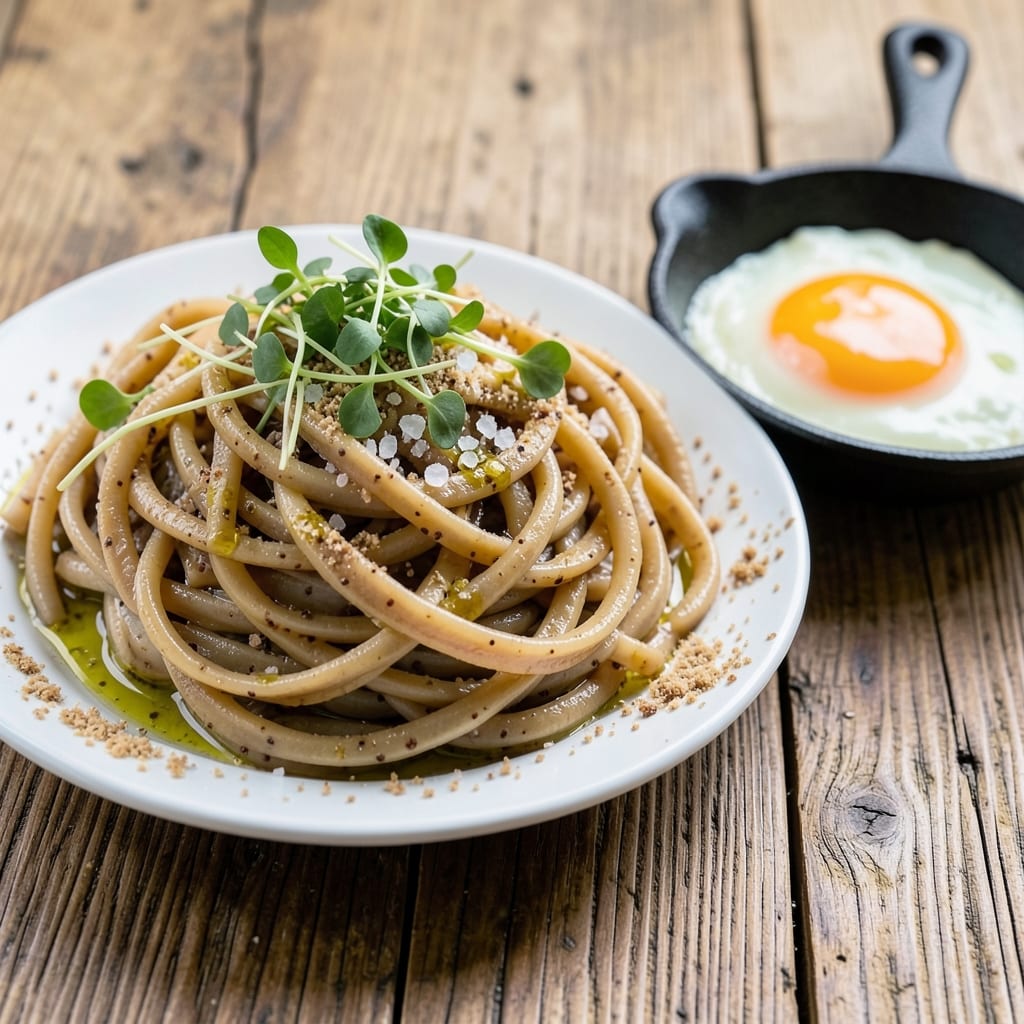
This buckwheat egg pasta recipe transforms simple ingredients into a nutty, earthy noodle with silky richness—perfect for those craving something beyond standard wheat pasta. 💛 The secret lies in balancing buckwheat’s robust flavor with eggs for a tender yet sturdy texture, ideal for hearty salads or light soups. Unlike refined flour, buckwheat adds a subtle nuttiness that elevates every bite.
Making it from scratch requires just five ingredients: buckwheat flour, eggs, water, and a pinch of salt, but the process is where the magic happens. The dough needs time to rest—30 minutes at room temperature—so the gluten relaxes and the flavors meld. Rolling it thin ensures that nutty depth shines through without overpowering the dish, while the egg enrichment keeps it tender.
What you’ll end up with is pasta that’s naturally gluten-free yet satisfying, with a chewy bite and a subtle toasted aroma. Cook it al dente in salted water, then toss with garlic, olive oil, and fresh herbs for a simple yet sophisticated salad base. The buckwheat’s earthiness pairs beautifully with creamy dressings or roasted vegetables.
This recipe is versatile enough for weeknight dinners or special occasions—just adjust the toppings to fit your mood. Whether you’re gluten-sensitive or simply seeking a healthier twist on pasta, this method delivers restaurant-quality results at home. Let’s get started!
Ingredients for buckwheat egg pasta
Five core ingredients create restaurant-quality buckwheat egg pasta with natural gluten-free richness.
| Ingredient | Amount | Notes |
|---|---|---|
| Buckwheat Flour 🌾 | 2 cups | 100% buckwheat, not buckwheat blend |
| Large Eggs 🥚 | 4 whole | Room temperature for even mixing |
| Filtered Water 💧 | 1 ½ cups | Lukewarm for optimal hydration |
| Diamond Crystal Kosher Salt 🧂 | ½ tsp | Fine grain for even distribution |
| Extra-Virgin Olive Oil 🫒 | 1 tbsp | For dusting rolling surface |
| Semolina Flour 🌾 | ¼ cup | For dusting pasta sheets |
| Fresh Garlic Cloves 🧄 | 2 cloves | Minced for finishing |
| Fresh Basil Leaves 🌿 | ¼ cup | Chopped for garnish |
| Unsalted Butter 🧈 | 1 tbsp | Optional for finishing |
Buckwheat flour is the foundation—look for 100% buckwheat (not blends) at specialty stores like Whole Foods or Trader Joe's for optimal flavor. The flour should be vibrant dark brown with no grayish tones, indicating freshness. Bob's Red Mill brand is a reliable choice if you can't find specialty stores. Eggs should be large and fresh—crack them gently against the bowl edge to avoid shell fragments. For the olive oil, California brands like Corto offer the best balance of peppery notes without overpowering the buckwheat's earthiness.
No buckwheat flour? Substitute with 100% whole wheat pastry flour at half the amount, though texture will differ. Egg substitutes like flax eggs (4 tbsp ground flax + 10 tbsp water) work but may yield slightly denser pasta. The semolina is non-negotiable for dusting—regular all-purpose flour lacks the grit needed to prevent sticking. For finishing, nutritional yeast can replace butter for a vegan option, adding a cheesy umami depth. If fresh basil isn't available, dried basil at one-third the amount suffices, though flavor will be more muted.
Store dried buckwheat flour in an airtight container in a cool, dark place for up to 6 months. Fresh pasta keeps 2-3 days wrapped in a damp towel in the fridge, or 1 month frozen between parchment sheets. The dough's resting time is crucial—never skip the 30-minute rest at room temperature, as this develops the gluten structure. For quick prep, portion the dough into balls before freezing. When ready to use, roll between parchment dusted with semolina to prevent tearing.
Why You'll Love This Recipe
- Five-Ingredient Magic: I swear by this recipe because it’s the kind of thing you can make while scrolling through your phone—just flour, eggs, water, salt, and olive oil. No yeast, no waiting, no fancy tools. The dough comes together faster than takeout delivery.
- Nutty Earthy Kick: That buckwheat flour? It’s not just a trend—it’s delicious. The pasta has this subtle, toasty depth that pairs perfectly with olive oil and salt, making even the simplest sauce taste gourmet. (Yes, even on a Tuesday night.)
- Meal Prep MVP: Between us, this pasta reheats like a dream. Toss a batch in the fridge, and you’ve got a quick lunch or dinner ready in minutes—no soggy noodles here. Honestly, I make it on Sundays just to avoid decision fatigue later in the week.
- Budget-Friendly Protein: Eggs and flour are cheap, and a single batch stretches across multiple meals. Plus, buckwheat adds fiber and staying power, so you’re not left hungry an hour later. It’s my go-to when I need to feed the family without breaking the bank.
Step-by-step instructions for buckwheat egg pasta
Here's the professional method to create al dente buckwheat pasta with perfect texture and nutty flavor.
👨🍳 Step 1: Create the Dough with Proper Hydration
In a large mixing bowl, combine the 2 cups buckwheat flour and 1.5 cups lukewarm filtered water. Using a fork, gently mix until a shaggy dough begins to form. The buckwheat flour will absorb moisture differently than wheat flour—don't be surprised if the dough feels drier initially.
Add the 4 whole large eggs (room temperature) and 0.5 teaspoon diamond crystal kosher salt, then continue mixing with your hands until the dough comes together. It should be soft but not sticky—if it's too dry, add 1 teaspoon water at a time until pliable. The dough will have a slightly grainy texture due to the buckwheat, which is completely normal.
🍳 Step 2: Knead Until Silky Smooth
Transfer the dough to a lightly floured surface and knead for 8-10 minutes until smooth and elastic. The buckwheat flour requires more kneading than wheat flour to develop proper gluten structure. Work the dough vigorously at first, then gradually reduce pressure as it becomes more pliable.
Your goal is to achieve a dough that's smooth to the touch with no visible flecks of flour. If the dough starts to stick, wet your hands slightly rather than adding more flour. Wrap the dough tightly in plastic wrap and let it rest for 30 minutes at room temperature. This resting period allows the gluten to relax and the dough to become more workable.
🔪 Step 3: Divide and Roll to Even Thickness
Unwrap the rested dough and divide it into 4 equal portions. Working with one portion at a time, use a rolling pin to flatten it into a rough rectangle about 1/8-inch thick. Dust the surface and rolling pin with 0.25 cup semolina flour as needed to prevent sticking—semolina's coarse texture creates better separation than all-purpose flour.
Roll the dough through a pasta machine set to the widest setting (usually #1), then fold it into thirds like a letter. Repeat this process 3-4 times through the machine at the same setting. This creates multiple thin layers that will yield delicate, even pasta sheets. After the final pass, unfold and dust both sides with semolina flour before cutting.
🍳 Step 4: Cut and Cook Immediately
Use a sharp knife or pasta cutter to slice the rolled dough into 1/4-inch wide strips (for tagliatelle) or 1/8-inch strips (for fettuccine). As you cut each strip, gently shake it to separate the strands. Immediately toss the fresh pasta with 1 tablespoon extra-virgin olive oil to prevent sticking.
Cook the pasta in boiling salted water (add 1 tablespoon salt per gallon of water) for 2-3 minutes until al dente. Buckwheat pasta cooks faster than wheat pasta—start checking for doneness at the 2-minute mark. Drain immediately and toss with 1 tablespoon unsalted butter, minced 2 garlic cloves, and chopped 0.25 cup fresh basil leaves for finishing.
Pro Tips For Making Buckwheat Egg Pasta
- Sift the Flour First: Buckwheat flour is dense—skipping the sift means lumps hiding in your dough. Use a fine-mesh sieve and tap it firmly against the bowl to break up clumps before mixing. I learned this the hard way when I ended up with a gritty, uneven texture that ruined the bite.
- Rest the Dough Longer: This isn’t regular pasta dough—buckwheat needs 30 minutes (minimum) to relax. Wrap it tightly in plastic and let it sit at room temp; the gluten (what little there is) will soften, and the pasta will hold shape better when rolled. I used to rush it, and the noodles would crack like brittle chips.
- Use Cold Water for Dough: Warm water makes buckwheat dough gummy. Stick to cold filtered water—it tightens the gluten structure just enough to prevent a sticky mess. Trust me, your hands (and your counter) will thank you after kneading.
- Boil with Olive Oil: Toss in 1 tablespoon of extra-virgin olive oil when boiling the pasta. It coats the noodles, preventing them from sticking together and keeping them tender. No more fishing for clumps—just smooth, silky strands. (Yes, even if you’re not making a salad.)
Flavor customization for this recipe
Nutty Roasted Variations
Enhance the buckwheat flavor by adding 1 tablespoon toasted buckwheat groats to the dough before kneading. Pulse ¼ cup buckwheat groats in a food processor until finely ground, then mix into the flour. This adds a delightful crunch and deeper nuttiness. For extra richness, toast 1 tablespoon walnuts or hazelnuts until fragrant, then finely chop and fold into the dough. 🌰
Herb-Infused Dough
Incorporate fresh herbs directly into the dough for vibrant flavor. Finely chop 2 tablespoons fresh parsley or thyme and mix into the flour before adding water. For a bold twist, add 1 teaspoon dried oregano or basil—this pairs beautifully with Mediterranean-inspired dishes. The herbs will mellow slightly during cooking but still contribute a subtle aromatic depth.
Spicy Heat Boost
Add a kick by mixing ½ teaspoon red pepper flakes or 1 teaspoon smoked paprika into the flour before combining with water. For a milder heat, use ½ teaspoon cayenne pepper—this works especially well with creamy sauces like Alfredo or pesto. The buckwheat’s earthiness balances the spice perfectly, creating a complex flavor profile.
Citrus Zest Brightness
Brighten the pasta with 1 teaspoon lemon or orange zest mixed into the dough. The citrus complements the buckwheat’s nuttiness while adding a refreshing acidity. Pair this variation with a light lemon-garlic sauce or a creamy ricotta dressing. For extra zing, add 1 tablespoon lemon juice to the dough for a tangy twist.
Umami Depth Additions
Elevate the savory profile by incorporating 1 tablespoon nutritional yeast or 1 teaspoon miso paste into the dough. These additions provide a cheesy, fermented depth that enhances the buckwheat’s natural earthiness. The miso works particularly well with Asian-inspired dishes, while nutritional yeast pairs beautifully with creamy sauces or roasted vegetables.
Sweet and Savory Fusion
For a unique twist, add 1 tablespoon finely chopped dried apricots or raisins to the dough. This sweet-savory combination works surprisingly well with rich sauces like brown butter or sage-infused olive oil. The dried fruit adds a subtle sweetness that contrasts beautifully with the buckwheat’s robust flavor, making this variation perfect for autumnal dishes.
Nutrition facts
Frequently asked questions
Why does buckwheat egg pasta need more kneading than regular wheat pasta?
Buckwheat flour has a different protein structure than wheat, requiring 8-10 minutes of vigorous kneading to develop proper gluten elasticity. The extra effort creates a smoother dough and prevents the pasta from becoming crumbly or breaking during rolling. Think of it as "coaxing" the buckwheat to behave more like wheat flour!
Can I make this pasta without a pasta machine?
Roll the dough between two sheets of parchment paper using a rolling pin, then flip and repeat until you reach 1/8-inch thickness. For cutting, use a sharp knife or even a clean ruler to create straight edges. The key is patience—work in small sections to maintain even thickness. This method yields slightly rustic but delicious results!
How do I prevent the pasta from sticking when drying?
After cutting, immediately toss the pasta strands with 1 tablespoon olive oil and spread them on a floured baking sheet. For longer storage, lay them on a wire rack in a single layer. If drying completely, use a fan on low heat to circulate air gently. Fresh buckwheat pasta dries faster than wheat pasta—monitor closely to avoid over-drying.
What's the best way to reheat cooked buckwheat egg pasta?
For best texture, reheat in a dry skillet over medium-low heat with 1 tablespoon butter or olive oil for 2-3 minutes, stirring constantly. Avoid adding water—it makes the pasta mushy. Alternatively, microwave for 30 seconds with a splash of water, then toss with fresh herbs. The egg enrichment helps maintain tenderness during reheating!
Is buckwheat egg pasta truly gluten-free?
Yes, but with an important caveat: pure buckwheat flour is naturally gluten-free, but cross-contamination can occur if your kitchen tools (rolling pins, machines) have previously handled wheat products. For strict gluten-free diets, dedicate equipment or use certified gluten-free buckwheat flour. The egg component is also safe for gluten-free diets. Always check labels on your flour!