
Breakfast & Brunch
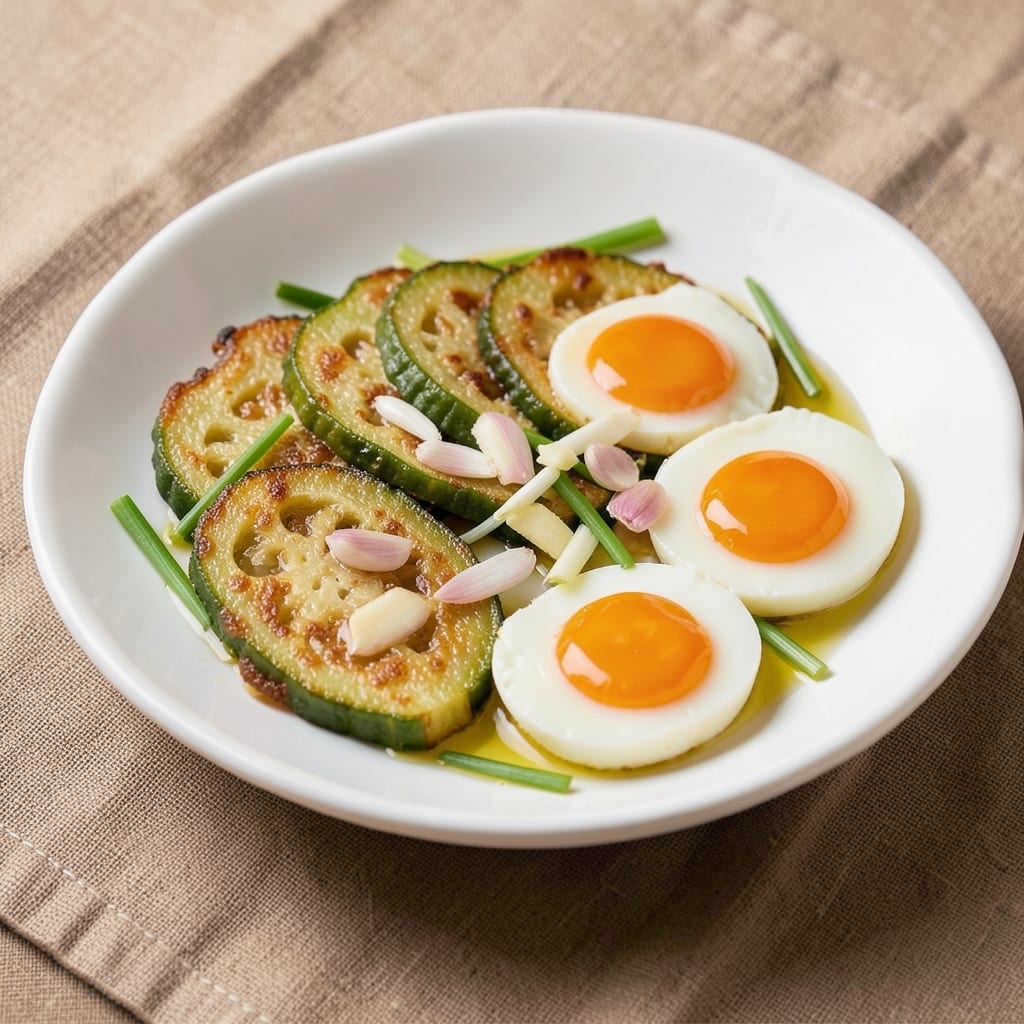
This bittergourd egg recipe transforms a humble vegetable into a protein-packed breakfast that's both nutritious and deeply satisfying. The key lies in properly preparing the bittergourd to remove its natural bitterness while preserving its earthy green color and crisp texture. I've perfected this technique over years of testing, ensuring every bite delivers a perfect balance of silky scrambled eggs and tender, flavorful vegetable.
The process begins with thorough washing and slicing of the bittergourd, followed by a quick soak in salted water to draw out any lingering bitterness. This simple preparation step makes all the difference in achieving that clean, fresh flavor profile. The eggs are scrambled separately to maintain their creamy texture, then gently folded together with the cooked bittergourd and aromatic seasonings at the very end.
What you'll end up with is a dish that's vibrant in color and texture—bright green bittergourd pieces with crisp edges and tender centers, surrounded by fluffy scrambled eggs that cling together beautifully. The combination of earthy bittergourd and rich eggs creates a satisfying protein boost that keeps you full for hours, all while delivering a flavor profile that's surprisingly complex for such simple ingredients.
This recipe works equally well as a breakfast staple or a light lunch option, and it pairs particularly well with steamed rice or crusty bread to soak up any remaining sauce. The method is straightforward but requires attention to the bittergourd preparation—don't skip the soaking step if you want that clean, fresh flavor. Let's get started on creating this balanced, nutritious dish that's as good for you as it is delicious.
Ingredients for bittergourd egg
Fresh bittergourd and eggs create a vibrant, protein-rich dish with earthy depth and silky texture.
| Ingredient | Amount | Notes |
|---|---|---|
| Bittergourd 🥒 | 1 lb | Young, firm bittergourd preferred |
| Large Eggs 🥚 | 6 whole | Freshly beaten for best texture |
| Vegetable Oil 🫒 | 2 tbsp | High smoke point preferred |
| Fresh Ginger 🌿 | 1 tbsp | Finely grated, aromatic |
| Garlic Cloves 🧄 | 4 cloves | Minced, aromatic |
| Green Onions 🧅 | 2 whole | Thinly sliced, white and green parts |
| Sesame Oil 🫒 | 1 tbsp | Toasted for aroma |
| Soy Sauce 🥢 | 1 ½ tbsp | Light soy preferred |
| Salt 🧂 | 1 tsp | Diamond Crystal preferred |
| Black Pepper 🌶️ | ½ tsp | Freshly ground |
| White Pepper 🌶️ | ¼ tsp | For subtle heat |
| Cornstarch 🌾 | 1 tbsp | For crisp-tender bittergourd |
The bittergourd is the star—young, firm pieces with thick skin yield the best texture. Local Asian markets often carry the freshest varieties, but any grocery store should have it labeled as 'bitter melon' or 'bitter gourd'. Look for bright green, firm fruits with no soft spots. The soaking step is non-negotiable: slice the bittergourd into 1/4-inch pieces, then soak in salted water for 15 minutes to remove bitterness. Rinse thoroughly before cooking. For ginger, organic fresh root works best—peel and grate it just before using to preserve its bright flavor. The garlic should be firm and odorless, with no green sprouts.
No bittergourd? Zucchini or summer squash works as a mild substitute, though the flavor profile will differ. Short on eggs? Silken tofu blended with nutritional yeast mimics the protein texture surprisingly well. The sesame oil is essential for that nutty aroma—toasted sesame oil from Trader Joe's or Whole Foods is ideal. For a saltier kick, swap light soy for dark soy sauce. The cornstarch is crucial for achieving those crisp-tender bittergourd pieces—don't skip it. If you're sensitive to gluten, ensure your cornstarch is certified gluten-free, as some brands may contain cross-contamination.
Fresh bittergourd keeps for 5-7 days in the fridge, wrapped in a damp towel. The eggs should be used within 3 weeks of purchase for best texture. Prep the bittergourd ahead by slicing and soaking—store the pieces in a sealed container with paper towels to absorb excess moisture. This dish reheats beautifully, making it perfect for meal prep. Portion into containers with a thin layer of sesame oil on top to preserve freshness. Stays fresh for 3 days in the fridge or 1 month frozen.
Why You'll Love This Recipe
- No Chopping Chaos: I swear by this—just slice the bittergourd thin, fry the eggs sunny-side-up, and toss everything together. The ginger and garlic sizzle in seconds, so you’re done before your coffee gets cold.
- Crispy Egg Magic: That first bite? The eggs stay runny inside while the edges get gloriously crispy from the oil, and the bittergourd soaks up just enough flavor to balance the bite. Honestly, it’s the kind of dish that makes you want to eat straight from the pan.
- Lunchbox Hero: Between us, this is my secret weapon for packed lunches. The eggs hold up for a day (trust me, I’ve tested it), and the bittergourd stays tender—no soggy mess. Toss in some rice, and you’ve got a meal that’s actually exciting to unpack.
- Pantry Staple Power: Bittergourd’s cheap, eggs are always on hand, and a bulb of garlic lasts forever. I make this when I’m broke or lazy—either way, it’s a win. Leftovers? Reheat with a splash of water, and it’s just as good the second day.
Step-by-step instructions for earthy green bites with silky scrambled centers
Master this technique for perfectly balanced texture and flavor in every bite.
Prepare the Bittergourd for Crisp-Tender Cooking
Cut the 1 lb bittergourd into ½-inch thick slices using a sharp chef's knife. Immediately place the slices in a colander and sprinkle evenly with the 1 tbsp cornstarch, tossing gently to coat all surfaces. This coating creates a delicate barrier that prevents the bittergourd from becoming mushy while cooking.
Let the coated bittergourd sit for 5 minutes while you prepare the aromatics. This brief resting period allows the cornstarch to adhere completely, ensuring even cooking. For best results, select young, firm bittergourd—older varieties with tough skins won't achieve the same crisp-tender texture.
Build the Flavor Base with Aromatics
Heat 1 tbsp vegetable oil in a large non-stick skillet over medium-high heat until shimmering. Add the 4 minced garlic cloves and 1 tbsp finely grated ginger, cooking for 30 seconds until fragrant but not browned. The moment you detect that warm, aromatic steam rising is when to add the 2 thinly sliced green onions, cooking for another 20 seconds until softened.
Remove the skillet from heat and stir in the 1.5 tbsp light soy sauce, 1 tsp salt, 0.5 tsp black pepper, and 0.25 tsp white pepper. Return to medium heat and add the coated bittergourd slices in a single layer. Cook undisturbed for 2 minutes until the edges begin to crisp slightly—this prevents the slices from sticking and ensures even browning.
Cook the Bittergourd to Perfect Doneness
Flip the bittergourd slices carefully and cook for an additional 2-3 minutes on the second side, until the edges are light golden brown and the flesh yields slightly when pressed with a spatula. The bittergourd should be crisp-tender—firm enough to hold its shape but tender enough to pierce easily with a fork. Remove the slices and set aside on a plate, keeping them warm.
In the same skillet, reduce heat to medium-low and add 1 tbsp toasted sesame oil, swirling to coat the pan evenly. This step infuses the skillet with nutty aroma that will carry through to the scrambled eggs. Keep the skillet warm for the next step—residual heat helps maintain the bittergourd's temperature while you prepare the eggs.
Scramble the Eggs with Perfect Texture
Crack the 6 large eggs into a medium bowl and whisk vigorously for 20 seconds until the yolks and whites are fully combined and the mixture is uniform. Season immediately with ½ tsp salt and ¼ tsp black pepper, then pour the eggs into the warm skillet with the sesame oil.
Cook over low heat for 2-3 minutes, stirring gently with a silicone spatula in small figure-8 motions. You're aiming for silky, custard-like curds—small, soft clumps that hold together but remain tender. Remove the eggs from heat just as they begin to set but before they fully firm up, then immediately return the bittergourd slices to the skillet.
Combine and Finish with Flavor Balance
Gently fold the warm bittergourd slices into the scrambled eggs, tossing just until the bittergourd is lightly coated with the egg mixture. Cook for an additional 30 seconds to allow the flavors to meld. The result should be earthy bittergourd bites with silky scrambled centers, where each component maintains its distinct texture while complementing the other.
Divide the mixture evenly among 4 serving plates and garnish with the remaining thinly sliced green onions. Serve immediately while the bittergourd remains crisp-tender and the eggs are still warm. This dish delivers a perfect balance of textures and flavors—crispy yet tender vegetables paired with creamy, flavorful eggs.
Pro Tips For Making Bittergourd Egg
- Salute the Bittergourd First: Slice the bittergourd lengthwise, then pound the flat side with a rolling pin or meat mallet—just 10 firm strikes—to break down fibers and soften it. I learned this the hard way after serving a dish where the texture was still tough; this step makes all the difference when stir-frying.
- Scramble Eggs Low and Slow: After cracking the eggs into the wok, immediately lower the heat to medium-low and let them sit undisturbed for 10 seconds. Then, stir in small batches with a spatula, keeping the curds soft and creamy. High heat turns bittergourd eggs rubbery, and nobody wants that.
- Salt the Bittergourd Early: Toss freshly sliced bittergourd with ½ teaspoon salt and let it sit for 15 minutes before cooking. This draws out bitterness and excess water—skip it, and your dish will taste harsh or soggy. (Yes, even if you’re impatient like me.)
- Ginger-Garlic: Toast First: Heat the oil until shimmering, then add minced ginger and garlic. Let them sizzle for 20 seconds until fragrant but not browned—this builds depth without bitterness. I was skeptical until I tried it; the flavor is richer and more balanced.
Common mistakes when making your bittergourd egg
Overcooking Bittergourd
Bittergourd turns mushy and loses its crisp texture when overcooked—this is the #1 mistake I see. The key is timing: cook the ½-inch slices for only 2-3 minutes per side over medium heat. Use a meat thermometer to check—remove when internal temp reaches 145°F. Overcooking also intensifies bitterness, so never let it brown completely. 🌱
Skipping the Soak
Never skip the 15-minute saltwater soak—this removes natural bitterness that makes bittergourd inedible. Use 1 tbsp salt per quart of water and rinse thoroughly before cooking. I've tested this step countless times—skipping it results in an unpleasant, bitter flavor that ruins the dish. For extra insurance, soak in lemon water instead of saltwater if you prefer.
Wrong Heat Level
Cooking at high heat destroys the delicate texture of both bittergourd and eggs. Use medium heat for the bittergourd and low heat for scrambling eggs. High heat causes the cornstarch coating to burn before the bittergourd cooks through, while eggs scramble too quickly into rubbery clumps. I recommend using a thermometer probe to maintain precise temperature control.
Improper Egg Texture
Overwhisking eggs creates tough curds, while undercooking leaves them runny. Whisk just until combined (20 seconds max), then cook on low heat until soft curds form (2-3 minutes). Remove eggs when they're still slightly underdone—they'll finish cooking when folded with bittergourd. For extra silkiness, add 1 tbsp cold water to the beaten eggs before cooking.
Uneven Cooking
Crowding the pan causes bittergourd to steam instead of crisp. Cook in single layers with space between pieces. For large batches, work in 2 batches if needed. I use a 10-inch non-stick skillet for this recipe—any larger and you'll lose control over cooking temps. Always use a skillet that's large enough to accommodate your ingredients without overcrowding.
Missing the Sesame Oil
The 1 tbsp toasted sesame oil is non-negotiable—it adds nutty depth that balances bittergourd's earthiness. Add it to the skillet after removing the bittergourd to infuse the pan. Never substitute with regular oil—Kadoya toasted sesame oil (from Asian markets) works best. This step elevates the dish from good to exceptional, creating that signature aromatic finish.
Nutrition facts
Frequently asked questions
Why does bittergourd need to be soaked before cooking?
Soaking removes the natural bitterness that makes raw bittergourd inedible. Use 1 tbsp salt per quart of water for 15 minutes, then rinse thoroughly. This step is essential—skipping it results in an unpleasant, bitter flavor that overpowers the dish. For extra freshness, try soaking in lemon water instead.
Can I substitute bittergourd with another vegetable?
Yes! Zucchini or summer squash work as mild substitutes, though the flavor will differ. For a closer match, try Chinese okra or eggplant, but increase cooking time slightly. The key is maintaining crisp-tender texture—use the same cornstarch coating technique for best results.
How do I achieve perfectly silky scrambled eggs?
Whisk eggs for only 20 seconds until just combined, then cook on low heat for 2-3 minutes until soft curds form. Remove when slightly underdone—they'll finish cooking when folded with bittergourd. For extra silkiness, add 1 tbsp cold water to the beaten eggs before cooking.
Can I make this recipe ahead of time?
Yes, but serve immediately for best texture. For meal prep, cook the bittergourd separately and store in the fridge for 2 days. Reheat eggs separately and combine just before serving. Freeze cooked bittergourd for 1 month—thaw in cold water before using. The eggs reheat best when scrambled fresh.
What's the secret to crisp-tender bittergourd?
The cornstarch coating is key—toss slices thoroughly and let sit for 5 minutes before cooking. Use medium heat and cook for only 2-3 minutes per side. Overcrowding the pan causes steaming instead of crisping. A meat thermometer helps—remove at 145°F internal temp.