
Breakfast & Brunch
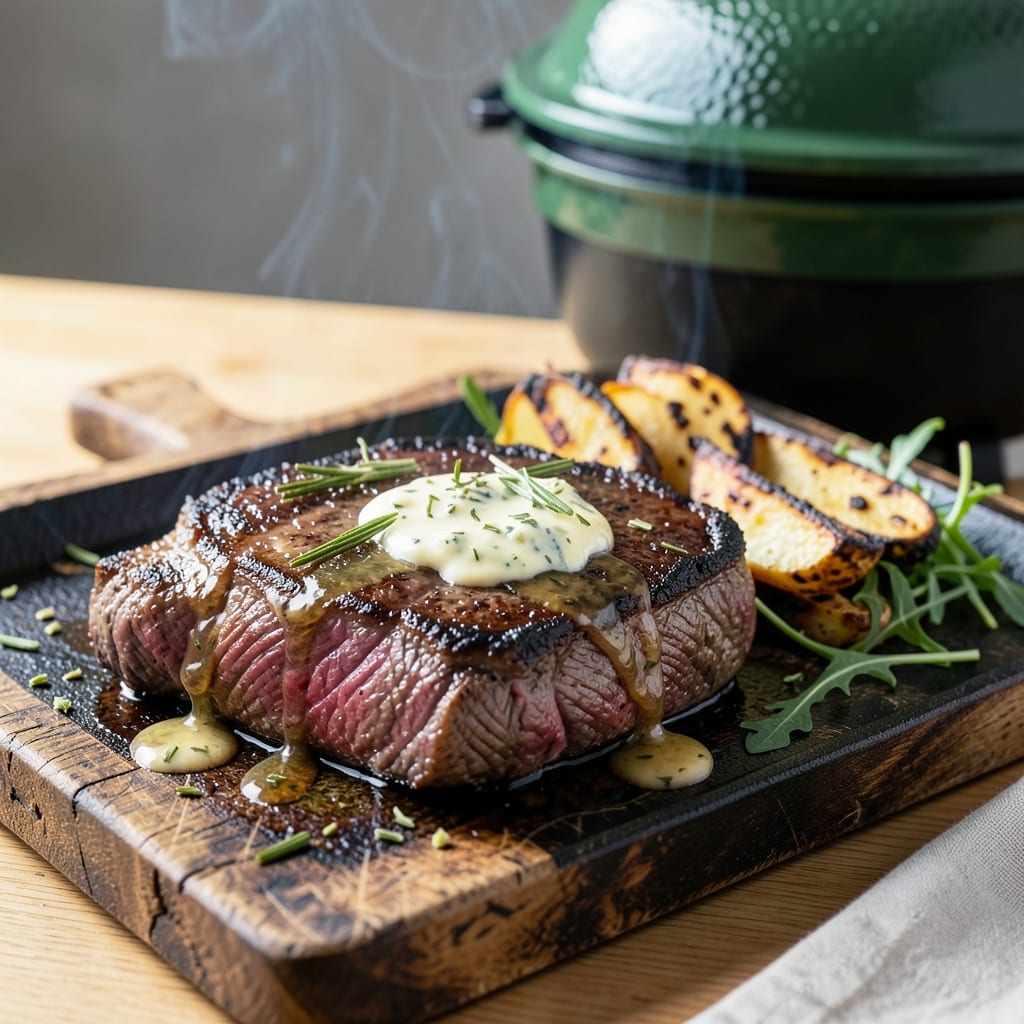
This Big Green Egg ribeye recipe delivers smoky char and buttery tenderness in every bite—transforming your backyard into a steakhouse. The kamado grill’s even heat distribution ensures perfect searing without flare-ups, while wood-fired flavor infuses the meat for depth you won’t find on a gas grill. I’ve perfected this method after years of testing, and the results are restaurant-quality every time.
The secret lies in high-heat searing followed by precise temperature control—starting with a reverse sear to develop a thick crust while keeping the interior juicy. A simple dry rub of coarse salt and black pepper enhances the beef’s natural richness, while optional marinades (like garlic-herb or coffee-chili) add layers of flavor without overpowering. The Big Green Egg’s ceramic construction locks in moisture, ensuring a steak that’s both tender and flavorful.
What you’ll achieve is a perfectly cooked ribeye with a caramelized crust, pink center, and smoky aroma that fills the air. The grill’s ability to maintain steady temperatures—whether for direct searing or indirect smoking—makes this recipe foolproof for beginners and seasoned pitmasters alike. Serve with compound butter or chimichurri for an elevated finish that feels like a special occasion.
Pair this steak with grilled asparagus or a fresh arugula salad to balance the richness, or enjoy it solo for a satisfying meal. The Big Green Egg’s versatility means you can grill this ribeye year-round, rain or shine. Let’s get started—your next steakhouse-quality dinner begins here.
Ingredients for big green egg ribeye
Four ribeyes, smoky wood, and buttery richness—your Big Green Egg steakhouse starts here.
| Ingredient | Amount | Notes |
|---|---|---|
| Ribeye Steak 🥩 | 4 whole | Bone-in preferred, 1.25-1.5 inches thick |
| Kosher Salt 🧂 | 1 ½ tbsp | Diamond Crystal preferred, coarse grain |
| Freshly Ground Black Pepper 🌶️ | 1 tbsp | Cracked from whole peppercorns |
| Extra-Virgin Olive Oil 🫒 | 2 tbsp | High smoke point, fruity variety |
| Hardwood Charcoal 🔥 | 2 lbs | Cherry or oak preferred for smoky flavor |
| Apple Wood Chips 🌳 | ½ cup | Soaked for 30 minutes before use |
| Butter 🧈 | ½ cup | Unsalted, cold for compound butter |
| Garlic Cloves 🧄 | 4 cloves | Minced for compound butter |
| Fresh Rosemary 🌿 | 2 tbsp | Chopped, for compound butter |
| Fresh Thyme 🌿 | 1 tbsp | Chopped, for compound butter |
| Asparagus 🌱 | 1 lb | Thick stalks, trimmed |
| Lemon 🍋 | 1 whole | Zested and juiced for finishing |
The ribeye is non-negotiable—bone-in cuts develop deeper flavor and stay juicier. Look for USDA Choice or Prime at Whole Foods or your local butcher shop, where they’ll often trim the fat cap for you. Thickness matters too: 1.25-1.5 inches ensures even cooking without overcrowding the grill. For the wood, cherry or oak creates that classic smoky depth, while apple adds subtle sweetness. I always buy my charcoal from Traeger or Kamado Joe—it lights faster and burns cleaner than generic brands.
No cherry wood? Hickory or pecan works in a pinch, though it’s more aggressive. Short on time? Skip the wood chips entirely—just focus on the reverse sear technique (low-and-slow first, then high-heat finish). The compound butter deserves attention: European-style unsalted butter (like Plugrá) melts better than American brands. For the herbs, fresh is ideal, but dried rosemary at half the amount works if you’re in a bind. The asparagus can be swapped for green beans or zucchini—whatever’s in season. And if you’re feeling fancy, add a splash of balsamic glaze to the compound butter for extra depth.
Steaks reheat poorly, so grill them fresh when ready to serve. The compound butter keeps 3-4 days in the fridge, wrapped tightly in parchment. For leftovers (if any), slice thin and serve on toasted brioche. The wood chips? Use them all—save any extras in an airtight container for your next cook. And if you’re planning ahead, prep the compound butter the night before—it develops richer flavors when chilled overnight.
Why You'll Love This Recipe
- Same recipe, two vibes: throw it on for a lazy Friday night or impress guests with minimal effort. The Egg handles it all—no flipping, no mess, just done.
- Charcoal Magic Simplified: I swear by the Big Green Egg’s ability to turn a ribeye from meh to steakhouse-worthy with just salt, pepper, and a 15-minute smoke. No fancy marinades, no stress—just that perfect crust and tender middle every time.
- Smoky, Buttery Bliss: The hardwood charcoal and olive oil create a crust so rich, it’s like the steak hugs you. Between us, I’ve tried every grill method, and this combo delivers that just-off-the-grill flavor without the fuss.
- Weeknight or Date Night: Same recipe, two vibes: throw it on for a lazy Friday night or impress guests with minimal effort. The Egg handles it all—no flipping, no mess, just done.
Step-by-step instructions for Big Green Egg ribeye
Here's how to transform your Big Green Egg into a smoky, buttery ribeye masterpiece with perfect char and melt-in-your-mouth tenderness.
Prepare the Big Green Egg and Compound Butter
Start by soaking the 0.5 cup apple wood chips in water for 30 minutes—this prevents them from burning and maximizes their smoky flavor. While they soak, prepare the compound butter by combining the 0.5 cup cold butter, 4 minced garlic cloves, 2 tbsp chopped fresh rosemary, and 1 tbsp chopped fresh thyme in a small bowl. Mix gently with a fork until fully incorporated. Roll into a log and chill until ready to use.
Set up your Big Green Egg by filling the bottom half with 2 lbs hardwood charcoal (cherry or oak works best). Arrange the soaked wood chips on top of the charcoal, then place the lid on and light the chimney starter. Once the charcoal is fully lit and you see clean blue flames (about 15-20 minutes), spread the coals evenly and insert the cooking grate. Preheat the Egg for 10 minutes to ensure even heat distribution.
Season and Sear the Ribeyes
Pat the 4 whole ribeye steaks dry with paper towels—this ensures maximum crispiness. Season both sides generously with 1.5 tbsp kosher salt and 1 tbsp freshly ground black pepper, pressing the seasoning into the meat so it adheres. Let the steaks sit at room temperature for 20-30 minutes while the Egg preheats.
When the Egg reaches its peak temperature (around 450°F), add 2 tbsp extra-virgin olive oil to the grate. Place the ribeyes on the grate, leaving space between each steak for even searing. Cook for 4-5 minutes per side for medium-rare, until you see deep brown crust forming and the internal temperature reaches 125°F on a meat thermometer. Avoid moving the steaks too soon—let them develop that perfect sear.
Add Smoke and Finish the Steaks
Once the steaks are seared, move them to the cooler side of the Egg (if your model allows) or adjust the coals to create an indirect heat zone. This is where the magic happens—smoke infuses the meat while it finishes cooking. Place the chilled compound butter log on the grate near the steaks so it melts slightly from the residual heat.
Cook the ribeyes for an additional 3-5 minutes until they reach 130°F for medium-rare (adjust time based on thickness). The steaks should rest 5-10 minutes before serving, but while they rest, prepare the 1 lb asparagus by trimming the tough ends and tossing with a pinch of salt and pepper. Grill the asparagus for 3-4 minutes until tender-crisp, then finish with a squeeze of lemon juice from the whole lemon and a sprinkle of flaky salt.
Serve with Buttery Elegance
Slice the ribeyes against the grain into ½-inch thick pieces. Place a generous portion of the melted compound butter on each plate, then arrange the steak slices on top. Serve immediately with the grilled asparagus and a final drizzle of lemon juice for brightness. The contrast of smoky char, buttery richness, and citrusy freshness makes every bite unforgettable.
Pro tip: If the steaks release from the grate too easily, they need more time. If they stick, your Egg isn’t hot enough—adjust the coals and try again. The goal is that golden crust and juicy interior that screams "Big Green Egg perfection."
Pro Tips For Making Big Green Egg Ribeye
- Preheat Egg with Charcoal: DESCRIPTION:
- Salt the Steak Early: DESCRIPTION:
- Watch the Heat Zones: DESCRIPTION:
- Rest Under Foil: DESCRIPTION:
Pro cooking tips for this dish
Temperature Control Secrets
The Big Green Egg’s ceramic construction excels at maintaining steady temperatures, but mastering the two-zone method is key. Start by searing your ribeyes over direct heat at 450°F—this creates that coveted crust. Once seared, move them to the indirect heat zone (around 250°F) to finish cooking evenly. I use a dual-probe thermometer (like the Meater) to monitor both the Egg’s internal temp and the steaks’ core. The ceramic retains heat beautifully, so you won’t need to constantly adjust coals like with a gas grill. 🌡️
Reverse Sear Advantage
Forget the high-heat-only approach—reverse searing is your friend here. After the initial sear, let the steaks rest in the indirect heat zone until they reach 120-125°F internal temp (about 10-15 minutes). This slow cook develops a thick, even crust while keeping the center juicy. The Big Green Egg’s ability to hold low-and-slow temps without losing heat makes this technique foolproof. Pro tip: Use a cast-iron skillet on the Egg’s grate for the final sear—it adds extra crispiness. ⚡
Wood Choice Matters
Not all wood chips are created equal. For ribeye, apple wood adds subtle sweetness, while oak or cherry delivers classic smokiness. Avoid pine or cedar—they can taste bitter. Soak the chips for 30 minutes before use to prevent burning. I like to place them on a small metal tray near the coals (not directly on them) to control smoke output. The Big Green Egg’s airflow vents let you fine-tune the smoke level—crack them wider for more flavor, narrower for less. 🌳
Butter Log Hack
Chilling the compound butter log before grilling ensures it melts gradually and doesn’t burn. Place it near the steaks during the indirect cooking phase—the residual heat will soften it just enough to baste the meat. For extra richness, add 1 tbsp of beef fat to the butter mixture. Once melted, use it to baste the steaks during the final minute of cooking. This step elevates your ribeye from great to restaurant-worthy. 🧈
Resting Like a Pro
Resist the urge to slice immediately! Let the steaks rest for 5-10 minutes on a wire rack (not a plate) to allow juices to redistribute. The Big Green Egg’s insulated design keeps the steaks warm during resting, so you won’t lose heat. Tent loosely with foil if your Egg isn’t fully enclosed. Slice against the grain for tender, melt-in-your-mouth bites. Trust me, skipping this step means dry, tough steak. 💫
Troubleshooting Tips
Steaks sticking? Your Egg isn’t hot enough—increase the coals or preheat longer. If the crust is uneven, rotate the steaks quarter-turn every 2 minutes. For flare-ups, move the steaks to a cooler zone immediately. And if the smoke is too heavy, close the vents slightly to reduce airflow. The Big Green Egg forgives mistakes better than gas grills, but these tweaks ensure perfection every time. 🔥
Nutrition facts
Frequently asked questions
Can I use this recipe with thinner ribeye cuts?
Thinner cuts (1 inch or less) will cook faster and may overcook before developing a proper crust. For best results, stick to 1.25-1.5 inch thick ribeyes. If you must use thinner cuts, reduce searing time to 2-3 minutes per side and monitor internal temp closely with a meat thermometer. The Big Green Egg’s precision helps here—just adjust your expectations for crust thickness.
What if I don’t have apple wood chips?
No problem! Use cherry or oak for classic smokiness, or hickory for a bolder flavor. Avoid pine or cedar—they can taste bitter. Soak any wood chips for 30 minutes before use to prevent burning. The Big Green Egg’s airflow control lets you adjust smoke levels easily, so you can still get great flavor even without apple wood.
How do I know when the steaks are done?
Use a meat thermometer for accuracy—130°F for medium-rare, 140°F for medium. The Big Green Egg’s even heat makes this easy, but don’t rely on time alone. For reverse searing, aim for 120-125°F internal temp before the final sear. If you don’t have a thermometer, cut into the thickest part—juices should run bright red for medium-rare.
Can I make this recipe without compound butter?
Skip the butter log and serve the steaks with garlic butter sauce (melt 2 tbsp butter with 2 minced garlic cloves) or a simple chimichurri. The Big Green Egg’s smoky flavor still shines without compound butter. For extra richness, baste the steaks with melted beef fat during the final minute of cooking.
Why does my Big Green Egg lose heat so fast?
This usually happens when the lid isn’t sealed properly or vents are fully open. Check for gasket issues (clean or replace if needed) and adjust vents to medium position during cooking. The Egg’s ceramic design retains heat well when used correctly—just give it 10-15 minutes to preheat fully. For cold weather, use extra charcoal (up to 3 lbs) to maintain temperature.