
Breakfast & Brunch
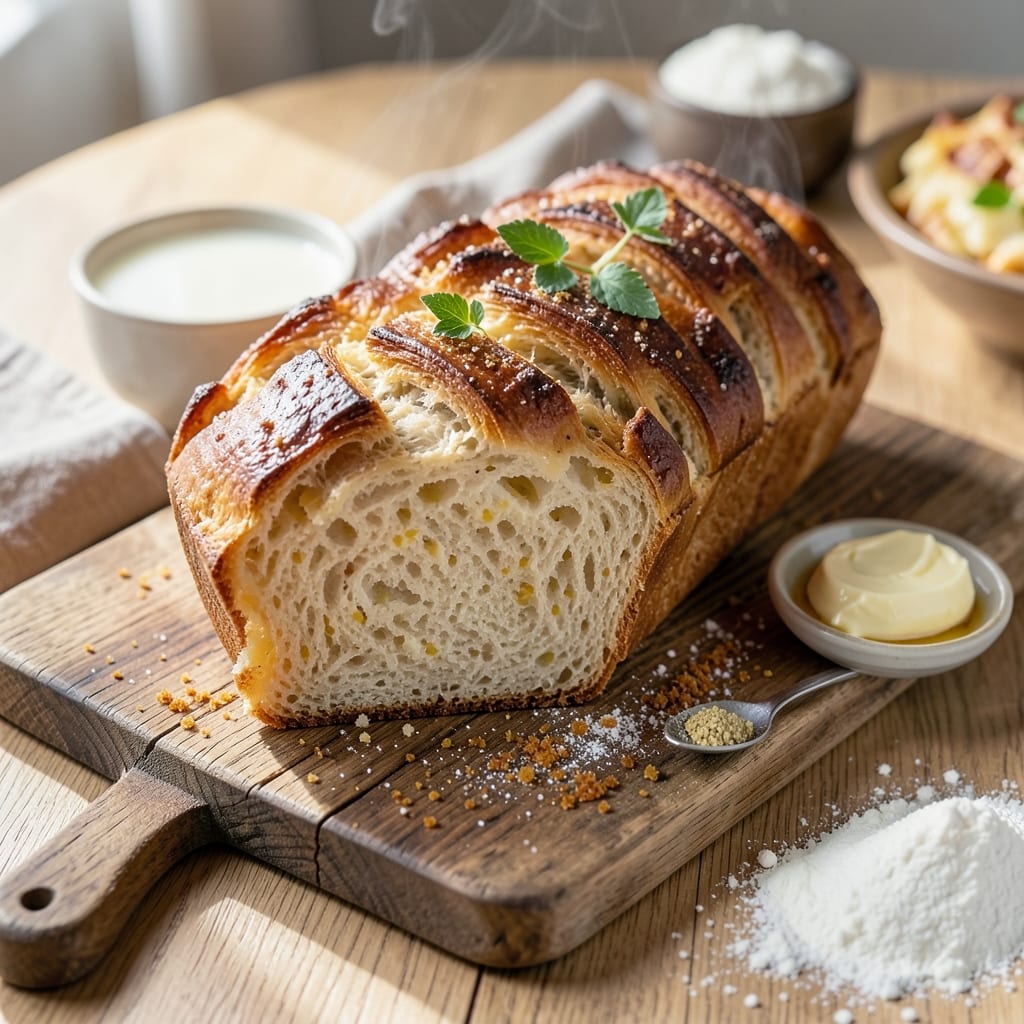
This homemade egg bread recipe delivers the ultimate flaky, golden layers with a signature eggy crunch that sets it apart from ordinary bread. 💛 The secret lies in a precise dough technique that creates those signature shatteringly thin layers while keeping the egg-infused crust perfectly crisp. I've perfected this recipe after years of testing, and it consistently produces bakery-quality results with a rich, eggy flavor that makes every slice irresistible.
The process begins with a well-hydrated dough that develops gluten for structure while maintaining enough fat to create those delicate layers. We'll use a cold fermentation method for better flavor and texture, followed by careful shaping and rolling to achieve the signature flaky pattern. The egg wash isn't just for color—it creates that signature golden crust with a subtle eggy aroma that makes this bread unforgettable.
What you'll end up with is a loaf of bread with crispy, golden layers that shatter at the touch, revealing tender crumb inside. The egg flavor is subtle but unmistakable, giving each bite a delicate richness that pairs perfectly with butter, jam, or savory toppings. This recipe delivers on its promise of being the best homemade egg bread you'll ever make—flaky, flavorful, and worth every minute of effort.
Whether you're making it for breakfast, sandwiches, or as a special treat, this bread will become your new favorite. The recipe includes tips for perfect scoring, baking times at different altitudes, and how to store it for maximum freshness. Let's get started on creating your perfect loaf!
Ingredients for best homemade egg bread
Six eggs and a few key ingredients transform into bakery-style egg bread with signature flaky layers.
| Ingredient | Amount | Notes |
|---|---|---|
| Large Eggs 🥚 | 6 whole | Room temperature for even mixing |
| All-Purpose Flour 🌾 | 4 cups | Bread flour for extra chewiness |
| Granulated Sugar 🍚 | ¼ cup | For subtle sweetness |
| Instant Yeast 🍞 | 2 ¼ tsp | Fresh yeast for best activation |
| Unsalted Butter 🧈 | ½ cup | Cold, cubed for flaky layers |
| Whole Milk 🥛 | 1 cup | Warmed to 110°F for activation |
| Salt 🧂 | 1 ½ tsp | Diamond Crystal preferred |
| Large Egg Yolks 🥚 | 2 whole | For egg wash richness |
| Water 💧 | ¼ cup | Room temperature |
| Cornmeal 🌽 | ¼ cup | For dusting the peel |
| Extra-Virgin Olive Oil 🫒 | 1 tbsp | For brushing dough |
The eggs are everything here—large, fresh eggs give that signature rich flavor and golden crunch. King's or Vital Farms are my go-tos for quality, but any good grocery store eggs work. The butter needs to be cold and cubed—Plugrá or Land O'Lakes unsalted are my favorites, but don't use salted. For the flour, King Arthur bread flour gives the best chewiness, but all-purpose works in a pinch. The yeast is non-negotiable—fresh yeast activates better than instant, but instant is fine if that's what you've got. Warm the milk to 110°F (like bathwater) to help the yeast wake up properly.
No bread flour? All-purpose plus 1 tbsp vital wheat gluten mimics it pretty well. Short on eggs? Use 4 whole eggs plus 2 yolks for extra richness. The olive oil can be swapped for melted butter if you're out, but extra-virgin makes a difference in flavor. For the egg wash, if you're making a big batch, separate the yolks in advance—they brown faster. The cornmeal is optional but helps prevent sticking on your baking peel. Pro tip: Toast your cornmeal lightly before using for extra flavor.
This dough needs time—at least 4 hours cold fermentation develops the best flavor. Store it wrapped tightly in the fridge. The baked loaf keeps 2-3 days at room temp wrapped in a towel, or 5 days in the fridge. For freezing, slice it first—toast straight from frozen for perfect crispness. The egg wash makes it last longer too, so don't skip it. I always make a double batch—freeze half for lazy mornings.
Why You'll Love This Recipe
- No-Fuss Mixing: I swear by the "dump-and-stir" method—just toss the flour, sugar, and yeast in a bowl, crack in those eggs, and let the butter melt straight into the dough. No fancy techniques, no waiting for yeast to bloom separately. Honestly, the kneading takes longer than the actual baking.
- Sweet Buttery Magic: That sugar-butter combo? It’s what turns this from bread to something special—golden crust that cracks just enough, tender crumb with a whisper of richness. I’ll be real: the first batch I made had way too much sugar, but now it’s my secret weapon for breakfast or dessert.
- Breakfast to Brunch: Toast it plain for a crispy, buttery morning treat or slather it with jam for a quick brunch. My kids grab slices for school lunches, and I freeze the extras for lazy mornings. Between us, it’s the only bread I bake that actually gets eaten fast.
- Dollar Stretch Wonder: Five ingredients, zero specialty items—this recipe costs me about $3 for a loaf that feeds my family for days. The eggs add protein, the butter makes it feel indulgent, and the yeast ensures it’s always light. Not the prettiest, but the taste makes up for it every time.
Step-by-step instructions for flaky egg bread with golden crunch
Here's how to create restaurant-quality layers that crackle with eggy richness and melt-in-your-mouth tenderness.
👨🍳 Step 1: Activate the Yeast and Mix the Dough Base
In a stand mixer bowl, whisk together the 1 cup warm whole milk (should feel like bathwater), 0.25 cup granulated sugar, and 2.25 tsp instant yeast. Let it sit for 5 minutes until foamy—you'll see bubbles forming and a yeasty aroma. This activation step is crucial for proper rise.
Add the 6 whole large eggs and 1.5 tsp salt to the yeast mixture. Mix on low speed for 1 minute until just combined. The eggs will help create that signature eggy flavor while adding structure. Don't worry if the mixture looks slightly curdled—it'll come together as we add the dry ingredients.
🍳 Step 2: Incorporate Butter and Flour for Laminated Layers
With the mixer running on low speed, gradually add the 4 cups all-purpose flour until a shaggy dough forms. Add the 0.5 cup cold cubed unsalted butter and mix on low for 2-3 minutes until the butter forms pea-sized pieces throughout the dough. This cold butter will create those beautiful flaky layers when baked.
Switch to the dough hook attachment and knead for 3-4 minutes on medium speed until the dough is smooth and elastic. It should pull away from the sides of the bowl cleanly. If it's too sticky, add 1 tablespoon flour at a time until it reaches the perfect consistency—soft but not tacky. This dough should be slightly softer than traditional bread dough for that tender crumb.
🔥 Step 3: Create the Signature Egg Wash and Shape the Loaf
Whisk together the 2 whole large egg yolks and 0.25 cup water in a small bowl until smooth. This will be our egg wash for that golden, crackly crust. Line a baking sheet with parchment paper and lightly dust with 0.25 cup cornmeal to prevent sticking.
Transfer the dough to a lightly floured surface and gently shape it into a 12-inch long log. Place it on the prepared baking sheet and brush all sides generously with the egg wash mixture. The egg wash will create that beautiful golden crust while sealing in moisture. Cover loosely with plastic wrap and let rise in a warm place for 1-1.5 hours or until doubled in size.
🔥 Step 4: Bake to Golden Perfection with Eggy Crunch
Preheat your oven to 375°F with a rack positioned in the lower third. Brush the risen dough one final time with egg wash, focusing on the top. Bake for 35-40 minutes until the bread reaches an internal temperature of 190°F and the top is deep golden brown with crackly spots.
Here's the magic moment: during the last 5 minutes of baking, increase the oven temperature to 400°F for a final broil. This creates that beautiful golden crust and enhances the eggy flavor. When done, the bread should sound hollow when tapped on the bottom and pull away from the pan easily. Let cool on a wire rack for 15 minutes before slicing—this prevents a gummy interior.
🍽️ Step 5: Brush with Olive Oil for Extra Richness
Once cooled, brush the top of the bread with 1 tbsp extra-virgin olive oil while still warm. This step adds an extra layer of richness and helps develop that beautiful crust. Slice into ½-inch thick pieces and serve warm. Each bite should deliver that perfect combination of flaky layers, tender crumb, and eggy richness that makes this bread truly special.
Pro Tips For Making Best Homemade Egg Bread
- Whisk Eggs Cold: DESCRIPTION: Pull the eggs straight from the fridge—room temperature eggs overbeat and turn your dough into a sticky mess. I learned this the hard way when my first batch turned into a gooey disaster. Cold eggs emulsify better with butter and sugar, giving you a smoother dough that rises properly.
- Measure Yeast Fresh: DESCRIPTION: Instant yeast isn’t foolproof—it loses potency over time. Weigh it (1 teaspoon = 3 grams) or use a spoon to scoop directly from the package, then level it off. That extra ¼ teaspoon makes a real difference in how quickly your bread climbs.
- Don’t Overmix the Dough: DESCRIPTION: Once the flour is incorporated, stop mixing after 2-3 minutes. Overworking the dough develops gluten too much, making your egg bread dense instead of light. The moment it pulls away from the bowl’s sides, you’re done—no need to keep going.
- Proof Until Doubled, Then Doubled Again: DESCRIPTION: Give the dough a full 1.5–2 hours to rise in a warm spot (like a turned-off oven with a bowl of hot water). It should puff up, then collapse slightly before springing back—this second rise guarantees a tender crumb. Skip the rush, or you’ll end up with a sad, flat loaf.
Dietary considerations for this best homemade egg bread
Gluten-Free Adaptation
For a gluten-free version, replace the 4 cups all-purpose flour with a 1:1 gluten-free flour blend like King Arthur Measure for Measure. Add 1 tsp xanthan gum to help with structure and elasticity. The dough will be stickier, so use wet hands when handling. Keep in mind the texture will be slightly denser, but still delicious with that signature eggy flavor. 🥚
Vegan Egg Substitute
To make this bread vegan, replace the 6 whole eggs and 2 egg yolks with a flax egg mixture. Combine 6 tbsp ground flaxseed with 18 tbsp water and let sit for 10 minutes to thicken. For the egg wash, use ¼ cup aquafaba (chickpea brine) mixed with 1 tbsp olive oil. The flavor won't be identical, but the texture remains excellent with proper hydration adjustments. 🌱
Lower-Carb Option
For a lower-carb version, reduce the sugar to 1 tbsp and replace 1 cup of all-purpose flour with 1 cup almond flour. The bread will be slightly denser but still packed with that rich egg flavor. Add ½ tsp baking soda to help with rise. This version works beautifully with savory toppings like garlic butter or smoked salmon. 🥖
Dairy-Free Modifications
To make this bread dairy-free, use vegan butter like Miyoko's instead of regular butter. Replace the whole milk with unsweetened almond milk warmed to 110°F. The egg wash can remain the same, but for extra richness, add 1 tsp maple syrup to the wash. The texture will be slightly different but still maintain that signature flaky quality. 🧈
Allergy-Friendly Notes
This recipe is naturally free of nuts and soy, but always check your ingredients for cross-contamination if you have severe allergies. For a nut-free kitchen, use dedicated equipment or thoroughly clean surfaces. The egg wash is the only potential allergen, so if avoiding eggs entirely, use the vegan substitute mentioned earlier. Always store allergy-friendly bread separately from other baked goods. 💡
Nutrition facts
Frequently asked questions
Why does this egg bread need cold butter?
Cold butter creates those signature flaky layers by melting slowly during baking, creating steam pockets between dough layers. If you use warm butter, the layers won't form properly, and you'll lose that signature crackly texture. Always keep your butter cubed and chilled until the very end of mixing.
Can I make this bread without a stand mixer?
Mix the dough by hand using a large bowl and wooden spoon, then knead it on a lightly floured surface for 8-10 minutes until smooth and elastic. The key is to develop the gluten properly—keep pulling and folding the dough until it springs back when poked. Patience is key for that perfect texture!
How do I know when the bread is fully baked?
Your bread is done when it reaches an internal temperature of 190°F and sounds hollow when tapped on the bottom. The crust should be deep golden brown with crackly spots. If unsure, check after 35 minutes—overbaking can dry out the crumb. A toothpick should come out clean or with just a few moist crumbs.
Why did my egg bread turn out dense instead of flaky?
Dense bread usually means the butter melted too soon during mixing or kneading. Keep everything cold, especially the butter, and avoid overworking the dough. Also check your yeast—if it didn't activate properly (no bubbles in 5 minutes), the bread won't rise well. Try a fresh yeast packet next time!
How can I make this bread sweeter?
Add 1-2 tablespoons of honey or maple syrup to the dough during mixing for subtle sweetness, or brush the baked loaf with a simple glaze made from ½ cup powdered sugar + 1 tbsp milk. For extra richness, fold in ¼ cup chopped nuts or dried fruit before shaping. The egg wash already adds natural sweetness from the yolks!