
Breakfast & Brunch
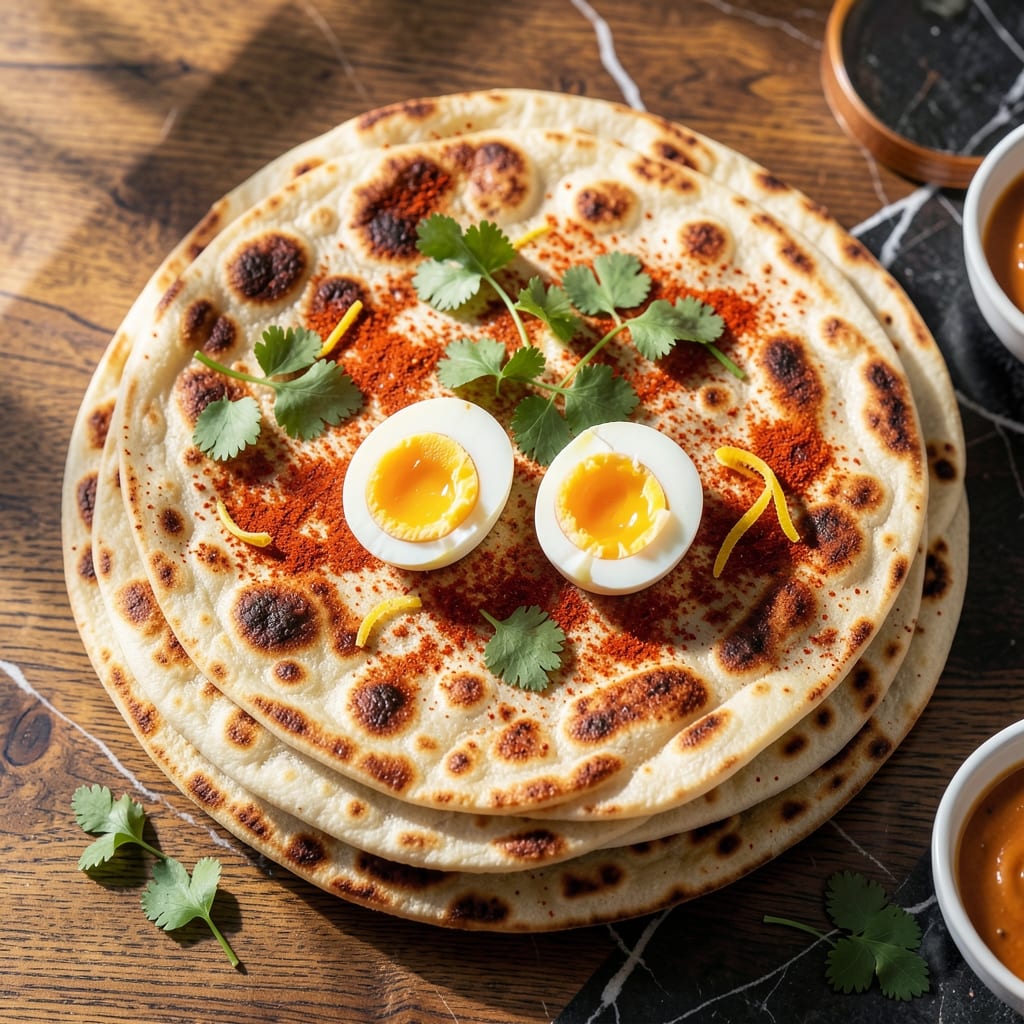
This boiled egg paratha recipe transforms simple breakfast ingredients into golden, flaky layers with a perfectly spiced egg surprise at the center. The secret lies in the dough's elasticity and the egg's gentle warmth that melts into each bite. I've perfected this technique over years of morning kitchen experiments, ensuring every paratha stays crisp outside and tender within.
The recipe begins with a basic whole wheat dough that's rolled thin and layered with hard-boiled eggs seasoned with turmeric, chili powder, and a touch of black pepper. The dough's natural richness pairs beautifully with the egg's savory depth, creating a harmonious balance. This method delivers restaurant-quality results without requiring advanced skills—just patience and a hot griddle.
What makes these parathas truly special is their flaky texture, achieved through careful rolling and controlled cooking on a tawa. Each bite reveals crispy layers that give way to the warm, spiced egg filling inside. The aroma alone will fill your kitchen with the comforting scent of freshly cooked breakfast, making it perfect for a hearty morning meal or a satisfying snack.
Once mastered, you'll find endless variations—add finely chopped herbs to the dough or experiment with different spice blends for the egg. These parathas are equally delicious served with mint chutney, yogurt, or a simple green salad. Let's get started on creating your perfect batch!
Ingredients for boiled egg paratha
Simple ingredients that create restaurant-quality flaky parathas with spiced egg surprises inside.
| Ingredient | Amount | Notes |
|---|---|---|
| Whole Wheat Flour 🌾 | 2 cups | Plus extra for dusting |
| Plain Yogurt 🥛 | ½ cup | Unflavored, full-fat preferred |
| Water 💧 | ½ cup | Room temperature |
| Hard-Boiled Eggs 🥚 | 4 whole | Medium-sized, peeled |
| Turmeric Powder 🌿 | ½ tsp | Freshly ground preferred |
| Chili Powder 🌶️ | 1 tsp | Adjust to taste |
| Ground Black Pepper 🌶️ | ½ tsp | Freshly cracked |
| Ghee 🧈 | 2 tbsp | For cooking parathas |
| Salt 🧂 | ½ tsp | Fine sea salt |
| Ghee (extra) 🧈 | ¼ cup | For brushing layers |
| Olive Oil 🫒 | 1 tbsp | For brushing dough |
The whole wheat flour is the foundation—look for brand-name organic flour at stores like Whole Foods or your local Indian grocery for a lighter texture. I always check the expiration date since flour absorbs moisture over time. The yogurt should be plain and full-fat for richness; Greek yogurt works too if that's what you have. For the eggs, boil them until the yolks are just set—about 10 minutes—so they hold their shape but still melt slightly when cooked. Costco sells pre-peeled eggs, which saves time, but peeling them fresh gives better texture control.
No turmeric? Curry powder at half the amount works in a pinch, though the flavor won't be identical. Chili powder can be swapped for cayenne if you prefer more heat, but reduce to 0.25 tsp to avoid overpowering. The ghee is non-negotiable for that authentic flavor—store-bought ghee from Patel Brothers or Trader Joe's is perfect. If you're avoiding dairy, substitute with vegetable ghee or extra olive oil, though the taste will differ slightly. For the dough, if the mixture feels too dry, add 1 tsp water at a time until it holds together.
Store the dough in an airtight container in the fridge for up to 2 days—wrap it in plastic wrap to prevent drying. The hard-boiled eggs keep for 5 days in their shells, but peel and season them just before using for best texture. Once cooked, parathas reheat beautifully—wrap them in foil and warm in a 350°F oven for 5 minutes. I freeze extras between parchment paper for up to 3 months; just thaw and reheat from frozen.
Why You'll Love This Recipe
- No-Fuss Dough: I swear by this dough—just flour, yogurt, and water. No kneading, no waiting, no stress. The yogurt keeps it soft, and the turmeric adds that golden color without extra effort.
- Crispy-Creamy Magic: That first bite? Crunchy edges, fluffy inside, and the egg tucked inside like a little surprise. The turmeric gives it a warm, earthy kick that makes it taste like a restaurant dish.
- Lunchbox Hero: Pack these for work or school—they hold up perfectly. My kids take them in their lunchboxes, and I sneak one in my bag too. No reheating needed, just grab and go.
- Pantry Staple Power: Whole wheat flour, eggs, yogurt—stuff you already have. No fancy ingredients, no last-minute grocery runs. And leftovers? Just reheat on a pan or microwave for seconds that taste just as good.
Step-by-step instructions for boiled egg parathas
Achieve restaurant-quality flakiness with these precise techniques for perfect parathas.
Prepare the Dough with Perfect Texture
In a large mixing bowl, combine the 2 cups whole wheat flour with 0.5 cup plain yogurt, 0.5 cup room temperature water, 0.5 tsp turmeric powder, 1 tsp chili powder, 0.5 tsp ground black pepper, and 0.5 tsp salt. Mix with your hands or a dough whisk until a shaggy dough forms, adding a splash more water if needed but don't overdo it.
The dough should be soft but not sticky—it should hold together when pressed but still be pliable. I like to let it rest for 10 minutes covered with a damp towel. This resting period allows the gluten to relax, making rolling easier and creating those signature flaky layers. If the dough feels too dry after resting, add 1 teaspoon water at a time until it reaches the perfect workable consistency.
Roll and Layer the Eggs
Divide the rested dough into 8 equal portions (about 2 tablespoons each). Roll one portion into a 4-inch circle on a lightly floured surface, keeping the thickness even at about ⅛ inch. Place 1 hard-boiled egg in the center of the circle, then gently fold the dough over the egg, sealing the edges tightly but not too tightly—you want some air pockets to create flakiness.
Roll the egg-filled dough into a 6-inch circle, pressing down firmly to ensure the egg stays centered. The goal is to create a thin, even layer that will cook through perfectly. I like to rotate the dough 90 degrees after each press to maintain even thickness. Repeat with remaining dough and eggs, keeping the filled parathas covered with a damp towel to prevent drying.
Cook on Medium Heat for Even Browning
Heat a non-stick skillet over medium heat and add 2 tablespoons ghee. Once the ghee is hot but not smoking, place one paratha in the pan. Cook for 2-3 minutes until the bottom turns golden brown and crispy. I press down gently on the paratha during the first minute—this prevents it from curling and ensures even contact with the pan.
Flip carefully using a spatula and cook the other side for another 2-3 minutes until golden brown. The paratha should puff slightly as it cooks, creating those beautiful layers. Remove from the pan and set aside on a wire rack. Repeat with remaining parathas, adding more ghee as needed to prevent sticking. The key is maintaining medium heat—too high and they'll burn before cooking through.
Finish with Ghee for Extra Flakiness
Once all parathas are cooked, transfer them to a clean plate. Brush each one generously with the 0.25 cup extra ghee using a pastry brush, allowing the ghee to soak in slightly for 30 seconds. This final step adds an extra layer of richness and enhances the flaky texture. For extra flavor, you can also brush with 1 tablespoon olive oil after the ghee.
Serve the parathas immediately while still warm and crispy. The combination of the spiced dough, tender boiled eggs, and ghee brushing creates a perfect balance of textures and flavors. Each bite should deliver crispy layers, creamy egg, and aromatic spices—this is what makes these parathas truly special.
Pro Tips For Making Boiled Egg Paratha
- CRUSH EGGS SMALL: Peel the boiled eggs and smash them into tiny, uneven bits—think crumbles, not slices. I used to cut them neatly, but the dough absorbs the flavor better when the egg pieces are broken down like this. Also, resist the urge to chop them too fine; you want texture in every bite.
- KNEAD UNTIL SILKY: Work the dough until it’s smooth and elastic, not sticky or crumbly. I learned this the hard way—skipping the extra kneading leads to dense, uneven parathas. If it feels dry, add a splash of water; if too sticky, a bit more flour. Aim for a dough that stretches without tearing.
- SEAL THE EDGES: Press the egg pieces firmly into the dough’s center, then pinch the edges tightly to trap them inside. I used to slap the filling in and roll right away, and half the egg would ooze out during cooking. A sealed paratha stays intact and cooks evenly—no surprises when you flip it.
- ROLL THIN AND EVEN: Use a rolling pin to stretch the dough into a perfect, even circle—about ¼-inch thick. I was skeptical about measuring, but thinner parathas crisp up faster, while thicker ones stay soft inside. Rotate the dough while rolling to avoid bulges, and dust with flour only when necessary.
Make-ahead tips for this boiled egg paratha
Dough Prep Ahead
Prepare the dough the night before for stress-free mornings. After mixing, cover with plastic wrap and refrigerate for up to 2 days. The cold temperature enhances flavor development and makes rolling easier—simply let it sit at room temperature for 30 minutes before shaping. I store mine in a glass airtight container to prevent drying. 💫
Egg Prep Shortcut
Save time by boiling and seasoning eggs in advance. Peel 4 hard-boiled eggs, then mix with ½ tsp turmeric, 1 tsp chili powder, and ½ tsp black pepper in a bowl. Store in an airtight container in the fridge for up to 3 days. Just grab and assemble when ready to cook.
Freezer-Friendly Parathas
Make a full batch and freeze extras for quick breakfasts. After cooking, cool parathas completely, then wrap individually in parchment paper and store in a freezer bag for up to 3 months. To reheat, warm in a 350°F oven for 5-7 minutes or microwave for 20 seconds—they'll taste almost as good as fresh!
Morning Assembly Hack
Keep pre-rolled dough discs and seasoned eggs ready in the fridge. In the morning, simply assemble and cook—no need for full prep. I keep a small bowl of ghee and 1 tbsp olive oil pre-warmed in the microwave for 10 seconds to speed up cooking. This cuts prep time by half while keeping everything fresh.
Batch Cooking Tips
Double the recipe and cook half now, then freeze the other half. Store cooked parathas in a single layer on a baking sheet before freezing to prevent sticking. When ready to eat, reheat in a skillet with 1 tbsp ghee over medium heat for 2 minutes per side. The ghee reactivates the crispy texture perfectly. 🔥
Spice Mix Prep
Combine all spices in a small jar for future use. Mix ½ tsp turmeric, 1 tsp chili powder, and ½ tsp black pepper—this makes seasoning eggs effortless. Store in your spice drawer for up to 6 months. Just sprinkle on peeled eggs before assembling, saving prep time every morning.
Nutrition facts
Frequently asked questions
Why does my boiled egg paratha dough crack when rolling?
The dough cracks when it's either too dry or too cold. Always let the dough rest for 10 minutes after mixing, then knead it gently if needed. If it feels crumbly, add 1 teaspoon water at a time until it becomes smooth but pliable. Keep your rolling surface lightly floured and work quickly to prevent drying.
Can I make boiled egg parathas without ghee?
Yes, but the flavor and texture will differ. Substitute ghee with vegetable oil or melted butter, though ghee gives that authentic rich taste and helps create flaky layers. For best results, use a mix of 1 tablespoon oil + 1 tablespoon melted butter per paratha. The parathas will still be delicious but may lack the signature crispiness.
How do I prevent the egg from bursting while cooking?
Ensure the egg is fully peeled and gently pressed into the center of the dough. Seal the edges tightly but don't overpress—leave small air pockets to allow for expansion. Cook on medium heat and avoid flipping too soon. If the egg starts to leak, reduce heat slightly and cook for an extra 30 seconds before flipping.
What's the best way to reheat leftover boiled egg parathas?
Reheat in a dry skillet over medium-low heat for 1-2 minutes per side with a tiny bit of ghee or oil. For oven reheating, place on a baking sheet at 350°F for 5 minutes. Microwaving works too—wrap in a damp paper towel and heat for 20 seconds to restore crispiness. Always reheat until warm through.