
Main Courses
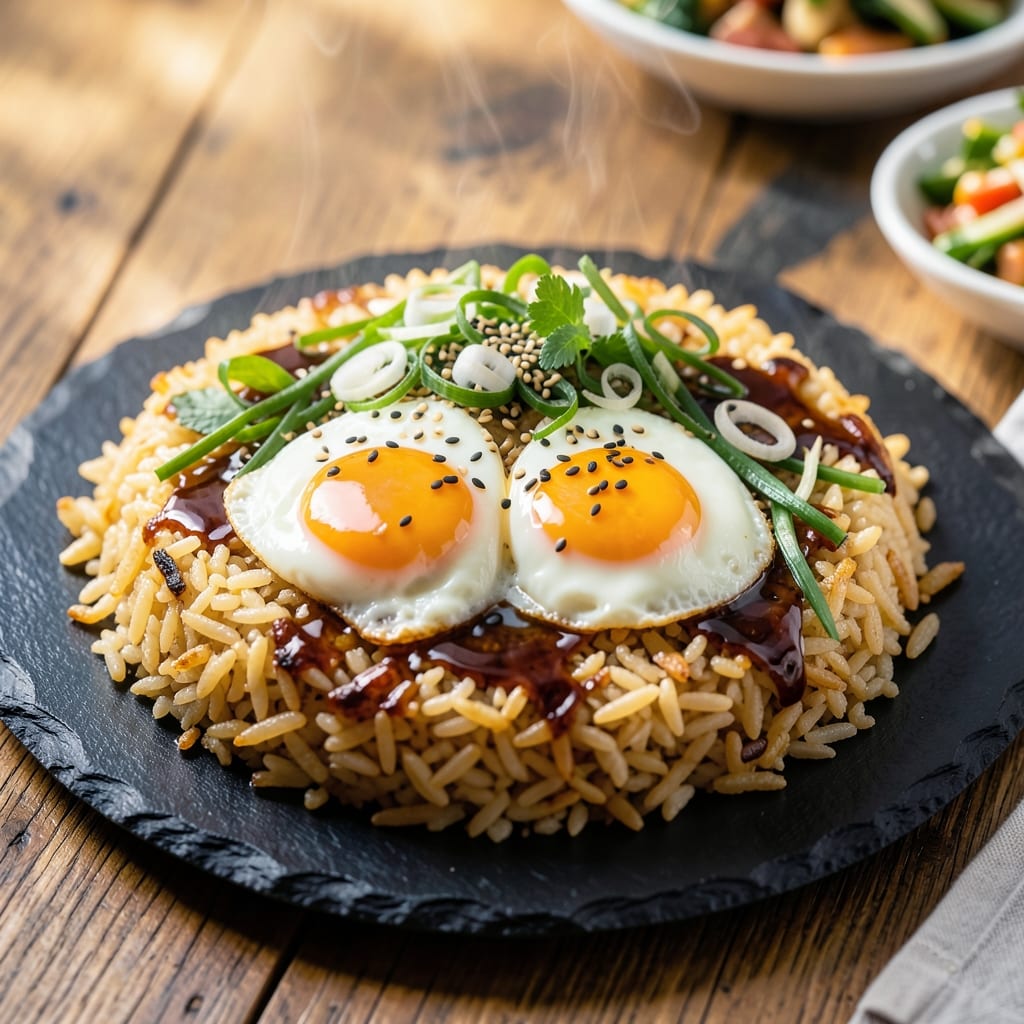
Benihana-style egg fried rice delivers restaurant-quality flavor with crispy scrambled egg clouds and savory rice. The secret lies in high-heat stir-frying and perfectly tempered eggs that create those signature golden fluffs. I've recreated this dish countless times after my first visit, and it never fails to impress. What makes this recipe special is the technique: cooking the rice first to achieve that slightly sticky texture, then wok-frying it with eggs that transform into delicate, crispy clouds. The combination of soy sauce, garlic, and sesame oil creates a flavor profile that's both rich and balanced. By the time you plate it, you'll have a dish that looks as impressive as it tastes—golden egg fluffs resting over fragrant rice, garnished with green onions and sesame seeds. The aroma alone will have everyone asking for seconds. This version stays true to Benihana's signature style while being adaptable for home cooks. Let's get started on recreating this restaurant favorite in your kitchen.
Ingredients for benihana egg fried rice
The secret to Benihana-style egg fried rice lies in these 12 ingredients—simple yet transformative when cooked with high heat and precision.
| Ingredient | Amount | Notes |
|---|---|---|
| Day-Old Cooked White Rice 🍚 | 4 cups | Cold or room temperature preferred |
| Large Eggs 🥚 | 4 whole | Room temperature for best fluffiness |
| Green Onions 🧅 | ½ cup | White and green parts, thinly sliced |
| Sesame Seeds 🌾 | 1 tbsp | Toasted for extra aroma |
| Vegetable Oil 🫒 | 3 tbsp | High smoke point preferred |
| Soy Sauce 🍶 | 2 tbsp | Low-sodium preferred |
| Garlic Cloves 🧄 | 3 cloves | Minced finely for authentic flavor |
| Sesame Oil 🫒 | 1 tsp | Toasted sesame oil for aroma |
| Salt 🧂 | ½ tsp | Adjust to taste |
| Black Pepper 🌶️ | ¼ tsp | Freshly ground |
| Butter 🧈 | 1 tbsp | Unsalted for flavor control |
| Sugar 🍬 | ½ tsp | Balances flavors |
The rice is non-negotiable—day-old, cold rice creates that signature sticky texture. Cook a full batch the night before and refrigerate. For garlic, fresh is essential—pre-minced loses its punch. Sesame oil is key for that authentic aroma, so grab the toasted kind at Asian markets or the international aisle. The eggs? Room temperature makes all the difference for those signature fluffy clouds. If you're short on time, use Kirkland Signature rice from Costco—it's consistently perfect for fried rice.
No sesame seeds? Toasted poppy seeds work in a pinch, though they lack the nutty depth. Short on soy sauce? Coconut aminos in a 1:1 ratio mimics the umami. The butter here isn't just for flavor—it helps create the egg fluffs by adding moisture. For the eggs, separate yolks and whites if you're feeling fancy: cook the whites first to set them, then gently fold in the yolks for that signature Benihana texture. The sugar might seem odd, but it balances the saltiness—brown sugar works too if you're out of white.
Rice keeps 3 days in the fridge, but it's best used immediately for fried rice. Sesame oil loses potency after opening, so transfer to a dark bottle and store in a cool place. The egg fluffs are best served immediately—they deflate as they cool. For leftovers, reheat gently in a skillet with a splash of water to restore moisture. This dish reheats beautifully, so double the recipe if you're feeding a crowd—it disappears fast.
Why You'll Love This Recipe
- One-Pan Magic: I swear by this—just rice, eggs, and a sizzle. No chopping, no mess, no extra bowls. The eggs fry right into the rice while you stir, and that golden crust? Pure satisfaction with zero cleanup.
- Umami Bomb: That crispy egg nestled in the rice? It’s the star. The sesame seeds add a nutty crunch, and the green onions bring freshness—simple, but the flavor combo hits different. Honestly, it’s the kind of dish that makes you pause mid-bite.
- Lunchbox Hero: Pack this for work or school—it reheats like a dream. Cold rice? No problem. The eggs stay creamy, and the sesame seeds keep it interesting. My kids actually ask for it in their lunches (yes, even on a Tuesday).
- Budget Win: Rice, eggs, and oil—this feeds four for under $5. Day-old rice? Perfect. Leftover rice? Even better. It’s my go-to when I’m broke or lazy, and somehow, it always tastes like a restaurant dish.
Step-by-step instructions for Benihana egg fried rice
Here's the authentic technique that delivers those signature fluffy egg clouds over perfectly seasoned rice.
Prepare the Rice and Aromatics
Spread the 4 cups day-old cooked white rice evenly on a baking sheet and let it sit at room temperature for 10 minutes. This ensures the rice is completely dry and will crisp up beautifully during cooking. While the rice warms, mince the 3 cloves garlic finely and thinly slice the 0.5 cup green onions, separating the white and green parts.
I like to toast the 1 tablespoon sesame seeds in a dry skillet over medium heat for 1-2 minutes until fragrant. This adds an extra layer of nutty aroma to your dish. Set them aside to cool slightly before using. The toasted seeds will release their flavor more dramatically when added at the end of cooking.
Create the Egg Cloud Mixture
In a medium bowl, crack the 4 whole large eggs and whisk them vigorously until the yolks and whites are completely combined. Add the 0.5 teaspoon salt, 0.25 teaspoon black pepper, 0.5 teaspoon sugar, and 1 teaspoon toasted sesame oil. The sugar might seem odd, but it helps balance the savory flavors and creates a slight caramelization in the eggs.
I've found that room temperature eggs incorporate air more easily, which is crucial for those signature Benihana egg clouds. If your eggs are straight from the fridge, let them sit in warm water for 5 minutes before whisking. The mixture should be smooth and slightly frothy—this texture is what gives you those beautiful, wispy egg clouds when cooked properly.
Cook the Egg Clouds Separately
Heat 1 tablespoon vegetable oil in a 12-inch non-stick skillet over medium-low heat. The oil should be hot but not smoking. Pour the egg mixture into the skillet and let it sit undisturbed for 10-15 seconds—this allows the eggs to set slightly at the bottom before gently stirring with a spatula.
Here's the key: keep the heat at medium-low and stir continuously in small circles, using the spatula to lift and fold the eggs. You're looking for soft, custardy curds that form delicate clouds rather than firm scrambled eggs. When the eggs are 80% set but still slightly runny in the center (about 2-3 minutes), remove them from the skillet and set aside. These will finish cooking when combined with the rice.
Sauté Aromatics and Cook the Rice
In the same skillet, add 2 tablespoons vegetable oil and heat over medium-high heat until shimmering. Add the minced garlic cloves and sauté for 30 seconds until fragrant—don't let them brown or they'll turn bitter. Immediately add the white parts of the green onions and cook for another 30 seconds to soften slightly.
Add the 4 cups day-old rice to the skillet, breaking up any clumps with your spatula. Stir-fry for 2-3 minutes, letting the rice absorb the oil and aromatics. This is where the magic happens—the rice should start to develop a slight crust on the edges. Add the 2 tablespoons soy sauce and 1 tablespoon butter, stirring constantly to coat the rice evenly.
Combine and Finish
Return the egg clouds to the skillet and gently fold them into the rice using your spatula. Cook for an additional 1-2 minutes just until the eggs are fully set and the rice is heated through. The residual heat from the rice will finish cooking the eggs perfectly, creating those signature wispy strands.
Taste and adjust seasoning if needed—you might want to add a splash of water or more soy sauce for desired consistency. Remove from heat and transfer to serving plates. Garnish with the green parts of the green onions and sprinkle with the toasted sesame seeds. Serve immediately while the eggs are still warm and fluffy.
Pro Tips For Making Benihana Egg Fried Rice
- Preheat Your Pan: Benihana-style fried rice demands a screaming-hot wok or skillet—think smoke testing the air before adding oil. I used to rush this, and my rice would steam instead of sear, ending up soggy. Get that pan so hot it shimmers when you toss in the first splash of oil, then let it cool just a fraction before adding rice. (Yes, even if you're impatient like me.)
- Crack Eggs Early: Beat your eggs in a bowl before heating the pan, then let them sit for 2–3 minutes at room temp. Cold eggs scramble unevenly and steal heat from your rice, making the whole dish taste dull. I learned this the hard way—my first batch had rubbery egg clumps that refused to fold in smoothly. Prepped eggs slide into the pan like silk and cook instantly.
- Break Rice into Bites: Skip the clumps—use your fingers or a fork to separate the day-old rice into rough, uneven chunks before frying. Benihana’s version has distinct texture layers: crispy edges on the outside, tender inside. I was skeptical until I tried it: broken rice toasts faster and absorbs sauce better than whole grains. (Pro move: Spread it on a tray first to dry out any lingering moisture.)
- Scatter Onions Last: Save the green onions for the final 10 seconds—toss them in after the rice is mostly done, then give everything a quick stir. This keeps the onions vibrant and slightly crisp, not wilted into oblivion. I used to add them early, and they’d turn into sad, limp strings. Timing is everything here; treat them like the garnish they are.
Regional styles of benihana egg fried rice
Japanese Teppanyaki Roots
Benihana's egg fried rice traces back to Japanese teppanyaki traditions, where chefs would dramatically cook eggs and rice at high heat right at your table. The signature egg cloud technique comes from tamagoyaki—Japanese rolled omelets—but Benihana adapted it for stir-frying. The dish became a signature when Benihana opened in 1964, blending Japanese precision with American-style entertaining. 🌏
Key to the Japanese approach is high-heat cooking—the eggs must cook quickly to create those delicate, wispy strands. Unlike traditional Japanese fried rice (chahan), Benihana's version incorporates butter and toasted sesame oil, giving it a richer, more indulgent profile that resonates with Western palates. The day-old rice technique also comes from Japanese cuisine, where cold rice develops a slightly sticky texture perfect for stir-frying.
Hawaiian Adaptation
While Benihana originated in Japan, its Hawaiian locations (like the original in Honolulu) added local touches. Chefs there often incorporated pineapple or teriyaki sauce as optional toppings, reflecting Hawaii's fusion culture. The dish became a staple at luaus and tourist spots, showcasing how Benihana adapted its menu to local tastes while keeping the core technique intact. 🍍
In Hawaii, you'll sometimes see spam or shrimp added to the fried rice, a nod to local comfort foods. The egg clouds remain the star, but the rice base might include garlic chives (a Hawaiian favorite) instead of green onions. This regional twist keeps the dish exciting while staying true to Benihana's signature style.
American Teppanyaki Influence
The American teppanyaki movement (popularized in the 1980s-90s) took Benihana's style and made it a theatrical dining experience. Restaurants like Miyako Teppan and Kona Grill adopted the egg fried rice as a signature dish, often serving it with extra butter and truffle oil for a gourmet twist. The high-heat cooking became a spectacle, with chefs flipping eggs and rice in synchronized moves. 🔥
American versions sometimes swap white rice for jasmine or add sriracha for heat, catering to local preferences. The egg clouds remain the defining feature, but the rice might include crispy bacon or caramelized onions—a far cry from traditional Japanese ingredients but still delicious. This adaptation proves how Benihana's dish became a culinary chameleon across cultures.
Modern Fusion Twists
Today, chefs are reimagining Benihana-style egg fried rice with global flavors. In California, you might find it topped with avocado and chimichurri; in Texas, it's loaded with brisket and pickled jalapeños. The egg cloud technique stays the same, but the rice base gets creative—some use cauliflower rice for low-carb versions or forbidden black rice for a dramatic color shift. 🌶️
For a vegetarian twist, swap eggs for tofu puffs or mushroom "clouds" while keeping the same high-heat stir-fry method. The dish's versatility makes it perfect for brunch menus or lazy Sundays—just keep the butter, soy sauce, and garlic as the unifying flavors. The magic is in the technique, not the ingredients.
Nutrition facts
Frequently asked questions
Why does Benihana egg fried rice use day-old rice?
Day-old rice has a slightly sticky texture that holds up better during stir-frying, preventing it from turning mushy. The cold temperature also helps create those signature crispy edges when cooked with high heat. Plus, it's easier to break up clumps for that authentic restaurant-style texture!
Can I make this with fresh rice instead of day-old?
Fresh rice will work, but it's trickier—you'll need to spread it on a baking sheet and let it dry out completely before cooking. The texture won't be as crispy, and you might end up with a soggier result. For best results, always use cold, day-old rice. If you're short on time, try microwaving fresh rice for 2 minutes to dry it out slightly first.
What's the secret to getting those fluffy egg clouds?
The key is using room temperature eggs and cooking them on medium-low heat while stirring constantly. Whisk the eggs vigorously first to incorporate air, then let them set slightly at the bottom before folding gently. The butter in the rice helps create steam that keeps the eggs light and airy. Don't overcook them—they should be just set when combined with the rice!
Can I make this recipe vegetarian?
Swap the eggs for tofu puffs or mushroom clouds (sautéed shiitake mushrooms cut into thin strips). Keep the same high-heat stir-fry technique and soy sauce base. For extra umami, add a splash of vegetable bouillon or miso paste. The texture will be different but still delicious!
How do I prevent the rice from getting soggy?
Keep your wok or skillet at high heat and stir constantly to develop a light crust on the rice. Avoid adding too much liquid—just a splash of water if needed. Also, make sure your rice is completely dry before cooking. If it starts looking wet, spread it on a baking sheet and dry it out for 5-10 minutes before finishing.