
Main Courses
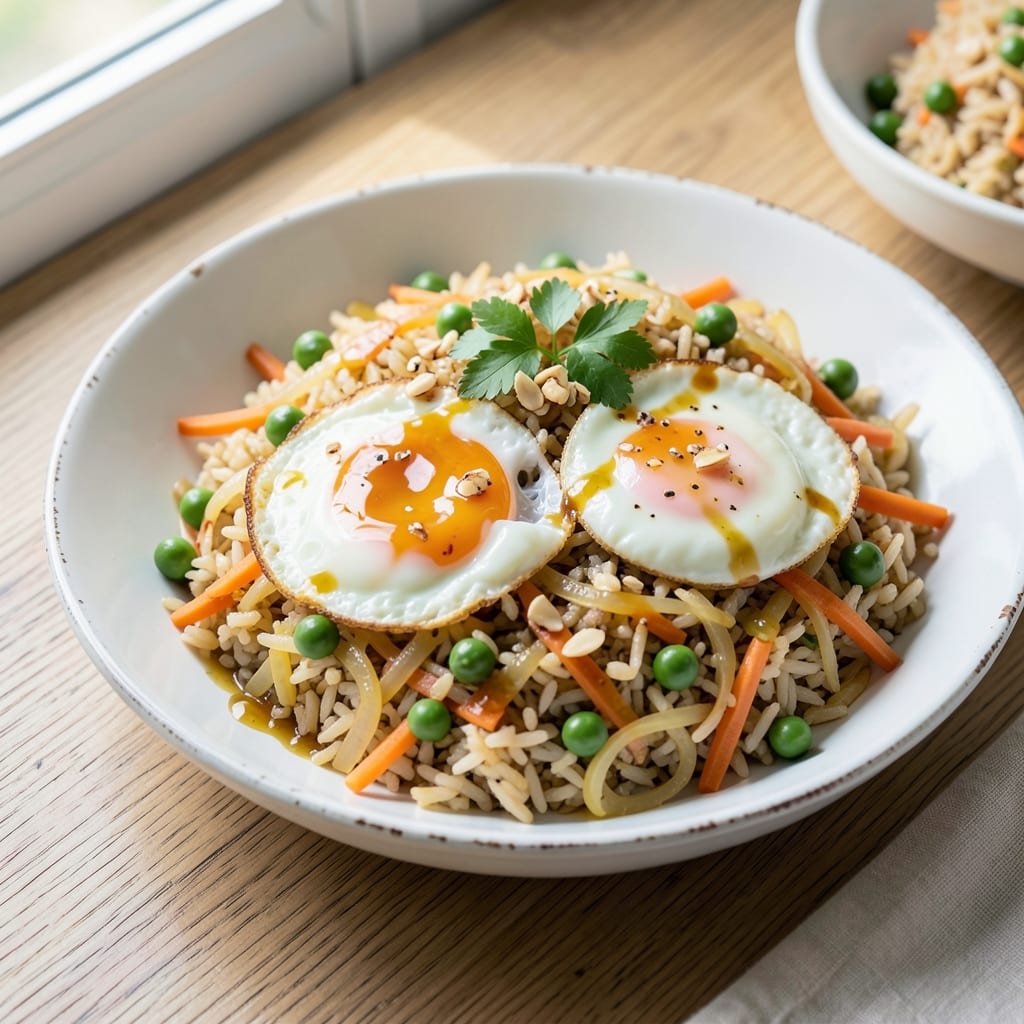
This basmati egg fried rice recipe transforms simple ingredients into a fragrant, restaurant-quality dish that’s ready in 20 minutes. The secret lies in using day-old basmati rice—its separate grains absorb flavors beautifully while maintaining that signature jasmine aroma. Silky scrambled eggs add protein and richness, while a quick stir-fry with vegetables and seasonings brings everything together in perfect balance.
What sets this recipe apart is the technique: high heat for crispy edges on the rice, gentle folding to keep eggs tender, and a savory-sweet sauce that coats every bite. Unlike heavy, mushy fried rice, this version stays light yet satisfying, with each grain distinct and full of flavor. The dish is customizable—swap in peas, carrots, or protein alternatives—but the foundation remains foolproof.
By the time you plate it, you’ll have a dish that’s golden, aromatic, and packed with texture—crispy rice edges, velvety eggs, and vibrant vegetables. The fragrance alone will have everyone at the table asking for seconds. Best of all, this recipe scales effortlessly for meal prep or feeding a crowd, making it a weeknight staple with restaurant-quality results.
Ready to master this dish? The key is timing and technique—we’ll cover everything from prepping the rice to achieving that perfect scramble. Let’s get started.
Ingredients for basmati egg fried rice
Transform simple pantry staples into fragrant, restaurant-quality fried rice in minutes.
| Ingredient | Amount | Notes |
|---|---|---|
| Day-Old Basmati Rice 🍚 | 3 cups | Cool completely before using |
| Large Eggs 🥚 | 4 whole | Room temperature for even cooking |
| Yellow Onion 🧅 | 1 medium | Finely diced for sweet flavor |
| Carrots 🥕 | 2 medium | Julienned into matchsticks |
| Garlic Cloves 🧄 | 4 cloves | Minced for aromatic punch |
| Frozen Peas 🌿 | ½ cup | No need to thaw |
| Soy Sauce 🥢 | 3 tbsp | Low-sodium preferred |
| Sesame Oil 🫒 | 1 tbsp | Toasted for nutty aroma |
| Vegetable Oil 🫒 | 2 tbsp | High smoke point recommended |
| Green Onions 🧅 | 3 whole | Sliced for garnish |
| Salt 🧂 | ½ tsp | Diamond Crystal preferred |
| Black Pepper 🌶️ | ¼ tsp | Freshly ground preferred |
| White Pepper 🌶️ | ¼ tsp | For subtle warmth |
| Sesame Seeds 🌾 | 1 tbsp | Toasted for crunch |
The rice is non-negotiable—day-old basmati with its distinct grains is essential for that signature texture. Trader Joe's and Whole Foods carry excellent basmati; look for long-grain varieties labeled 'jasmine' or 'aromatic'. If you must use fresh rice, spread it on a tray and refrigerate overnight. The eggs should be room temperature—cold eggs scramble unevenly. For the vegetables, frozen peas work perfectly (no thawing needed), but fresh peas add a brighter pop of color. The yellow onion should be finely diced—small pieces ensure even cooking without turning mushy.
No soy sauce? Coconut aminos work in a pinch, though the flavor profile shifts slightly. The sesame oil is where the magic happens—toasted sesame oil from Trader Joe's or Penzeys adds depth, but regular sesame oil will do. Swap carrots for bell peppers or snap peas if you prefer. The green onions are purely decorative but add a fresh finish—skip them if you're serving this as a base for other proteins. For extra richness, stir in vegan butter or cashew cream at the end. The white pepper is subtle but elevates the dish—don't skip it if you've got it.
This dish reheats beautifully—microwave for 90 seconds with a splash of water to revive texture. Store leftovers in an airtight container for up to 4 days, though I recommend making a fresh batch every 2 days for peak flavor. For meal prep, portion into glass containers to maintain crispness. The sesame seeds toast best in a dry pan for 30 seconds—don't walk away, or they'll burn. Freeze portions for up to 3 months if you're prepping for a crowd.
Why You'll Love This Recipe
- No Leftover Waste: I swear by this trick—using day-old basmati rice means no sad, gummy grains. The texture? Perfectly separate, so every bite stays light and fluffy instead of gluing to your fork.
- Garlic-Caramelized Crunch: That moment when the onions turn golden and the garlic hits just right? The sweetness from the carrots and the crispy egg edges make this dish ridiculously satisfying. Honestly, I’ll take this over takeout any day.
- Lunchbox Hero: Between us, this is my go-to for packed lunches. Cold or reheated, it holds up—just toss in some peas or corn if you’re feeling fancy. My kids (and my partner) actually finish what’s in their containers. That’s saying something.
- Pantry Staple Magic: Three eggs, a handful of rice, and whatever veggies you’ve got? This recipe never fails me when I’m broke or lazy. The onions and garlic add depth without cost, and the carrots keep it colorful. Basically, it’s the ultimate “I’ve got nothing” meal.
Step-by-step instructions for basmati egg fried rice
Here's how to transform day-old basmati rice into fragrant, aromatic fried rice with perfectly silky scrambled eggs.
Prep and Toast the Aromatics
Heat the 2 tablespoons vegetable oil in a wok or large skillet over medium-high heat until shimmering. Add the finely diced yellow onion and julienned carrots—they should sizzle immediately. Cook for 3-4 minutes until the onions soften and the carrots begin to caramelize at the edges.
Add the 4 cloves minced garlic and stir for 30 seconds until fragrant—you'll smell that sweet garlic aroma wafting through your kitchen. Here's the thing: don't let the garlic brown or it'll turn bitter. Remove the pan from heat briefly if needed, then return it to the stove. This aromatic base is the soul of your fried rice.
Scramble the Eggs Silky-Smooth
Push the vegetable mixture to one side of the pan, then add the 4 room temperature eggs to the empty space. Let them sit for 10 seconds until the edges begin to set. Using a spatula, gently scramble the eggs while keeping them soft and creamy—you want ribbons, not dry curds. When they're just set but still slightly runny in the center, mix them into the vegetable mixture.
Real talk: the secret to perfect fried rice eggs is low and slow heat. If you scramble too aggressively, you'll end up with rubbery eggs. Keep the heat at medium-low for this step, and don't walk away—you want to control that scramble.
Add Rice and Season Generously
Break up the 3 cups day-old basmati rice with your hands until it resembles individual grains—no clumps allowed. Add it to the pan and stir-fry for 2 minutes to heat through. Pour in the 3 tablespoons soy sauce and ½ teaspoon salt, then sprinkle with ¼ teaspoon black pepper and ¼ teaspoon white pepper. Toss everything together for another 2 minutes until the rice is evenly coated and the flavors meld.
This is where the magic happens: the soy sauce should be distributed evenly, but don't over-stir or you'll crush the rice. You'll see the grains become glossy and separate—this indicates proper seasoning. If your rice isn't absorbing the sauce, add a splash of water and stir until it does.
Finish with Peas and Toasted Sesame
Add the ½ cup frozen peas and the 1 tablespoon sesame oil to the pan. Stir-fry for 1-2 minutes until the peas are heated through and the sesame oil releases its nutty aroma. The peas should pop slightly as they warm, adding freshness to the dish.
Remove the pan from heat and immediately stir in the 1 tablespoon toasted sesame seeds and 3 sliced green onions. The sesame seeds add that essential crunch you crave in fried rice, while the green onions provide a fresh counterpoint to the rich flavors. Give everything one final toss to distribute those finishing touches evenly.
Serve Immediately with Confidence
Transfer the fried rice to serving plates while it's still hot—fried rice doesn't wait. The texture should be light and fluffy, with each grain distinct. The eggs should be silky and integrated, not separate. Taste and adjust seasoning if needed—you might want to add a touch more soy sauce or a pinch of salt.
Here's what you're aiming for: fragrant, aromatic basmati rice with perfectly balanced flavors—sweet from the carrots, umami from the soy sauce, nutty from the sesame, and fresh from the peas and green onions. Each bite should deliver that perfect combination of textures and temperatures. Serve immediately with extra green onions on top if you're feeling fancy.
Pro Tips For Making Basmati Egg Fried Rice
- CRACK EGGS COLD: I used to scramble them straight from the fridge, and they’d turn rubbery before the rice got a chance to toast. Crack them into a bowl first, then let them sit at room temp for 10 minutes—just long enough to warm up. The eggs will cook faster and stay tender, not dry.
- CHOP ONIONS SMALL: Big chunks of onion mean half-chewed rice by the time you finish eating. Dice them into 1/4-inch pieces—no smaller, or they’ll burn before the rice gets crispy. If you’re lazy, pulse them in a food processor for 2 seconds, then hand-chop the last bit for texture.
- TOAST RICE FIRST: Dump the cold rice into the wok before adding anything else, and let it sizzle for 30 seconds on high heat. This builds the crusty base that makes fried rice sing. Skip this, and you’ll end up with mushy, sad rice—trust me, I’ve made that mistake at 2 AM.
- USE CARROT JUICE: Instead of chopping carrots into matchsticks (which burn easily), grate them first, then squeeze out the excess moisture with a paper towel. The leftover juice adds sweetness and prevents the rice from sticking—like a natural glaze. Works even if you’re in a rush.
Health benefits of basmati egg fried rice
Protein-Packed Perfection
This dish delivers a high-quality protein boost from the 4 large eggs, providing about 24 grams of protein per serving—ideal for muscle repair and satiety. Eggs also contain choline, a nutrient crucial for brain health, and lutein, which supports eye health. The day-old basmati rice adds 4 grams of fiber per serving, helping stabilize blood sugar levels and keep you full longer. 💪
Low-Calorie Comfort
At just around 350 calories per serving, this fried rice offers a satisfying, balanced meal without excessive calories. The carrots and peas contribute vitamin A (for vision) and vitamin C (for immunity), while the sesame oil provides healthy fats that support heart health. The dish is naturally gluten-free and can easily accommodate dairy-free or vegan swaps if needed.
Digestive Benefits
The day-old basmati rice is gentler on digestion than freshly cooked rice, as it has cooled and partially broken down. The fiber from vegetables (especially carrots) promotes gut health, while the garlic and onions contain prebiotic compounds that feed beneficial gut bacteria. For extra digestion support, add ginger or chili flakes—both aid in breaking down fats and proteins.
Meal Prep Advantage
This recipe is a meal prep powerhouse because it reheats beautifully while retaining texture. The high protein and fiber content help curb cravings, making it perfect for weight management or balanced nutrition. Store leftovers in airtight containers for up to 4 days, and the fragrant aroma alone will make it feel like a restaurant meal. ✨
Customizable Nutrition
Easily adapt this dish to fit dietary needs: swap eggs for tofu or tempeh for a vegan option, or add chicken or shrimp for extra protein. For low-carb, reduce the rice portion and bulk up with extra veggies or protein. The soy sauce can be replaced with coconut aminos for a gluten-free alternative. Every tweak keeps the dish nutritious while staying true to its comforting essence.
Nutrition facts
Frequently asked questions
Why does the recipe call for day-old basmati rice instead of fresh?
Day-old rice works best because its grains are drier and more separate, preventing a mushy texture when stir-fried. Freshly cooked rice releases too much moisture, turning your fried rice into a sticky mess. If you only have fresh rice, spread it on a tray and refrigerate for at least 4 hours (or overnight) before using.
Can I make this recipe without a wok?
A large skillet or nonstick frying pan works perfectly. The key is to use high heat and keep stirring to prevent sticking. A wok distributes heat better, but any wide, shallow pan will give you great results. Just watch your rice closely to avoid burning.
How do I prevent the eggs from turning rubbery?
Keep the heat at medium-low when scrambling and use room-temperature eggs. Stir gently but constantly until just set (about 10-15 seconds per side). Overcooking is the #1 cause of rubbery eggs—remove them from the pan as soon as they're softly set but still slightly runny in the center.
What's the best way to reheat leftovers?
Microwave for 90 seconds with a splash of water to restore moisture. For better texture, reheat in a dry skillet over medium heat for 3-4 minutes, stirring occasionally. Avoid high heat—it makes the rice dry out. The eggs will stay creamy if reheated gently.
Can I add other proteins besides eggs?
Yes! Swap in chicken, shrimp, tofu, or tempeh for a different protein profile. For chicken, cook it separately first and add back at the end. For tofu, press and cube it before stir-frying. Just reduce the soy sauce slightly if using salty proteins like ham or bacon.