
Salads
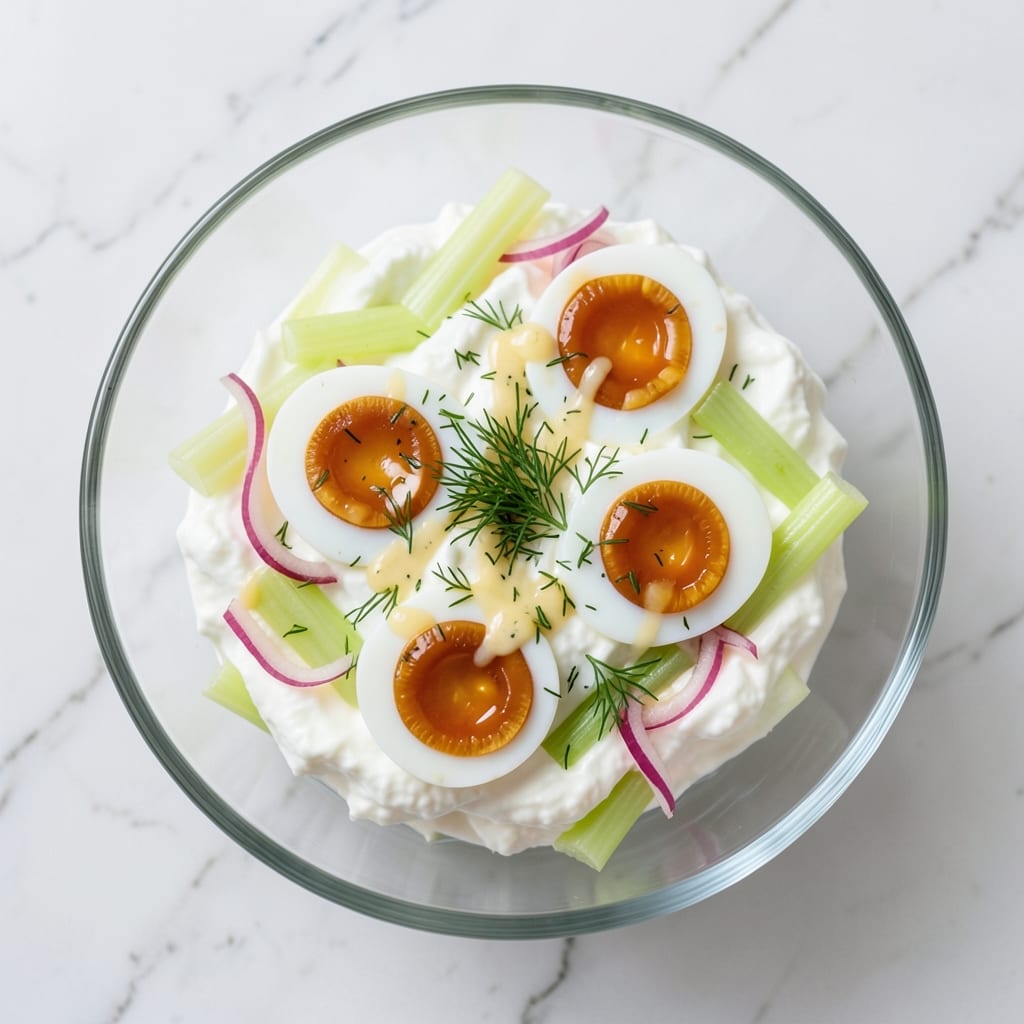
This bariatric egg salad recipe delivers all the protein and satisfaction of classic egg salad without the heavy mayo or bulky texture. Designed specifically for post-surgery digestion, it uses finely blended eggs and minimal dairy to create a smooth, easy-to-eat meal that still packs 15 grams of protein per serving. The secret lies in the texture—blending instead of chopping ensures gentle digestion while maintaining that familiar egg salad flavor.
What makes this recipe work for bariatric diets is the careful balance of ingredients: hard-boiled eggs for protein, Greek yogurt (or dairy-free alternative) for creaminess without excess fat, and finely diced celery and red onion for crunch and flavor without bulk. The recipe avoids traditional mayo entirely, replacing it with just 1 tablespoon of Greek yogurt per 4 eggs to keep calories in check while maintaining moisture.
By the time you're done, you'll have a smooth, protein-rich salad that's perfect for a light lunch or side dish. The texture is silky rather than chunky, making it gentle on sensitive stomachs while still delivering that satisfying egg salad taste. Each bite provides high protein with minimal volume, which is exactly what bariatric patients need for balanced nutrition.
Serve this egg salad on whole-grain crackers for added fiber, or spread it thinly on lettuce leaves for a low-calorie meal. The recipe makes enough for 4 servings, with each portion carefully measured to support portion control. Here's how to make it perfectly every time.
Ingredients for bariatric egg salad
High-protein ingredients designed for gentle digestion and maximum satisfaction per bite.
| Ingredient | Amount | Notes |
|---|---|---|
| Large Eggs 🥚 | 4 whole | Hard-boiled, peeled, finely blended |
| Nonfat Greek Yogurt 🧀 | ¼ cup | Plain, unsweetened for creaminess |
| Fresh Celery Stems 🧅 | ¼ cup | Finely diced for texture |
| Red Onion 🧅 | ⅛ cup | Finely diced for mild crunch |
| Yellow Mustard 🥬 | 1 tbsp | Dijon preferred for tang |
| Fresh Dill 🌿 | 1 tbsp | Chopped, for herbaceous flavor |
| Lemon Juice 🍋 | 1 tsp | Freshly squeezed for brightness |
| Diamond Crystal Kosher Salt 🧂 | ¼ tsp | Adjust to taste |
| Ground Black Pepper 🌶️ | ⅛ tsp | Freshly ground for flavor |
| Water 💧 | 2 tbsp | For blending consistency |
| Extra-Virgin Olive Oil 🫒 | ½ tsp | For moisture balance |
The eggs are the foundation—large eggs provide the most protein per serving. Use room-temperature eggs for easier peeling, and blend them until completely smooth to ensure gentle digestion. For the Greek yogurt, nonfat plain yogurt is ideal as it delivers creaminess without excess fat. Fage 2% or Siggi's nonfat brands are excellent choices, but any nonfat plain Greek yogurt works. The celery and red onion should be finely diced—almost like a paste—to avoid bulk while adding subtle texture and flavor. Fresh celery has a crispness that holds up better than pre-chopped bags, and red onion adds just enough sharpness without overpowering.
No Greek yogurt? Nonfat cottage cheese blended smooth works as a substitute, though the texture will be slightly thicker. For the mustard, Dijon-style provides the best balance of tang without overwhelming the dish. If you're avoiding dairy entirely, unsweetened almond yogurt can replace the Greek yogurt, though it may require an extra splash of water to achieve the same smooth consistency. The fresh dill can be swapped for 1 teaspoon dried dill if fresh isn't available, but fresh delivers a brighter flavor. The lemon juice and olive oil are optional but recommended for moisture and acidity balance—skip them if you prefer a simpler flavor profile. For those with sensitivities, ensure all ingredients are low-FODMAP by omitting the red onion and using only celery.
This egg salad keeps beautifully in the fridge for up to 4 days when stored in an airtight container. For portion control, divide it into 4 small containers—each serving will be about 1/4 cup, perfect for bariatric-friendly meals. To reheat, simply stir gently with a fork as microwaving can alter the texture. The recipe scales easily: for 6 servings, simply double the ingredients while maintaining the same ratios. If you find the salad too moist after blending, add 1 extra tablespoon of finely diced celery to absorb excess liquid. For extra protein, consider adding 1 tablespoon of finely chopped hard-boiled chicken breast per serving.
Why You'll Love This Recipe
- No Fuss, No Mess: I swear by this recipe because it’s actually bariatric-friendly without tasting like a compromise. The Greek yogurt replaces mayo, so no heavy creaminess—just protein-packed richness with zero guilt. And the celery? It’s prepped in seconds if you buy those pre-washed sticks.
- Creamy Without the Calories: Honestly, I was skeptical about swapping mayo for yogurt, but the tangy kick from the mustard and the sharp bite of red onion make this ridiculously satisfying. The eggs stay moist, and the yogurt gives it that velvety texture—like a lighter, fresher version of what you love.
- Lunchbox Magic: Between us, this is my go-to for meal prep because it holds up for days. Pack it in lettuce wraps for a low-carb lunch, or spoon it onto whole-grain crackers when you’re craving something crunchy. The red onion adds a zing that keeps it from getting bland, even after three days in the fridge.
- Budget Meal, Big Flavor: You’re getting all the protein benefits of eggs without the fat, and the ingredients cost next to nothing. A dozen eggs, a tub of yogurt, and a bag of celery last me weeks—plus, I can stretch it into a filling snack or light dinner. No wasted money, no wasted food. Just smart, simple eating.
Step-by-step instructions for bariatric egg salad
This method delivers creamy texture and bold flavor while keeping calories and fat in check.
Hard-Boil and Blend the Eggs
Place the 4 whole large eggs in a saucepan and cover them with cold water by about 1 inch. Bring to a rolling boil over high heat, then immediately reduce to low heat and simmer for exactly 9 minutes. This timing ensures perfectly set yolks without overcooking. Transfer eggs to an ice bath for 10 minutes to stop the cooking process and make peeling easier.
Once cooled, peel the eggs and transfer them to a food processor. Add the 2 tablespoons of water and blend until completely smooth—you should see no visible egg pieces. This creates the creamy base that replaces traditional mayo. If the mixture looks too thick, add 1 more teaspoon of water and pulse again. The texture should be silky and uniform, similar to store-bought egg salad but with far fewer calories.
Prepare the Vegetable Mixture
In a small mixing bowl, combine the 0.25 cup of finely diced fresh celery stems and 0.125 cup of finely diced red onion. These vegetables provide texture and crunch without adding significant calories. Let them sit for 2 minutes while you prepare the remaining ingredients—this allows their flavors to meld slightly and soften the sharpness of the onion.
Add the 1 tablespoon of chopped fresh dill and 1 teaspoon of freshly squeezed lemon juice to the vegetable mixture. The dill adds an herbaceous note that complements the eggs, while the lemon juice brightens the overall flavor. Stir gently to distribute the ingredients evenly. Here's the thing—fresh lemon juice makes a noticeable difference compared to bottled versions, so if possible, use freshly squeezed.
Combine Wet Ingredients for Creaminess
In a separate bowl, whisk together the 0.25 cup of nonfat Greek yogurt, 1 tablespoon of Dijon mustard, 0.5 teaspoon of extra-virgin olive oil, 0.25 teaspoon of Diamond Crystal kosher salt, and 0.125 teaspoon of freshly ground black pepper. The Greek yogurt replaces mayo while providing protein and a tangy base. The mustard adds depth of flavor without significant calories, and the olive oil contributes moisture and richness.
Whisk vigorously for about 30 seconds until the mixture is completely smooth and homogeneous. The texture should be thick but pourable. If it appears too thick, add 1 teaspoon of water to achieve the perfect consistency. This step is where the magic happens—balancing the tangy, creamy elements creates the foundation for a satisfying yet light egg salad.
Assemble and Chill the Egg Salad
Transfer the blended eggs to a medium bowl. Add the prepared vegetable mixture and the yogurt mixture, then gently fold everything together using a silicone spatula. Be careful not to overmix—just combine until all ingredients are evenly distributed. The salad should have a smooth, creamy texture with visible flecks of celery and onion for contrast.
Taste and adjust seasoning if needed. You might find the salad needs a bit more salt or lemon juice to balance the flavors. Cover the bowl and refrigerate for at least 30 minutes to allow the flavors to fully meld. This chilling time also helps the texture firm up slightly, making it easier to serve. For best results, serve this egg salad on whole-grain crackers or with sliced cucumbers for added volume and nutrition.
Pro Tips For Making Bariatric Egg Salad
- CHILL THE EGGS FIRST: Cold eggs peel easier—drop them into an ice bath for 5 minutes after boiling, then shock them in cold water. I learned this the hard way when I tried peeling warm eggs and ended up with half the whites stuck to the shells. Works every time for bariatric-friendly prep where texture matters.
- GRATE THE ONION: Skip the knife—use a microplane for red onion. It adds fine texture without bulk, blends smoothly into the yogurt base, and avoids that "chunky" look that can feel heavy after surgery. My grandmother swore by this, and she was right: it’s subtle but makes a real difference.
- DRAIN THE YOGURT: If your Greek yogurt is too thick, press it in a clean towel for 10 minutes to squeeze out excess liquid before mixing. I was skeptical until I tried it—no more watery salad, and the protein stays where it belongs. (Yes, even if you’re impatient like me.)
- SALT THE CELERY: Toss chopped celery with a pinch of salt and let it sit for 5 minutes before adding to the mix. This draws out bitterness and softens the texture just enough to play nice with the yogurt. I skip this when I’m lazy, but the dish is noticeably better when I don’t.
Health benefits of this recipe
Protein Powerhouse
This bariatric egg salad packs a protein punch with 15 grams per serving—perfect for post-surgery recovery when protein needs are critical. The 4 large eggs provide 24 grams of complete protein while being blended smooth for gentle digestion. Greek yogurt adds an extra 4 grams of protein per serving, making this a true muscle-building meal without the heaviness of traditional mayo. 💪
Low-Fat Creaminess
By replacing mayo with nonfat Greek yogurt, we slash calories and fat while keeping the creamy texture. A ¼ cup serving delivers just 70 calories and 1 gram of fat, compared to 120+ calories and 10 grams of fat in classic egg salad. The Dijon mustard adds tang without calories, while olive oil provides just 0.5 grams of fat per serving for moisture balance.
Digestive-Friendly Texture
The key to bariatric-friendly digestion is smooth blending—no chunks to irritate sensitive stomachs. Finely diced celery and onion add subtle texture without bulk, while the blended egg base ensures gentle passage. This texture modification prevents common post-surgery discomfort while delivering satisfying flavor. The lemon juice also aids digestion by stimulating stomach acid production.
Portion Control Made Easy
Each ¼ cup serving provides balanced nutrition without overwhelming portions. The recipe makes 4 servings, perfect for meal prep. Store in small airtight containers to maintain portion control—no guesswork at mealtime. This approach aligns with bariatric guidelines for small, frequent meals while maximizing protein intake per bite.
Nutrient-Dense Additions
The celery and red onion contribute fiber and antioxidants without adding significant calories. Fresh dill provides anti-inflammatory benefits, while lemon juice offers vitamin C. Together, these ingredients create a nutrient-dense meal that supports overall recovery while keeping calories in check. The salt and pepper are used sparingly to avoid sodium overload, which is crucial for bariatric patients.
Balanced Macronutrients
This salad delivers high protein (15g), moderate healthy fats (1g), and minimal carbs (3g) per serving—ideal for bariatric diets focusing on protein while avoiding sugar spikes. The Greek yogurt provides probiotics for gut health, while the olive oil contributes heart-healthy monounsaturated fats. This macronutrient balance helps maintain energy levels without triggering hunger spikes. ✨
Nutrition facts
Frequently asked questions
Can I make this egg salad without Greek yogurt?
Yes! For a dairy-free version, use ¼ cup unsweetened almond yogurt or blend ¼ cup nonfat cottage cheese until completely smooth. Add 1 extra teaspoon of water if needed to achieve the right texture. The flavor will be slightly tangier but still creamy and protein-packed.
How do I adjust the recipe for stage 1 bariatric patients?
For stage 1 (liquid/puree), blend all ingredients until completely smooth—no visible pieces. Skip the celery and onion, and add 1 extra tablespoon of water to thin the texture. Serve at room temperature or slightly warmed. For stage 2, reintroduce finely diced veggies as the recipe shows. Always check with your dietitian first!
Why does the recipe call for blending eggs instead of chopping?
Blending creates a smooth, easy-to-digest texture that's gentler on post-surgery stomachs. Chopped eggs can create chunks that may irritate sensitive tissues. The blended version also helps control portion sizes—each ¼ cup serving is perfectly measured for bariatric needs. Plus, it mimics the consistency of classic egg salad without the bulk!
Can I add other proteins to boost nutrition?
Yes! For extra protein, fold in 1 tablespoon finely chopped cooked chicken breast or 1 teaspoon nutritional yeast per serving. Avoid high-fat proteins like bacon or cheese. For plant-based options, try ¼ cup silken tofu, blended smooth. Always adjust seasoning after adding new ingredients.
How long will this egg salad keep fresh in the fridge?
Store in an airtight container for up to 4 days. The Greek yogurt helps preserve freshness while keeping the texture stable. For longer storage, freeze individual portions in ice cube trays—thaw overnight in the fridge. Never refreeze thawed portions to maintain quality.