
Desserts
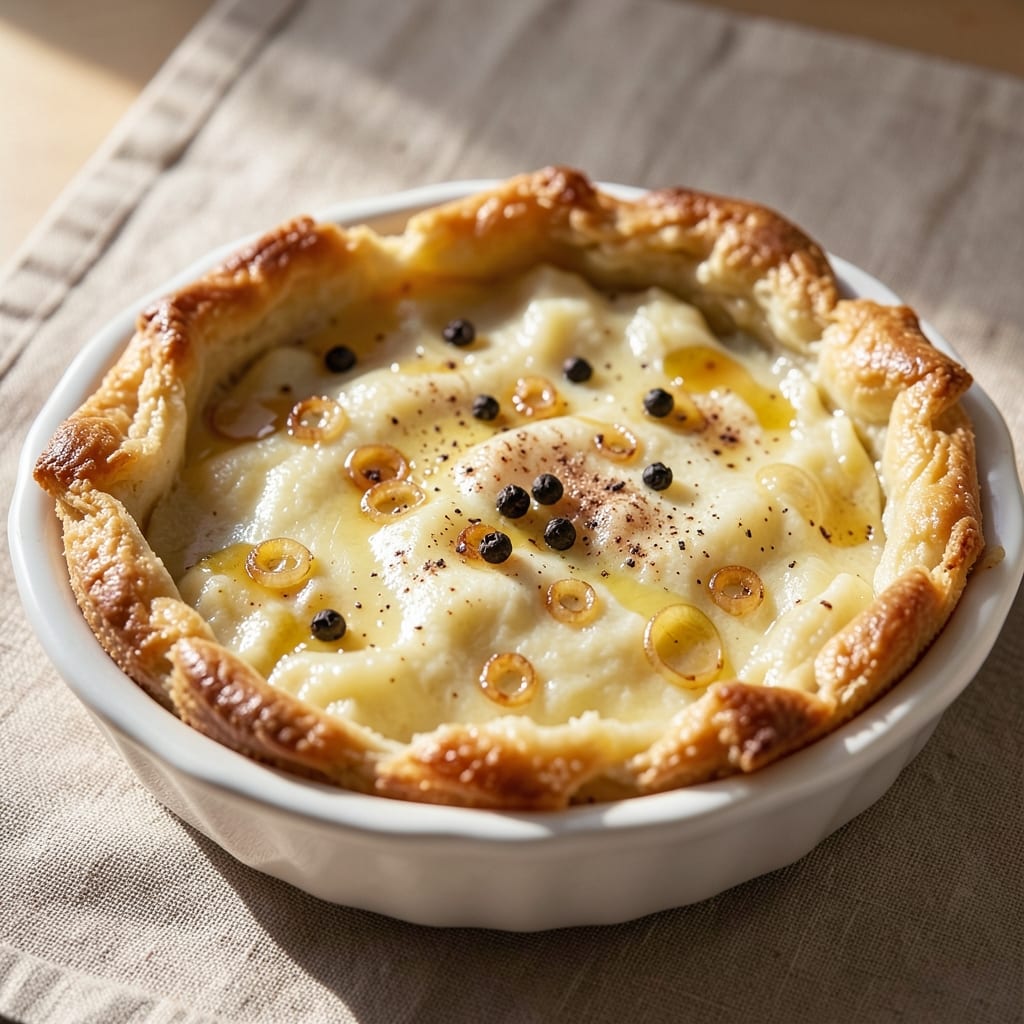
This egg and potato pie recipe delivers a comforting blend of creamy scrambled centers and crispy crust edges—perfect for brunch or a hearty dinner. The secret lies in boiling potatoes until tender, then blending them into a velvety base that absorbs egg perfectly. Every bite offers that satisfying mix of fluffy texture and savory depth, making it a standout dish that feels both nostalgic and refined.
What sets this recipe apart is the balance of simplicity and technique. You'll start with starchy potatoes that soak up moisture, ensuring the filling stays moist and never dry. The crust—whether store-bought or homemade—bakes to a golden finish while keeping the filling silky. This isn't just a pie; it's a foolproof method for transforming humble ingredients into something restaurant-worthy.
The result is a pie with layers of satisfaction: a crisp, buttery crust that gives way to tender scrambled potatoes infused with egg and seasonings. The filling stays melt-in-your-mouth soft, while the edges develop a subtle golden hue. It's the kind of dish that disappears quickly, leaving everyone asking for seconds.
Serve this pie warm with a side of fresh greens or crusty bread to soak up every last bit of savory goodness. The recipe scales easily, so you can make it for a family gathering or save leftovers for another meal. Let's get started on creating this comforting classic!
Ingredients for egg and potato pie
Six simple ingredients transform into a restaurant-style egg and potato pie with layers of texture.
| Ingredient | Amount | Notes |
|---|---|---|
| Russet Potatoes 🥔 | 3 lb | Medium size, peeled and cubed |
| Large Eggs 🥚 | 8 whole | Room temperature preferred |
| Unsalted Butter 🧈 | ¾ cup | Cold, cubed for crust |
| All-Purpose Flour 🌾 | 1 ½ cups | Plus 2 tbsp for dusting |
| Milk 🥛 | ¾ cup | Whole milk for creaminess |
| Shallots 🧅 | 2 whole | Minced for filling flavor |
| Fresh Chives 🌿 | ¼ cup | Chopped for garnish |
| Salt 🧂 | 1 ½ tsp | Kosher or sea salt |
| Ground Black Pepper 🌶️ | ½ tsp | Freshly ground preferred |
| Nutmeg 🌿 | ¼ tsp | Freshly grated for warmth |
| Store-Bought Pie Crust 🥧 | 1 package | Or homemade crust recipe |
| Heavy Cream 🥛 | ¼ cup | For extra richness |
The potatoes are the foundation—Russet potatoes work best because they're starchy and hold moisture well. Look for firm, unblemished potatoes at Whole Foods or your local grocery store's produce section. Medium size is ideal; they'll cook evenly without turning to mush. Peeled and cubed consistently (about 1-inch pieces), they'll blend into a velvety texture that absorbs the egg perfectly. For the crust, store-bought pie crust saves time, but a homemade version with butter and flour adds that extra flaky layer. If you're making your own, keep everything cold to prevent the butter from melting prematurely.
No shallots? Substitute 3 tablespoons of finely chopped yellow onion—it'll add sweetness but won't overpower the dish. Fresh chives can be swapped for dried chives at one-third the amount, though fresh adds a brighter flavor. The eggs should be room temperature for even cooking, but if they're straight from the fridge, let them sit out for 30 minutes. For extra richness, heavy cream can be reduced to half and half if you prefer a lighter texture. The nutmeg is non-negotiable—it adds that subtle warmth that makes this pie taste homemade. If you're out, a pinch of cinnamon works in a pinch, but it'll change the flavor profile slightly.
This pie reheats beautifully—350°F for 20-25 minutes until the crust is golden and the filling is just set. Store leftovers in an airtight container in the fridge for up to 4 days. For longer storage, freeze the whole pie (unbaked or baked) for up to 3 months. To reheat from frozen, thaw overnight in the fridge, then bake as directed. The crust holds up well, so you can even reheat individual slices in the oven for a crispy finish. Leftovers make great lunches—slice and serve with a side of fresh greens or crusty bread to soak up every last bit of savory goodness.
Why You'll Love This Recipe
- One-Bowl Magic: I swear by this recipe when I’m too tired to wash dishes. Just mash those Russets, whisk in eggs and milk, dump into a buttered pan, and bake—no mixing bowls, no stress. The crust forms right from the flour and butter you toss in last, and honestly? It’s the kind of meal that makes me feel like I’ve earned my dinner.
- Creamy Crisp Contrast: That golden, buttery crust on top with the fluffy egg-potato center? It’s the kind of texture combo that makes you pause mid-bite. The flour-butter topping stays crisp even when the filling is still warm, and the eggs give it this silky richness that turns it into something special—not just another potato dish.
- Lunchbox Hero: Between us, this is my go-to for packed lunches. Cut the cooled pie into squares, wrap in foil, and it stays warm (or reheats in seconds). My kids take it to school, my husband brings it to work, and I’ve even served it at potlucks—no one bats an eye, but I get compliments every time.
- Pantry Staple Power: Russets and eggs? Always on hand. Butter and flour? Already there. Milk? Probably in the fridge. I’ve made this pie on a dime when I forgot to plan, and it’s never let me down. Plus, leftovers reheat like a dream—just slap them in the oven for five minutes, and it’s like you’re eating it fresh. Budget-friendly? Absolutely. Reliable? Even more.
Step-by-step instructions for egg and potato pie
This recipe delivers a golden crust filled with velvety scrambled potatoes and eggs—creamy, flavorful, and perfect for brunch.
Prepare the Potato Filling
Boil the 3 lb Russet Potatoes in salted water for 15-20 minutes until fork-tender. Drain and let them cool slightly, then roughly mash them with 0.75 cup Unsalted Butter, 0.75 cup Milk, 1.5 tsp Salt, 0.5 tsp Ground Black Pepper, and 0.25 tsp Nutmeg until smooth but slightly textured. The potatoes should be thick enough to hold their shape when spooned but still creamy.
In a separate pan, sauté the 2 whole Shallots in 2 tablespoons of the reserved butter until soft and translucent. Fold them into the potato mixture along with 0.25 cup Heavy Cream for extra richness. The filling should be thick, cohesive, and ready to layer—this is the foundation of your pie's silky texture.
Assemble the Pie Crust
Roll out the 1 package Store-Bought Pie Crust on a floured surface to fit a 9-inch pie dish, leaving a 1-inch overhang for the edge. Press it gently into the dish, then chill in the refrigerator for 15 minutes to firm up. This step prevents shrinking during baking and ensures a sturdy base.
Preheat your oven to 375°F. Spread the potato mixture evenly into the chilled crust, leaving a ½-inch border at the edges. The filling should be level—use a spatula to smooth the top. This even distribution guarantees consistent baking and a perfect rise.
Prepare the Egg Layer
In a bowl, whisk the 8 whole Large Eggs until frothy but not fully scrambled. Gently pour them over the potato filling, letting them settle naturally. The eggs should cover the potatoes completely but remain slightly runny—this creates the signature silky scrambled texture when baked.
Sprinkle 0.25 cup Fresh Chives evenly over the eggs for a pop of color and freshness. The chives will stay vibrant during baking, adding a bright contrast to the golden crust. Avoid pressing them in—just scatter them lightly on top.
Bake to Golden Perfection
Bake the pie for 40-45 minutes until the crust is deep golden brown and the eggs are set but still slightly custardy in the center. The edges should be crisp, while the filling remains soft and creamy. If the top browns too quickly, tent it loosely with foil to prevent over-browning.
Let the pie rest for 10 minutes before slicing—this allows the filling to set slightly and makes it easier to serve. The result should be a flaky, buttery crust with a velvety egg-potato mixture that melts in your mouth. Serve warm for the best texture and flavor.
Pro Tips For Making Egg And Potato Pie
- Boil Potatoes Until Fork-Tender: I learned this the hard way—undercooked potatoes turn to mush in the pie. Cut Russets into even ½-inch slices and boil them until they pierce easily with a fork (about 8–10 minutes). Drain well and pat thoroughly dry with a kitchen towel—wet potatoes steam instead of crisping.
- Whisk Eggs Until Ribbon-Thin: The filling’s texture depends on this. Beat eggs and milk until the mixture coats the back of a spoon and holds a slow ribbon when you lift the whisk. Over-mixing adds air (which can make the pie gummy), but under-mixing? That’s how you end up with scrambled bits instead of smooth custard.
- Skip the Overmixing of Dough: This isn’t the prettiest method, but it’s the tastiest. Mix cold butter into flour until it resembles coarse crumbs, then add ice water one tablespoon at a time—just until the dough holds. Overworking it develops gluten, and you’ll end up with a tough crust instead of a flaky one.
- Bake at 375°F, Not Higher: I was skeptical until I tried it—375°F is the sweet spot for even cooking. Higher heat browns the crust too fast while leaving the filling rubbery. Rotate the pie halfway through, and if the edges brown before the center sets, tent it loosely with foil. Patience here guarantees a creamy, set filling.
Essential equipment for egg and potato pie
Pie Dish Essentials
First, grab a 9-inch pie dish—I recommend a ceramic or glass dish for even baking. A deep-dish pie plate works best to hold the filling without spilling. If you don’t have one, a round cake pan in a pinch (just grease it well). For the crust, I use store-bought pie crust from the refrigerated section at Kroger or Whole Foods—it’s foolproof and saves time. If you’re ambitious, a homemade butter crust (using 1.5 cups all-purpose flour and 0.75 cup cold cubed butter) adds that extra flaky magic. 🥧
Mixing & Mashing Tools
A potato masher or fork is perfect for rough-mashing the boiled potatoes—you want texture, not a smooth purée. For blending the filling, a wooden spoon works best to scrape up every last bit of creamy goodness. A medium mixing bowl (at least 3-quart size) holds everything comfortably. Don’t skip the fine-mesh strainer if you prefer ultra-smooth filling—it removes lumps for that restaurant-quality finish. 🥔
Baking & Resting Gear
Your oven needs to hit 375°F precisely, so a digital thermometer (like the OXO Good Grips) ensures accuracy. A pie crust cutter or fork helps create the classic lattice pattern if you’re feeling fancy. For resting, I swear by a wire cooling rack—it keeps the crust crisp while the filling sets. Pro tip: A small offset spatula makes spreading the filling evenly a breeze. 🔥
Optional Upgrades
For extra richness, a pastry brush helps paint the crust with egg wash (1 egg + 1 tbsp water) before baking. A food processor speeds up mashing potatoes if you hate manual work. If you love garnishes, fresh chives or grated Parmesan add a pop—just sprinkle them on post-bake. And for reheating, a small baking dish keeps slices crispy when warmed. ✨
Budget-Friendly Swaps
No pie dish? Use a cast-iron skillet (preheat it first!). Skip the food processor—hand-mashing works just fine. Store-bought crust too pricey? Try a shortcrust mix (like Pillsbury) or even tortillas for a quick crust. A spoon replaces a pie cutter for lattice designs. The key is creativity—this pie is forgiving! 💡
Nutrition facts
Frequently asked questions
Can I make this egg and potato pie ahead of time?
Yes! Assemble the pie (without baking) up to 24 hours ahead and refrigerate it. Bake it straight from the fridge, adding 5-10 extra minutes to the baking time. For a fully baked pie, let it cool completely, then refrigerate for up to 4 days. Reheat slices in a 350°F oven for 10-15 minutes to restore crispiness.
Why did my egg and potato pie turn out dry?
Dry filling usually happens when the potatoes are overcooked or the eggs are overwhisked. Always boil potatoes until just tender (15-20 minutes) and whisk eggs only until frothy. The filling should be thick but still slightly runny when poured into the crust. For extra moisture, add 1-2 tablespoons of milk to the egg mixture before pouring.
Can I substitute sweet potatoes for regular potatoes?
Sweet potatoes will work, but they'll change the flavor and texture. Their natural sweetness will alter the savory balance, and they're less starchy, so the filling may be less creamy. If you must use them, reduce the sugar by ½ teaspoon and add 1 extra tablespoon of butter to compensate. For best results, stick with Russet potatoes.
How do I make a homemade crust if I don't have time for store-bought?
Mix 1.5 cups all-purpose flour, ½ teaspoon salt, and ½ cup cold cubed butter until crumbly. Add 3-4 tablespoons ice water and knead just until combined. Roll it out quickly and use it right away—homemade crusts are best when chilled for 15 minutes but can be rushed if needed. Keep everything cold to prevent shrinking!
What's the best way to reheat leftover slices?
For crispy crust and creamy filling, wrap slices in foil and reheat at 350°F for 10-12 minutes. For extra browning, broil for 1-2 minutes at the end. Microwave reheating works in a pinch (use 30-second intervals on medium power), but it makes the crust soggy. Always reheat to 165°F for food safety.