
Breakfast & Brunch
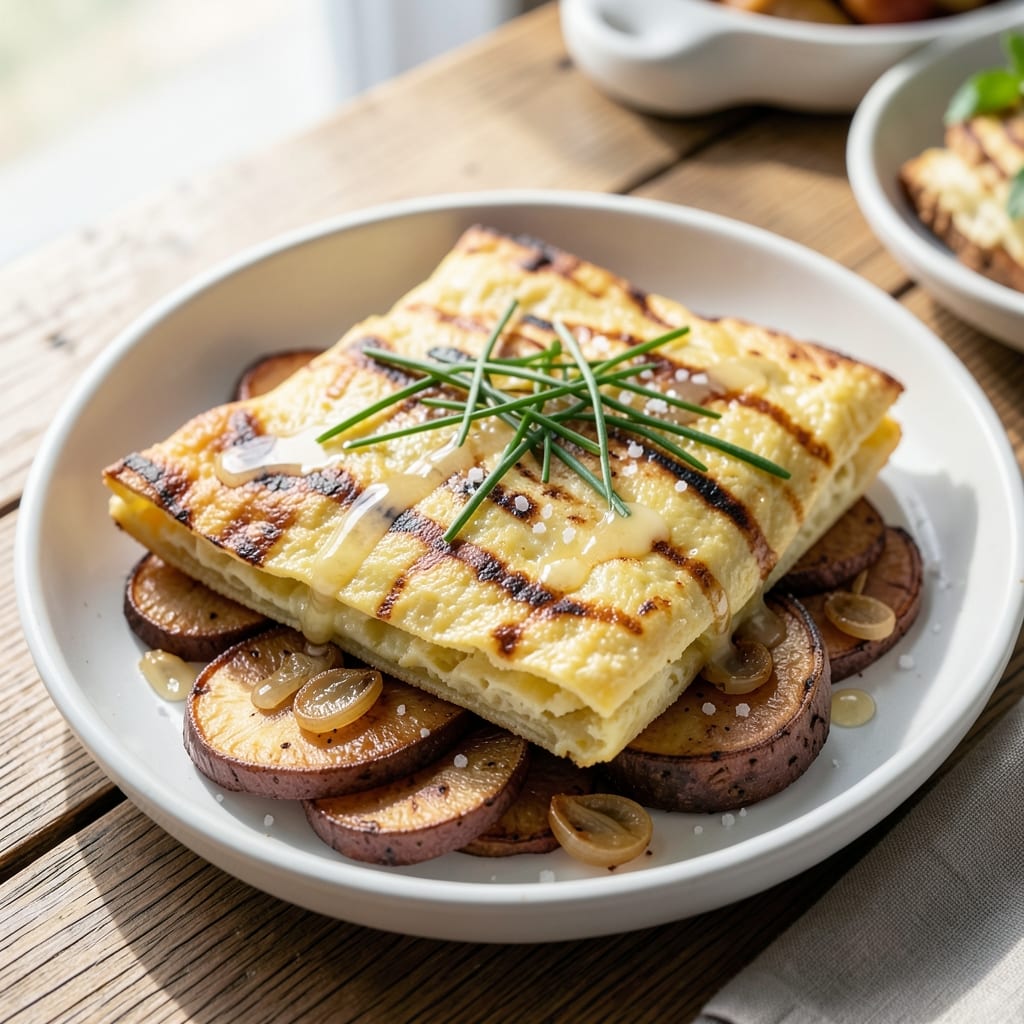
This egg and potato omelette recipe transforms simple ingredients into a restaurant-worthy breakfast with crispy potato layers and silky egg ribbons—no fancy skills required. The secret lies in cooking the potatoes just right before folding them into the eggs, creating that perfect contrast of textures. I perfected this technique after years of experimenting with potato omelettes, and it never fails to impress, even for brunch guests who think they don’t like potatoes in eggs.
What sets this recipe apart is the balance of flavors and textures: golden, crispy potato slices at the edges, tender potatoes in the center, and eggs that remain creamy and custardy throughout. The potatoes absorb the egg mixture beautifully, soaking up every bit of flavor without turning soggy. This method works equally well as a hearty breakfast or a satisfying lunch, and it’s completely vegetarian—just add your favorite cheese or herbs for extra depth.
By the time you fold the last layer, you’ll have an omelette that’s rich, satisfying, and packed with savory crunch—no dry edges or rubbery potatoes in sight. The key is patience: letting the potatoes crisp slightly before adding the eggs ensures they stay crispy, while a low-and-slow finish keeps the eggs perfectly set. This is the kind of dish that makes breakfast feel like a special occasion, even on a weekday morning.
Serve it with a side of fresh avocado or a sprinkle of hot sauce for brightness, or keep it simple with a dollop of sour cream. The possibilities are endless, but the technique remains foolproof. Let’s get started—your taste buds (and brunch menu) will thank you.
Ingredients for egg and potato omelette
Simple ingredients, restaurant-worthy textures—crispy potatoes and silky eggs in every bite.
| Ingredient | Amount | Notes |
|---|---|---|
| Large Eggs 🥚 | 6 whole | Room temperature for even cooking |
| Russet Potatoes 🥔 | 1 ½ lb | Thinly sliced (1/8-inch), waxed paper separated |
| Unsalted Butter 🧈 | 2 tbsp | Full-fat for best flavor |
| Shallots 🧅 | 2 whole | Minced finely for sweetness |
| Fresh Chives 🌿 | ¼ cup | Chopped, for garnish |
| Diamond Crystal Kosher Salt 🧂 | ½ tsp | For seasoning, not salting |
| Freshly Ground Black Pepper 🌶️ | ¼ tsp | Light hand for subtle flavor |
| Vegetable Oil 🫒 | 1 tbsp | High smoke point for frying |
| Sharp Cheddar Cheese 🧀 | ½ cup | Shredded, optional for depth |
| Sour Cream 🥛 | ¼ cup | Full-fat for serving |
| Avocado 🥑 | 1 whole | Sliced, for serving |
| Hot Sauce 🌶️ | 1 tbsp | For serving, optional |
The potatoes are non-negotiable here. Russet potatoes work best—they're starchy enough to crisp up without turning gummy. Trader Joe's or Whole Foods carry them pre-sliced for convenience, but if you're slicing yourself, use a mandoline for even 1/8-inch pieces. Separate them with waxed paper so they don't stick. The shallots? Fresh is key—dried powder won't give that sweet, oniony punch. If you can't find them, green onions work in a pinch, but chop the whites extra fine to avoid bitterness. For the eggs, room temperature is everything—they'll cook more evenly and won't curdle.
No butter? Olive oil or ghee works just fine, though butter adds that unmistakable richness. Swapping cheddar? Gruyère or sharp white cheddar hold up better to the moisture. The sour cream can be Greek yogurt if you're avoiding dairy, but trust me on the full-fat version—it makes everything taste better. For the avocado, Hass varieties are ideal—they hold up well when sliced. If yours is too soft, sprinkle with a pinch of salt and let sit for 10 minutes before serving. The hot sauce is purely optional, but I always keep a bottle nearby—it cuts through the richness beautifully.
Potatoes stay crispy for 2 days in the fridge if wrapped tightly in parchment. The eggs? Use within 3 days for best texture. I like to prep everything the night before—slice potatoes, chop shallots, and shred cheese—so morning assembly is a breeze. The omelette itself reheats poorly, so make it fresh. Store any leftovers (if there are any) in a single layer with parchment between slices to prevent sogginess. Freezes surprisingly well too—just reheat gently in a skillet with a splash of water to restore crispiness.
Why You'll Love This Recipe
- One-Pan Magic: I swear by this—just one skillet, no extra dishes. The potatoes soften while the eggs cook, and that buttery shallot aroma fills the kitchen. Honestly, my counters stay cleaner than my usual breakfast chaos.
- Crispy-Creamy Bliss: That golden crust on the potatoes? Chef’s kiss. The eggs stay tender, the butter melts into the shallots, and the chives add a fresh bite. It’s the kind of flavor that makes you pause mid-bite—even on a Tuesday.
- Leftovers That Don’t Suck: Unlike flimsy omelettes, these hold up for days. Reheat slices in a pan or toss cold into salads. I’ll be real: my lunchbox gets packed with these more than I’ll admit.
- Budget Breakfast Win: Russets are cheap, eggs are cheap, and a stick of butter lasts forever. This feeds four for under $5, and the taste? Way fancier than takeout. My wallet and taste buds agree.
Step-by-step instructions for layered egg and potato omelette
Here's how to build this restaurant-worthy omelette with crispy potato layers and silky eggs.
Prep and Par-Cook the Potatoes
Peel the 1.5 lb russet potatoes and slice them into 1/8-inch thick rounds using a mandoline or sharp knife. Separate each slice with waxed paper to prevent sticking. Pat them completely dry with paper towels—this ensures maximum crispiness later.
Heat 1 tablespoon vegetable oil in a nonstick skillet over medium-high heat. Add the potato slices in a single layer and cook for 3-4 minutes per side until they're golden brown and tender when pierced with a fork. Transfer to a paper towel-lined plate to drain excess oil. You want them crispy on the outside but still holding their shape.
Sauté the Shallots and Season
In the same skillet (no need to clean it—the fond adds flavor), melt 2 tablespoons unsalted butter over medium heat. Add the 2 minced shallots and cook for 2-3 minutes until they turn translucent and slightly caramelized. This step builds depth of flavor that carries through the entire dish.
Remove the skillet from heat and stir in the 0.5 teaspoon diamond crystal kosher salt and 0.25 teaspoon freshly ground black pepper. Let the mixture cool slightly—this prevents the eggs from scrambling when you combine them later. The shallots should be warm but not hot to the touch.
Whisk the Eggs to Perfect Silky Texture
Crack the 6 large eggs into a bowl and whisk vigorously for 30 seconds until the yolks and whites are fully combined. The eggs should be uniform in color with no streaks of white remaining. Room temperature eggs incorporate better, so if they're cold, let them sit at room temperature for 10 minutes before whisking.
Season the eggs with an additional pinch of salt and pepper—this ensures even seasoning throughout the omelette. The eggs should be at room temperature when you pour them into the skillet, so they cook evenly without creating a rubbery texture.
Build the Layered Omelette
Wipe the skillet clean and place it over medium-low heat. Pour in the whisked eggs, tilting the pan to distribute them evenly. Let them cook undisturbed for 2 minutes until the edges start to set but the center is still slightly runny. This creates a soft, custardy interior.
Sprinkle half of the 0.5 cup shredded sharp cheddar cheese evenly over the eggs, followed by half of the potato slices. Fold one side of the omelette over the filling, then the other side, creating a neat packet. Cook for another 1-2 minutes until the cheese melts and the bottom is golden brown. The omelette should be just set in the center—it'll finish cooking from residual heat.
Serve with Fresh Toppings
Transfer the omelette to a warm plate and let it rest for 1 minute to set completely. Garnish with the remaining 0.25 cup chopped fresh chives, 0.25 cup full-fat sour cream, slices of the 1 whole avocado, and a drizzle of 1 tablespoon hot sauce if you like a kick. The contrast of creamy avocado, tangy sour cream, and crispy potatoes with the silky eggs makes every bite perfect.
Slice the omelette into wedges and serve immediately while the potatoes are still crispy. The layers should hold together, with each bite delivering a mix of textures—creamy eggs, melty cheese, and crunchy potato. Enjoy with a simple arugula salad to balance the richness.
Pro Tips For Making Egg And Potato Omelette
- USE COLD POTATOES: I learned this the hard way—warm or room-temp potatoes steam the eggs instead of crisping them. Slice Russets thin (⅛-inch or less) and soak in cold water for 10 minutes to remove starch, then pat bone-dry before cooking. The cold start guarantees a golden, not soggy, base.
- SWEAT SHALLOTS FIRST: Skip the raw shallot hack—it burns fast and tastes bitter. Melt 1 tbsp butter in the pan, add minced shallots, and cook low for 3-4 minutes until translucent. This builds flavor without waiting for the potatoes to crisp, and you won’t waste time scrambling for a second pan.
- DON’T OVERMIX EGGS: Whisk eggs just until barely combined—lumps are fine. Overbeating makes them tough, and you’ll end up with a dense, rubbery omelette. Fold in potatoes and shallots gently after they’ve browned; rough handling collapses the structure. Think "cloud," not "pancake."
- SALT THE POTATOES: Season potato slices before cooking—more salt than you think, especially if using unsalted butter. Russets absorb flavor like sponges, and salting early ensures they’re seasoned through, not just on the surface. (Yes, even if you’re impatient like me.)
Essential equipment for this dish
Nonstick Skillet
A 10-inch nonstick skillet is your best friend for this recipe—it prevents sticking and makes flipping easier. I recommend a high-quality brand like All-Clad or Cuisinart for even heat distribution. If you don’t have nonstick, a well-seasoned cast iron (like Lodge) works too, but you’ll need to oil it generously to prevent sticking. Avoid aluminum or thin stainless steel—they won’t hold heat consistently for crispy potatoes and silky eggs. 🔥
Mandoline Slicer
For even 1/8-inch potato slices, a mandoline (like the OXO Good Grips) is a game-changer. It ensures consistent thickness, so all potato slices crisp at the same rate. If you don’t own one, a sharp chef’s knife and steady hand work, but be extra careful—thick slices will stay undercooked, while thin ones burn quickly. I slice potatoes against the grain to prevent them from falling apart later. 🥔
High-Quality Butter
Use unsalted butter (like Plugrá or Kirkland Signature) for the best flavor—it’s richer and melts more smoothly than salted. Salted butter can make your omelette too salty, especially if you’re adding cheese or other seasonings. If you’re avoiding dairy, European-style cultured butter (like Miyoko’s) works well too. Always use room-temperature butter—it melts evenly without splattering. 🧈
Whisk and Mixing Bowl
A balloon whisk (like OXO’s) is perfect for blending eggs to a silky consistency. Avoid forks—they create streaks that lead to uneven cooking. For the bowl, use a deep, wide one (like Le Creuset’s) to prevent splashing when whisking. If your eggs are cold, let them sit in the bowl for 10 minutes before whisking to ensure even cooking. A glass or stainless steel bowl is ideal—plastic can retain odors. ✨
Tongs for Flipping
Stainless steel tongs (like Mercer Culinary’s) are better than spatulas for folding the omelette—they grip the edges without tearing. Avoid plastic or silicone tongs; they can’t handle the heat and may melt. Practice your fold before adding fillings to get a neat, even shape. The goal is a tight packet that holds together while cooking. 💪
Paper Towels and Waxed Paper
Keep paper towels nearby to drain excess oil from the potatoes and waxed paper to separate slices while prepping. I use Bounty for absorbency and Reynolds Wrap for its nonstick properties. For storage, wrap the omelette in parchment paper (like If You Care) to keep it crispy overnight. These simple tools make all the difference in texture and presentation. 💫
Nutrition facts
Frequently asked questions
Why do the potatoes need to be sliced so thin?
Thin 1/8-inch slices ensure even cooking and maximum crispiness while staying tender inside. Thicker slices would take too long to cook, making the eggs rubbery by the time they're done. The mandoline creates perfect consistency—no more soggy centers or burnt edges!
Can I make this omelette without cheese?
The recipe works beautifully without cheese—it's still packed with flavor from the potatoes, shallots, and eggs. For extra richness, try adding 1 tablespoon of sour cream to the egg mixture before cooking. The crispy potatoes and silky eggs shine on their own!
How do I keep the potatoes crispy when folding?
Cook the potatoes until golden brown and tender, then drain well on paper towels. Use medium-low heat when adding the eggs, and fold the omelette quickly—just 1-2 minutes is all it needs to set. The residual heat finishes cooking while keeping the potatoes crisp. Never overcook the eggs after folding!
What if I don't have shallots?
No problem! Swap them for 1/4 cup finely chopped red onion or 2 green onions (whites and greens). For extra flavor, add a pinch of garlic powder. The key is to use something with mild sweetness—avoid strong onions that might overpower the delicate egg and potato flavors.
Can I make this ahead of time?
Prep the potatoes and shallots the night before, but assemble the omelette fresh—it's best served immediately for crispy texture. If you must reheat, warm in a 350°F oven for 5-7 minutes on a baking sheet, covered with foil. For storage, keep components separate until cooking to maintain crispness.