
Sauces & Condiments
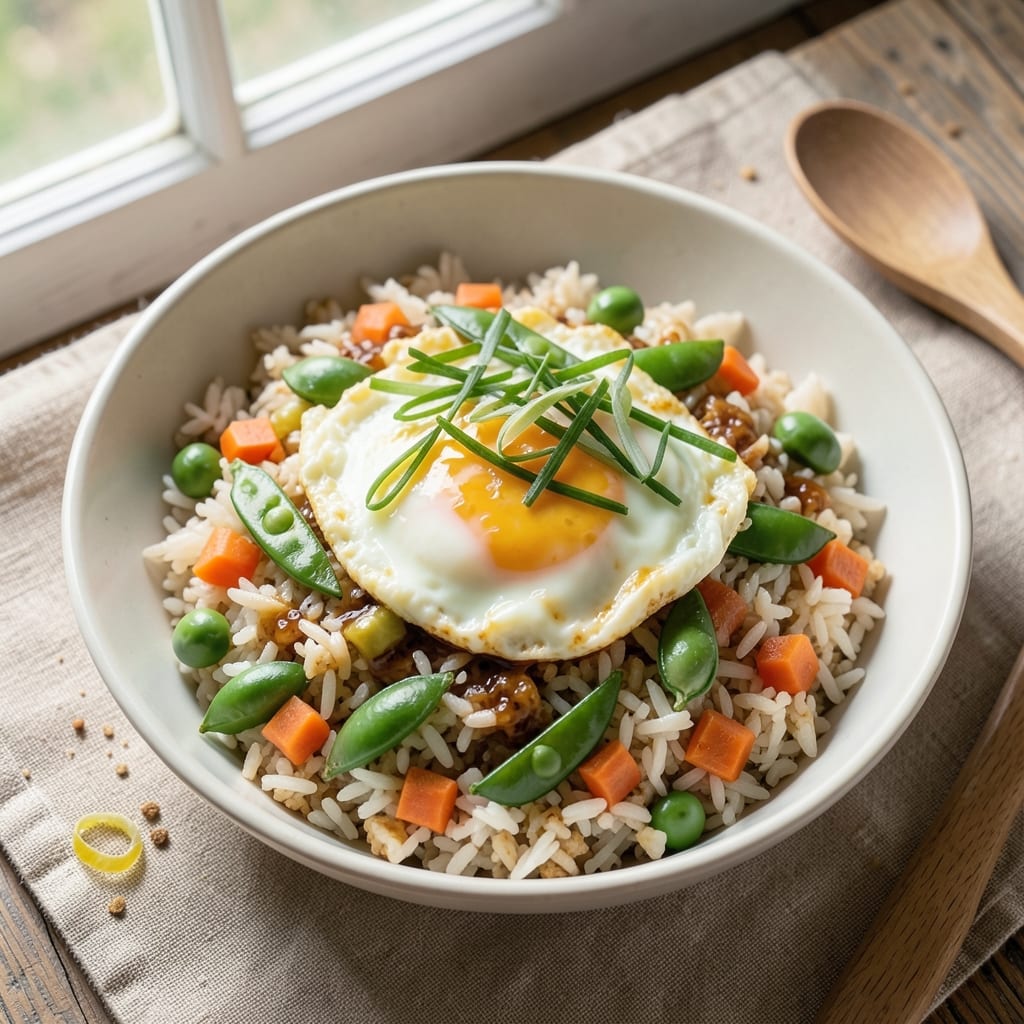
This easy fried rice recipe with egg and soy sauce delivers restaurant-quality flavor in just 20 minutes using one pan. The secret lies in high-heat stir-frying and proper soy sauce balance—transforming day-old rice, scrambled eggs, and simple veggies into a savory, umami-packed dish that’s foolproof for beginners.
Perfect for weeknight dinners or meal prep, this recipe relies on a few key techniques: breaking up cold rice properly, scrambling eggs separately for texture, and tossing everything together with just enough soy sauce to coat without overpowering. The result? A golden, aromatic dish with crisp edges and tender, flavorful bites that taste like you spent hours cooking.
Ingredients for easy fried rice recipe with egg and soy sauce
High-heat stir-frying transforms simple pantry staples into restaurant-quality fried rice in minutes.
| Ingredient | Amount | Notes |
|---|---|---|
| Day-Old Cooked White Rice 🍚 | 4 cups | Cold rice preferred, broken into pieces |
| Large Eggs 🥚 | 4 whole | Room temperature for even cooking |
| Light Soy Sauce 🍶 | ½ cup | Kikkoman preferred for authentic flavor |
| Neutral Vegetable Oil 🫒 | 3 tbsp | High smoke point, like avocado oil |
| Frozen Mixed Vegetables 🥕 | 1 ½ cups | Peas, carrots, corn blend ideal |
| Green Onions 🧅 | 4 whole | Thinly sliced, white and green parts |
| Garlic Cloves 🧄 | 3 cloves | Minced for aromatic depth |
| Sesame Oil 🫒 | 1 tbsp | Toasted for nutty aroma |
| Diamond Crystal Kosher Salt 🧂 | ½ tsp | Adjust to taste after cooking |
| White Pepper 🌶️ | ¼ tsp | Freshly ground for subtle heat |
| Toasted Sesame Seeds 🌾 | 1 tbsp | For garnish and texture |
The rice is the foundation—day-old works best as it's drier and absorbs flavors better. Day-old jasmine or basmati from the Asian market delivers the most authentic texture, but any white rice will do. Break it up into bite-sized pieces with your hands or a fork before cooking—this creates those signature crisp edges. For the eggs, room temperature is key; they'll scramble more evenly. The soy sauce makes or breaks this dish—Kikkoman is the gold standard, but any light soy will work. Avoid dark soy unless you want a deeper color.
No frozen veggies? Fresh peas, diced carrots, and corn kernels work perfectly, but they'll cook faster so add them last. Short on green onions? Substitute scallions or chives at the same amount. The garlic can be pre-minced from a jar (the good stuff, not the dusty kind), but fresh is always better. For extra umami, add 1 tbsp fish sauce (vegetarian? use soy sauce instead). The sesame oil should be toasted—look for it in the Asian aisle or toast regular sesame oil in a dry pan for 30 seconds. And if you're feeling fancy, swap the white pepper for a pinch of Sichuan peppercorns for a tingling finish.
This dish reheats beautifully—just add a splash of water and stir-fry again over high heat. Store leftovers in an airtight container for up to 4 days in the fridge. For meal prep, portion into containers with a layer of plastic wrap pressed against the rice to prevent sogginess. The sesame seeds and green onions can be added fresh when serving to keep them vibrant. Double the recipe and freeze half for lazy nights—it thaws and reheats like a dream.
Why You'll Love This Recipe
- No Chopping Needed: I keep a bag of frozen veggies in the freezer just for this—no peeling, dicing, or prepping. Toss them straight from the bag into the hot oil, and they crisp up perfectly while the eggs scramble. Honestly, the only knife I use is to crack eggs into a bowl.
- Umami Magic: That first splash of light soy sauce? It’s the secret weapon—salty, savory, and just enough to make the rice taste like it’s been simmering for hours. The eggs add richness, and the frozen veggies? They soak up the flavor like sponges. Between us, this is the kind of dish that makes you go back for seconds without even trying.
- Leftover Hero: This recipe actually improves the next day. The rice gets slightly firmer, the flavors meld even better, and reheating it in a pan with a little extra soy sauce? It’s like a free upgrade. I make a big batch on Sundays and eat it all week—no sad, dry leftovers here.
- Pocketbook Friendly: Day-old rice, eggs, soy sauce, and frozen veggies? This is the ultimate budget stretch. I can feed four people for under $5, and the leftovers are just as satisfying. Plus, no fancy ingredients—just the basics you already have. (Yes, even on a Tuesday night.)
Step-by-step instructions for easy fried rice with egg and soy sauce
Here's the straightforward method for a restaurant-quality fried rice using only one pan.
Prepare the Egg Mixture and Break Down the Rice
Crack the 4 whole large eggs into a medium bowl and whisk vigorously until the yolks and whites are completely combined. I like to add a pinch of the 0.5 teaspoon diamond crystal kosher salt and 0.25 teaspoon white pepper to the eggs at this stage—this ensures even seasoning throughout the dish.
In a separate large bowl, break apart the 4 cups day-old cooked white rice with your hands or a fork until it resembles coarse grains. Cold rice is essential here—it prevents the dish from becoming mushy. Remove any large clumps, as they'll create uneven texture in your fried rice.
Scramble the Eggs and Set Aside
Heat 2 tablespoons of the neutral vegetable oil in a 14-inch nonstick skillet or wok over medium-high heat until shimmering. Pour in the egg mixture and let it sit undisturbed for 5-7 seconds before gently pushing the eggs around the pan with a spatula, creating soft curds.
Continue cooking until the eggs are just set but still slightly moist—about 30-45 seconds. Remove from the pan and set aside on a plate. The eggs should look like soft, creamy ribbons rather than fully scrambled. This texture is crucial for authentic fried rice.
Stir-Fry the Vegetables and Aromatics
Increase the heat to high and add the remaining 1 tablespoon neutral vegetable oil to the same pan. Add the 1.5 cups frozen mixed vegetables and stir-fry for 2-3 minutes until they begin to soften and release their moisture. Don't overcrowd the pan—work in batches if needed.
Add the 3 cloves minced garlic cloves and 4 whole thinly sliced green onions (white parts only), stirring constantly for 30 seconds until fragrant. The garlic should turn golden without burning—this adds depth to the dish. Push the vegetables to one side of the pan, creating space for the rice.
Combine Rice and Sauce for Perfect Texture
Add the broken-down rice to the pan, spreading it evenly. Drizzle the 0.5 cup light soy sauce over the rice and toss gently with tongs for 2-3 minutes until the rice begins to sizzle and turn translucent at the edges. This is where the magic happens—the soy sauce should coat each grain without making the rice soggy.
Sprinkle the 1 tablespoon toasted sesame seeds over the rice and toss again. The seeds will toast slightly in the pan, releasing their nutty aroma. Cook for another 1-2 minutes until the rice is heated through and the edges are beginning to crisp slightly.
Finish with Eggs, Sesame Oil, and Garnish
Return the scrambled eggs to the pan and gently fold everything together using a spatula. Add the 1 tablespoon sesame oil and toss for 30-45 seconds until the rice is evenly coated and the sesame oil is absorbed. The dish should smell deeply aromatic with notes of soy, garlic, and toasted sesame.
Taste and adjust seasoning with additional soy sauce or kosher salt if needed. Garnish with the remaining green onion tops and serve immediately while the rice is still hot. The final dish should have crisp-tender rice, creamy egg ribbons, and vibrant vegetables in every bite.
Pro Tips For Making Easy Fried Rice Recipe With Egg And Soy Sauce
- CHOP RICE SMALL AND DRY: Break up clumps with your hands first—no need for a knife—and spread the rice on a tray to dry for 10 minutes. I learned this the hard way after making mushy fried rice twice in a row; dry rice fries up crisp instead of sticking.
- SCRAMBLE EGGS FIRST: Push the egg mixture to the side of the pan and let it set for 30 seconds before stirring. This gives you fluffy, soft curds instead of scrambled bits—just what you want in fried rice. (Yes, even if you’re impatient like me.)
- USE LESS SOY SAUCE: Start with half the amount listed, taste, then add more. Light soy sauce is salty, and overdoing it turns your dish flat. Trust me, you can always add more, but you can’t fix oversalting.
- FREEZE VEGETABLES IN ADVANCE: Thaw and drain frozen veggies overnight in the fridge, then pat them very dry with a paper towel. Cold, wet veggies steam instead of crisp up—this guarantees they’ll sizzle and add texture. (Your future self will thank you.)
Flavor customization for this dish
Spicy Kick
Add 1-2 teaspoons of chili garlic sauce or ½ teaspoon red pepper flakes when tossing the rice with soy sauce. For extra heat, stir in 1 tbsp of gochujang (Korean chili paste) with the soy sauce. I like to balance the heat with a drizzle of honey or 1 tsp of sugar to create a sweet-spicy contrast. 🌶️
Umami Boost
Elevate the savory depth by adding 1 tbsp fish sauce (or 1 tsp vegetarian oyster sauce) to the soy sauce mixture. For a richer flavor, stir in 1 tsp of mushroom powder or finely chopped dried shiitake mushrooms. I also love adding 1 tbsp of hoisin sauce for a slightly sweet, tangy complexity.
Herbaceous Twist
Brighten the dish with fresh herbs like cilantro or Thai basil. Chop ¼ cup of cilantro and stir it in during the final 30 seconds of cooking, or add 10-12 Thai basil leaves for a fragrant, slightly peppery note. For a more robust flavor, use ½ cup of chopped scallions instead of green onions.
Sweet and Tangy
Add a touch of sweetness with 1 tbsp of rice vinegar or 1 tsp of sugar when tossing the rice. For a tangy twist, mix 1 tbsp of lime juice with the soy sauce before adding it to the rice. I also enjoy adding ½ cup of diced pineapple (fresh or canned) for a tropical-inspired variation that balances the savory flavors.
Smoky Depth
Infuse the dish with smoky flavor by adding ½ teaspoon smoked paprika or 1 tbsp of liquid smoke to the soy sauce mixture. For a more authentic touch, use 1 tsp of doubanjiang (Chinese fermented chili bean paste) instead of red pepper flakes. This adds a deep, complex flavor that pairs beautifully with the eggs and vegetables.
Creamy Finish
For a richer texture, stir in 2 tbsp of crumbled feta cheese or 1 tbsp of cream cheese during the final 30 seconds of cooking. Alternatively, add ¼ cup of diced avocado or a dollop of sour cream on top just before serving. This adds a creamy contrast that complements the crisp-tender rice beautifully. 💛
Nutrition facts
Frequently asked questions
Can I use freshly cooked rice instead of day-old rice?
Freshly cooked rice is too moist and will turn mushy when stir-fried. For perfect texture, use day-old rice (or rice cooked at least 6 hours earlier). If you're in a hurry, spread freshly cooked rice on a tray and refrigerate for 30 minutes to dry it out slightly before using.
What's the secret to getting crispy edges on the fried rice?
High heat is key! Use a 14-inch skillet or wok on high heat and make sure your oil is shimmering before adding the rice. Break up the rice into even pieces and spread it in a single layer—this maximizes surface area for crisping. Toss constantly for 2-3 minutes until edges turn golden.
How do I prevent the eggs from turning rubbery?
Remove the eggs from the pan as soon as they're just set (30-45 seconds) and set them aside. Overcooking makes eggs tough. When adding them back at the end, cook for only 30 seconds to gently warm through. For extra tenderness, whisk the eggs with a pinch of sugar (¼ teaspoon) before cooking.
Can I make this vegetarian or vegan?
Swap the eggs for tofu (press and cube firm tofu, then pan-fry until crispy) or mushrooms (sauté sliced shiitake or oyster mushrooms first). For vegan soy sauce, use a high-quality tamari. Add 1 teaspoon of nutritional yeast for extra umami if needed.
Why does my fried rice taste bland?
Most likely, you didn't use enough soy sauce or let it develop flavor. Start with the full ½ cup soy sauce and taste as you cook—add more if needed. Also, make sure your pan is hot enough to caramelize the edges slightly. For extra depth, add 1 teaspoon of fish sauce or a splash of sesame oil at the end.