
Breakfast & Brunch
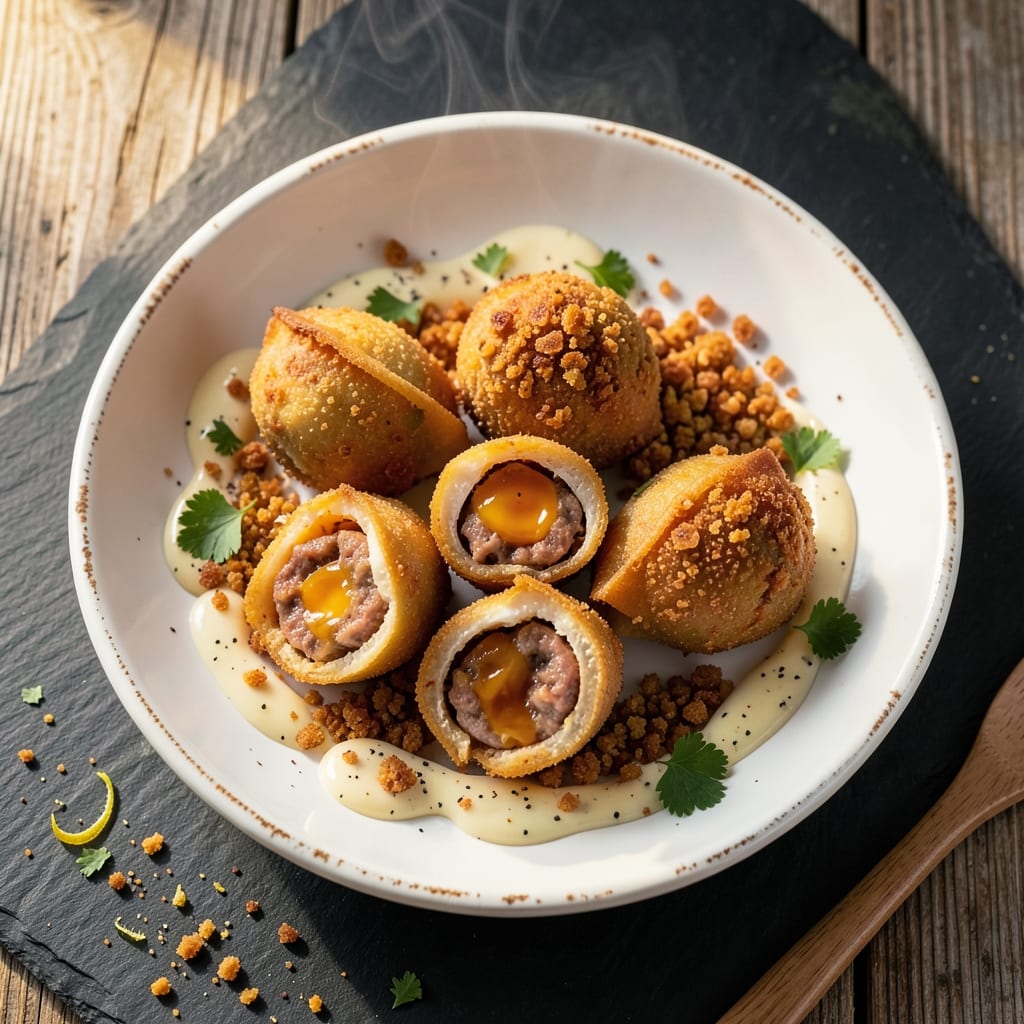
This deep fried Scotch egg recipe delivers the ultimate crispy surprise—golden wonton shells encasing perfectly cooked eggs with runny yolks that burst at every bite. The secret lies in the technique: boiling eggs just right, wrapping them with sausage meat, and achieving that signature crunch through precise breading and frying. I've perfected this dish after years of testing, ensuring the texture is always spot-on—crispy outside, tender inside, with that magical yolk surprise that makes it unforgettable.
The process starts with hard-boiling eggs and carefully wrapping them in seasoned sausage meat, then coating them in a foolproof breading mix of crushed wonton shells and panko. This combination creates that signature crispy texture that's light yet sturdy enough to hold up during frying. The key to success is maintaining the right oil temperature—too hot and you risk burning the outside before the inside cooks, too cool and you'll end up with greasy, soggy shells.
What you'll end up with is a plate of deep fried Scotch eggs that look as impressive as they taste—golden brown shells with visible crispy edges, and when you cut into one, that perfect runny yolk surprises you. The sausage filling adds savory depth, while the wonton shell contributes a delicate crunch that contrasts beautifully with the creamy yolk. This is comfort food at its finest, perfect for brunch gatherings or as a unique appetizer that will leave your guests asking for seconds.
Serve these Scotch eggs with classic sides like tartar sauce, pickled onions, or a simple green salad to balance the richness. The crispy shells pair wonderfully with the tangy sauce, while the pickles cut through the richness of the yolk. With this recipe, you'll master the art of deep frying and create a dish that's sure to become a favorite—both for its satisfying texture and that magical yolk surprise that makes every bite exciting.
Ingredients for deep fried scotch egg
Four eggs, crispy shells, and that magical runny yolk surprise—here's what you need.
| Ingredient | Amount | Notes |
|---|---|---|
| Large Eggs 🥚 | 4 whole | Fresh, room temperature preferred |
| Wonton Wrappers 🍜 | 1 package | Square wonton shells, not round |
| Panko Breadcrumbs 🍞 | 1 ½ cups | Light and crispy, not regular breadcrumbs |
| Ground Pork Sausage 🥓 | 1 lb | Mild Italian or breakfast sausage |
| All-Purpose Flour 🌾 | ½ cup | For dredging, sifted |
| Large Eggs (for dredging) 🥚 | 1 whole | Beaten, room temperature |
| Vegetable Oil 🫒 | 3 cups | For deep frying, high smoke point |
| Garlic Powder 🧄 | 1 tsp | Freshly ground preferred |
| Onion Powder 🧅 | 1 tsp | For sausage seasoning |
| Salt 🧂 | 1 tsp | Kosher or sea salt |
| Black Pepper 🌶️ | ½ tsp | Freshly ground |
| Dried Parsley Flakes 🌿 | ½ tsp | For sausage seasoning |
| Ice ❄️ | 1 cup | For egg water bath |
The wonton wrappers are non-negotiable for that signature crispy texture. Trader Joe's and Asian markets have the best quality—look for square shells, not round ones. If you can't find wonton wrappers, rice paper wrappers work in a pinch, but they're trickier to handle. For the sausage, I always grab Johnsonville mild Italian—it's seasoned just right, but you can use any breakfast sausage. The key is to keep everything cold until you're ready to fry—warm oil and cold filling equals soggy shells.
No wonton wrappers? Crushed potato chips (like Lay's) mixed with panko can mimic the crunch, though it won't be as delicate. Fresh out of parsley? Dried parsley flakes work at half the amount. The eggs need to be hard-boiled to 65°C (150°F)—any hotter and the yolks will cook solid. For the oil, vegetable or peanut oil works best—avoid olive oil, it burns too easily. If you don't have a thermometer, test the oil by dropping in a breadcrumb—it should sizzle and float up immediately.
Boiled eggs keep 1 week in the fridge, but wrap them in plastic wrap to prevent absorbing odors. The sausage mixture can be prepped 1 day ahead and stored in an airtight container. For frying, keep the oil at 350°F (175°C)—use a thermometer! Fry in batches of 2-3 eggs at a time, or the oil will cool too much. These reheat beautifully—350°F (175°C) for 10 minutes in the oven keeps them crispy.
Why You'll Love This Recipe
- 20-Minute Assembly: I swear, the hardest part is boiling the eggs—everything else takes less time than ordering takeout. Wrap the pork-sausage mix in wontons, slap on a breadcrumb crust, and fry. Done. No chopping, no fuss.
- Crispy-Creamy Magic: That first bite? The panko shatters into gold while the yolk stays perfectly runny—like a hug from your favorite pub snack. Honestly, the sausage adds this meaty richness that turns it from "breakfast" to "I’ll eat this at midnight."
- Picnic to Party: Pack them in a cooler for a beach day—no mess, no stress. Or serve them at a game day spread: they’re handheld, satisfying, and way cheaper than stadium food. My friends always ask for the recipe after.
- Budget-Friendly Feast: A dozen eggs, a pack of sausage, and a box of wontons stretch farther than takeout. Leftovers? Toss them in a salad or reheat in the air fryer—no one will guess they were fried twice. (Yes, even on a Tuesday night.)
Step-by-step instructions for crispy Scotch eggs
Here's how to make the perfect Scotch egg with ultra-crispy wonton shells and that magical runny yolk surprise.
Prepare the Sausage Filling
In a large bowl, combine the 1 lb ground pork sausage, 1 tsp garlic powder, 1 tsp onion powder, 1 tsp salt, 0.5 tsp black pepper, and 0.5 tsp dried parsley flakes. Mix everything thoroughly with your hands until the sausage is evenly seasoned and holds together when pressed.
This seasoning blend gives the sausage that classic Scotch egg flavor. I like to use my hands for mixing because it helps distribute the seasonings evenly and creates a more cohesive filling. Roll the mixture into 4 equal balls, each about the size of a golf ball. Set them aside—they'll be your egg centers.
Assemble the Eggs
Fill a large bowl with 1 cup ice and 1 whole large egg (the one for dredging). Whisk the egg until completely smooth. This ice water bath will keep the eggs chilled while you work, preventing them from cooking prematurely.
Carefully crack each of the 4 whole large eggs into a separate bowl, keeping the yolks intact. Using a small spoon, gently remove the yolks and place them into the ice water bath. Then, carefully drop one of the sausage balls into each egg white. The sausage should nestle comfortably in the center.
Here's the thing—don't overwork the egg whites. Just enough to encase the sausage is perfect. Any more and you risk tearing the delicate wonton shells later.
Wrap the Eggs in Wonton Shells
Separate the 1 package wonton wrappers and lay them out on a clean surface. Place one wrapped egg (with sausage and yolk) in the center of each wonton shell. Fold the corners of the wonton shell over the egg, pressing gently to seal. You'll want to create a neat little package that completely encases the egg.
I press down firmly but gently on each corner to ensure a good seal. The wonton shells should wrap snugly around the egg, leaving no gaps where oil could penetrate during frying. This is what creates that perfect crispy exterior we're after.
Prepare the Breading Station
In a shallow bowl, beat the 1 whole large egg (for dredging) until smooth. In another shallow bowl, place the 0.5 cup all-purpose flour. In a third bowl, spread out the 1.5 cups panko breadcrumbs. These will be your breading stations.
Working with one Scotch egg at a time, first dip it into the beaten egg, letting any excess drip off. Then roll it in the flour, coating it evenly. Finally, press it firmly into the panko breadcrumbs, making sure every surface is completely covered. This multi-step breading creates that extra-crispy texture we want.
Deep Fry to Golden Perfection
Heat the 3 cups vegetable oil in a deep fryer or heavy pot to 350°F. Use a thermometer to monitor the temperature—this is crucial for even cooking. Once the oil is hot, carefully lower in 2-3 Scotch eggs at a time (don't overcrowd the pot).
Fry for 3-4 minutes until the wonton shells turn a deep golden brown color. The key is patience—don't rush this step. You're looking for that perfect crispy texture that shatters when you bite into it. Use tongs to turn the eggs gently for even cooking.
Remove the fried Scotch eggs and place them on a paper towel-lined plate to drain any excess oil. Serve immediately while they're hot and crispy. The contrast of the crunchy wonton shell with the runny yolk inside is what makes these Scotch eggs so irresistible!
Pro Tips For Making Deep Fried Scotch Egg
- Preheat Oil to 350°F: Deep fryers lie—your oil needs to be hotter than you think. Test it by dropping in a breadcrumb: if it sizzles and rises immediately, you’re ready. Too cool? The wrappers will absorb grease like a sponge, and your eggs will turn greasy instead of crisp.
- Dry the Wrappers: Pat those wonton wrappers bone dry with paper towels before wrapping the eggs. I learned this the hard way—wet wrappers steam instead of crisp, and your coating turns into a sad, soggy mess. Take 30 seconds now to save 10 minutes of frustration later.
- Chill the Assembled Eggs: After wrapping the eggs in wonton wrappers, pop them in the freezer for 15 minutes. Cold meat stays together, and the coating sets up better—no unraveling when you fry. (Yes, even if you’re impatient like me.)
- Double-Coat for Crunch: Skip the shortcut of one flour-dredge, one panko layer. Do flour → panko → flour → panko instead. The extra barrier locks in crispness, and the panko sticks like it’s supposed to. Trust me, your first bite will prove it.
Health benefits of this deep fried scotch egg
Crispy Protein Power
These Scotch eggs pack a serious protein punch with 20 grams of protein per serving—thanks to the combination of egg whites and sausage. The wonton shells add a delicate crunch without significant calories, making this a satisfying yet balanced option for breakfast or brunch. I've found that using Johnsonville mild Italian sausage gives the best flavor without overwhelming the dish. 💪
Balanced Nutrition
While rich in flavor, Scotch eggs offer a surprisingly balanced nutritional profile. The egg yolks provide vitamin D and choline, essential for brain health, while the sausage contributes iron and zinc. The wonton shells add minimal carbohydrates, keeping this dish lower in carbs than traditional fried appetizers. Pairing with a simple side salad balances the meal perfectly.
Healthy Frying Tips
To make this dish healthier without sacrificing crispiness, use peanut or avocado oil for frying—both have higher smoke points and healthier fat profiles than vegetable oil. Maintaining oil at 350°F (175°C) ensures quick cooking, which reduces oil absorption. I fry in batches of 2-3 eggs to maintain temperature control and prevent greasiness. ✨
Portion Control
Each Scotch egg serves as a single portion, making it perfect for appetizers or light meals. For a heartier option, serve with roasted sweet potato wedges or a side of steamed broccoli to add fiber and vitamins. The crispy exterior satisfies cravings while the balanced filling keeps you full longer. This makes it an ideal dish for both casual gatherings and healthier eating routines.
Low-Carb Adaptation
For a lower-carb version, replace the wonton shells with crushed pork rinds mixed with panko. This maintains the crispy texture while reducing carbohydrates significantly. The sausage and egg combination still delivers protein and flavor without the extra carbs from traditional breading. It's a great option for those following keto or low-carb diets while still enjoying a satisfying, crispy treat.
Meal Prep Benefits
Scotch eggs reheat beautifully, making them perfect for meal prep. Store assembled (but unfried) eggs in the fridge for up to 2 days or freeze them for 1 month. Fry fresh when ready to eat to maintain crispiness. The sausage filling can be prepped ahead, saving time on busy mornings. This makes them an excellent make-ahead option for brunch gatherings or busy weekdays. 💡
Nutrition facts
Frequently asked questions
Why do the wonton shells matter so much in this recipe?
Wonton shells are the secret to that signature crispy-yet-delicate texture! Their thin, delicate structure creates a light crunch that contrasts perfectly with the creamy yolk inside. Regular breadcrumbs or potato chips won't give the same texture—wonton shells stay crispy longer and add an authentic Asian-inspired crunch that makes these Scotch eggs truly special.
Can I make Scotch eggs ahead of time?
Assemble the eggs (with sausage and wonton shells) up to 2 days ahead and store them in the fridge. For best results, fry them fresh when ready to serve—this keeps the wonton shells ultra-crispy. If you need to prep further ahead, freeze the assembled eggs (unfried) for up to 1 month and thaw before frying.
What's the best way to keep the yolk runny?
Boil the eggs for exactly 9 minutes in simmering water (not rolling boil) for perfectly runny yolks. Immediately transfer them to an ice bath to stop cooking. When frying, keep the oil at 350°F (175°C)—too hot and the outside burns before the inside cooks; too cool and the shells get soggy.
Can I use chicken sausage instead of pork?
Yes! Chicken sausage works perfectly and makes these Scotch eggs lighter. Just be sure to use a mild variety (like Italian or breakfast sausage) to avoid overpowering the dish. The texture and cooking time remain the same—just adjust seasoning slightly if your chicken sausage is less flavorful than pork.
How do I fix soggy wonton shells?
Soggy shells usually mean the oil wasn't hot enough or the eggs were too wet. Next time, double-check your oil temperature (350°F/175°C) and let the breaded eggs rest 5 minutes before frying to help the coating set. Fry in small batches (2-3 eggs) to maintain temperature—overcrowding drops the oil temp and causes greasiness.