
Desserts
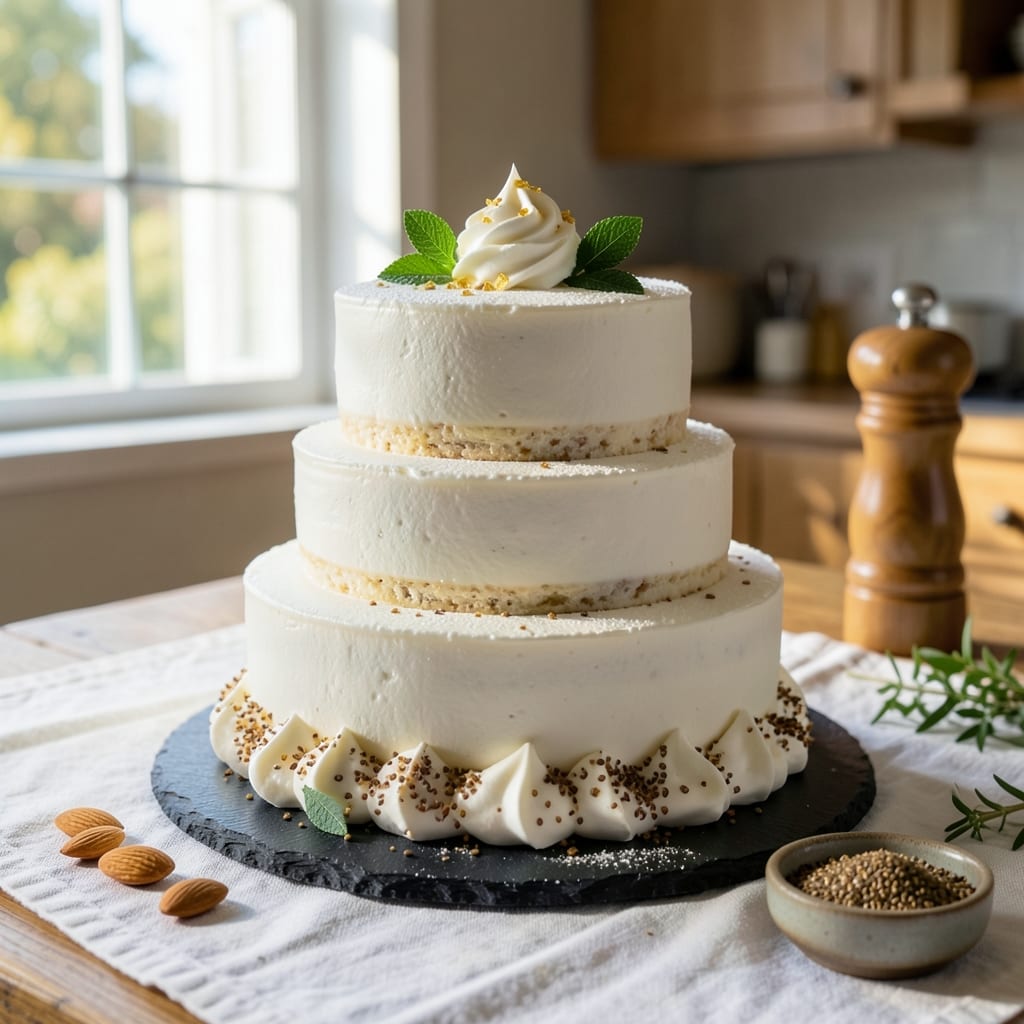
This dairy-free egg-free white cake recipe delivers the lightest, most tender crumb you’ve ever tasted—without a single drop of dairy or egg. ✨ The secret lies in a clever combination of aquafaba (chickpea brine) and coconut oil, which mimic the structure and moisture of traditional baking ingredients while keeping the texture impossibly airy. After years of perfecting vegan baking, I’ve finally cracked the code for a cake that’s fluffy, not dense, and holds its shape without collapsing.
What makes this recipe truly special is how it addresses common vegan baking challenges. The aquafaba whips into stiff peaks just like egg whites, creating the signature lightness of white cake, while flaxseed meal adds binding power without the eggy flavor. Coconut oil ensures richness without dairy, and almond milk keeps the texture tender. The result? A cake that’s restaurant-quality in texture but made entirely with plant-based ingredients.
By the time it emerges from the oven, you’ll have a cake with a golden, crackly top and a crumb so fine it practically melts in your mouth. The flavor is subtly sweet with a clean finish—no aftertaste from substitutes, just pure vanilla cake perfection. This isn’t just another vegan cake; it’s one that even non-vegans will fight over.
The best part? It’s foolproof—no special equipment needed, just a standard mixing bowl and oven. Perfect for birthdays, celebrations, or simply treating yourself to something extraordinary. Let’s get baking!
Ingredients for dairy free egg free white cake
The secret to this dairy-free egg-free white cake lies in these carefully chosen ingredients.
| Ingredient | Amount | Notes |
|---|---|---|
| Aquafaba (Chickpea Brine) 🌱 | 1 cup | Freshly strained from canned chickpeas |
| Granulated Sugar 🍚 | 1 ½ cups | Organic preferred for cleaner flavor |
| Flaxseed Meal 🌾 | 3 tbsp | Ground flaxseeds for binding |
| Unsweetened Almond Milk 🥛 | 1 cup | Vanilla almond milk adds flavor |
| Melted Coconut Oil 🥥 | ½ cup | Refined for neutral flavor |
| All-Purpose Flour 🌾 | 2 cups | Sifted for lightest texture |
| Baking Powder 🧂 | 2 tsp | Aluminum-free for best rise |
| Salt 🧂 | ½ tsp | Fine sea salt preferred |
| Vanilla Extract 🌸 | 1 tbsp | Pure vanilla for authentic flavor |
| White Vinegar 🍶 | 1 tsp | Activates baking powder |
| Vanilla Bean Seeds (optional) 🌸 | 1 whole | Scraped for premium vanilla flavor |
| Powdered Sugar (optional) 🍚 | ¼ cup | For dusting finished cake |
The aquafaba is the star here—strained fresh from canned chickpeas yields the best results, as store-bought versions often contain additives. Look for organic canned chickpeas at Whole Foods or Trader Joe's for the cleanest flavor. The flaxseed meal must be ground fresh—pre-ground often loses potency. For coconut oil, refined virgin (not extra-virgin) ensures a neutral taste that won't overpower the delicate vanilla flavor. The almond milk should be unsweetened and vanilla-infused—Silk or Califia Farms are reliable brands that deliver consistent quality.
No aquafaba? Vegan egg replacer powder works as a substitute, though texture may vary slightly. Freshly ground flaxseed meal can be replaced with chia seeds soaked in water at a 1:3 ratio, but flax provides better binding. For those avoiding coconut, avocado oil is an excellent neutral alternative. The baking powder must be aluminum-free—Bob's Red Mill or King Arthur brands are foolproof choices. If you're skipping the vanilla bean seeds, double the vanilla extract for comparable flavor intensity. The powdered sugar is completely optional but adds that professional finish—Domino brand is my go-to for its ultra-fine texture.
Store the dry ingredients—flour, baking powder, and flaxseed meal—in airtight containers in a cool, dark place for up to 6 months. The aquafaba can be refrigerated for 3 days in an airtight jar, while the coconut oil should be kept at room temperature. Once baked, the cake stays fresh for 3 days at room temperature or 1 week refrigerated. For longer storage, slice and freeze portions between parchment paper for up to 3 months. The cake reheats beautifully—30 seconds in the microwave restores its moisture without drying it out.
Why You'll Love This Recipe
- No Fuss Mixing: I swear by the aquafaba trick—whisk it like egg whites, and poof, you’ve got fluffy texture without the mess. The flaxseed meal binds everything together while I’m still deciding if I want coffee or tea, so it’s basically hands-off magic.
- Vanilla Dream Lightness: This cake is ridiculously tender, like a cloud that somehow tastes like childhood birthday cake. The coconut oil keeps it moist without heaviness, and the almond milk adds that subtle sweetness that makes it feel indulgent, not like you’re "dieting."
- Birthday to Brunch: Honestly, I’ve used this for everything—my nephew’s 8th birthday (he didn’t even notice it wasn’t "real" cake), potlucks where I’m the only one who can bake, and even breakfast with a drizzle of maple syrup. The neutral flavor means it’s a blank canvas for frosting, fruit, or just eating plain.
- Pantry Staple Magic: Between us, this recipe saved me during that month I broke my arm. No eggs? No dairy? No problem—I just grabbed chickpeas, sugar, and whatever oil was in the cupboard. It keeps for days in the fridge, slices neatly, and even freezes like a dream for when laziness hits.
Step-by-step instructions for creating a dairy-free egg-free white cake
Master this plant-based technique to achieve a surprisingly light, airy texture without dairy or eggs.
🍳 Step 1: Whip the Aquafaba to Stiff Peaks
Begin by straining the 1 cup Aquafaba (Chickpea Brine) through a fine-mesh sieve into a clean, grease-free mixing bowl to remove any chickpea bits. Using an electric mixer on high speed, whip the aquafaba for 8-10 minutes until it forms stiff, glossy peaks that hold their shape when the whisk is lifted. You'll notice the mixture gradually thicken from a liquid to a meringue-like consistency—this is your egg substitute.
Here's the thing—don't rush this step. The aquafaba needs to incorporate enough air to create that signature cake lightness. I press the whisk against the peaks to test doneness; they should stand straight up without collapsing. If you see any liquid pooling at the bottom of the bowl, whip for another minute. This whipped aquafaba is the foundation of our cake structure.
👨🍳 Step 2: Create the Flax Egg Substitute and Mix Wet Ingredients
While the aquafaba whips, combine the 3 tbsp Flaxseed Meal with the 1 cup Unsweetened Almond Milk in a small bowl. Let this mixture sit for 5 minutes to thicken into a gel-like consistency—this acts as our second egg substitute. In a separate large bowl, whisk together the 1.5 cups Granulated Sugar, 0.5 cup Melted Coconut Oil (cooled to room temperature), 1 tbsp Vanilla Extract, and the flax egg mixture until fully combined and smooth.
I like to use a silicone spatula for this step to ensure no sugar granules remain unincorporated. The melted coconut oil should be completely cool—if it's still warm, it can cause the aquafaba to deflate. Add the 1 tsp White Vinegar now to activate the baking powder later. If using, scrape the seeds from the 1 whole Vanilla Bean and add them to the wet mixture for extra depth of flavor.
🥘 Step 3: Gently Fold Dry Ingredients into the Batter
In a separate bowl, sift together the 2 cups All-Purpose Flour, 2 tsp Baking Powder, and 0.5 tsp Salt. This sifting step is crucial—it aerates the flour and prevents dense pockets in your cake. With the mixer on low speed, gradually add the dry ingredients to the wet mixture, mixing just until combined. Be gentle here; you're not trying to develop gluten—just distribute the ingredients evenly.
Now comes the delicate part: fold in the whipped aquafaba. Using a spatula, gently fold one-third of the aquafaba into the batter to lighten it, then fold in the remaining two-thirds in two additions. The goal is to maintain as much air as possible—stop mixing as soon as no streaks of flour remain. The batter should be thick but pourable, with a smooth, velvety consistency that resembles cake batter. If you see the aquafaba deflating, don't worry; it'll still work, but you'll sacrifice some height.
🔥 Step 4: Bake at Precise Temperature for Even Rise
Preheat your oven to 350°F and grease two 8-inch round cake pans with coconut oil, then line the bottoms with parchment paper. Divide the batter evenly between the pans and smooth the tops with a spatula. Bake for 25-30 minutes, or until a toothpick inserted into the center comes out clean and the edges pull away slightly from the pan. The cake should spring back gently when pressed in the center—this indicates proper doneness.
I've found that baking at this moderate temperature prevents the cake from browning too quickly while allowing even cooking throughout. Open the oven door just once during baking to check for doneness, but avoid opening it more than necessary to maintain consistent heat. The cakes are done when they've risen about ½ inch above the pan edges and have a slightly domed top.
⏰ Step 5: Cool and Dust for Professional Finish
Remove the cakes from the oven and let them cool in their pans for 10 minutes, then transfer to a wire rack to cool completely. This gradual cooling prevents cracking as the cakes shrink slightly. While they cool, dust the top of one cake with the 0.25 cup Powdered Sugar (if using) for an elegant finish. For extra flavor, you could also brush the cooled layers with a simple syrup made from equal parts sugar and water, heated until dissolved.
The cakes should be completely cool before assembling. If you're making layers, use the same amount of filling between each layer to maintain even height. This dairy-free, egg-free cake holds together beautifully when properly cooled, giving you clean slices with that perfect crumb structure we're after. Store any leftovers covered at room temperature for up to 3 days or refrigerated for up to 5 days—though they're likely to disappear faster than that!
Pro Tips For Making Dairy Free Egg Free White Cake
- Whip Aquafaba Cold: I learned this the hard way—warm chickpea brine loses volume when whipped. Use straight-from-the-can aquafaba (or refrigerate it for 30 minutes first) to get that fluffy, cloud-like texture. Skip the warm shortcut unless you’re okay with a denser cake.
- Measure Flaxseed Precisely: Flaxseed meal is finicky—too much and your cake turns gummy, too little and it collapses. Use a kitchen scale for 1:3 ratio (1 tbsp meal to 3 tbsp almond milk) and let it sit for 5 minutes before mixing. No measuring spoons here.
- Grease with Coconut Oil: Melted coconut oil is your friend for this recipe—it prevents sticking better than butter substitutes and adds a subtle richness. Brush the pan and line it with parchment, then dust with a little sugar. Trust me, you’ll hate scraping a stuck cake later.
- Bake at 325°F, Not Higher: I was skeptical until I tried it—this cake needs gentle heat to rise properly. Cranking the oven to 350°F makes it dome in the middle and crack on top. Use an oven thermometer to confirm, and bake until the edges pull away cleanly (about 30-35 minutes). Patience pays off.
Regional styles of these flavors
Japanese Mochi-Inspired
For a delicate, chewy twist, replace ½ cup of the all-purpose flour with ½ cup glutinous rice flour (like Mochiko from Asian markets). This creates a subtle mochi-like texture while keeping the cake light. Add 1 tsp matcha powder to the dry ingredients for a vibrant green hue and earthy flavor. Bake at 325°F instead of 350°F to prevent over-browning, and reduce baking time to 20-25 minutes. Serve with a dusting of kinako (roasted soybean flour) for an authentic touch. 🌸
Southern U.S. Buttermilk Swap
In the Southern states, buttermilk is a pantry staple, so swap the almond milk for 1 cup unsweetened soy milk and add 1 tbsp lemon juice to mimic buttermilk's tang. Boost the flavor with 1 tsp vanilla bean paste and a pinch of cinnamon in the dry ingredients. This version has a slightly denser crumb but richer vanilla notes. Top with a lemon glaze (powdered sugar + lemon juice) for a classic Southern finish. 🍋
German Jaffa Cake Fusion
Incorporate ½ cup finely chopped dried apricots and 2 tbsp orange zest into the batter for a German-inspired twist. Use orange blossom water (½ tsp) instead of vanilla for a floral aroma. Bake in a 9-inch springform pan for a denser, moist texture similar to traditional Jaffa cake. Serve with a dusting of powdered sugar and fresh berries for a bright, citrusy contrast. 🍊
Italian Lemon Ricotta Substitute
Replace the almond milk with 1 cup unsweetened cashew milk and fold in ½ cup blended silken tofu (for creaminess). Add zest of 1 lemon and 2 tbsp lemon juice to the wet ingredients for a zesty Italian flair. Top with a lemon curd filling (made with aquafaba and powdered sugar) between layers. This version mimics the brightness of classic Italian lemon cake but stays entirely dairy-free. 🍋
Caribbean Rum-Inspired
Infuse the almond milk with 1 tsp rum extract (or ½ cup rum, simmered off) for a tropical twist. Add ½ tsp nutmeg and 1 tsp cinnamon to the dry ingredients. Serve with a rum glaze (powdered sugar + rum + lemon juice) and fresh pineapple slices. This version is perfect for summer celebrations and pairs beautifully with coconut whipped cream. 🌴
French Macaron-Inspired Crust
Create a delicate crust by pressing ½ cup crushed almonds mixed with 2 tbsp powdered sugar into the bottom of your cake pan before adding the batter. Bake as usual, then dust the top with powdered sugar** while warm for a macaron-like finish. This French-inspired technique adds a crisp, nutty layer that contrasts with the soft cake. 🥥
Nutrition facts
Frequently asked questions
Can I make this cake without aquafaba?
Yes! If you don't have aquafaba, use ½ cup vegan egg replacer powder mixed with 1 tbsp water per "egg" (this recipe needs 2 "eggs"). For best results, whip the egg replacer until stiff peaks form, just like aquafaba. The texture will be slightly denser but still delicious.
Why does my cake turn out dense instead of light?
Dense cake usually means overmixing or underwhipped aquafaba. Stop folding the aquafaba as soon as no flour streaks remain—overmixing develops gluten. Also, ensure your aquafaba reaches stiff peaks (test by lifting the whisk). Another common issue is using warm coconut oil, which can deflate the aquafaba. Always cool melted coconut oil completely before mixing.
How do I prevent cracking on the top?
Cracking happens when cakes cool too quickly. Let your cakes cool in pans for 10 minutes before transferring to a rack. Avoid opening the oven door during baking, and don't overbake—remove them when a toothpick comes out clean. For extra insurance, brush warm cakes with simple syrup (equal parts sugar and water) while still in pans.
Can I use this recipe for a sheet cake?
Simply pour the batter into a 9x13-inch pan lined with parchment paper. Bake at 350°F for 25-30 minutes until a toothpick comes out clean. For even baking, place the pan on the middle rack. This makes a perfect dessert for large gatherings—just slice after cooling completely.
What's the best way to store leftovers?
Store your cake in an airtight container at room temperature for up to 3 days. For longer storage, refrigerate for 1 week or freeze slices between parchment paper for 3 months. To serve, let frozen slices thaw at room temperature for 30 minutes before reheating for 10-15 seconds in the microwave to restore moisture.