
Desserts
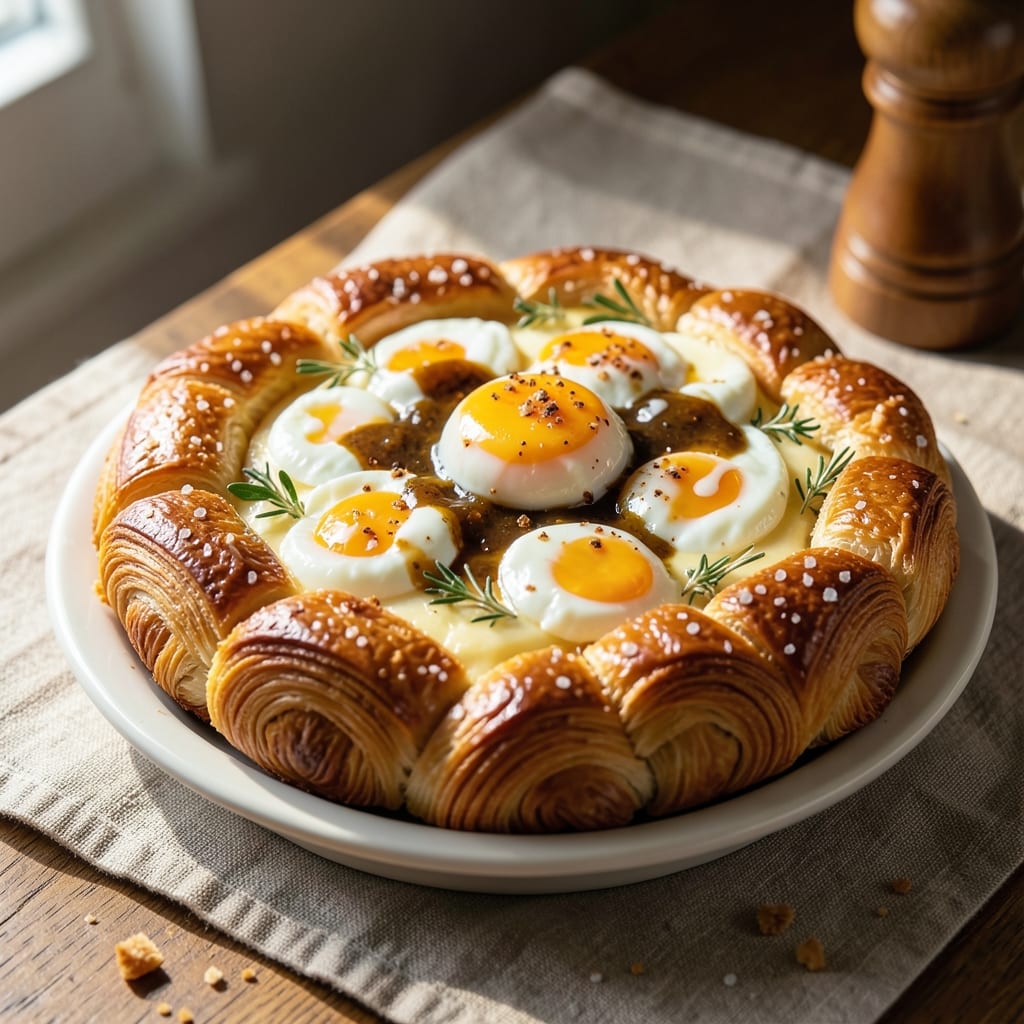
This croissant egg pie recipe delivers the perfect balance of buttery, flaky layers and creamy, runny yolk centers that make every bite feel like a decadent breakfast. The secret lies in using store-bought croissants for that signature texture while keeping the filling simple yet luxurious—just eggs, heavy cream, and a touch of Dijon mustard for depth. What sets this apart is how the high heat transforms the croissants into crispy, golden shingles while keeping the egg custard perfectly set yet still custardy.
The assembly is where the magic happens: layering croissant slices in a buttered baking dish creates those iconic flaky pockets, while the egg mixture bakes into a silky, golden custard that clings to every crispy edge. Baking at 375°F for 25-30 minutes ensures the top stays golden and the custard sets just enough to hold its shape when sliced. This isn't your average egg pie—it's a showstopper that tastes like a cross between a French breakfast tart and a luxurious custard.
What you'll end up with is a pie that's both impressive and effortless to prepare, with that perfect contrast of crispy, buttery croissant layers and rich, creamy custard. The runny yolk in the center delivers that luxurious mouthfeel, while the flaky croissant adds a satisfying crunch with every bite. It's the kind of dessert that feels special enough for brunch but simple enough for a weeknight treat.
For an extra touch of sophistication, sprinkle with flaky sea salt and fresh herbs like chives or thyme before serving. The salt enhances the buttery richness, while the herbs add a bright, fresh contrast that cuts through the richness. This recipe is your ticket to creating a restaurant-worthy dessert that's surprisingly easy to make at home.
Ingredients for croissant egg pie
Buttery croissants, creamy custard, and that perfect runny yolk—just nine ingredients transform into a showstopper.
| Ingredient | Amount | Notes |
|---|---|---|
| Store-Bought Croissants 🥐 | 12 whole | Day-old for best texture |
| Large Eggs 🥚 | 6 whole | Room temperature preferred |
| Heavy Cream 🥛 | 1 ½ cups | Full-fat for richness |
| Dijon Mustard 🍯 | 1 tbsp | For subtle depth |
| Unsalted Butter 🧈 | ½ cup | Melted, for baking dish |
| Flaky Sea Salt 🧂 | 1 tsp | For finishing touch |
| Fresh Chives 🌿 | ¼ cup | Chopped, for garnish |
| Granulated Sugar 🍬 | 2 tbsp | Balances flavors |
| Ground Black Pepper 🌶️ | ½ tsp | Freshly cracked |
The croissants are non-negotiable here. Day-old is ideal—they're more pliable and won't fall apart when sliced. Kroger's or Whole Foods usually have the best quality, but any store-bought brand works. Look for ones with visible layers and a golden-brown crust. If you can't find day-old, bake them at 350°F for 10 minutes to crisp them up before using. The butter matters too—Land O'Lakes or Plugrá are my go-tos for that rich, melt-in-your-mouth texture. For the eggs, room temperature is key—they'll blend smoother into the custard without breaking.
No Dijon mustard? Regular yellow mustard at half the amount works in a pinch, but you'll lose that subtle depth. Heavy cream substitutes? Half-and-half plus a splash of milk keeps it close, though the texture won't be as rich. Fresh chives wilting? Dried chives or parsley at one-third the amount will do, but fresh is worth seeking out at the market. The sugar can be swapped for maple syrup or honey if you're avoiding refined sugar, but keep the total amount the same. And if you're really in a bind, Greek yogurt or sour cream can replace the heavy cream for a lighter version—just reduce by two tablespoons to account for the extra moisture.
This pie tastes even better the next day, so make it ahead if you can. Store covered at room temperature for up to 2 days, or refrigerate for 3 days. To reheat, pop it in a 350°F oven for 10 minutes—just enough to warm the custard without drying it out. The croissant layers stay crispy thanks to the butter base, but if they soften, broil for 2 minutes to restore that golden crunch. For serving, slice into wedges and sprinkle with extra sea salt and chives right before eating—trust me on this. The contrast of salty, fresh, and creamy is what makes this dish sing.
Why You'll Love This Recipe
- Two-Ingredient Base: I swear by this trick—just crack eggs into heavy cream, whisk, and pour. That’s it. No measuring cups, no stress. The croissants handle the rest, turning into buttery shingles that soak up every last drop of that golden custard.
- Mustard Magic: Honestly? That Dijon mustard is the MVP here. A single teaspoon cuts through the richness, giving the custard a bright, tangy kick that makes this pie taste way more sophisticated than it should. (Yes, even on a Tuesday night.)
- Breakfast or Brunch: This pie is my secret weapon for lazy mornings, potlucks, or when I need to feed a crowd without slaving away. Serve it warm with a sprinkle of flaky salt, or let it cool slightly for a make-ahead dish that still tastes fresh hours later.
- Zero-Waste Leftovers: Between us, this recipe makes enough for two meals. The next day, I slice it up for a quick breakfast quiche or toast the pieces straight from the fridge—crispy edges, runny center, every time. And because croissants are cheap in bulk? Budget-friendly too.
Step-by-step instructions for croissant egg pie
Here's how to build layers of buttery croissants and custardy eggs for a showstopping brunch pie.
Prepare the Croissant Crust
Preheat your oven to 350°F. Cut the 12 whole store-bought croissants in half lengthwise, then slice each half into ¼-inch thick pieces. You should end up with about 24 pieces total. Arrange them in a 9-inch pie dish in a tight spiral pattern, slightly overlapping each piece so there are no gaps. This creates a solid, flaky base that won't fall apart when you add the filling.
Brush the croissant pieces generously with melted unsalted butter (from the 0.5 cup) using a pastry brush. This step is non-negotiable—it transforms the croissants from dry to golden and crispy. Bake for 15 minutes until the edges are lightly golden. Let cool slightly while you prepare the filling.
Whisk the Egg and Cream Mixture
In a large bowl, whisk together the 6 whole large eggs, 1.5 cups heavy cream, 1 tbsp Dijon mustard, 2 tbsp granulated sugar, and 0.5 tsp ground black pepper until completely smooth. The mixture should be uniform with no streaks of egg white. I like to use a fork first to break up the yolks, then switch to a whisk for the cream to incorporate air gently.
This is where the magic happens—the mustard adds subtle depth, the sugar balances the richness, and the pepper gives a little kick. Taste the mixture now—it should be slightly tangy and sweet, with a hint of pepper. If you want to adjust the flavor, this is your last chance before it goes into the oven.
Assemble and Bake the Pie
Pour the egg mixture evenly over the pre-baked croissant crust. Sprinkle the 0.25 cup chopped fresh chives evenly on top, then finish with a pinch of flaky sea salt. The chives add a fresh, bright note that cuts through the richness, while the salt enhances all the flavors.
Bake at 350°F for 35-40 minutes, until the custard is just set but still slightly wobbly in the center. You want that perfect runny yolk experience when you cut into it. If the top browns too quickly, tent loosely with foil for the last 10 minutes of baking.
Rest and Serve
Remove the pie from the oven and let it rest for 10 minutes before slicing. This resting time is crucial—it allows the custard to fully set slightly and makes it easier to serve clean slices. The pie should have a golden, slightly crisp top with that irresistible custard center.
Slice into 6 equal wedges and serve immediately. The contrast of the flaky, buttery croissant crust with the rich, custardy egg filling is what makes this pie so special. Pair it with a simple arugula salad for a complete brunch.
Pro Tips For Making Croissant Egg Pie
- CHILL THE CREAM: Heavy cream whips better when cold—pop it in the fridge for 10 minutes before beating. I used to skip this and ended up with a runny, soupy custard instead of fluffy clouds. Trust me, the extra two minutes make all the difference when baking.
- SLICE CROISSANTS THIN: Cut store-bought croissants into ¼-inch slices, not the usual ½-inch. Thinner layers crisp faster and won’t turn soggy while the custard sets. Yes, it’s more work, but your pie won’t taste like a soggy pastry sandwich.
- WHISK EGGS LIKE YOUR LIFE DEPENDS ON IT: Beat the eggs and Dijon mustard until fully smooth—no streaks, no lumps. I learned this after one batch where the mustard stayed clumpy, giving the custard an odd texture. Use a fork if you’re in a rush, but a whisk guarantees even cooking.
- BAKE COLD, NOT HOT: Assemble the pie in the fridge for 15 minutes before baking. Cold custard bakes more evenly and won’t curdle from warm butter or cream. I was skeptical—until I saw the difference in a golden, set custard vs. a lumpy mess.
Troubleshooting great croissant egg pie
Filling Too Watery
If your custard looks too thin after baking, it likely didn't set properly. This usually happens when the oven temperature drops during baking or the pie sits in a cold oven. To fix it, preheat your oven to 375°F and place a baking sheet on the lower rack to create even heat circulation. Also, ensure your eggs are at room temperature—cold eggs can cause the custard to separate. For extra insurance, whisk in 1 tbsp cornstarch when mixing the filling to help thicken it. 💡
Croissants Not Crispy
Dry, soggy croissants are usually the result of not buttery enough layers.
Custard Overcooked
An overcooked custard will be firm and rubbery rather than creamy. To avoid this, pull the pie out of the oven as soon as the edges are set and the center still jiggles slightly. If you're unsure, use a toothpick—it should come out with a few moist crumbs, not completely clean. For a more precise gauge, invest in an instant-read thermometer and aim for an internal temperature of 165°F at the center.
Pie Sinking in the Middle
A sunken center often means the crust wasn't sturdy enough to support the filling. To prevent this, arrange your croissant slices in a tight spiral with slight overlaps to create a solid base. Chill the assembled pie in the fridge for 30 minutes before baking to help it hold its shape. If it still sinks, try baking at a slightly lower temperature (325°F) for a longer time (40-45 minutes) to set the custard more gently.
Eggs Curdling
Curdled eggs in your custard can happen if the mixture is too hot or if you add liquid too quickly. To avoid this, whisk the eggs and cream together gently over a double boiler (or a heatproof bowl over simmering water) until the mixture reaches 160°F—just below boiling. If you notice curdling while baking, cover the pie with foil and bake at a lower temperature (300°F) until the custard smooths out.
Uneven Baking
If the edges cook faster than the center, your oven likely has hot spots. Rotate the pie halfway through baking to ensure even cooking. For better heat distribution, place a baking stone on the lower rack before preheating. If your oven runs hot, reduce the temperature by 25°F and extend baking time by 5-10 minutes. A thermometer probe in the center helps monitor progress accurately. ✨
Nutrition facts
Frequently asked questions
Can I use puff pastry instead of croissants?
Yes! Puff pastry works beautifully and is often easier to find. Use 1 sheet of thawed puff pastry (about 1/8-inch thick) and cut it into strips to create the flaky layers. The texture will be slightly different but still delicious. For extra richness, brush with melted butter just like the croissants.
How do I make this egg pie ahead of time?
You can prepare it 2 days ahead! Assemble the pie completely, then refrigerate it uncovered for up to 48 hours. When ready to bake, simply increase the oven temperature to 375°F and bake for 40-45 minutes—the extra time ensures the custard sets properly. For best results, reheat slices in a 350°F oven for 5 minutes to restore crispiness.
Why does my custard look grainy?
Grainy custard usually means the eggs weren't whisked enough or were added too quickly to hot cream. Whisk the eggs and cream together gently over a double boiler (or simmering water) until the mixture reaches 160°F—just below boiling. Strain the mixture through a fine-mesh sieve before pouring to remove any lumps.
Can I add cheese or bacon to this recipe?
For a savory twist, stir in 1 cup shredded Gruyère or sharp cheddar and 4 oz cooked bacon crumbles into the egg mixture. The cheese adds depth while the bacon gives a smoky contrast. Reduce the heavy cream by 2 tbsp to balance the extra moisture from the cheese.
What's the best way to reheat leftovers?
Reheat slices in a 350°F oven for 8-10 minutes until the custard is warm but still creamy. For a crispy top, broil for 1-2 minutes at the end. Microwaving works in a pinch (30-second bursts), but it can make the croissants soggy. Always cover with a damp paper towel to keep the custard moist.