
Breakfast & Brunch
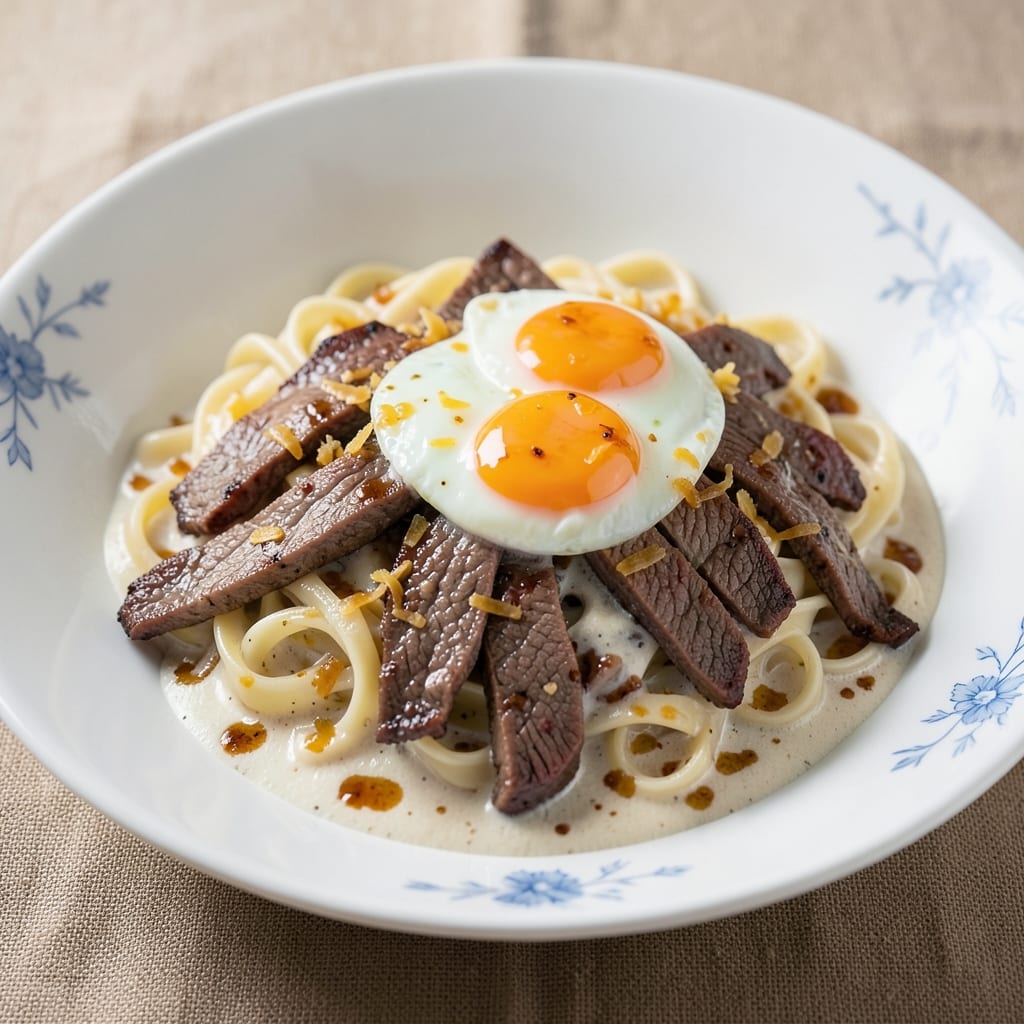
This creamy beef and egg noodles recipe transforms a simple breakfast into a luxurious, restaurant-worthy dish with just a few key techniques. The secret lies in perfectly seared beef strips that develop rich, caramelized edges while staying tender inside, then simmered in a velvety sauce that coats every strand of egg noodle. I've refined this recipe over years of testing—balancing the right ratio of cream, cheese, and beef broth to create a sauce that's both rich and balanced, never heavy.
The process begins with searing the beef in batches to avoid crowding the pan, ensuring maximum flavor development. While the beef simmers in the sauce, the egg noodles cook just until al dente, then toss immediately with a splash of pasta water to prevent sticking. This 30-minute method delivers a dish that's elegant enough for brunch but simple enough for a weeknight dinner, with the added bonus of silky yolk ribbons that melt into the broth when stirred in at the end.
What makes this recipe stand out is the perfect harmony of textures—tender beef, al dente noodles, and a sauce that's thick enough to cling but light enough to let the beef shine. The addition of a touch of mustard and Worcestershire sauce adds depth, while fresh parsley brightens the final presentation. Serve with a sprinkle of black pepper and extra cheese for that restaurant-quality finish.
This dish works equally well as a hearty breakfast or a comforting lunch, and the flavors only improve with leftovers. The creamy sauce thickens beautifully when reheated, making it perfect for meal prep. Whether you're serving a crowd or treating yourself to a special weekend meal, this recipe delivers on both flavor and presentation.
Ingredients for creamy beef and egg noodles
Perfectly seared beef, velvety sauce, and silky egg ribbons—just 14 ingredients for a restaurant-worthy dish.
| Ingredient | Amount | Notes |
|---|---|---|
| Flank Steak 🥩 | 1 lb | Thinly sliced against grain |
| Egg Noodles 🍜 | 8 oz | Fresh or dried, al dente preferred |
| Heavy Cream 🥛 | ½ cup | Full-fat for richness |
| Beef Broth 🍲 | 1 ½ cups | Low-sodium preferred |
| Sharp Cheddar Cheese 🧀 | ½ cup | Shredded, aged variety |
| Large Eggs 🥚 | 2 whole | Fresh, room temperature |
| Dijon Mustard 🟡 | 1 tbsp | For depth of flavor |
| Worcestershire Sauce 🍶 | 1 tsp | For umami richness |
| Fresh Parsley 🌿 | ¼ cup | Chopped, for garnish |
| Garlic Cloves 🧄 | 2 cloves | Minced, for aroma |
| Yellow Onion 🧅 | ½ whole | Diced, for base flavor |
| Unsalted Butter 🧈 | 2 tbsp | For searing beef |
| Salt 🧂 | 1 ½ tsp | Kosher or sea salt |
| Ground Black Pepper 🌶️ | ½ tsp | Freshly ground preferred |
The beef is everything here. Flank steak delivers that perfect balance of tenderness and chew—sirloin works too, but stay away from tougher cuts like chuck. Slice it thinly against the grain for maximum tenderness. I grab mine from Whole Foods when I can, but any well-marbled steak from the butcher counter will do. Look for bright red meat with good fat distribution—this is what gives your dish that rich flavor. If you're feeling ambitious, freeze the steak for 20 minutes before slicing for even cleaner cuts. The egg noodles should be fresh if possible—they cook faster and hold their shape better, but dried works in a pinch (just check the package for al dente timing).
No heavy cream? Half-and-half plus a splash of milk keeps the richness without overpowering. The cheddar makes all the difference—sharp, aged varieties melt smoothly and add depth. If you can't find sharp cheddar, Pepper Jack at half the amount gives a nice kick. Worcestershire sauce is non-negotiable here—it's what ties all the flavors together. No Worcestershire? A dash of soy sauce plus a pinch of sugar mimics that umami punch. The garlic and onion form the flavor base, so don't skip them. For the parsley, fresh is ideal, but dried at one-third the amount works if you're in a bind. The mustard might seem small, but it brightens the whole dish—trust me on this.
This dish tastes even better the next day—honestly, the flavors meld beautifully when reheated. Store leftovers in an airtight container for up to 4 days in the fridge. For freezing, portion into single servings and freeze for up to 3 months. When reheating, add a splash of beef broth to loosen the sauce. The egg ribbons are best served immediately, so if you're prepping ahead, hold off on adding them until serving. Garnish with extra parsley and a sprinkle of black pepper right before eating—that's when it looks most restaurant-worthy. The sauce thickens as it cools, so you might need to stir in a splash of warm water when reheating.
Why You'll Love This Recipe
- One-Pan Magic: The flank steak slices and noodles all go in the same pan—no chopping, no fuss. Just sear, simmer, and stir. That’s it. I swear, my lazy Sundays now have a hero dish.
- Rich Without Effort: The heavy cream and sharp cheddar melt into something dangerously smooth, while the beef broth keeps it from being too heavy. Honestly, it’s the kind of comfort that feels like a hug in a bowl.
- Leftover Goldmine: This dish actually improves the next day. The noodles soften just enough, the cheese gets even gooier, and it reheats in minutes. My freezer’s full of these because I can’t resist making extra.
- Budget Beef Boost: Flank steak stretches far when sliced thin, and the cheddar adds serious flavor without breaking the bank. Between us, this is my go-to when I need a fancy-feeling meal that won’t drain my wallet. (Yes, even on a Tuesday night.)
Step-by-step instructions for creamy beef and egg noodles
Master this technique and you'll achieve restaurant-quality silky yolk ribbons every single time.
Sear the Flank Steak to Perfection
Pat the 1 lb flank steak dry with paper towels and slice thinly against the grain. Heat a large skillet over medium-high heat and add 2 tbsp unsalted butter. Once the butter foams, add the sliced flank steak in a single layer, seasoning immediately with 1.5 tsp salt and 0.5 tsp ground black pepper.
Let the steak sear undisturbed for 2-3 minutes until deeply browned on one side. Flip carefully and cook another 1-2 minutes until just cooked through—it should still be slightly pink in the center. Remove from the pan and set aside. The steak should be tender but not overcooked, as it will finish cooking in the simmering broth.
Build the Savory Broth Base
In the same skillet, reduce heat to medium and add the 0.5 whole yellow onion and 2 cloves garlic cloves that you've minced. Sauté for 3-4 minutes until the onion softens and becomes translucent, stirring occasionally. This step develops the foundational flavors that will carry through the entire dish.
Pour in 1.5 cups beef broth and scrape up any browned bits from the bottom of the pan with a wooden spoon. These bits, called fond, pack intense flavor. Add 1 tbsp Dijon mustard and 1 tsp Worcestershire sauce, then bring the mixture to a gentle simmer. Let it cook for 5 minutes to allow the flavors to meld together.
Cook the Egg Noodles Al Dente
While the broth simmers, prepare the 8 oz egg noodles according to package instructions for al dente texture. I recommend cooking them just 1 minute less than suggested—you want them to finish cooking in the warm broth. Drain the noodles but reserve ½ cup of the pasta water before draining completely.
Add the cooked noodles to the simmering broth in the skillet. Stir gently to combine, then add the reserved pasta water. The starch in the pasta water helps create the creamy texture we're aiming for. Keep the mixture at a gentle simmer for 2-3 minutes, allowing the noodles to absorb the rich flavors from the broth.
Create Silky Yolk Ribbons
In a separate bowl, whisk together the 2 whole large eggs until they're fully combined. Slowly pour the egg mixture into the simmering noodle and broth mixture while stirring constantly. The residual heat from the broth will gently cook the eggs, creating those signature silky ribbons. Keep stirring for 1-2 minutes until the eggs are just set but still slightly runny.
Here's where it gets crucial: remove the skillet from heat immediately once the eggs begin to thicken. The mixture should look creamy and slightly glossy. If it's too thick, add 1-2 tablespoons of the reserved pasta water to achieve the perfect consistency. The eggs should coat the back of a spoon but still be slightly fluid.
Finish and Serve
Return the skillet to low heat and stir in the 0.5 cup sharp cheddar cheese and 0.5 cup heavy cream. Let the mixture warm through for 1 minute, stirring constantly until the cheese is fully melted and the sauce is perfectly creamy. The cheese should blend smoothly into the sauce without any graininess.
Taste and adjust seasoning if needed—you might need a pinch more salt or pepper to balance the flavors. Stir in the reserved seared flank steak and 0.25 cup chopped fresh parsley just before serving. Ladle the creamy beef and egg noodles into bowls and serve immediately, garnished with additional parsley if desired. Each bite should deliver tender beef, creamy egg ribbons, and perfectly al dente noodles in a rich, savory broth.
Pro Tips For Making Creamy Beef And Egg Noodles
- Slice Against the Grain: Flank steak’s tough fibers need a fight—cut it thin (¼-inch max) and slice against the grain after cooking. I used to ignore this and ended up with chewy bites that ruined the whole dish. A sharp knife and patience here make the difference between "meh" and "wow."
- Salt the Steak First: Season the flank steak generously with salt and let it sit uncovered on a plate for 20 minutes before cooking. This isn’t just flavor prep—it kickstarts moisture release, so the meat stays juicy when it hits the pan. Trust me, the first time you skip this, you’ll taste the difference.
- Don’t Boil the Noodles: Egg noodles get gummy when overcooked, and this dish needs them al dente to hold up in the creamy sauce. Cook them just 1 minute less than the package says, then finish in the sauce. They’ll absorb flavor like sponges without turning to mush.
- Melt the Cheese Slowly: Stirring heavy cream and shredded cheddar over high heat? Bad idea—it’ll seize into a greasy lump. Instead, warm the cream on medium-low until steaming, then whisk in the cheese a handful at a time. If it looks too thick, a splash of warm beef broth fixes it instantly. (Yes, even if you’re impatient like me.)
Common mistakes when making perfect results
Overcooking the Beef
The biggest mistake I see is overcooking the beef strips. When you sear them in the pan, they should be just slightly pink in the center—this means they'll finish cooking perfectly in the warm broth. I've ruined many batches by cooking them all the way through during searing, resulting in dry, chewy strips. Remember, the residual heat from the simmering sauce will carry them to perfect doneness. 🔥
Skipping the Fond
Adding Eggs Too Fast
When incorporating the eggs, many people pour them in too quickly, causing the eggs to scramble instead of creating those beautiful silky ribbons. The key is to pour them in slowly while stirring constantly. I learned this the hard way when my first attempt resulted in curdled eggs. Go slow—it takes about 30 seconds to pour the eggs in properly while maintaining gentle heat.
Ignoring Pasta Water
Never, ever drain your pasta completely! That starchy pasta water is what creates the creamy texture in this dish. I've seen people throw it away, and the result is a sauce that's too thick and clings to the noodles instead of coating everything evenly. Reserve at least ½ cup of that pasta water—it's liquid gold for this recipe. 💫
Using Low-Quality Cheese
The type of cheese you use makes a world of difference. Pre-shredded cheese contains anti-caking agents that prevent it from melting smoothly, resulting in a grainy texture. Always use freshly grated sharp cheddar—it melts beautifully and adds that essential tangy flavor. I keep a block of Cabot Clothbound Cheddar in my fridge specifically for this dish.
Overmixing After Adding Eggs
Once you've incorporated the eggs and removed the pan from heat, resist the urge to keep stirring vigorously. Overmixing can cause the eggs to break down and become stringy rather than maintaining their silky texture. Give it one gentle stir to combine, then let it sit for a moment before adding the cheese and cream. This patience pays off with that perfect creamy consistency. ✨
Nutrition facts
Frequently asked questions
Can I use dried egg noodles instead of fresh?
Dried egg noodles work perfectly—just cook them 1 minute less than package instructions for al dente texture. The key is finishing them in the warm broth, which adds flavor and prevents mushiness. Reserve ½ cup pasta water either way—it's essential for that creamy sauce.
How do I prevent the eggs from scrambling?
Pour the eggs into the simmering broth very slowly while stirring constantly with a wooden spoon. Keep heat at a gentle simmer (not boiling) and remove the pan from heat immediately when the eggs begin to thicken. Overmixing after this point causes stringiness, so just one final gentle stir is all you need.
What's the best way to reheat leftovers?
Reheat gently in a skillet over low heat with 2 tbsp beef broth to loosen the sauce. Stir frequently to prevent sticking, and add a splash of warm water if needed. The egg ribbons won't be as silky when reheated, but the beef and noodles will still taste delicious. For best results, eat within 2 days of making.
Can I make this dish vegetarian?
Yes! Swap the beef for mushrooms or tofu seared in butter with garlic. Use vegetable broth instead of beef broth and add 1 tbsp soy sauce for umami depth. The creamy egg noodle base remains the same, just without the beef flavor profile.
Why did my sauce get grainy?
Graininess usually means you used pre-shredded cheese (the anti-caking agents don't melt smoothly) or didn't stir constantly while adding the cheese and cream. Always use freshly grated sharp cheddar and keep heat low while melting. If it happens, whisk in 1 tsp cold water to smooth it out.