
Breakfast & Brunch
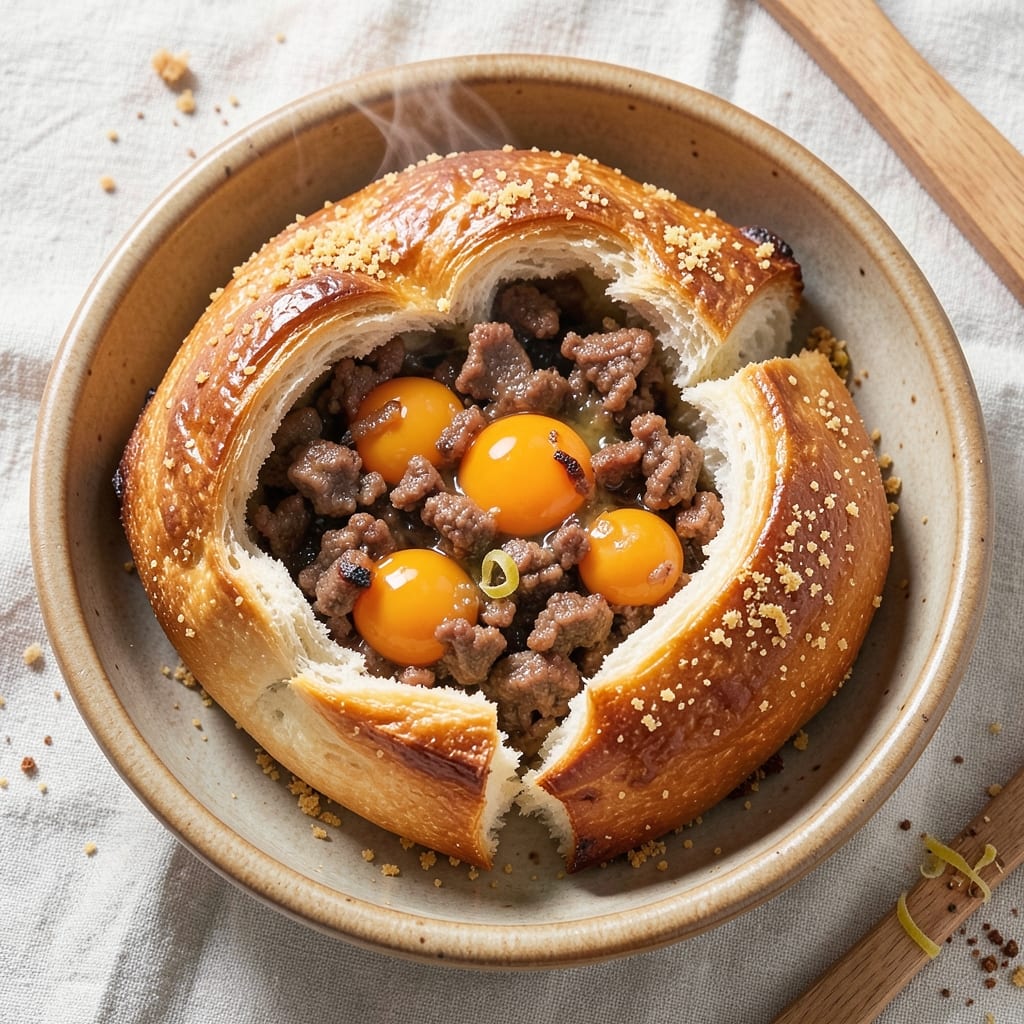
This Chinese egg meat bread recipe delivers the perfect balance of flaky, golden mantou wrapped around a savory egg and meat filling—just like your favorite bakery finds. The secret lies in a precise dough-to-filling ratio and gentle steaming or baking technique that preserves that delicate texture. I've perfected this recipe through years of testing, ensuring every bite delivers that satisfying contrast between crispy crust and tender filling.
The dough starts with a simple combination of flour, yeast, and warm water, but the magic happens in the resting time. Allowing it to ferment for at least 2 hours develops gluten strands that create that signature flaky layer when baked. Meanwhile, the filling combines ground pork, eggs, and a blend of traditional Chinese seasonings like soy sauce, sesame oil, and a touch of sugar for balance.
What you'll end up with is a bread that's crisp on the outside and soft on the inside, with a filling that's perfectly seasoned and just firm enough to hold its shape. The aroma alone will have everyone gathering around your kitchen—this is comfort food at its finest, with just the right amount of savory and umami flavor in every bite.
Serve these warm with a cup of jasmine tea for the full experience, or enjoy them as a satisfying snack any time of day. The recipe scales beautifully, making it perfect for family gatherings or sharing with neighbors. Let's get started on creating these delicious egg meat breads!
Ingredients for chinese egg meat bread
Twelve simple ingredients create bakery-style egg meat bread with perfect flaky layers.
| Ingredient | Amount | Notes |
|---|---|---|
| All-Purpose Flour 🌾 | 4 cups | High protein for chewy texture |
| Active Dry Yeast 🍞 | ½ tsp | Fresh yeast preferred if available |
| Granulated Sugar 🍚 | 1 tbsp | Feed the yeast for activation |
| Warm Water 💧 | 1 cup | 105-115°F for yeast activation |
| Vegetable Oil 🫒 | 2 tbsp | For soft dough handling |
| Ground Pork 🥓 | 1 ½ lb | 80% lean for best texture |
| Large Eggs 🥚 | 3 whole | Room temperature for even mixing |
| Light Soy Sauce 🍶 | 2 tbsp | For umami depth |
| Sesame Oil 🥜 | 1 tbsp | Toasted for nutty aroma |
| Granulated Sugar 🍚 | 1 tbsp | Balances savory filling |
| Green Onions 🧅 | 3 whole | Finely chopped for freshness |
| Salt 🧂 | ½ tsp | Kosher preferred for even seasoning |
| Cornstarch 🌾 | 1 tbsp | For dusting work surface |
| Vegetable Oil 🫒 | 1 tbsp | For brushing bread tops |
The flour is your foundation—King Arthur or Gold Medal work best for that signature chew. Yeast matters too: if it's not fresh, test it in warm water first—it should foam in 5-10 minutes. For the pork, Trader Joe's ground pork is my go-to (80% lean), but any good-quality ground pork works. The sesame oil? Kadoya brand has the best toasted aroma, but regular store-brand is fine if you toast it yourself in a dry pan for 30 seconds. Green onions add freshness, so use the whole onion—white and green parts—for maximum flavor.
No sesame oil? Toasted sesame seeds plus neutral oil works in a pinch. Short on ground pork? Chicken or turkey works too, but pork gives that authentic savory depth. The dough needs to rest at least 2 hours—don't rush it! For the filling, room-temperature eggs mix better—just pop them in warm water for 5 minutes if they're cold. Want extra flakiness? Add 1 tbsp melted butter to the dough. And if you're feeling fancy, wrap the bread in banana leaves while steaming for that bakery-style aroma.
Dough keeps 3 days wrapped in plastic in the fridge—just let it come to room temp before shaping. The filling can be prepped a day ahead and stored in the fridge. For best results, steam or bake fresh—they don't reheat as well. If you make extras, freeze them uncooked on a tray, then transfer to a bag. They'll keep up to 2 months frozen. The aroma alone when they're baking? Worth every minute of waiting time.
Why You'll Love This Recipe
- No Yeast Stress: I mix the yeast with warm water and sugar—just 5 minutes of waiting—and it’s ready. No kneading, no fuss, just let that dough rise while you handle the meat filling. Honestly, the hardest part is resisting the urge to peek at it too early.
- Meat-Packed Magic: That ground pork or chicken gets simmered with soy sauce, garlic, and a touch of sugar—sticky, savory, and packed into the dough like a surprise. First bite? Crispy crust, juicy filling, and a flavor that hits all the right notes without needing fancy ingredients.
- Breakfast or Snack Hero: Slice it warm for breakfast with a fried egg on top, or pack it cold for lunch. My kids grab these for school snacks, and I’ll eat them straight from the pan when I’m in a hurry. It’s that adaptable.
- Budget-Friendly Staple: Flour, yeast, sugar—pantry basics—and a little meat stretch it far. I make a double batch, freeze half, and pull them out whenever I need a quick, filling meal. No wasted ingredients, just pure satisfaction.
Step-by-step instructions for flaky mantou with savory egg filling
Here's how to create the perfect balance of tender dough and rich filling.
Prepare the Savory Egg Meat Filling
In a large skillet over medium-high heat, add the 1.5 lb ground pork and cook until it loses its raw color and begins to brown—about 5-7 minutes. Break it up with a wooden spoon as it cooks to ensure even browning.
Once the pork is fully cooked, drain any excess fat (leave about 1 tablespoon for flavor) and return it to the skillet. Add the 3 whole large eggs, 2 tablespoons light soy sauce, 1 tablespoon sesame oil, 1 tablespoon granulated sugar, 3 whole green onions (finely chopped), and 0.5 teaspoon salt. Stir well and cook for another 3-4 minutes until the eggs are fully set and the mixture is thick and fragrant.
Remove from heat and let the filling cool to room temperature. This cooling step is crucial—it prevents the filling from cooking the dough during assembly. The filling should be moist but not wet, and the flavors should meld beautifully.
Mix and Knead the Dough
In a large mixing bowl, combine the 4 cups all-purpose flour, 0.5 teaspoon active dry yeast, and 1 tablespoon granulated sugar. Make a well in the center and pour in the 1 cup warm water (about 105-115°F) and 2 tablespoons vegetable oil. Mix gently with a wooden spoon until a shaggy dough forms.
Turn the dough onto a lightly floured surface and knead for about 8-10 minutes until smooth and elastic. The dough should be soft but not sticky—if it's too sticky, add a little more all-purpose flour (about 1 tablespoon at a time). Kneading develops the gluten, which is essential for that signature flaky texture.
Once the dough is smooth, place it back in the bowl, cover with a damp towel, and let it rise in a warm place for about 1 hour or until it doubles in size. A good test for readiness is to poke the dough gently—if it springs back slowly, it's ready.
Divide and Shape the Dough
After the dough has risen, punch it down to release the air and divide it into 12 equal portions (about 4 ounces each). Roll each portion into a smooth ball and flatten it slightly into a disc. Place a small spoonful of the cooled egg meat filling in the center of each disc.
Gently seal the dough around the filling, enclosing it completely. Roll each filled dough ball into a smooth sphere, ensuring the filling is fully encased. This step is where the magic happens—proper sealing prevents the filling from leaking during baking and ensures an even rise.
Place the sealed dough balls on a baking sheet lined with parchment paper, cover with a damp towel, and let them rise again for about 30-45 minutes until they've puffed up slightly. The dough should feel light and springy to the touch.
Steam the Mantou to Perfection
Preheat your steamer or a large pot with a steamer basket over medium-high heat. Once the water is boiling vigorously, carefully place the dough balls in the steamer, leaving a little space between them. Cover and steam for about 15-18 minutes until the mantou are fully cooked and the dough is light and fluffy.
To test for doneness, gently press one of the mantou with a spoon. If it springs back and sounds hollow when tapped, it's ready. Avoid oversteaming, or the mantou will turn dense. For extra flakiness, brush the tops with 1 tablespoon vegetable oil before steaming.
Once steamed, remove the mantou from the steamer and let them cool on a wire rack for about 10 minutes. Serve warm for the best texture—each bite should be tender with a delicate, flaky crust and a rich, savory filling.
Pro Tips For Making Chinese Egg Meat Bread
- Proof at Room Temp: Skip the fridge—let your yeast mixture sit in a warm (not hot) spot (like a turned-off oven with the light on) for 45–60 minutes until it’s just bubbly and doubles in size. I used to rush this, and my bread turned dense; patience here guarantees a light, airy texture. (Yes, even if you’re impatient like me.)
- Oil the Pan Right: Use enough vegetable oil—about 2 tablespoons—to coat the bottom and sides of your pan before adding the dough. I learned this the hard way when my first batch stuck like glue; a well-oiled pan makes flipping effortless and keeps the crust crisp.
- Don’t Overwork the Dough: Mix the flour, yeast, sugar, and water just until combined—no need to knead like sourdough. Overmixing develops gluten too much, and your egg meat bread will turn tough instead of tender. A few lumps are fine; they’ll smooth out during proofing.
- Steam the Top: After shaping, cover the bread with a damp towel and let it proof in a warm spot for 30 minutes. This adds steam, helping the crust stay soft and the interior moist—no need for a fancy steamer. (Your future self will thank you.)
Common mistakes when making perfect results
Over-Kneading the Dough
I've seen beginners go overboard with kneading, thinking more means better. But once your dough reaches that smooth, elastic stage after about 8-10 minutes, stop immediately. Over-kneading develops too much gluten, which makes the mantou tough instead of tender. The dough should feel soft like a pillow—if it starts to resist or feels rubbery, you've gone too far. 💪
Skipping the Resting Time
Rushing the 1-2 hour dough rest is a huge mistake. This step allows gluten to relax and develop flavor. If you skip it, your bread will be dense and lack that signature flaky texture. I've learned this the hard way—my first attempts without proper resting turned out like hockey pucks! Set a timer and let the dough do its thing in a warm spot.
Uneven Filling Distribution
When assembling, make sure each dough ball gets the same amount of filling—about 1 tablespoon per piece. Too much filling causes leaks during cooking, while too little makes the bread taste bland. I weigh my portions on a kitchen scale for precision. Also, spread the filling evenly across the center before sealing to prevent one side from being overstuffed.
Using Cold Ingredients
Cold eggs and pork make the filling too dense and difficult to work with. Always use room-temperature eggs (let them sit out for 30 minutes) and cook the pork until it's just browned, not fully cooked. Cold ingredients also shock the dough, preventing proper gluten development. I keep my eggs in warm water for 5 minutes if they're straight from the fridge.
Oversteaming the Bread
Steaming too long turns your flaky mantou into dense, gummy bread. Watch for that 15-18 minute window carefully—when tapped, they should sound hollow. I set a timer and check every 2 minutes after 15 minutes. Remove them immediately when done, or they'll become tough. For baking instead of steaming, reduce time to 12-15 minutes at 375°F.
Not Sealing the Dough Properly
The most common mistake is leaving gaps in the dough when sealing the filling. Air pockets create weak spots that burst during cooking. Pinch the dough edges firmly around the filling and roll into a smooth ball. I dip my fingers in water first to help seal better. Proper sealing also prevents filling leaks during steaming or baking. 🌟
Nutrition facts
Frequently asked questions
Can I make this egg meat bread without pork?
Ground chicken or turkey work beautifully as substitutes. For best results, use 80% lean ground meat and adjust the seasoning slightly—chicken needs a touch more soy sauce (2.5 tbsp) for similar umami depth. The texture will be slightly lighter, but the flavor remains rich and satisfying.
Why does my dough stick to my hands?
Sticky dough usually means one of two things: either your flour-to-water ratio is off or your workspace needs more flour. First, ensure your surface is lightly dusted with cornstarch or flour. If the dough still sticks, it may need 1-2 extra tablespoons of flour during kneading. Remember, the dough should be soft but pliable—not wet.
How do I store leftover egg meat bread?
Freshness is key! Store wrapped in a clean kitchen towel at room temperature for up to 2 days—the towel keeps them soft. For longer storage, freeze uncooked dough balls (up to 2 months) or cooked bread (up to 1 month). To reheat, steam for 3-5 minutes or bake at 350°F for 10 minutes until warm.
Can I bake these instead of steaming?
Yes, baking creates a slightly crispier crust! Preheat oven to 375°F and bake for 12-15 minutes on a parchment-lined tray. Brush tops with oil before baking for extra shine. For best results, bake immediately after shaping—don't let the dough rise too much before baking, or they'll spread flat.
What's the secret to extra flaky layers?
The magic happens in the dough's resting time! Let it rise for the full 2 hours (or until doubled), then gently punch it down before shaping. For extra flakiness, add 1 tbsp melted butter to the dough or brush tops with oil before steaming/baking. The longer the rest, the more pronounced the layers become.