
Side Dishes
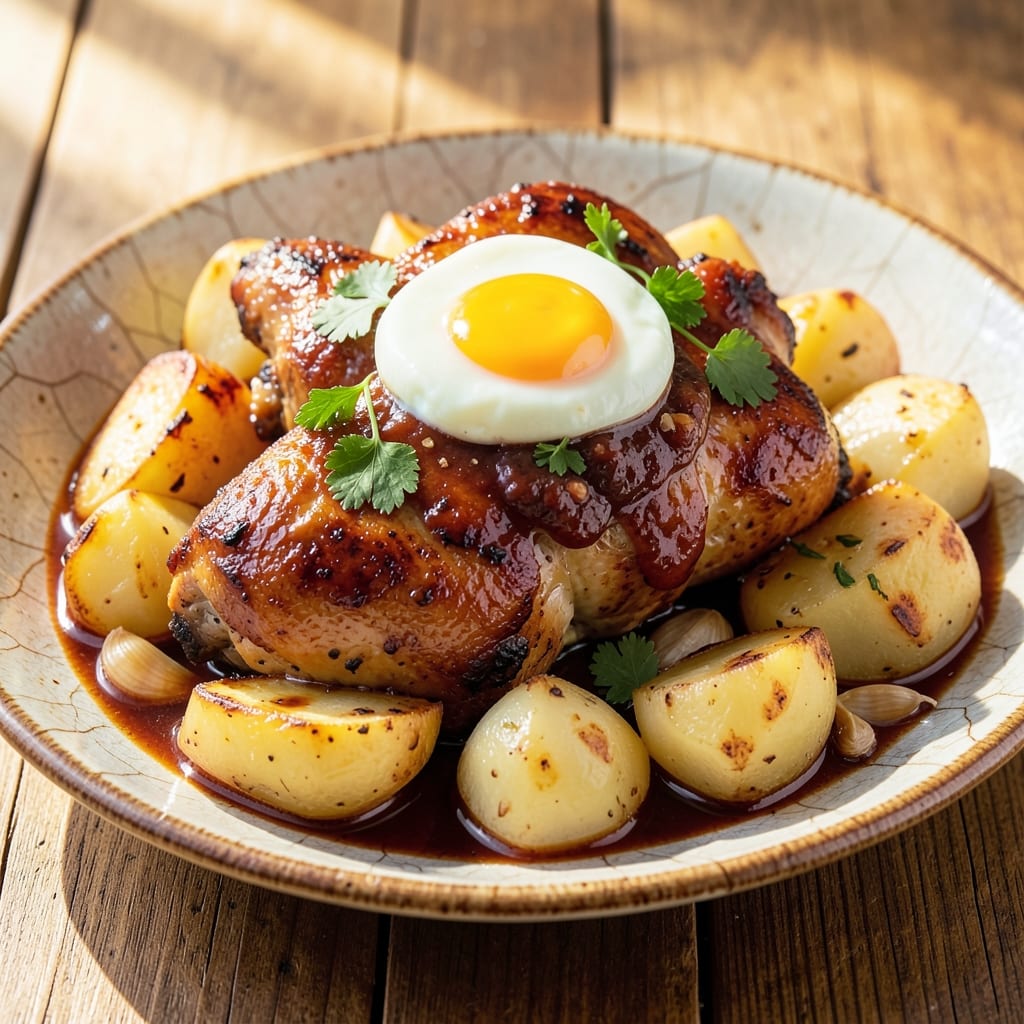
This chicken adobo with egg and potato recipe brings the heart of Filipino comfort food to your table, where tender chicken, creamy eggs, and hearty potatoes braise together in a tangy, savory sauce. The secret lies in the balance of soy vinegar and garlic, creating a rich depth that transforms simple ingredients into a restaurant-worthy dish. What makes this recipe special is the way the eggs cook directly in the stew, emerging silky and perfectly incorporated without ever turning rubbery.
Traditional Filipino techniques are key here—starting with a proper marinade of vinegar, garlic, and spices that tenderizes the chicken before it braises. The potatoes soak up the flavorful sauce while maintaining their texture, creating a satisfying bite in every spoonful. This isn't just a side dish; it's a complete meal that delivers bold flavors with minimal effort, perfect for family dinners or special occasions.
The result is a fragrant, deeply flavorful stew where each component—tender chicken, creamy eggs, and buttery potatoes—works in harmony. The sauce clings to every ingredient, creating a dish that's both comforting and impressive. Serve with steamed rice to soak up every last drop of that tangy, garlicky goodness. This recipe proves that homemade can taste just as rich and satisfying as your favorite Filipino restaurant.
Ready to master this classic? We'll walk you through every step—from marinating the chicken to braising the potatoes and eggs—so you can achieve that perfect balance of textures and flavors. Let's get started on creating a dish that feels like coming home.
Ingredients for chicken adobo with egg and potato
Tender chicken, creamy eggs, and hearty potatoes braise together in this rich, tangy Filipino stew.
| Ingredient | Amount | Notes |
|---|---|---|
| Boneless Chicken Thighs 🍗 | 1 ½ lb | Skin-on preferred for flavor |
| Large Eggs 🥚 | 4 whole | Room temperature for even cooking |
| Russet Potatoes 🥔 | 1 ½ lb | Cut into 1-inch chunks |
| Soy Sauce 🍶 | ½ cup | High-quality, salt-reduced preferred |
| Canned Tomatoes 🍅 | 1 can | 14.5 oz can, crushed by hand |
| Garlic Cloves 🧄 | 8 cloves | Minced finely for deep flavor |
| Yellow Onion 🧅 | 1 whole | Diced into small pieces |
| Coconut Aminos 🍶 | ¼ cup | Or substitute soy sauce |
| Cane Vinegar 🍋 | ¼ cup | Or substitute white vinegar |
| Bay Leaves 🍃 | 2 whole | Remove after cooking |
| Ground Black Pepper 🌶️ | 1 tsp | Freshly ground preferred |
| Olive Oil 🫒 | 2 tbsp | For searing chicken |
| Salt 🧂 | 1 ½ tsp | Adjust to taste |
The chicken thighs are key here—skin-on gives the best flavor, but boneless makes prep easier. Look for thighs with good marbling at your local butcher or grocery store's meat counter. If you can't find them pre-cut, ask for them to be trimmed. For the potatoes, Russets or Yukon Golds work best—they hold up well to braising without turning mushy. I always grab extra garlic because minced garlic is the soul of this dish, and you'll want plenty for both marinating and cooking. The soy sauce matters too—Kikkoman or Gold Peak are reliable, but if you're using a salt-reduced version, you might want to add a pinch more salt at the end.
No coconut aminos? Double the soy sauce—it'll still taste amazing. Short on vinegar? Lemon juice at half the amount works in a pinch, but cane vinegar gives that authentic tang. The eggs are the trickiest part—room temperature eggs slide right into the stew without breaking. If you're worried, crack them into a bowl first, then gently stir them into the hot liquid. For the tomatoes, San Marzano if you can find them, but any good canned tomatoes will do. Just make sure to crush them by hand for the best texture—no blender needed.
This stew tastes even better the next day, so make a big batch—it keeps for 4-5 days in the fridge. For leftovers, reheat gently on the stove with a splash of water to keep everything moist. The sauce thickens as it cools, so don't stress if it looks a little loose while hot. Freezes beautifully too—portion into containers with rice for easy meals. And trust me, the rice soaks up every last drop of that garlicky, tangy goodness.
Why You'll Love This Recipe
- Minimal Chopping Required: I swear by this—just slice the potatoes into chunks, no fancy dice work. The chicken thighs? Toss them in whole or cut into big pieces—no one’s judging. Soy sauce and canned tomatoes handle the heavy lifting while you stir.
- Crispy Eggs, Creamy Potatoes: That fried egg on top? Chef’s kiss. The runny yolk soaks into the tender potatoes, and the adobo sauce clings to the chicken like it’s been braised for hours. (Spoiler: It’s not, but you’d never know.)
- Lunchbox Hero: Between us, this is my go-to for packed lunches. The leftovers? Still packed with flavor, even cold. Wrap the chicken and potatoes in foil, toss in a fried egg (yes, really), and boom—your work lunch just got a Michelin-star upgrade.
- Pantry Magic: Honestly, I make this when I’m low on fresh ingredients. Soy sauce, canned tomatoes, potatoes, eggs—it’s the ultimate “I’ve got nothing but basics” save. And it still tastes like you slaved over it. (Not that I’m admitting to skipping grocery day.)
Step-by-step instructions for chicken adobo with egg and potato
Here's how to create this comforting Filipino stew with tender chicken, silky eggs, and hearty potatoes.
Sear the Chicken for Maximum Flavor
Heat the 2 tablespoons olive oil in a large Dutch oven over medium-high heat. Pat the 1.5 lb boneless chicken thighs dry with paper towels—this ensures a good sear. Season both sides generously with 1 teaspoon salt and 1 teaspoon ground black pepper. Place the chicken in the hot oil and cook undisturbed for 4-5 minutes per side until golden brown and cooked through to 165°F internally.
Here's the thing—searing the chicken first builds deep flavor in the sauce. Don't rush this step; you want those edges beautifully browned. Once the chicken reaches temperature, remove it from the pot and set it aside on a plate, leaving all that delicious browned chicken fat in the pot. This fat will form the flavor base for your adobo.
Build the Adobo Base with Aromatics
In the same Dutch oven, add the 1 whole yellow onion (diced) and 8 cloves garlic (minced). Cook over medium heat for 3-4 minutes until the onions soften and become translucent. You'll smell that wonderful garlic aroma—this is when the magic starts happening in your kitchen.
Now it's time to deglaze. Pour in the 0.5 cup soy sauce, 0.25 cup coconut aminos, and 0.25 cup cane vinegar. Stir well to scrape up all those browned bits from the bottom of the pot—this is called fond, and it's packed with flavor. Add the 1 can crushed tomatoes and 2 whole bay leaves, then bring everything to a gentle simmer. Let it cook uncovered for 5 minutes to allow the liquid to reduce slightly and the flavors to meld.
Add Potatoes and Simmer Together
Add the 1.5 lb russet potatoes (cut into 1-inch chunks) to the pot. Stir gently to coat them with the sauce. The potatoes should be mostly submerged, but that's okay—they'll absorb some of the liquid as they cook. Return the chicken to the pot and add enough water to just cover everything—about 1 cup. This ensures the potatoes cook through without drying out.
Bring the mixture to a gentle boil, then reduce heat to low and let it simmer uncovered for 20-25 minutes. You want the potatoes to be tender but not falling apart, and the chicken to be fork-tender. Stir occasionally, but not too much—this keeps the potatoes intact. The sauce should be thick and flavorful, coating everything beautifully.
Poach the Eggs to Perfection
While the stew simmers, prepare the 4 whole large eggs by cracking them into a small bowl. Here's where it gets interesting—you'll create little wells in the stew for the eggs. Using a spoon, gently push the potatoes and chicken aside to make 4 small depressions in the liquid. Carefully slide one egg into each well.
Cover the pot and let the eggs poach gently for 6-8 minutes until the whites are set but the yolks remain runny. This is the key to silky, custardy eggs that blend perfectly with the stew. The gentle heat from the simmering adobo will cook them just right without overdoing it. If you prefer fully cooked eggs, add an extra 1-2 minutes of cooking time.
Finish and Serve Warm
Once the eggs are perfectly poached, remove the 2 whole bay leaves from the pot. Taste the stew and adjust the seasoning if needed—you might want to add a bit more salt or a splash of soy sauce to deepen the flavor. The adobo should be rich, slightly tangy, and perfectly balanced.
Ladle the chicken adobo with eggs and potatoes into bowls, making sure each serving gets a generous portion of the silky poached eggs. Serve immediately while everything is hot and the eggs are still creamy. The combination of tender chicken, hearty potatoes, and perfectly poached eggs creates a dish that's both comforting and satisfying—exactly what you want on a cozy evening.
Pro Tips For Making Chicken Adobo With Egg And Potato
- Parboil Potatoes First: I learned this the hard way—skipping this step means your potatoes turn to mush in the adobo sauce. Cut them into even 1-inch chunks, boil for exactly 5 minutes, then drain. They’ll hold their shape while soaking up all that savory, salty goodness.
- Brown Chicken in Batches: High heat. Seriously, crank it up until the chicken thighs develop a deep golden crust before adding any liquid. If you crowd the pan, you’ll steam instead of sear—resulting in bland, gray meat. Two batches if needed.
- Use Thick Tomato Sauce: That watery canned tomato stuff? Drain it first. Blend the pulp with a splash of soy sauce and a pinch of sugar to thicken it—this cuts down on thinning sauce later and balances the salt. Trust me, your adobo won’t be watery sludge.
- Fry Eggs Last: Sounds weird, but it works: poach or fry the eggs in the finished adobo sauce for 30 seconds—just until the whites set. The residual heat keeps them creamy while the yolks stay runny, and they absorb the flavors instead of floating on top like an afterthought.
Pro cooking tips for great chicken adobo with egg and potato
Garlic is Key
Don't skimp on the garlic—this is where the magic happens! I always use 8 cloves minced finely for maximum flavor impact. For extra depth, let the garlic cook until it's golden brown at the edges, about 3-4 minutes over medium heat. This caramelization adds a sweet, nutty note that balances the tangy soy vinegar. If you love garlic, you can even add an extra 2-3 cloves to the marinade for chicken. 🧄
Vinegar Balance
The tangy kick comes from the 0.25 cup cane vinegar, but too much can overpower the dish. I recommend using cane vinegar or white vinegar—they're both great, but cane vinegar has a slightly sweeter profile. If you're new to adobo, start with the full amount, taste, and adjust. You can always add more vinegar later, but you can't take it out! For a milder version, reduce by 1 tablespoon and add ½ teaspoon sugar to balance.
Potato Texture Control
Potatoes are the secret to heartiness in this dish, but they can easily turn mushy. Cut them into 1-inch chunks for even cooking, and resist the urge to stir them too much while simmering. I like to use Russet potatoes because they hold up well. For extra insurance, add the potatoes 5 minutes after the chicken returns to the pot—this gives them time to absorb flavor without overcooking. If they're not quite tender after 20-25 minutes, add ¼ cup water and cover for another 5 minutes.
Egg Poaching Secrets
Poaching eggs in adobo is easier than you think, but timing is everything. The key is to create small wells in the stew and slide the eggs in gently—no cracking! Cover the pot and poach for 6-8 minutes for runny yolks, or 9-10 minutes for fully set eggs. I like to use room-temperature eggs because they slide right into the sauce without breaking. Pro tip: If the sauce gets too thick while poaching, add 1-2 tablespoons water to keep the eggs from sticking.
Sauce Thickness
The adobo sauce should coat the back of a spoon but still be silky, not gluey. If it's too thin after simmering, reduce heat to low and let it cook uncovered for another 5-10 minutes to thicken. For extra richness, stir in 1 tablespoon cornstarch mixed with 2 tablespoons water at the end. Avoid over-reducing—you want the sauce to cling to the chicken and potatoes, not dry them out. Taste and adjust seasoning before serving; sometimes a pinch of salt or a splash of soy sauce makes all the difference. ✨
Nutrition facts
Frequently asked questions
Can I substitute chicken breast for thighs in this recipe?
Chicken thighs are ideal because they stay juicy and tender during the long braising time. If you must use breast, opt for bone-in, skin-on pieces for better flavor retention. Cook them 2-3 minutes less than thighs since they're leaner and dry out faster. For extra moisture, add ¼ cup water during simmering.
What if I don't have cane vinegar? What's the best substitute?
White vinegar works perfectly in a 1:1 ratio, though it has a sharper taste. For a milder option, use apple cider vinegar or rice vinegar with ½ teaspoon sugar added. Avoid balsamic—it's too sweet and will alter the dish's balance. If using lemon juice, reduce by 1 tablespoon and add ½ teaspoon salt to compensate for the lack of acidity.
Why do the potatoes turn mushy in my adobo?
Overcooking or stirring too much causes potatoes to break down. Cut them into 1-inch chunks and add them 5 minutes after the chicken returns to the pot. Use Russet or Yukon Gold potatoes (they hold up better than red potatoes) and simmer uncovered at low heat. If they're still firm after 20-25 minutes, cover and add ¼ cup water for 5 more minutes. Never pierce them with a fork—this releases starch and makes them gummy.
Can I make this recipe without eggs? What's a good substitute?
For a vegetarian version, add 4 firm tofu cubes (pressed and cubed) or 4 slices of firm tempeh instead. Cook them with the potatoes for the last 10 minutes of simmering. For extra richness, stir in 2 tablespoons coconut milk at the end. If you prefer meat, try 4 shrimp or ½ lb pork belly—add them during the final 5 minutes of cooking.
How can I make this dish spicier? Or milder?
For heat, add 1-2 teaspoons sriracha or ½ teaspoon chili flakes during the final 5 minutes of simmering. For a milder version, reduce the vinegar by 1 tablespoon and add ½ teaspoon sugar to balance. If using coconut aminos, they're naturally sweeter than soy sauce, so you might need less sugar. Always taste as you go—adjustments are easy to make!