
Main Courses
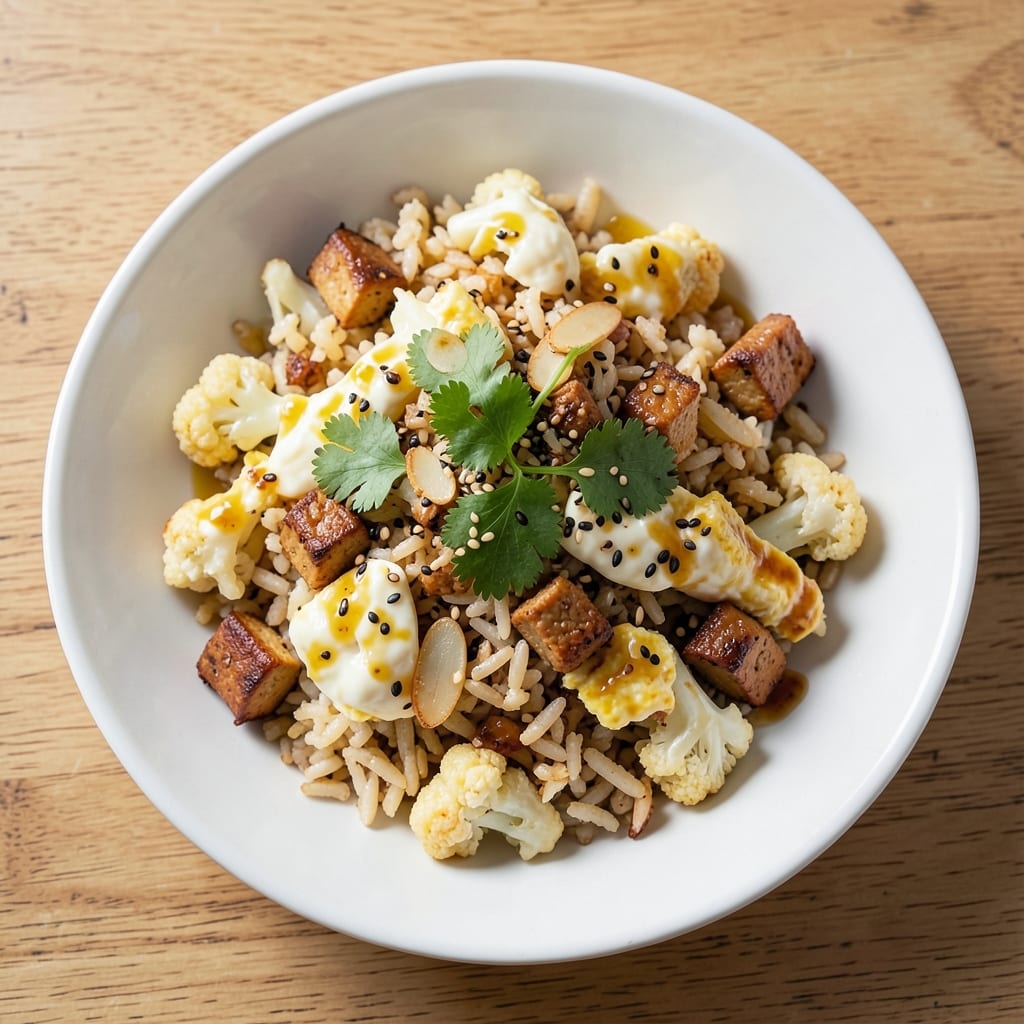
This cauliflower egg fried rice recipe delivers all the comfort of classic fried rice with a low-carb twist that’s just as satisfying. The secret lies in perfectly crisping the cauliflower rice while keeping the eggs silky and tender—no soggy bits allowed. I’ve perfected this one-pan method over countless batches, ensuring every bite has that ideal texture contrast: crispy rice edges and delicate egg ribbons that melt in your mouth.
What sets this dish apart is the balance of flavors—savory soy sauce, aromatic garlic, and fresh ginger—all coming together in a quick, 30-minute process. Whether you're cutting carbs or simply craving a lighter take on fried rice, this recipe delivers restaurant-quality results without the fuss. The best part? It’s completely vegetarian, packed with protein, and ready in time for lunch or dinner.
Ingredients for cauliflower egg fried rice
Cauliflower rice, silky eggs, and aromatic seasonings come together in this crispy, protein-packed vegetarian fried rice.
| Ingredient | Amount | Notes |
|---|---|---|
| Fresh Cauliflower 🥬 | 1 lb | Riced with food processor |
| Large Eggs 🥚 | 4 whole | Room temperature for silky texture |
| Extra-Firm Tofu 🧇 | ½ lb | Crumbled for protein boost |
| Low-Sodium Soy Sauce 🥢 | ½ cup | Kikkoman preferred |
| Sesame Oil 🫒 | 1 tbsp | Toasted for authentic aroma |
| Garlic Cloves 🧄 | 4 cloves | Minced for aromatic punch |
| Fresh Ginger 🌿 | 1 tbsp | Grated for zesty kick |
| Green Onions 🧅 | ¼ cup | Sliced for fresh finish |
| Vegetable Oil 🫒 | 2 tbsp | High smoke point preferred |
| White Rice Vinegar 🍶 | 1 tbsp | Balances soy sauce |
| Sesame Seeds 🌾 | 1 tsp | Toasted for crunch |
| Diamond Crystal Kosher Salt 🧂 | ½ tsp | Adjusts to taste |
| Ground Black Pepper 🌶️ | ¼ tsp | Freshly cracked |
The cauliflower is the star here—fresh, firm heads yield the best texture. I always grab mine from the produce section at Whole Foods or Trader Joe's for that extra crispness. If using pre-riced cauliflower, pat it completely dry before cooking to prevent sogginess. The tofu adds protein without overpowering the dish—extra-firm holds shape best when crumbled. For the eggs, room temperature is key; they'll scramble perfectly without turning rubbery. The garlic and ginger should be bright and fresh, not dried or powdered—those subtle aromatics make all the difference.
No soy sauce? Coconut aminos work in a pinch, though the flavor will differ slightly. Short on sesame oil? Swap for toasted peanut oil at half the amount—it's a common sub in Asian cooking. The tofu can be omitted if you prefer, but the dish loses some heartiness without it. For extra crunch, add 1/4 cup crushed peanuts at the end. The green onions can be subbed with scallions or chives, though green onions have that signature sharpness. If you're watching sodium, reduce the soy sauce to 1/4 cup and add an extra 1/4 tsp of salt at the end.
This dish reheats beautifully—just add a splash of water to the pan and stir-fry for 2-3 minutes. Keeps for 4-5 days in the fridge, though I find it's best within 2 days for peak crispiness. For meal prep, portion into glass containers with tight lids to maintain texture. The sesame seeds and green onions can be added fresh after reheating for that restaurant-quality finish. Freezes well for up to 3 months—thaw overnight in the fridge before reheating.
Why You'll Love This Recipe
- One-Pan Magic: I swear by this recipe because it’s literally one pan, one spatula, and zero dishes to scrub. The cauliflower florets rattle around while the eggs sizzle—no chopping boards, no mess. Honestly, I’ve made this at 8 PM after a long day, and it still feels like a win.
- Umami Bomb: That low-sodium soy sauce and sesame oil combo? Chef’s kiss. The tofu soaks it up, the eggs add richness, and the cauliflower—yes, cauliflower—holds its own with a satisfying bite. It’s savory, salty, and just a little funky in the best way. (Yes, even on a Tuesday night.)
- Lunchbox Hero: Between us, this is my secret weapon for meal prep. Toss leftovers into containers, and they reheat like a dream—no soggy rice, no sad textures. My kids grab it for school lunches, and my partner sneaks bites straight from the fridge. (Not that I blame him.)
- Budget-Friendly Flex: Fresh cauliflower and eggs stretch across multiple meals without breaking the bank, and extra-firm tofu? It’s a protein powerhouse that costs next to nothing. I’ve fed a crowd for under $15 with this—no takeout guilt, just flavor-packed plates.
Step-by-step instructions for crispy cauliflower egg fried rice
Master this one-pan technique for perfectly crispy cauliflower rice and silky egg ribbons.
Prepare the Cauliflower Rice and Protein
Start by processing the 1 lb fresh cauliflower in a food processor fitted with the shredding disc until you achieve rice-sized pieces. Transfer to a bowl and set aside. For the tofu, drain the 0.5 lb extra-firm tofu thoroughly, then crumble it into small, pea-sized pieces using your hands or a fork. This texture will mimic traditional fried rice while adding protein.
Crack the 4 whole large eggs into a separate bowl and whisk them lightly with the 0.5 tsp diamond crystal kosher salt and 0.25 tsp ground black pepper. Room temperature eggs create silky ribbons, so if they're cold, let them sit at room temperature for 10 minutes before using. The tofu should be completely dry to prevent a soggy texture—press it between paper towels if needed.
Sauté Aromatics and Crisp the Cauliflower
Heat 2 tablespoons vegetable oil in a large skillet or wok over medium-high heat until shimmering. Add the 4 cloves minced garlic and 1 tablespoon grated fresh ginger, cooking for 30 seconds until fragrant but not browned. Add the crumbled tofu and cook for 3-4 minutes, stirring occasionally, until lightly golden.
Push the tofu to one side of the pan and add the cauliflower rice in batches, stirring frequently for 5-6 minutes until the edges turn golden brown and crispy. The cauliflower should develop a toasted aroma and slight char in spots—this is what creates that satisfying crunch. If the pan gets too crowded, work in two batches. Season immediately with 0.5 cup low-sodium soy sauce and 1 tablespoon white rice vinegar, stirring well to coat.
Cook the Eggs and Combine
Reduce the heat to medium-low and tilt the pan slightly to create a thin layer of oil along one edge. Pour in the whisked eggs and let them sit undisturbed for 5-7 seconds until the edges begin to set. Gently push the eggs with a spatula, creating soft ribbons as they cook through—this takes about 15-20 seconds. The eggs should be just set but still slightly runny in the center.
Immediately add the cooked cauliflower-tofu mixture back into the pan and stir vigorously for 1-2 minutes until everything is evenly coated and heated through. The residual heat will finish cooking the eggs while incorporating them into the rice. Taste and adjust seasoning with additional soy sauce or vinegar if needed—you want a balance of savory and slightly tangy flavors.
Finish with Fresh Herbs and Crunch
Turn off the heat and stir in the 0.25 cup sliced green onions and 1 tablespoon toasted sesame oil. The green onions add a fresh contrast to the rich, savory base. For the final touch, sprinkle with 1 teaspoon toasted sesame seeds and give everything one last stir. The sesame seeds should be lightly toasted in a dry pan for 30 seconds beforehand to enhance their nutty flavor.
Serve immediately while the cauliflower rice maintains its crispy texture and the eggs remain silky. For best results, eat straight from the pan while the aromas are at their peak. The dish should have a satisfying crunch from the cauliflower, tender tofu pieces, and delicate egg ribbons throughout each bite. Garnish with additional green onions if desired.
Pro Tips For Making Cauliflower Egg Fried Rice
- CHOP CAULIFLOWER SMALL: Cut the florets into ½-inch pieces—no bigger, or they’ll steam instead of crisp up. I learned this the hard way when my first batch turned soggy; smaller bits get that perfect wok-hei texture faster.
- SALT THE TOFU FIRST: Toss cubed tofu in ½ teaspoon salt and let it sit 10 minutes before cooking. This draws out moisture so it crisps instead of absorbing oil like a sponge. (Yes, even if you’re impatient like me.)
- SCRAMBLE EGGS LOW AND SLOW: Cook the eggs on medium-low heat until just set—no rubbery centers—and push them to the side of the pan before adding other ingredients. High heat turns them into a sad, dry mess. Trust the process.
- STIR-FRY IN BATCHES: Don’t overload the pan—work in two batches if needed. Crowding steams the cauliflower and tofu instead of searing them. I skip this when I’m lazy, but the dish is noticeably better when I don’t.
Pro cooking tips for this dish
High-Heat Mastery
This dish thrives on medium-high to high heat—your wok or skillet needs to be screaming hot to get that perfect crisp on the cauliflower rice. I use a 14-inch cast iron skillet (like my Lodge Pre-Seasoned) because it retains heat beautifully. If your pan isn’t hot enough, the cauliflower will steam instead of crisp. Test it by flicking a drop of water—if it sizzles immediately, you’re ready. 🔥
For even better results, work in batches if needed—overcrowding drops the pan’s temperature and kills that crispy edge. I’ve learned the hard way that patience here pays off: 5-6 minutes per batch of cauliflower at high heat gives you that golden, toasted aroma we all love.
Egg Texture Secrets
The eggs are where this dish shines, and getting them right takes practice. Whisk them lightly—just until combined—so they stay silky rather than scrambled. Room temperature eggs are non-negotiable; cold eggs cook unevenly and can turn rubbery. I keep mine in a bowl on the counter for 10 minutes before cooking. 🥚
When tilting the pan to cook the eggs, create a thin oil layer along one edge. Pour the eggs in, let them sit for 5-7 seconds, then gently push them with your spatula to form ribbons. Over-stirring breaks them up into curds—we want those delicate strands that melt in your mouth.
Tofu Prep Matters
Extra-firm tofu is your best friend here, but only if you prep it right. After draining, press it between paper towels for 10 minutes to remove excess moisture. Then crumble it into pea-sized pieces—this mimics traditional fried rice texture while adding protein. I use my hands for this because a fork can make the pieces too fine. 🧇
Cook the tofu first until it’s lightly golden before adding the cauliflower. This prevents the tofu from absorbing too much moisture during the stir-fry, which would make everything soggy. A quick 3-4 minutes at medium-high heat does the trick.
Soy Sauce Timing
Add the soy sauce and rice vinegar right after the cauliflower is crispy—this locks in the flavor and prevents the rice from absorbing too much liquid later. I use Kikkoman low-sodium soy sauce because it has that perfect balance of umami without overwhelming the dish. The vinegar brightens everything up, cutting through the richness. 🥢
Taste as you go! The dish should be savory but not salty, with just a hint of tang. If it needs more depth, a splash of sesame oil at the end adds another layer of flavor. Never skip the final seasoning check—this is where home cooks often fall short.
One-Pan Efficiency
This recipe is designed to be one-pan magic, but there’s a method to the madness. After crisping the cauliflower, push it to one side of the pan to create space for the eggs. This keeps everything hot while you cook the eggs separately, then combine them at the end. The residual heat finishes cooking the eggs perfectly without over-mixing. ⚡
If your pan isn’t wide enough, cook the eggs in a separate small skillet, then fold them into the rice at the very end. The key is speed—once everything’s combined, it should take less than 2 minutes to heat through completely. Over-stirring after combining can break down the crispy texture, so work quickly!
Nutrition facts
Frequently asked questions
Can I make this cauliflower fried rice without tofu?
The tofu adds protein but isn't essential. For a simpler version, omit it and increase the eggs to 6 for extra richness. You could also add 1/2 cup chopped mushrooms or 1/4 cup shredded carrots for texture and color. The dish will still be delicious and satisfying.
Why does my cauliflower rice turn mushy instead of crispy?
Mushy cauliflower happens when it absorbs too much moisture. Always pat the rice completely dry after processing, and avoid adding liquid until the very end. Cook in batches over medium-high heat for 5-6 minutes per batch—overcrowding drops the pan temperature. Also, make sure your cauliflower is fresh and firm, not wilted.
How can I make this dish spicier?
Add 1/2 teaspoon red pepper flakes or 1 tablespoon sriracha when combining the ingredients. For extra heat, stir in 1 teaspoon gochujang (Korean chili paste) with the soy sauce. If you love fresh heat, top with thinly sliced jalapeños or a drizzle of chili oil before serving. Start with small amounts—you can always add more!
Is this recipe gluten-free?
Yes, this recipe is naturally gluten-free! Just ensure your soy sauce is certified gluten-free (like tamari). All other ingredients—cauliflower, eggs, tofu, sesame oil, and vegetables—are gluten-free by default. Double-check labels on any packaged seasonings or oils you use.
Can I use pre-riced cauliflower from the store?
Store-bought cauliflower rice works, but it often has more moisture. Drain it thoroughly, then spread it on a baking sheet lined with paper towels. Let it air-dry for 10-15 minutes before cooking to remove excess water. You may need to cook it for 1-2 extra minutes to achieve the same crispiness as fresh cauliflower.