
Breakfast & Brunch
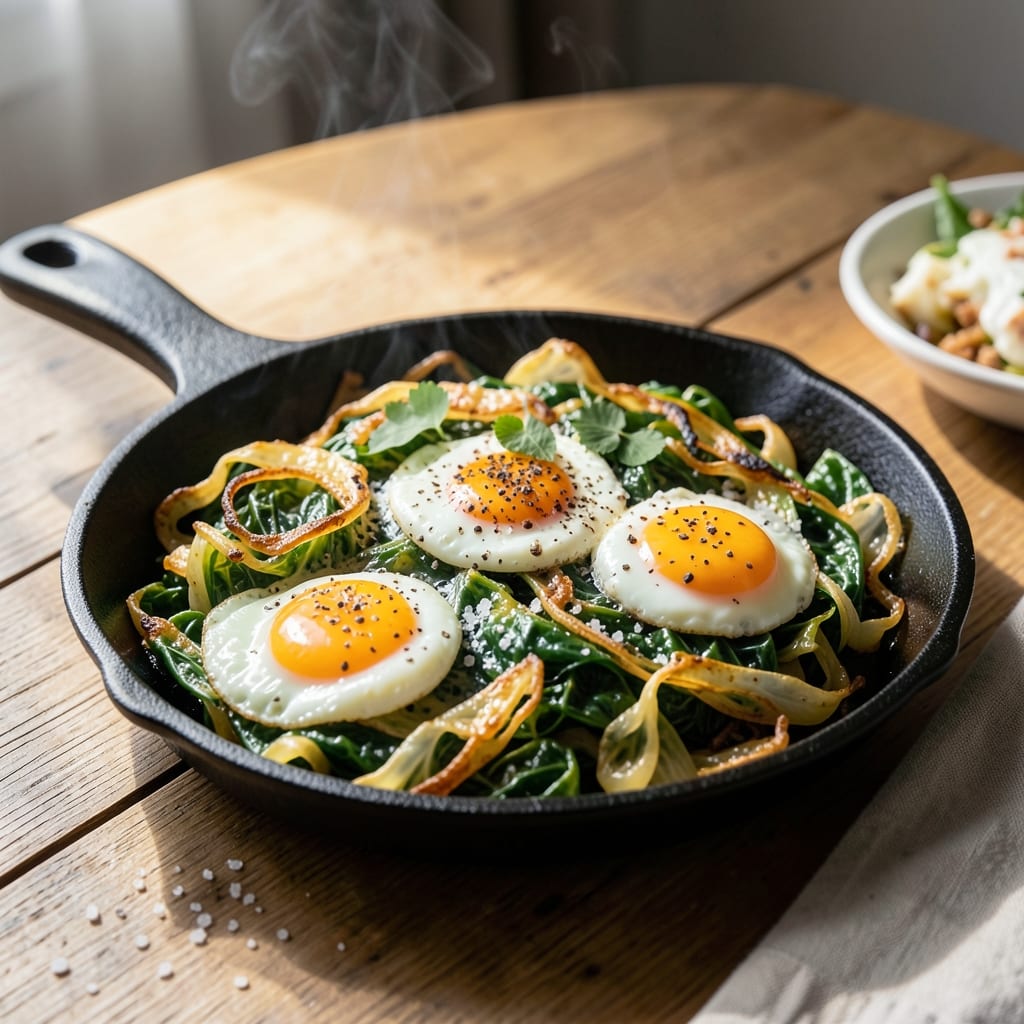
This cabbage egg fry recipe transforms simple ingredients into a crispy, golden dish with runny yolk magic that steals every bite. 💛 The secret lies in perfectly timed pan-frying—cabbage strips crisp up while eggs cook just enough to create that signature creamy yolk center. I developed this after years of experimenting with textures, and it never fails to impress. What sets this dish apart is the balance of crunch and creaminess: cabbage stays crispy on the edges while absorbing just enough egg to become tender, all topped with a perfectly runny yolk. The process is straightforward but requires attention to heat control—medium-high for the cabbage, lower for the eggs—to achieve that ideal texture. By the time you plate it, you'll have a dish that's restaurant-quality at home: golden cabbage strips, tender egg centers, and that irresistible contrast of textures. The simplicity makes it perfect for weeknight breakfasts or brunch gatherings, and it pairs beautifully with buttered toast or steamed rice. Here's where the magic happens: crispy cabbage meets velvety eggs in perfect harmony. Let's get cooking!
Ingredients for cabbage egg fry
Crispy cabbage meets velvety eggs—just 11 simple ingredients for golden perfection.
| Ingredient | Amount | Notes |
|---|---|---|
| Green Cabbage 🥬 | 12 oz | Thinly sliced, small head preferred |
| Large Eggs 🥚 | 4 whole | Room temperature for best results |
| Unsalted Butter 🧈 | ½ cup | Cold, cubed for crispy cabbage |
| Vegetable Oil 🫒 | ¼ cup | For even cooking |
| Salt 🧂 | 1 tsp | Kosher or sea salt |
| Black Pepper 🌶️ | ½ tsp | Freshly ground preferred |
| Garlic Cloves 🧄 | 2 cloves | Minced, optional for flavor |
| Fresh Parsley 🌿 | ¼ cup | Chopped, for garnish |
| White Vinegar 💧 | 1 tbsp | For crisping cabbage |
| Sugar 🍯 | ½ tsp | Balances flavors |
| Sesame Oil 🫒 | 1 tsp | For finishing touch |
The cabbage is everything here. Green cabbage works best—it's crunchier than red and holds up to frying. Grab a small head (about 12 oz) from the produce section. Look for leaves that are tight and vibrant, not wilted. I always buy mine at Whole Foods or my local Asian market—they keep it fresher longer. If you're using a bigger head, just slice more thinly. The key is to cut it into even strips, about 1/8-inch thick. Too thick and it won't crisp up right.
No sesame oil? Toasted peanut oil works in a pinch—just use half the amount. The eggs are non-negotiable though—room temperature is crucial for that perfect runny yolk. Fresh parsley? Dried works at one-third the amount, but fresh is brighter. The garlic is optional but adds serious flavor—minced is best, but powdered in a bind. For the cabbage prep, I like to soak the slices in cold water with a pinch of salt for 10 minutes before frying. It helps remove any dirt and makes them extra crispy. Don't skip this step if your cabbage feels gritty.
Prep the cabbage first—it takes the longest to cook. Store any leftover cabbage strips in an airtight container for 2-3 days, but honestly, they're best fresh. The eggs? Use within 2 days of cracking. This dish reheats beautifully—just warm in a skillet with a splash of water for 30 seconds. The sesame oil and parsley are for finishing, so add those last minute. Makes enough for 4 servings—perfect for brunch leftovers or a quick lunch.
Why You'll Love This Recipe
- Here’s what sold me: the cabbage gets this perfect crunch from the oil, while the eggs stay silky and rich thanks to the butter. It’s the kind of dish where every bite has texture—no soggy spots, no dry edges.
- I’ll be real: cabbage and eggs are cheap, and this recipe stretches them far. A few heads of cabbage and a dozen eggs feed my family for days, and the leftovers? Just as good reheated as they are fresh. Budget-friendly doesn’t mean boring.
Step-by-step instructions for crispy cabbage strips with runny yolk magic
Here's how to make perfectly crispy cabbage with silky eggs—simple steps for maximum flavor.
🍳 Step 1: Cook the Cabbage Until Crispy-Tender
Heat a large skillet over medium-high heat and add the 0.25 cup vegetable oil and 0.5 cup unsalted butter. Once the butter foams, add the 12 oz green cabbage in a single layer. You want the cabbage to sizzle immediately—if it doesn't, let the pan get hotter.
Cook for 8-10 minutes, stirring occasionally, until the cabbage edges turn deep golden brown and crispy. Here's the trick: when the cabbage looks done but still has some bite, add the 1 tbsp white vinegar and 0.5 tsp sugar. Stir and cook for another 2 minutes—this brightens the cabbage and balances the sweetness.
Season with 1 tsp salt and 0.5 tsp black pepper while it's hot. Remove the cabbage and set it aside on a plate, keeping it warm. Don't skip this step—seasoning while hot ensures perfect flavor distribution.
🍳 Step 2: Fry the Eggs to Perfect Runny Yolk
Wipe out the skillet with a paper towel to remove any excess butter or oil. Return it to medium-low heat—you want it warm but not hot. Crack the 4 whole large eggs into the skillet, spacing them evenly apart.
Let them cook undisturbed for 2-3 minutes until the whites are set but the yolks remain completely runny. I know it's tempting to peek, but resist! Overcooking turns that perfect yolk into a sad, rubbery mess. If the whites cook too fast, reduce the heat slightly.
Once the whites are opaque but the yolks are still liquid, gently transfer the eggs to a plate. Keep them warm while you finish the dish—you want that yolk to stay runny when you serve.
🥘 Step 3: Finish with Garlic and Sesame Oil
Return the skillet to medium heat and add the 2 cloves minced garlic. Cook for 30 seconds until fragrant—don't let it brown, or it'll turn bitter. Remove the skillet from heat and stir in the 1 tsp sesame oil.
Now, here's the fun part: toss the crispy cabbage back into the skillet with the garlic and sesame oil. Stir everything together for 1 minute to coat the cabbage in those aromatic flavors. The sesame oil adds a nutty depth that pairs perfectly with the crispy cabbage and runny yolks.
🍽️ Step 4: Assemble and Garnish
Divide the crispy cabbage among 4 plates, placing 1 egg on top of each portion. The cabbage should be piled high enough to hold the egg without breaking it. Sprinkle each plate generously with 0.25 cup chopped fresh parsley for a pop of color and freshness.
Serve immediately with the cabbage still crispy and the eggs at their perfect runny stage. The contrast of the crunchy cabbage with the silky, warm egg yolk is what makes this dish truly magical. Don't wait too long—once that yolk cools, it sets up fast!
Pro Tips For Making Cabbage Egg Fry
- SHRED SMALL, SHRED EVEN: Cut the cabbage into 1-inch strips—no smaller, or it’ll turn to mush before the eggs set. Use a sharp knife and work in batches if needed; I learned this the hard way when my first batch turned into a sad, limp pile.
- SALT THE CABBAGE FIRST: Toss the shredded cabbage with salt and let it sit for 10 minutes before cooking. This draws out moisture, so it crisps up properly instead of steaming into a soggy mess—trust me, your future self will notice the difference.
- SCRAMBLE EGGS SEPARATELY: Fry the eggs in a clean, dry pan after the cabbage starts to soften. Crowding the pan with both ingredients at once makes the eggs rubbery and the cabbage wet; keep them apart for that perfect tender-crisp texture.
- USE HALF BUTTER, HALF OIL: Start with vegetable oil to sear the cabbage, then swap to butter for the eggs. The oil handles the high heat, while the butter adds richness without burning—this combo makes the dish taste restaurant-worthy without extra effort.
Flavor customization for this dish
Sweet-Savory Balance
Adjust the sugar and vinegar ratio to control sweetness—try 1 tsp sugar and 2 tsp vinegar for extra tang or ½ tsp sugar and ½ tsp vinegar for milder flavor. I love adding ½ tsp honey to the cabbage mix for a caramelized finish when tossing with sesame oil. 🍯
Spicy Kick Options
For heat lovers, toss the crispy cabbage with ½ tsp chili flakes or 1 tsp gochujang before adding eggs. I also like a drizzle of sriracha mayo (mix 1 tbsp mayo with ½ tsp sriracha) on the plate for dipping. Fresh red chili crisp adds a smoky punch too!
Herb Variations
Swap parsley for cilantro or green onions—both add freshness. For a bold flavor, mix 1 tbsp chopped cilantro with ½ tsp lime zest before serving. I also enjoy a sprinkle of toasted sesame seeds for extra crunch and nuttiness.
Cheesy Twist
Add ¼ cup shredded sharp cheddar or feta cheese to the cabbage while frying—it melts slightly, creating pockets of gooey goodness. For a vegan option, use nutritional yeast (just 1 tbsp) for a cheesy flavor without dairy. 🧀
Umami Boost
Enhance depth with 1 tsp soy sauce or ½ tsp fish sauce in the cabbage mix. I also love adding 1 tbsp miso paste (dissolved in 1 tsp water) to the sesame oil for a rich, savory note that pairs perfectly with the eggs.
Nutrition facts
Frequently asked questions
Why does my cabbage turn mushy instead of crispy?
Overcrowding the pan is the #1 culprit! Cook cabbage in a single layer with enough space between strips so they sizzle properly. Too much at once steams the cabbage instead of frying it. Also, make sure your pan is hot enough—medium-high heat is key for that crispy texture.
Can I make this dish ahead of time?
Cook the cabbage up to 1 day ahead and store it in an airtight container. Reheat in a skillet with a splash of water for 30 seconds to restore crispiness. The eggs should always be cooked fresh—they lose their perfect runny yolk when reheated.
What's the best way to get perfectly runny yolks?
Use room temperature eggs and cook them on medium-low heat for exactly 2-3 minutes—no peeking! The whites should be set but the yolks still jiggly. A nonstick skillet helps prevent sticking while keeping the heat gentle.
Can I substitute red cabbage?
Yes, but green cabbage is ideal for crispiness. Red cabbage has a softer texture and sweeter flavor, so it may not hold up as well when frying. If using red, add an extra 1 minute to cooking time to ensure crisp edges.
What's the secret to balancing flavors?
The vinegar-sugar combo is magic! The 1 tbsp vinegar brightens while the ½ tsp sugar balances. Taste as you go—add more vinegar for tang or sugar for sweetness. The sesame oil at the end adds nutty depth that ties everything together.