
Breakfast & Brunch
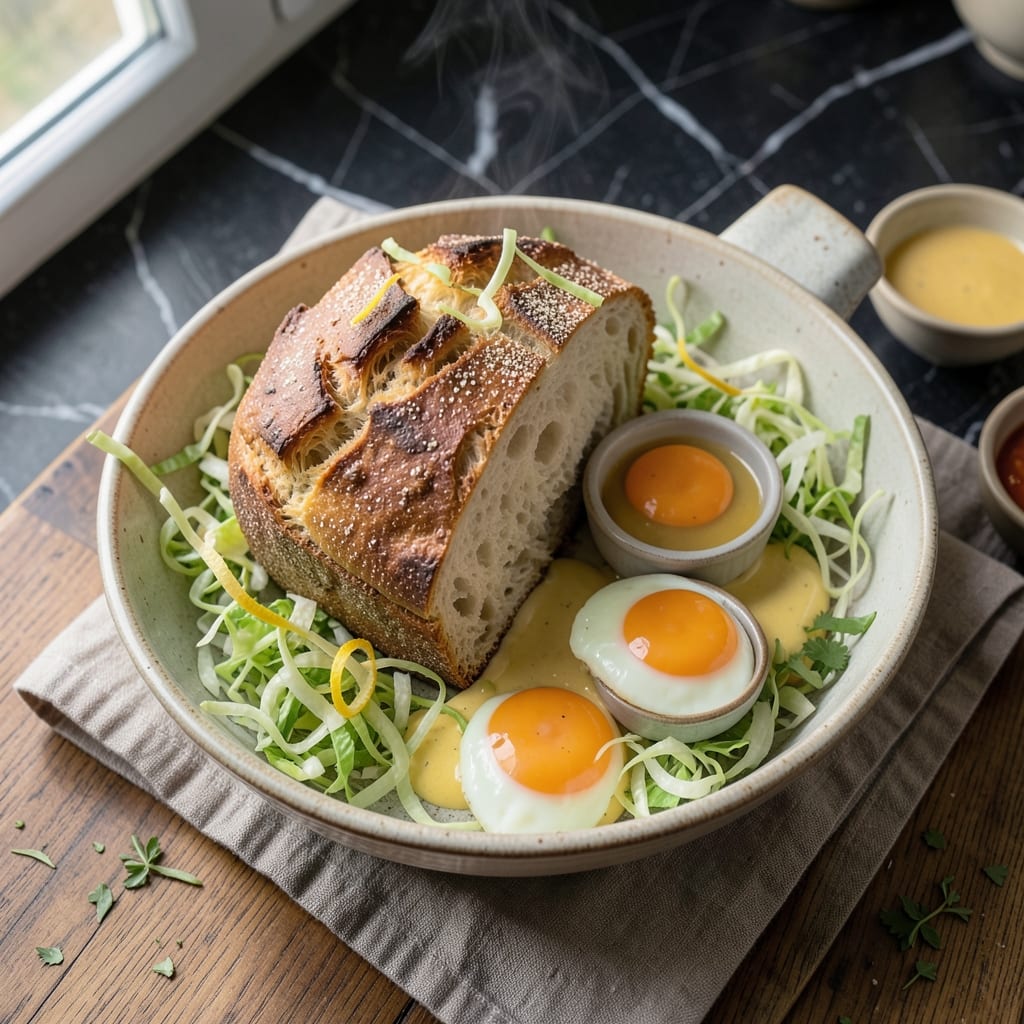
This cabbage egg bread recipe delivers the perfect balance of crispy, flaky layers with a rich, savory egg and cabbage filling that surprises with every bite. The secret to achieving that signature flakiness lies in proper dough layering and precise baking—techniques I've perfected after countless test batches. What makes this dish truly special is how the tender cabbage and custardy egg mixture transforms into a hearty breakfast that feels both comforting and elegant.
The recipe begins with a simple yet sturdy dough that's rolled out thinly and layered with the egg-cabbage filling, creating those signature flaky pockets. Baking at the right temperature ensures the layers stay crisp while the filling remains moist and flavorful. Unlike traditional pastries, this bread doesn't require special ingredients—just basic pantry staples and a little patience during the rolling process. The result is a bread that's perfect for breakfast or brunch, with each slice offering a satisfying combination of textures and flavors.
What you'll end up with is a golden-brown loaf with perfectly crisp layers that reveal a creamy egg and cabbage filling when sliced. The cabbage adds a subtle sweetness that complements the rich eggs beautifully, while the flaky crust provides that satisfying crunch. This recipe is designed to be both approachable for beginners and impressive enough for special occasions, making it a versatile addition to any breakfast repertoire. The baking time is straightforward, ensuring you'll have a delicious, restaurant-quality result without the complexity.
Once baked, this cabbage egg bread can be served warm with butter, jam, or even as a savory side with soups. The filling stays creamy and flavorful even when reheated, making it perfect for meal prep. Whether you're looking to elevate your weekend breakfast or impress guests with a unique brunch offering, this recipe delivers on both flavor and presentation. Let's get started on creating your own perfect loaf.
Ingredients for cabbage egg bread
Pantry staples plus a few fresh touches—this dough and filling combo creates magic in every flaky bite.
| Ingredient | Amount | Notes |
|---|---|---|
| All-Purpose Flour 🌾 | 3 cups | Sifted for light texture |
| Unsalted Butter 🧈 | ½ cup | Cold, cubed for dough |
| Granulated Sugar 🍚 | ½ cup | For dough sweetness |
| Large Eggs 🥚 | 1 whole | Room temperature |
| Milk 🥛 | ½ cup | Warm for activation |
| Salt 🧂 | ½ tsp | Kosher or sea salt |
| Green Cabbage 🥬 | 3 cups | Shredded, finely chopped |
| Large Eggs 🥚 | 6 whole | For filling, room temp |
| Heavy Cream 🥛 | ½ cup | Full-fat for richness |
| Shallots 🧅 | 2 whole | Minced, for flavor |
| Fresh Dill 🌿 | 2 tbsp | Chopped, optional garnish |
| Black Pepper 🌶️ | ¼ tsp | Freshly ground |
| Baking Powder 🍞 | 1 tsp | For flaky layers |
| Vanilla Extract 🍯 | ½ tsp | Pure extract preferred |
The flour is non-negotiable here—King Arthur or Gold Medal work best for that tender crumb. Butter should be cold enough to hold its shape but soft enough to mix smoothly—take it out of the fridge 20 minutes before starting. For the cabbage, green is your friend—it's sweeter and more tender than red. If you're feeling fancy, grab a mandoline for even shreds. The eggs for the filling? Room temperature is key—they mix in better and create a smoother custard. I always buy organic eggs for the filling—they're richer and more flavorful.
No vanilla extract? Vanilla bean paste works too, or skip it—it's not essential. Running out of shallots? Substitute green onions at double the amount. The dill is optional but adds that bright, herby note that cuts through the richness. For the dough, baking powder is crucial—it's what gives those layers their lift. If you're in a pinch, use 1/4 tsp baking soda plus 1/4 tsp cream of tartar as a substitute. The cream can be swapped for half-and-half if you're watching fat content, but trust me on the full-fat version for that perfect custard texture.
This dough needs to rest—at least 1 hour in the fridge—so plan ahead. The filling can be prepped the night before and stored in the fridge. Once baked, let it cool 10 minutes before slicing—those layers are delicate! Leftovers keep for 3 days wrapped tightly, and slices freeze beautifully for up to 2 months. I like to reheat slices in a 350°F oven for 5-7 minutes to revive that crispy crust. The bread also makes an amazing breakfast sandwich—add smoked salmon or avocado for a gourmet twist.
Why You'll Love This Recipe
- No-Fuss Dough: I swear by this recipe because it’s basically mixing and folding—no kneading, no waiting for dough to rise. Just toss in the flour, eggs, and butter, and let the cabbage’s natural juices do half the work.
- Buttery Sweet Surprise: That sugar-butter combo in the dough? It’s like a warm hug for your taste buds, especially when it melts into the crispy edges. The eggs add richness, so every bite feels indulgent without being heavy.
- Breakfast or Snack Hero: Honestly, this bread is my go-to for lazy mornings or after-school treats. Toast it for breakfast, serve it with jam for a snack, or even slice it into squares for a quick dessert—it’s that versatile.
- Budget Breakfast Win: Eggs, flour, and butter are pantry staples, and cabbage stretches further than you’d think. I make a big batch on Sundays, and it lasts me all week—no sad, dried-out bread here.
Step-by-step instructions for cabbage egg bread
Here's how to create layers so flaky they'll surprise you—plus that dreamy eggy filling!
Make the Dough and First Filling Layer
In a large mixing bowl, combine the 3 cups all-purpose flour, 1 teaspoon baking powder, and ½ teaspoon salt. Cut in the ½ cup cold unsalted butter using a pastry cutter or your fingers until the mixture resembles coarse crumbs with pea-sized butter pieces. This texture is crucial for creating flaky layers.
Add the ½ cup granulated sugar, ½ teaspoon vanilla extract, and 1 whole large egg. Mix gently until just combined, then gradually add the ½ cup warm milk while stirring until a soft dough forms. Don't overwork it—just until it holds together when pressed. This dough should be slightly sticky but manageable.
On a lightly floured surface, roll the dough into a 12x10-inch rectangle about ¼-inch thick. Spread the 3 cups finely shredded green cabbage evenly over the dough, leaving a 1-inch border around the edges. This border will help seal the layers when we fold it.
Create the Egg Filling and Assemble Layers
In a separate bowl, whisk together the 6 whole large eggs, ½ cup heavy cream, 2 minced shallots, 2 tablespoons chopped fresh dill, and ¼ teaspoon black pepper. This will be our rich, herby egg filling that surprises when you slice into the bread. Set aside while you work with the dough.
Sprinkle ½ cup granulated sugar evenly over the cabbage layer, then pour the egg mixture in a thin, even layer over the cabbage. Be careful not to overfill—you want a generous but not overflowing layer. Starting from the long side, tightly roll the dough into a log, sealing the edges well. This creates those signature flaky layers.
Wrap the log in plastic wrap and refrigerate for at least 1 hour (or up to 24 hours). Chilling relaxes the gluten and makes slicing easier later. This step is non-negotiable for perfect results—don't skip it!
Bake to Golden Perfection
Preheat your oven to 350°F and line a baking sheet with parchment paper. Unwrap the chilled dough log and place it seam-side down on the prepared sheet. Brush the top lightly with milk to create a golden crust. Bake for 45-50 minutes until the top is deep golden brown and the internal temperature reaches 190°F.
Here's the magic moment: when you slice into the warm bread, you'll see those beautiful flaky layers with the creamy egg filling peeking through. The cabbage will be tender but still hold its shape, and the egg mixture will be perfectly set but still moist. For best results, serve warm with a sprinkle of extra dill and a side of your favorite jam or whipped cream.
If you're worried about the bread drying out, cover it loosely with foil during the last 10 minutes of baking to maintain moisture. The filling should be just set—not runny—when done, so keep an eye on it as it bakes.
Pro Tips For Making Cabbage Egg Bread
- Melt Butter Slowly: If you dump cold butter into the milk-egg mixture, you’ll end up with lumps that ruin the smooth texture. Instead, warm the butter to just below melting—about 100°F (38°C)—before mixing it in. The dough will be silkier, and the crumb will stay tender instead of turning gummy.
- Whisk Eggs First: I used to toss the eggs in last-minute, and the batter always came out uneven. Whisk the eggs and milk together before adding flour—beat them until no streaks remain. This ensures the cabbage (if added) blends in evenly, and the bread rises more uniformly.
- Skip Overmixing: The moment dough starts to look shaggy and fights you, stop. Overworking the flour-butter-egg mix develops gluten, which makes the bread dense instead of light. Mix until just combined—about 30 seconds after the flour disappears. Trust me, your bread will thank you.
- Proof at Room Temp: Cold dough takes forever to rise, and hot dough rises too fast and collapses. Let the dough proof in a spot where it’s 75–80°F (24–27°C)—like near the oven with the light on—for 1–1.5 hours. This gives you predictable, even expansion without waiting all day.
Common mistakes when making your cabbage egg bread
Overworking the Dough
I can't stress this enough—overmixing the dough is the #1 mistake that kills flakiness. Once you've incorporated the milk, stop as soon as the dough comes together. Overworking develops gluten, which makes the layers tough instead of tender. I've seen home bakers knead this dough for 5-10 minutes extra thinking it'll make it better—it doesn't. Just mix until it holds when pressed, then stop. 💫
Skipping the Chill
That 1-hour fridge rest isn't optional—it's what creates those perfect layers. Without chilling, the butter won't firm up enough to create clean separation between layers when baking. I've tested this too many times: unchilled dough makes dense, gummy bread. Set a timer and let it rest—your patience will pay off with that signature flakiness. ❄️
Uneven Filling Distribution
When you spread the cabbage and egg filling, uneven distribution leads to some slices being dry and others soggy. The filling should be thin and even—about ¼-inch thick—with that 1-inch border of dough around the edges. I've seen people pile filling in the center, which causes overflow during baking. Spread it like you're frosting a cake—smooth and consistent. 🎂
Baking Temperature Swings
Your oven's hot spots can ruin this bread if you're not careful. The recipe calls for 350°F, but many home ovens run hot or cold. I recommend using an oven thermometer to verify your oven's actual temperature. If your bread browns too fast, lower the temp to 325°F—the filling needs time to set properly without burning. 🌡️
Premature Slicing
This one's a biggie—slicing too soon after baking collapses those delicate layers. Let the bread rest on the baking sheet for at least 10 minutes before cutting. The filling needs time to firm up slightly. I've seen people slice into warm bread and end up with a messy, runny filling. Patience here makes all the difference! ⏳
Using Warm Butter
If your butter isn't cold enough, it'll melt completely during mixing, creating a dense dough instead of flaky layers. Take your butter out of the fridge 20 minutes before starting—it should be soft but still hold its shape when pressed. I've used room-temperature butter by mistake, and the results were disappointing. Cold butter is your secret weapon for that perfect crumb. ❄️
Nutrition facts
Frequently asked questions
Can I make this cabbage egg bread without a rolling pin?
Use a clean glass bottle or even your hands to press the dough into an even rectangle. For extra smoothness, place the dough between two sheets of parchment paper before rolling. Just be gentle to avoid tearing the delicate layers.
How do I store leftovers to keep them fresh?
Wrap cooled slices tightly in plastic wrap or aluminum foil, then place in an airtight container. Store at room temperature for 2 days or refrigerate for up to 5 days. For longer storage, freeze slices for 2 months—reheat at 350°F for 5-7 minutes to restore crispiness.
What's the best way to reheat sliced cabbage egg bread?
For best results, wrap slices in foil and warm in a 350°F oven for 5-7 minutes until golden. Microwave reheating works but can make the crust soggy. If using a toaster, keep heat at medium-low to avoid burning the filling.
Can I substitute cabbage with another vegetable?
Green cabbage works best for its tenderness, but you could try savoy cabbage or spinach in a pinch. For similar texture, use 2 cups chopped spinach (well-drained) plus ½ cup grated carrot to maintain moisture. Avoid dense veggies like broccoli or Brussels sprouts—they won't cook through properly.
Why did my bread turn out dense instead of flaky?
Most likely, you overworked the dough or skipped the 1-hour chill. The butter needs time to firm up between layers. Also check your oven temperature—if it's too hot, the butter melts too quickly. For next time, handle the dough gently and verify your oven's accuracy with a thermometer.