
Breakfast & Brunch
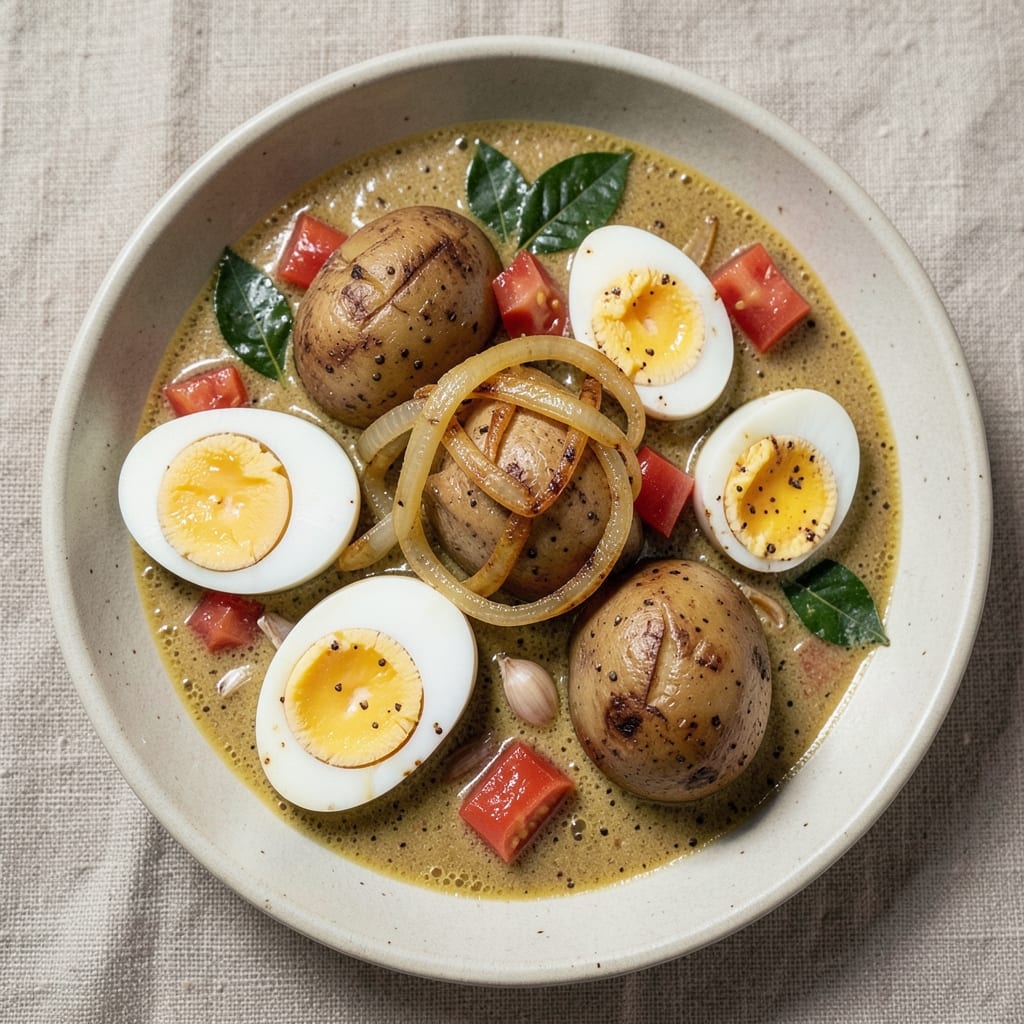
This one-pot boiled egg and potato curry transforms humble ingredients into a fast, aromatic breakfast that feels like a restaurant dish. The secret lies in tempering whole spices—cumin, mustard seeds, and curry leaves—until they release their deep, earthy fragrance, which infuses the creamy coconut milk and tender potatoes. I developed this recipe after realizing how quickly boiled eggs and leftover potatoes could become something extraordinary with just a few spices and a splash of coconut milk.
The magic happens in the one-pot simplicity: potatoes soften while the eggs cook gently in the simmering broth, absorbing the flavors without breaking. A touch of turmeric and garam masala adds warmth, while fresh cilantro brightens the dish at the end. This curry is ready in under 30 minutes, making it perfect for busy mornings when you still crave something hearty and satisfying.
What you’ll end up with is a creamy, spiced curry where the potatoes melt into the sauce and the eggs—still intact—add a rich, protein-packed element. The aroma alone will wake up your kitchen, and the first bite delivers a balance of textures: soft potatoes, tender eggs, and a velvety coconut broth. Serve it with warm naan or crusty bread to soak up every last drop of that fragrant sauce.
This recipe is versatile enough for breakfast or dinner, and the leftovers reheat beautifully. The key to success? Don’t skip the tempering step—it’s what transforms this into something truly special. Let’s get cooking!
Ingredients for boiled egg and potato curry
Fast, aromatic, and packed with humble ingredients that taste like a restaurant dish.
| Ingredient | Amount | Notes |
|---|---|---|
| Russet Potatoes 🥔 | 2 lb | Cut into 1-inch cubes, peeled |
| Large Eggs 🥚 | 4 whole | Hard-boiled, peeled, room temp |
| Coconut Milk 🥥 | 1 can | Full-fat, 13.5 oz can |
| Yellow Onion 🧅 | 1 whole | Diced, medium size |
| Garlic Cloves 🧄 | 6 cloves | Minced, fresh preferred |
| Fresh Curry Leaves 🌿 | ¼ cup | Packed, finely chopped |
| Ground Cumin Seeds 🌶️ | 1 tbsp | Toasted for depth |
| Mustard Seeds 🌶️ | 1 tsp | Whole, yellow preferred |
| Ground Turmeric 🌿 | ½ tsp | Freshly ground preferred |
| Garam Masala 🌶️ | 1 tsp | Store-bought or homemade |
| Salt 🧂 | 1 tsp | Kosher or sea salt |
| Fresh Cilantro 🌿 | ¼ cup | Chopped, stems removed |
| Vegetable Oil 🫒 | 2 tbsp | Neutral, high smoke point |
| Lemon Juice 🍋 | 1 tbsp | Freshly squeezed |
The coconut milk is non-negotiable here—full-fat gives that rich, velvety texture. Thai Kitchen or Aroy-D brand are reliable, but any canned full-fat works. For the curry leaves, Indian grocery stores carry them fresh, but if you can't find them, skip them—they're more about aroma than flavor. Potatoes should be Russet or Yukon Gold—they hold up better to boiling and mashing. The eggs? Room temperature eggs crack less when boiling, and they absorb flavors better too. Toast your cumin seeds in a dry pan for 30 seconds before adding to the oil—that's where the magic starts.
No curry leaves? Extra cumin plus a pinch of black pepper gets you close. Running short on coconut milk? Half coconut milk, half vegetable broth keeps it creamy. The garam masala can be swapped for a mix of coriander, cardamom, and cinnamon if you've got those spices. Fresh cilantro is ideal, but dried oregano at half the amount works in a pinch. For the potatoes, don't skip peeling—they absorb the spices better and give a cleaner texture. The lemon juice at the end? Freshly squeezed brightens everything up, but bottled works if you're in a rush.
This curry reheats beautifully—3-4 days in the fridge, 3 months frozen. I like to portion it into containers with a side of naan for easy lunches. The eggs stay intact when reheated gently, but if you're freezing, add them fresh after reheating. For extra flavor, stir in a splash of water or coconut milk when reheating. The spices mellow over time, so it actually tastes better the next day once everything melds together.
Why You'll Love This Recipe
- No Chopping Nightmare: I swear by this one—just dice the onion and mince the garlic, then let the potatoes and eggs do the work. The Russets stay tender while the eggs stay perfectly firm, no fussing required.
- Coconut Cream Magic: That first spoonful of coconut milk hitting the simmering potatoes? Rich, velvety, and just enough to make you forget it’s basically a hug in a bowl. The eggs soak up the flavor like sponges.
- Lunchbox Hero: Between us, this is my go-to for packed lunches. Cold or reheated, the potatoes hold their shape and the eggs add protein—no sad soggy sandwiches here. (My kids still argue over who gets the last bite.)
- Pantry Staple Power: Onion, garlic, potatoes, eggs, coconut milk—you’re probably already stocked. I’ve made this on a $5 grocery run, and it still tastes like I spent hours. Leftovers? Even better the next day.
Step-by-step instructions for boiled egg and potato curry
Here's how to make this aromatic, one-pot breakfast curry that balances creamy coconut milk with spiced potatoes and eggs.
Prepare the Spice Base
Heat the 2 tablespoons vegetable oil in a large, deep skillet over medium heat. Add the 1 tablespoon ground cumin seeds and toast for 30 seconds until fragrant—you'll smell that nutty aroma. Immediately add the 1 teaspoon mustard seeds and toast for another 20 seconds until they begin to pop.
Lower the heat to medium-low and add the 1 whole yellow onion that's been diced. Cook for 5-6 minutes until the onions soften and turn translucent. Stir in the 6 cloves garlic cloves that have been minced and the 0.5 teaspoon ground turmeric. Cook for another 1 minute until the garlic turns golden—this prevents bitterness and builds flavor depth.
Build the Curry Foundation
Add the 2 lb russet potatoes that have been cut into 1-inch cubes and the 0.25 cup packed fresh curry leaves to the skillet. Stir well to coat the potatoes in the spice mixture. Pour in the 1 can coconut milk and the 1 teaspoon salt, then bring everything to a gentle simmer over medium heat. The mixture should bubble softly—this ensures even cooking without scorching.
Cover the skillet and let the potatoes simmer for 15-18 minutes, stirring occasionally, until they're fork-tender with a slight resistance. You'll know they're ready when they're soft enough to mash easily but still hold their shape. The coconut milk should have thickened slightly, creating a creamy base for the curry.
Incorporate the Eggs and Final Spices
Gently add the 4 whole large eggs that have been hard-boiled, peeled, and cut into halves. Stir them into the potato mixture, being careful not to break them apart completely. Sprinkle the 1 teaspoon garam masala evenly over the top and stir to combine. The eggs will absorb the rich flavors of the curry while maintaining their texture.
Simmer uncovered for 5-7 minutes until the eggs are heated through and the sauce has thickened to a perfect consistency. You want the curry to coat the back of a spoon but still be spoonable—this balance is key. The eggs should be warm all the way through, with no pink remaining in the center.
Finish with Fresh Herbs and Acid
Remove the skillet from heat and stir in the 0.25 cup chopped fresh cilantro and 1 tablespoon freshly squeezed lemon juice. The cilantro adds a bright, herbaceous note that cuts through the richness of the coconut milk, while the lemon juice brightens the entire dish. Taste and adjust the seasoning if needed—you might want to add a pinch more salt or a squeeze of lemon to balance the flavors.
Let the curry rest for 2-3 minutes before serving. This resting period allows the flavors to meld together, creating a cohesive dish that's creamy, spiced, and perfectly balanced. Serve immediately while the potatoes are still tender and the eggs are warm, ready to be enjoyed with steamed rice or warm naan.
Pro Tips For Making Boiled Egg And Potato Curry
- PARBOIL POTATOES FIRST: Russet potatoes take forever to soften in curry—cut them into even 1-inch chunks and boil for 5 minutes before adding to the pot. This cuts cooking time by half and keeps them from turning to mush later.
- USE COLD EGGS: I learned this the hard way—room-temperature eggs crack when dropped into simmering coconut milk. Pop them straight from the fridge into ice water first, then add gently to the pot. No more scrambled yolks.
- SWEAT ONIONS LOW AND SLOW: After burning three batches, I finally figured out: cook onions on medium-low heat until they’re translucent but not brown. Rushing this step makes the curry taste raw and bitter—patience here makes all the difference.
- STIR IN COCONUT MILK LAST: Add the coconut milk when the potatoes and onions are nearly done, then simmer just 2-3 minutes. Dumping it in too early turns the curry greasy and watery—this keeps the sauce rich without breaking the eggs.
Essential equipment for perfect results
One-Pot Skillet
This recipe comes together in a single large, deep skillet—I recommend a 10-inch cast-iron skillet or stainless steel sauté pan for even heat distribution. Cast iron retains heat beautifully, ensuring the potatoes cook evenly without burning. If you don’t have cast iron, a heavy-bottomed stainless steel pan works just as well. The depth is important because you’ll be simmering liquids and potatoes together—aim for at least 2-3 inches of height to avoid spills. 🔥
Spice Toasting Tools
Toast your cumin seeds and mustard seeds in a small dry skillet or directly in your main pan. For extra control, use a small stainless steel sauté pan—it heats up quickly and prevents burning. A wooden spoon helps stir the seeds without scratching non-stick surfaces. Toasting seeds in a separate pan first ensures they pop perfectly before adding onions. I also keep a fine-mesh strainer handy to remove any stray seeds if needed.
Potato Prep Essentials
Peeling and cubing potatoes efficiently requires a sharp chef’s knife and a cutting board. For even cubes, use a mandoline if you’re prepping in bulk, but a knife works fine for home cooks. A potato masher (optional) helps create that soft, creamy texture if you prefer mashed potatoes over chunks. I always keep a small bowl of cold water nearby to rinse cut potatoes—it prevents browning while prepping. 🥔
Temperature Control
A kitchen thermometer ensures your curry simmers at the perfect 190-200°F—this prevents scorching while gently cooking the potatoes and eggs. For stovetop control, I use a digital instant-read thermometer like the Thermoworks Thermapen ONE. If you don’t have one, watch for a gentle bubble (not a rolling boil) to maintain even cooking. Adjust heat as needed to keep the sauce creamy, not watery.
Garnish & Serving
Fresh cilantro and lemon juice need a small knife and cutting board for chopping. A microplane works well for zesting lemon if you want extra brightness. For serving, I like to use individual bowls or a large platter with warm naan or rice on the side. A tongs helps transfer the curry without breaking the eggs. Don’t forget a small pitcher for extra lemon juice at the table!
Nutrition facts
Frequently asked questions
Can I make this curry without coconut milk?
Yes, but the texture will be thinner. Replace the coconut milk with 1 cup vegetable broth + 2 tablespoons cornstarch slurry to thicken it. For extra richness, stir in 2 tablespoons Greek yogurt or cashew cream at the end. The spices will still shine, but the creamy element will be missing.
How do I keep the boiled eggs intact in the curry?
Add the eggs only after the potatoes are fully cooked and simmer gently for 5-7 minutes max. Avoid stirring vigorously—just spoon the sauce around them. For extra protection, place halved eggs in a small metal strainer and nestle them into the curry. This keeps them whole while absorbing flavors.
What if I don't have fresh curry leaves?
Skip them—this spice is mostly for aroma. Boost flavor instead with 1 extra teaspoon cumin seeds or ½ teaspoon black pepper. For a different twist, add 1 teaspoon dried fenugreek leaves (soaked in warm water for 10 minutes first). The dish will still taste delicious without them.
Can I make this curry ahead of time?
It reheats beautifully. Store in an airtight container for 3-4 days in the fridge. Reheat gently on low heat, adding 1-2 tablespoons water or coconut milk to restore creaminess. For best texture, add boiled eggs fresh when reheating—this keeps them intact.
What's the best way to serve this curry?
Pair it with steamed basmati rice or warm naan to soak up the sauce. For extra flair, serve with pickled onions or a side of yogurt raita. The creamy curry also works well as a filling for flatbread wraps or over crusty bread. Garnish with extra cilantro and lemon wedges for freshness.