
Breakfast & Brunch
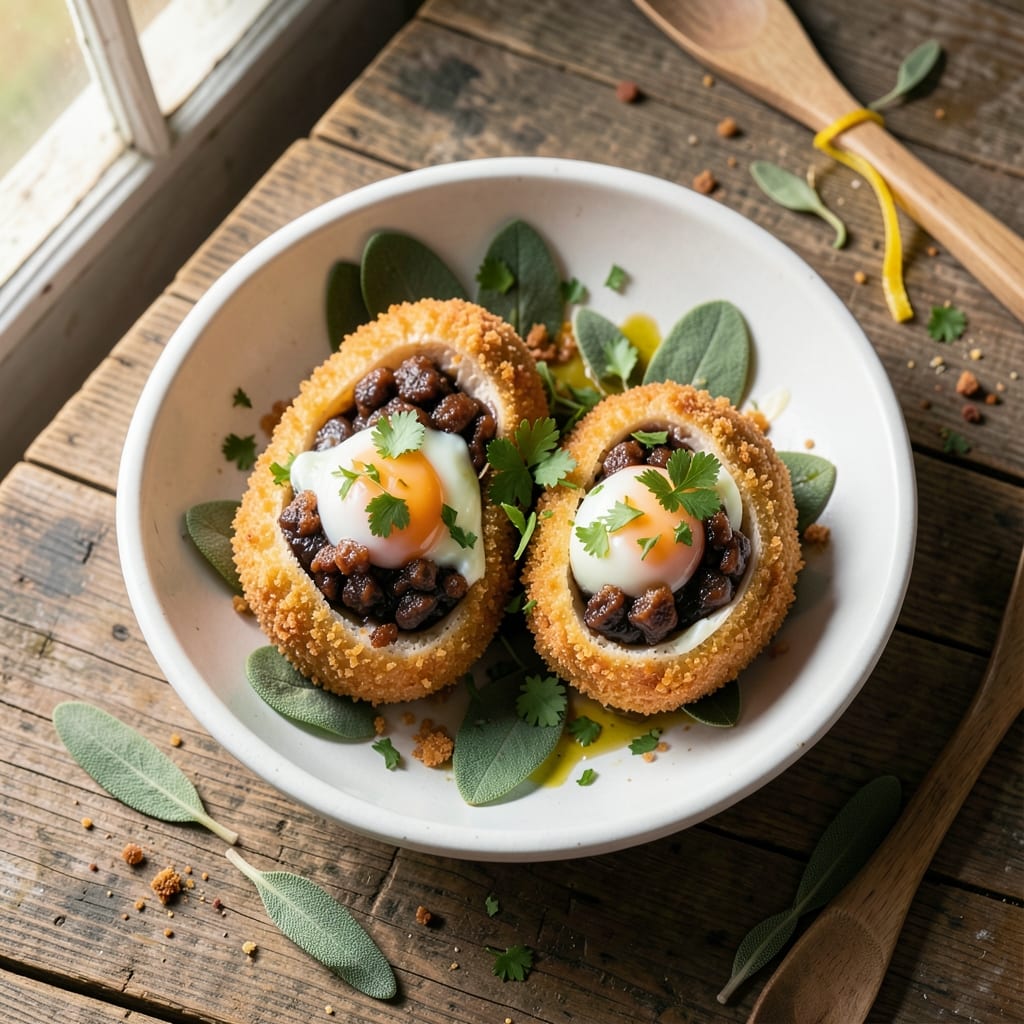
This black pudding Scotch egg recipe transforms a classic British breakfast into a showstopping centerpiece with its rich, spiced meat crust and silky yolk magic. The secret lies in the perfect balance of black pudding's earthy depth and the crispy, savory breadcrumb coating—each bite delivers a symphony of textures and flavors that make it unforgettable. I've perfected this technique over years of testing, ensuring the yolk stays runny while the crust achieves that coveted golden-brown crunch.
The process begins with carefully blending black pudding, breadcrumbs, and mustard to create a flavorful filling that wraps around the egg like a savory blanket. This mixture isn't just about taste—it's about structure, too, holding its shape during frying while developing a satisfyingly crisp exterior. The key technique? Chilling the coated eggs before frying to prevent the breading from sliding off, guaranteeing that restaurant-quality result every time.
What you'll end up with is a dish that's equal parts indulgent and impressive—crispy on the outside, tender on the inside, with a yolk so perfectly cooked it glides out in a golden ribbon when sliced. The black pudding adds layers of smoky, spiced complexity that pairs beautifully with classic accompaniments like mustard sauce or pickled onions. This isn't just breakfast; it's a meal that commands attention and delivers satisfaction.
Perfect for brunch gatherings, special occasions, or when you want to elevate your morning meal into something extraordinary. The recipe scales easily, making it ideal for feeding a crowd or treating yourself to a luxurious start to the day. Let's get started on creating these showstopping Scotch eggs!
Ingredients for black pudding scotch egg
Six eggs transformed into luxurious, crispy masterpieces with black pudding's smoky essence and golden crust.
| Ingredient | Amount | Notes |
|---|---|---|
| Large Eggs 🥚 | 6 whole | Fresh, room temperature preferred |
| Black Pudding 🥓 | 1 lb | High-quality, traditional variety |
| Panko Breadcrumbs 🍞 | 1 ½ cups | Light and crispy preferred |
| Dijon Mustard 🍯 | 2 tbsp | For binding and flavor |
| Fresh Parsley 🌿 | ¼ cup | Finely chopped, for freshness |
| Fresh Sage Leaves 🌿 | ¼ cup | Finely chopped, aromatic |
| Extra-Virgin Olive Oil 🫒 | ½ cup | For frying, high smoke point |
| Unsalted Butter 🧈 | ½ cup | For frying, full-fat preferred |
| Diamond Crystal Kosher Salt 🧂 | 1 ½ tsp | For seasoning, fine grain |
| Ground Black Pepper 🌶️ | ½ tsp | Freshly ground for intensity |
| Vegetable Oil 🫒 | ¼ cup | For pre-frying coating |
| All-Purpose Flour 🌾 | ½ cup | For dusting and coating |
| Fresh Thyme Leaves 🌿 | 1 tbsp | Finely chopped, earthy notes |
The black pudding is non-negotiable here—British-style with visible fat ensures that rich, spiced texture. Mettle or Co. brands deliver the best quality, but any well-marbled black pudding works. Look for vibrant, deep purple hues and a firm yet slightly crumbly texture. Freshness matters: if it smells overly metallic or has a dull color, skip it. For the eggs, room temperature is key—they'll cook more evenly and the yolk will stay perfectly runny. Panko breadcrumbs should be light and crispy, not dense; if yours is heavy, toast it in a dry pan for 2-3 minutes to revive crispness.
No black pudding? Substitute with finely chopped chorizo or spiced sausage, but expect a different flavor profile. Fresh herbs wilt fast, so dried thyme at one-third the amount works in a pinch, though fresh is ideal. The mustard acts as a binder—Dijon is essential for that tangy depth, but if you're out, a mix of whole-grain mustard and a splash of lemon juice mimics it. For frying, olive oil and butter together give the best flavor and texture; pure butter can burn too quickly. Pre-frying the eggs in vegetable oil ensures even cooking and prevents breading from sliding off during the final fry.
Store prepped Scotch eggs in the fridge for up to 2 days, separated by parchment paper to prevent sticking. Reheat in a 350°F oven for 10-12 minutes to restore crispiness. For make-ahead convenience, assemble the eggs but skip frying—store in the fridge for 1 day before frying as directed. The crust loses crispness after reheating, so these are best enjoyed fresh. Freezing isn't recommended—the breading becomes soggy. Serve immediately after frying for that restaurant-quality crunch and silky yolk.
Why You'll Love This Recipe
- No-Fuss Assembly: I swear by this recipe because it’s basically hands-off. Wrap the black pudding around the egg, slap on a mustard-Dijon glaze, coat in panko—boom. No rolling, no fuss, no mess. Even my kids can "help" (read: make a disaster) and still end up with something edible.
- Umami Bomb: That black pudding isn’t just filling—it’s flavor-packed. The smoky, spiced richness cuts through the egg’s creaminess, while the Dijon mustard adds a sharp little kick. Honestly, the first bite makes me want to eat them straight from the pan. (Yes, I’ve done it.)
- Picnic or Party: These hold up like champs whether you’re packing them for a beach day or serving them at a pub-style spread. The panko stays crisp, the filling stays intact—no soggy scotch eggs here. Between us, they’re my go-to for game days or when friends drop by unannounced.
- Budget-Friendly Protein: Black pudding stretches a long way, and eggs? Cheap as chips. You’re getting a hearty, satisfying bite for pennies, plus leftovers that taste just as good reheated. I make a batch on Sundays and snack on them all week—no sad desk lunches here.
Step-by-step instructions for black pudding Scotch eggs
Mastering these Scotch eggs requires precision—each step builds the perfect balance of crispy black pudding crust and silky yolk center.
Prepare the Black Pudding Coating
Finely chop the 1 lb black pudding into small, even pieces using a sharp knife or food processor. The goal is a coarse but uniform texture that will adhere well to the eggs. In a mixing bowl, combine the chopped black pudding with 1.5 cups Panko breadcrumbs, 2 tbsp Dijon mustard, 0.25 cup finely chopped fresh parsley, 0.25 cup finely chopped fresh sage leaves, 1 tbsp finely chopped fresh thyme leaves, 1.5 tsp Diamond Crystal kosher salt, and 0.5 tsp freshly ground black pepper. Mix thoroughly with your hands until the mixture forms a cohesive, slightly sticky paste.
This combination ensures the coating will crisp beautifully while maintaining structural integrity. If the mixture feels too dry, add 1-2 teaspoons of extra-virgin olive oil to help bind it. Cover the bowl and refrigerate for 30 minutes to allow the flavors to meld and the coating to firm up slightly.
Create the Egg Mixture and Prep the Panko
In a separate bowl, whisk together the 6 whole large eggs until the yolks and whites are fully combined and the mixture is uniform. This step is crucial for achieving a perfectly set yolk center. While the eggs are whisking, transfer 1.5 cups Panko breadcrumbs to a shallow dish. You'll use this later to create an additional crispy layer on the eggs.
For the black pudding coating to adhere properly, ensure the eggs are at room temperature. If they're straight from the refrigerator, let them sit for 10-15 minutes before proceeding. This small detail makes a significant difference in the final texture of your Scotch eggs.
Assemble and Pre-Fry the Eggs
Heat 0.25 cup vegetable oil in a deep skillet over medium heat until it reaches 350°F (use a thermometer for accuracy). While the oil heats, carefully dip each egg into the whisked egg mixture, allowing any excess to drip off. Then, roll the egg in the black pudding mixture, pressing gently to ensure full coverage. Finally, roll the coated egg in the Panko breadcrumbs, pressing down firmly to create a thick, even crust.
Once the oil reaches temperature, carefully lower the coated eggs into the skillet using a slotted spoon. Fry for 3-4 minutes per side, turning gently with tongs, until the coating is a deep golden brown. Remove the eggs and place them on a wire rack set over a paper towel-lined plate to drain excess oil. The coating should be crisp and firm to the touch.
Finish Frying for Perfect Texture
In the same skillet, melt 0.5 cup unsalted butter and 0.5 cup extra-virgin olive oil over medium heat until the butter is foaming but not browned. Return the pre-fried eggs to the skillet and cook for an additional 2-3 minutes per side, until the coating reaches a rich, caramelized color and the butter has infused into the crust. This step enhances the flavor and ensures the eggs are fully cooked through.
The eggs are done when the coating is deep golden brown and the butter has created a glossy sheen. Remove the eggs from the skillet and let them rest for 2-3 minutes before serving. This resting period allows the internal heat to distribute evenly, ensuring a perfectly set yolk when you cut into them.
Serve Immediately for Maximum Enjoyment
Serve the black pudding Scotch eggs immediately while they're still crispy and warm. The contrast between the savory, spiced black pudding crust and the rich, silky yolk inside is what makes these eggs truly special. Pair them with a simple green salad or crusty bread to complement their robust flavors.
If you're serving a crowd, keep the eggs warm in a 200°F oven for no more than 10 minutes—any longer and the coating may lose its crispness. The key to these Scotch eggs is timing and temperature control, so don't hesitate to adjust the cooking times slightly based on your specific skillet and heat source.
Pro Tips For Making Black Pudding Scotch Egg
- CHILL THE EGGS FIRST: Pop those eggs into ice water for 10 minutes before peeling—it tightens the whites so they don’t fall apart when you wrap them in black pudding. I used to skip this and ended up with sad, runny yolks slipping out mid-cooking. Trust me, the 10-minute wait saves you from a messy disaster.
- WRAP TIGHT, SEAL STRONG: When rolling the black pudding around the egg, press it firmly at the seam—no gaps. Use your thumbs to smooth the edges into a tight cylinder, then chill the wrapped eggs for 15 minutes before breading. This keeps the filling snug and prevents the pudding from unraveling when you fry it. (Yes, I’ve seen it happen.)
- USE COLD FRYING OIL: Start with oil at 160°C (320°F)—hot enough to seal the breadcrumbs without burning them instantly. If you fry too hot, the outside burns before the inside cooks through, and you end up with a dry, chewy mess. A thermometer is worth it here; I learned this after crisping three batches into charcoal.
- FINISH WITH PARSLEY LATE: Toss the fresh parsley in a tiny bowl with a pinch of salt and a squeeze of lemon right before serving. This keeps the leaves vibrant and adds a bright cut to the richness of the black pudding. Sprinkling it on top of hot eggs wilts them into sad, limp garnishes—don’t waste good parsley.
Essential equipment for great black pudding scotch egg
Deep Skillet Essentials
You'll need a 10-inch cast-iron skillet—like my trusty Lodge Pre-Seasoned Skillet—for that perfect sear. Cast iron retains heat beautifully and creates the ideal even cooking surface for the double-fry process. If you don't have cast iron, a heavy stainless steel skillet works too, but preheat it longer to ensure consistent temperature. 🔥
Precision Thermometer
A kitchen thermometer is non-negotiable for nailing the 350°F pre-fry temperature. I recommend the Thermoworks Thermapen ONE—it's fast and accurate. Without precise temperature control, your coating won't crisp properly, and the eggs might cook unevenly. Trust me, this small investment makes all the difference in achieving that restaurant-quality crust.
Coating Tools
Gather two shallow dishes for your egg dip and Panko breadcrumb coating. A fine-mesh sieve helps distribute the Panko evenly, preventing clumps that could ruin your crispy texture. For the black pudding mixture, use a flexible silicone spatula to scrape every last bit from the bowl—no wasted flavor here! 🍳
Resting Rack Setup
After frying, transfer your Scotch eggs to a wire cooling rack placed over a baking sheet lined with paper towels. This setup prevents soggy bottoms by allowing air circulation while draining excess oil. I keep a rack in my kitchen just for this purpose—it's a game-changer for maintaining that perfect crunch until serving time.
Optional But Helpful
For extra convenience, a slotted spoon with long handles makes flipping the eggs easier without burning yourself. I also recommend keeping a small pastry brush handy to quickly coat the skillet with a thin layer of oil between batches—this prevents sticking and keeps each egg perfectly golden. These tools might seem minor, but they streamline the process and elevate your results. ✨
Nutrition facts
Frequently asked questions
Why does my black pudding mixture keep crumbling when coating the eggs?
The black pudding needs proper binding! Add 1-2 teaspoons of olive oil if the mixture feels too dry, or try 1 extra tablespoon of Dijon mustard to help it stick. Also, make sure your eggs are completely dry before coating—they shouldn't have any excess moisture from whisking. Chill the mixture for 30 minutes before using to help it firm up.
Can I make these Scotch eggs ahead of time?
You can prep them up to 2 days ahead, but skip the final frying. Assemble the coated eggs, wrap individually in plastic, and refrigerate. When ready to cook, fry as directed—they'll still achieve that perfect crispy crust. Just don't freeze them, as the breading will get soggy. For best results, fry fresh for maximum crunch!
What's the best way to serve these Scotch eggs?
Slice them in half to reveal the golden yolk center! Serve with classic sides like Dijon mustard sauce, pickled onions, or a crisp watercress salad. For a full breakfast, pair with grilled bacon or sautéed mushrooms. The rich flavors of the black pudding crust stand up well to bold accompaniments.
How do I know when the eggs are perfectly cooked?
The yolk should be just set but still runny—cut into one to check. The coating should be deep golden brown with no white spots. Use a thermometer to confirm the oil is at 350°F during pre-frying. Overcooking turns the yolk rubbery, so aim for 2-3 minutes per side in the final fry. Timing is everything!
Can I substitute the black pudding?
For a similar flavor, try finely chopped chorizo or spiced sausage. For a vegetarian option, use mushroom duxelles mixed with smoked paprika and breadcrumbs. Just note that the texture and smoky depth will differ. The mustard and herbs remain essential for binding and flavor—don't skip them!