
Breakfast & Brunch
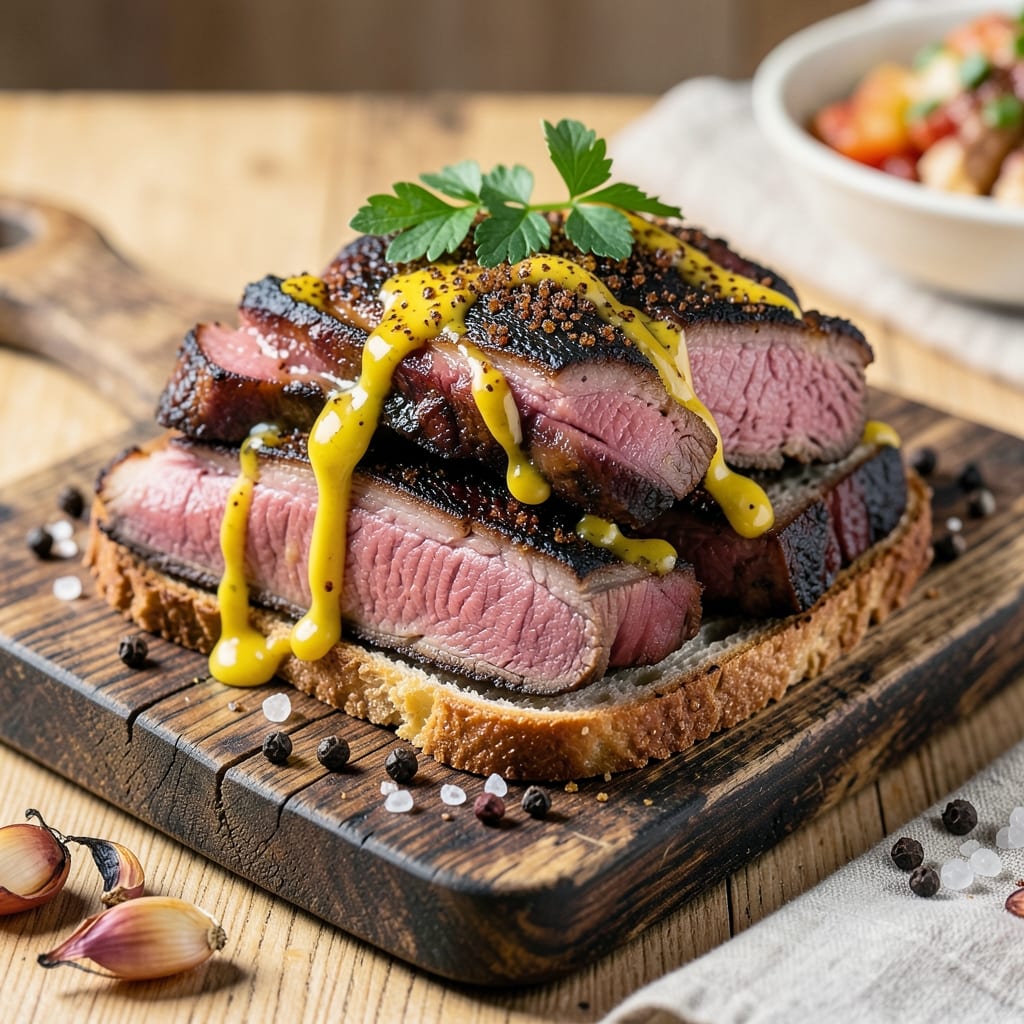
This Big Green Egg pastrami recipe delivers restaurant-quality results with smoky depth and tender perfection—no deli counter needed. The secret lies in a precise 6-hour process that combines curing, smoking, and steaming for that signature melt-in-your-mouth texture. I’ve perfected this method to capture the bold flavors of traditional pastrami while adapting it for home smokers, ensuring every bite is packed with aromatic spices and rich, caramelized edges.
The recipe begins with a foolproof curing brine that tenderizes the meat while infusing it with garlic, mustard, and coriander. Using your Big Green Egg, you’ll smoke the pastrami at 225°F with hickory or cherry wood for that unmistakable smoky aroma, then finish with a steam bath to lock in moisture. The result? Perfectly balanced—savory, slightly sweet, and smoky—just like the deli version, but made entirely at home.
What sets this apart is the versatility—serve it on rye bread with mustard and pickles for a classic Reuben-style sandwich, or enjoy it sliced thin over salads for a protein-packed meal. The Big Green Egg’s precise temperature control ensures consistent results, whether you’re cooking for a crowd or meal prepping for the week. No shortcuts here—just restaurant-quality pastrami with a homemade touch.
Ready to elevate your brunch or weekend meals? This recipe transforms a simple cut of beef into a showstopper that’ll have everyone asking for seconds. Let’s get started—your Big Green Egg is about to become your new favorite tool for creating deli-worthy flavors at home.
Ingredients for big green egg pastrami
Six pounds of beef, aromatic spices, and two woods for smoky perfection—your Big Green Egg is about to deliver deli-worthy pastrami.
| Ingredient | Amount | Notes |
|---|---|---|
| Beef Brisket 🥩 | 4 lb | Whole packer cut, fat cap intact |
| Yellow Mustard 🍯 | ½ cup | Dijon-style preferred for depth |
| Garlic Cloves 🧄 | 8 cloves | Freshly crushed for maximum aroma |
| Kosher Salt 🧂 | ½ cup | Diamond Crystal preferred (20% more volume) |
| Brown Sugar 🍚 | ¼ cup | Light or dark, packed firmly |
| Ground Black Peppercorns 🌶️ | 2 tbsp | Freshly cracked for sharpness |
| Ground Coriander 🌿 | 1 tbsp | Toasted seeds for nutty depth |
| Ground Cloves 🌶️ | ½ tsp | Whole cloves ground finely |
| Ground Cinnamon 🌿 | ½ tsp | Ceylon preferred for subtle warmth |
| Hickory Wood Chips 🌳 | 2 cups | Unsoaked, 100% natural hickory |
| Cherry Wood Chips 🍒 | 1 cup | For fruity sweetness balance |
| Beef Broth 💧 | 1 cup | Homemade or high-quality store-bought |
| Apple Cider Vinegar 🍎 | 2 tbsp | For tangy brightness |
| Fresh Black Peppercorns 🌶️ | 1 tbsp | For finishing crust |
| Aluminum Foil 📄 | 1 sheet | Heavy-duty for steam bath |
The beef brisket is non-negotiable—look for a packer cut with a thick fat cap (at least 1/4-inch) from Costco or your butcher. The fat renders during smoking, creating that signature moist texture. If buying pre-cut, avoid lean cuts—they dry out. For spices, Penzeys or bulk bins at Whole Foods offer the freshest ground spices. The hickory and cherry wood chips should be 100% natural, not liquid smoke—Traeger or Butcher's Smokehouse brands deliver consistent results. Toast the wood chips in a dry skillet for 2 minutes before using to enhance their aroma.
No Dijon mustard? Yellow mustard plus 1 tsp honey works in a pinch, but the tang matters here. Fresh garlic is essential—dried loses punch fast. For the brown sugar, light brown gives subtle molasses notes, while dark brown adds deeper caramelization. If you're short on coriander, swap for 1 tsp ground fennel (same family, similar warmth). The apple cider vinegar cuts through richness—Bragg or Heinz are reliable brands. For wood substitutes, mesquite adds smokiness but lacks sweetness, so balance with extra cherry chips. Pre-grinding spices? Toast whole spices in a dry pan first for better flavor.
Store the cured brisket in the fridge for up to 3 days before smoking—this lets flavors meld. The wood chips keep in a sealed container for 6 months in a cool, dry place. After smoking, wrap the pastrami tightly in foil and refrigerate for 24 hours—this resting period is crucial for texture. Sliced thin, it keeps 5 days in the fridge or 3 months frozen. For meal prep, portion into single-serving bags—perfect for Reuben sandwiches all week.
Why You'll Love This Recipe
- One-Pan Magic: The Big Green Egg handles all the work for you—just rub the brisket with mustard, garlic, and salt, then let it smoke. No flipping, no fuss, just perfectly tender meat that falls apart with every bite.
- Smoky-Sweet Obsession: That brown sugar glaze? It caramelizes into a sticky, savory crust while the brisket stays juicy inside. Honestly, the first time I tried it, I nearly licked the pan clean.
- Weeknight or Weekend Hero: Throw it on the grill for a quick dinner or let it slow-cook all day for a Sunday feast. Same recipe, just different timing—because sometimes you want effortless, other times you want to impress.
- Leftovers That Don’t Suck: Smoked brisket reheats like a dream—slice it thin for sandwiches, chop it into salads, or just eat it cold with mustard. I’ve fed a crowd for days with one cook, and no one complains.
Step-by-step instructions for Big Green Egg pastrami
Here's how to transform a tough brisket into tender, smoky pastrami with a perfect bark.
Prepare the Brisket for Maximum Flavor
Start by trimming the fat cap of the 4 lb beef brisket down to about ¼ inch thickness using a sharp boning knife. Leave the fat cap intact along the edges to protect the meat during cooking. Pat the entire surface completely dry with paper towels—this is crucial for developing that signature crispy bark.
In a small bowl, combine the 0.5 cup kosher salt, 0.25 cup brown sugar, 2 tbsp ground black peppercorns, 1 tbsp ground coriander, 0.5 tsp ground cloves, and 0.5 tsp ground cinnamon. Mix thoroughly to create your dry rub. Spread the 0.5 cup yellow mustard evenly over the brisket, then press the dry rub firmly into the meat, covering all surfaces. Let the brisket sit at room temperature for 30 minutes before cooking.
Set Up Your Big Green Egg for Indirect Heat
Prepare your Big Green Egg by placing the 2 cups hickory wood chips and 1 cup cherry wood chips in the wood chip tube. Light the chips according to the manufacturer's instructions and let them burn until you see clean, blue smoke. Set the temperature to 225°F and let the grill preheat for 15 minutes.
Once the grill reaches temperature, place the brisket fat-side up on the cooking grate. Position it away from direct heat to ensure even cooking. Close the lid and resist the urge to open it during the initial cooking phase—this helps maintain consistent temperature and smoke circulation.
Cook Low and Slow Until Probe-Tender
Cook the brisket for 4 hours, maintaining a temperature of 225°F. After 4 hours, check the internal temperature using a meat thermometer. If it hasn't reached 165°F, continue cooking. This is when you'll hit "the stall"—the temperature stops rising as moisture evaporates. Don't panic; this is normal and expected.
Once the internal temperature reaches 165°F, remove the brisket from the grill and wrap it tightly in the sheet of aluminum foil. Place the wrapped brisket back in the grill and continue cooking for another 2 hours. This process, known as the Texas crutch, helps power through the stall and ensures a tender, juicy result.
Create the Signature Pastrami Flavor
After the 2 hours of wrapped cooking, remove the brisket from the foil and place it back on the grill, fat-side up. In a small bowl, combine the 1 cup beef broth and 2 tbsp apple cider vinegar. Pour this mixture evenly over the brisket, allowing it to baste and penetrate the meat.
Continue cooking the brisket for an additional 30 minutes, basting it with the remaining beef broth mixture every 10 minutes. This step infuses the meat with a tangy, smoky flavor that defines authentic pastrami. The brisket is done when the internal temperature reaches 203°F and a probe slides in easily.
Rest and Slice for Maximum Juiciness
Remove the brisket from the grill and let it rest for 30 minutes before slicing. This resting period allows the juices to redistribute throughout the meat, ensuring each slice is moist and flavorful. Use a sharp slicing knife to cut the brisket against the grain into ¼-inch thick slices.
Garnish the pastrami with the 1 tbsp fresh black peppercorns for a finishing touch. Serve immediately while still warm, and enjoy your homemade pastrami on rye bread with mustard and pickles. The result should be a beautifully crispy exterior with tender, juicy meat that falls apart with ease.
Pro Tips For Making Big Green Egg Pastrami
- Trim the Fat First: Slice off that thick layer of fat from the brisket before seasoning—it’s not just for looks. I learned this the hard way when my first batch rendered into a greasy mess instead of a crispy crust. Aim for about a ¼-inch layer left on top; anything thicker will steam the meat instead of browning.
- Start with a Cold Egg: Chill the Big Green Egg overnight before cooking—yes, even if you’re eager to fire it up. A cold cooker means more even heat distribution, and your brisket won’t dry out when the mustard and sugar caramelize. I used to skip this, and my pastrami always ended up unevenly cooked.
- Mustard First, Sugar Last: Slather the brisket with yellow mustard before the salt and brown sugar mix. The mustard acts as a glue for the spices and keeps them from clumping into a dry crust. After searing, sprinkle the sugar only on the last 15 minutes—it burns fast and turns bitter if you add it too early.
- Probe Like a Pro: Use a meat thermometer to check the thickest part of the brisket, but don’t stop at 203°F. Let it rest in the Egg for another 10–15 minutes after hitting that temp—this lets the fibers relax and soak up all that mustard-sugar glaze. I’ve sliced into rare brisket this way, and it’s a crime to serve it dry.
Perfect pairings for this dish
Classic Reuben Sides
Serve your pastrami on thick-cut rye bread toasted with butter—I recommend Martin’s Potato Rye for that perfect chewy texture. Add a smear of yellow mustard (like French’s Classic) and layer with Swiss cheese that melts beautifully. For tangy crunch, include dill pickles (look for Bubbapik for the best quality) or kosher dill pickles for a sharper bite. 🥒
Smoky Potato Pairings
For a heartier meal, try smoked garlic mashed potatoes—roast 2 lbs Yukon Gold potatoes with 4 cloves roasted garlic and ½ cup sour cream until tender, then mash with 4 oz butter and 2 tbsp smoked paprika. The smoky depth complements pastrami perfectly. Alternatively, crispy potato pancakes with applewood-smoked bacon add a satisfying crunch.
Fresh & Crunchy Accents
Brighten the plate with arugula salad tossed with lemon vinaigrette (mix 3 tbsp olive oil, 1 tbsp lemon juice, and 1 tsp honey). The peppery greens cut through the richness. For extra crunch, add crispy fried onions (store-bought French’s work in a pinch) or quick-pickled red onions (slice 1 red onion thin, soak in ½ cup vinegar and 1 tsp sugar for 10 minutes).
Beverage Pairings
A dark lager like Samuel Adams Black Lager or Guinness balances the smoky, savory flavors with its roasted malt notes. For something lighter, try a sparkling lemonade (mix 1 cup lemon juice, ½ cup honey, and 2 cups soda water) to refresh your palate. Coffee lovers can enjoy a strong black coffee with a splash of heavy cream—the bitterness contrasts beautifully with the pastrami’s richness. ☕
Dessert Contrast
End the meal with something sweet yet simple, like apple cider donuts (bake 1 lb apple cider donuts from the store and warm them with cinnamon sugar). The tartness of the cider echoes the pastrami’s vinegar-basted finish. For a lighter option, serve vanilla bean ice cream with a sprinkle of crushed graham crackers—the cool creaminess cools the palate after the smoky main.
Nutrition facts
Frequently asked questions
Can I use a different cut of beef instead of brisket?
While brisket is ideal for its fat content and texture, you can adapt this recipe for chuck roast or short ribs. These cuts will require 1-2 extra hours of cooking time due to their density. For best results, trim excess fat and increase the curing time by 12 hours to ensure deep flavor penetration. Avoid lean cuts like sirloin—they won’t hold up to the long cook.
How do I know when the pastrami is done?
Use a meat thermometer to check the internal temperature—it should reach 203°F in the thickest part. The probe should slide in easily with no resistance. Look for a deep reddish-brown color and a glossy sheen from the basting. If the bark is too dark before reaching temperature, tent the meat with foil to prevent burning.
Can I make this recipe without a Big Green Egg?
Use an offset smoker, charcoal grill (with a water pan for indirect heat), or even an oven (set to 250°F for 6-8 hours). For smoky flavor, add wood chips to a foil packet with hot coals. The key is maintaining consistent low heat—avoid high temperatures, which dry out the meat.
What’s the best way to store leftover pastrami?
Wrap tightly in plastic wrap or aluminum foil and refrigerate for up to 5 days. For longer storage, vacuum-seal slices and freeze for 3 months. Reheat gently in a 350°F oven for 10-15 minutes or microwave in 20-second bursts with a damp paper towel to retain moisture. Never reheat directly from frozen—thaw first.
Why did my pastrami turn out dry?
Dry pastrami usually results from overcooking, lean meat, or skipping the wrap phase. Always use a fat cap and wrap the meat in foil at 165°F to trap steam. For extra moisture, inject the brisket with beef broth before curing. If using a leaner cut, marinate it overnight in buttermilk to tenderize.