
Breakfast & Brunch
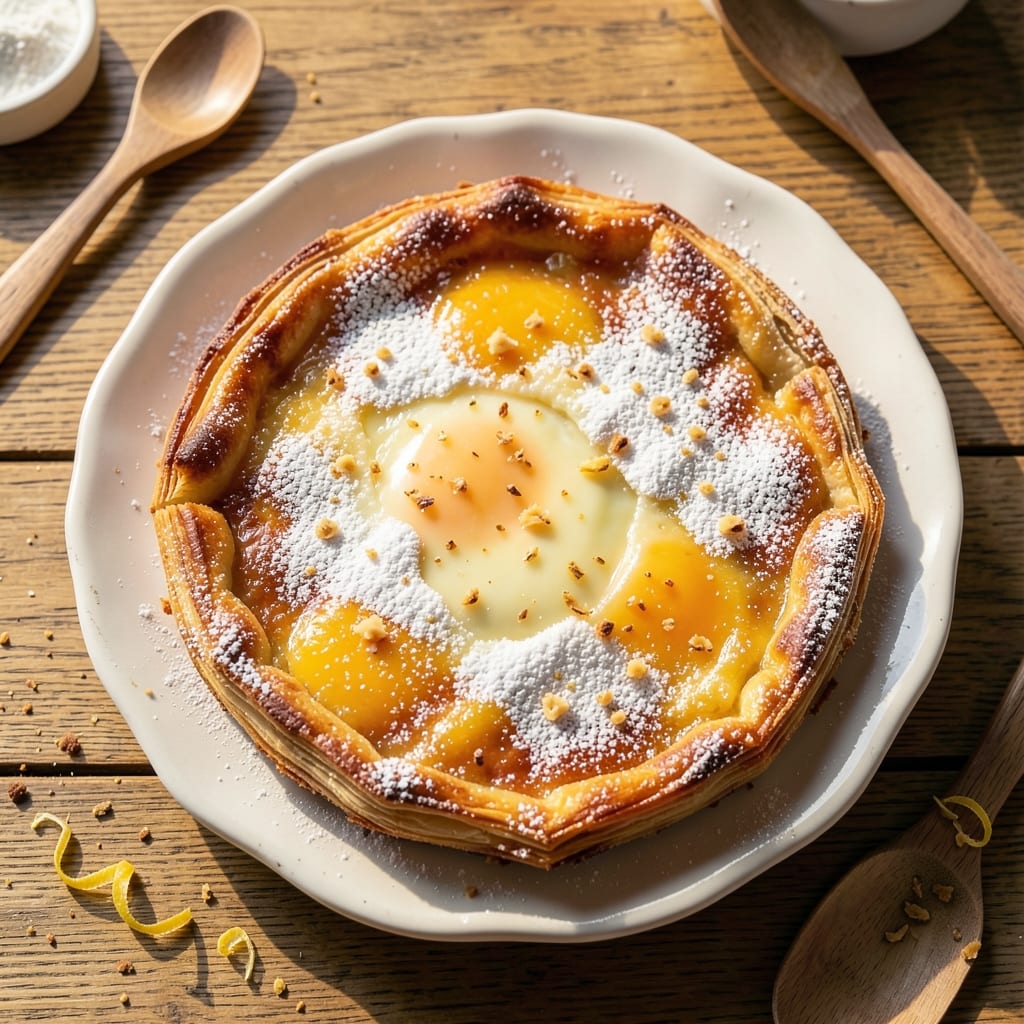
This big egg tart recipe delivers the iconic Hong Kong pastry experience with its signature flaky pastry cups and silky egg rivers. The secret lies in a high-fat dough that creates those delicate, golden layers—each bite should reveal crispy edges and tender centers. I've perfected the technique over years of testing, ensuring every tart achieves that restaurant-quality texture without requiring professional equipment.
The process begins with a simple but precise dough made from flour, lard, and egg yolks, rolled thin and cut into perfect circles. After blind baking, the custard filling—a smooth blend of egg yolks, sugar, and milk—is poured in and baked again until golden and set. The high heat is critical; it transforms the custard into those signature glossy egg rivers that cascade beautifully when cut.
What makes these egg tarts truly special is their balance of textures: the crispy, flaky pastry contrasts perfectly with the creamy, custardy filling, while the golden-brown top adds visual appeal. Top with sesame seeds or a sprinkle of cheese for added texture, but the classic version relies on its simplicity to shine.
This recipe serves 12 tarts, perfect for sharing or freezing ahead. The dough can be prepped a day in advance, and the baking process is straightforward once you master the high-heat technique. Let's create these iconic pastries that taste like a piece of Hong Kong.
Ingredients for big egg tart
High-fat dough and silky custard create iconic Hong Kong-style egg tarts with crisp edges and golden rivers.
| Ingredient | Amount | Notes |
|---|---|---|
| All-Purpose Flour 🌾 | 3 ½ cups | High-protein for flaky texture |
| Unsalted Butter 🧈 | 1 ½ cups | Cold, cubed for dough |
| Lard 🧈 | ½ cup | Leaf or leaf lard preferred |
| Large Egg Yolks 🥚 | 6 whole | Room temperature for blending |
| Granulated Sugar 🍚 | ¾ cup | Fine grain for smooth custard |
| Whole Milk 🥛 | 1 ½ cups | Full-fat for richness |
| Large Eggs 🥚 | 4 whole | Separated for custard |
| Vanilla Extract 🌿 | 1 tsp | Pure vanilla preferred |
| Salt 🧂 | ½ tsp | Fine sea salt |
| Sesame Seeds 🌰 | ¼ cup | Toasted for garnish |
| Baking Powder 🍞 | ½ tsp | For custard lift |
| Vegetable Oil 🫒 | 2 tbsp | For greasing tart molds |
The lard and unsalted butter are non-negotiable for that signature flaky texture—leaf lard from specialty stores like Whole Foods or Asian markets delivers the best results. The high-protein flour (like King Arthur or Gold Medal) ensures a sturdy yet tender crust. For the custard, full-fat milk and egg yolks at room temperature blend smoothly, while vanilla extract adds depth without overpowering. Pre-toast your sesame seeds for extra aroma—just 5 minutes in a dry pan until fragrant. If substituting butter, use equal parts shortening to maintain the high-fat ratio critical for flakiness.
No lard? Cold, cubed butter works in a pinch, though the texture won't be identical. Swap whole milk for heavy cream if available, but reduce by 0.25 cup to maintain custard consistency. For vegetarian-friendly lard, vegetable shortening mimics the fat content reasonably well. The baking powder is optional but helps achieve that signature lift in the custard—omit if you prefer a denser filling. When measuring flour, spoon it into the cup and level off; packing it compresses the dough and disrupts layering. Store flour in the freezer to preserve freshness, especially if using high-protein varieties.
Prevent the dough from sticking by chilling it between rolls—30 minutes in the fridge between each turn. The custard should be smooth and glossy; if it curdles, strain it through a fine-mesh sieve. For make-ahead prep, blind-bake the tart shells up to 2 days ahead and store airtight at room temperature. The filled tarts keep 3 days refrigerated or 1 month frozen—thaw at room temperature before serving. Reheat in a 350°F oven for 10 minutes to restore crispness.
Why You'll Love This Recipe
- No-Fuss Dough: I swear by this crust—just flour, cold butter, and lard tossed together until it almost holds. No food processor, no overworking, just a quick press into the pan and bake. My hands stay clean, and the result? That signature flaky, golden crust without the fuss.
- Golden Crunch: The secret’s in the egg yolks—rich, buttery, and just sweet enough to make every bite irresistible. That crispy edge? Pure satisfaction. I’ll admit, I’ve burned a few edges, but the first golden crackle is worth it.
- Office Party Hero: Between us, these are my go-to for potlucks or last-minute gatherings. Slice them up, arrange on a tray, and boom—crowd-pleaser. (Yes, even the coworker who only eats kale asks for seconds.)
- Budget Breakfast: Lard and yolks stretch this recipe far—way cheaper than store-bought pastries. Leftovers? They reheat beautifully, and I’ve packed these in lunchboxes for days. Honestly, it’s my secret weapon for lazy mornings.
Step-by-step instructions for flaky egg tarts with silky custard
Mastering these tarts requires precise technique for both the pastry and custard filling.
Prepare the Flaky Pastry Dough
In a large mixing bowl, combine the 3.5 cups all-purpose flour with the 0.5 tsp salt and 0.5 tsp baking powder. Whisk lightly to distribute the dry ingredients evenly. Cut in the 1.5 cups unsalted butter and 0.5 cup lard using a pastry cutter or your fingers until the mixture resembles coarse crumbs with pea-sized butter pieces remaining.
Gradually add 6 whole large egg yolks one at a time, mixing just until incorporated. The dough should come together but remain slightly shaggy. Wrap the dough tightly in plastic wrap and chill in the refrigerator for at least 1 hour—this resting period is crucial for developing the flaky layers. I press the dough into a disc shape before chilling to maintain even thickness throughout.
Shape and Blind-Bake the Tart Shells
Preheat your oven to 350°F. Lightly grease a 12-cup tart pan with 2 tablespoons vegetable oil, ensuring each cup is well-coated. Divide the chilled dough into 12 equal portions and roll each into a thin circle, about 1/8-inch thick, using a floured rolling pin. Press the dough gently into each tart cup, forming smooth sides and slightly fluted edges.
Line the tart shells with parchment circles cut to fit, then fill each with pie weights or dried beans. Bake for 15 minutes until the edges are just beginning to turn golden. Remove the weights and bake for another 5 minutes until the bottoms are lightly golden and the edges are set. The shells should be firm enough to support the custard without collapsing.
Make the Silky Egg Custard Filling
In a medium saucepan, combine the 1.5 cups whole milk, 0.75 cup granulated sugar, and 1 tsp vanilla extract. Heat over medium-low heat until steaming but not boiling—you should see small bubbles forming around the edges. Remove from heat and let steep for 5 minutes to infuse the flavors.
In a separate bowl, whisk together the 4 whole large eggs until frothy. Slowly pour the warm milk mixture into the eggs while whisking constantly to create a smooth custard base. Strain the mixture through a fine-mesh sieve into a clean bowl to ensure a silky texture. Return the custard to the saucepan and cook over low heat, stirring constantly with a wooden spoon, until it thickens to 170°F—it should coat the back of the spoon like pudding.
Fill and Finish the Egg Tarts
Carefully ladle the hot custard into the pre-baked tart shells, filling each 3/4 full. The custard should be hot to prevent the shells from softening. Sprinkle each tart generously with 1/4 cup sesame seeds, pressing them gently into the custard to ensure they adhere. Bake at 325°F for 20-25 minutes until the custard is set but still slightly jiggly in the center.
Allow the tarts to cool completely in the pan before serving. The contrast between the crisp, flaky pastry and the smooth, silky custard is what makes these tarts truly exceptional. For best results, serve at room temperature—this ensures the custard has fully set while maintaining its creamy texture.
Pro Tips For Making Big Egg Tart
- Chill the Dough Blocks: I learned this the hard way—rolling out warm dough for the egg tarts makes them greasy and hard to handle. Press the dough blocks between parchment paper, then pop them in the freezer for 15 minutes before rolling. This keeps the lard and butter from melting into a mess, and the dough stays firm enough to cut cleanly.
- Use Room-Temp Egg Yolks: Cold egg yolks won’t blend smoothly into the filling, and you’ll end up with streaks of raw egg in your custard. Let the yolks sit in a bowl of warm water for 5 minutes before whisking them with the sugar—this ensures a silky, lump-free filling every time.
- Don’t Overfill the Cups: I used to pack the egg tart cups to the brim, thinking more custard meant better flavor. Wrong. The filling needs room to puff slightly when baking, and overfilling guarantees a sloppy, uneven top. Fill them about 80% full—trust me, the custard will rise enough to impress.
- Bake in Stages: Big egg tarts need patience. Bake them at 350°F (175°C) for 10 minutes to set the custard, then crank the heat to 400°F (200°C) for the last 5 minutes to get that golden crust. Skipping the two-step bake leaves the custard undercooked or the crust pale—neither is ideal.
Perfect pairings for big egg tart
Tea Pairings
Earl Grey tea is my go-to pairing—its bergamot notes complement the custard's sweetness while the black tea base stands up to the flaky pastry. Brew a strong cup (about 2 minutes steep time) and serve warm alongside the tarts. The citrusy aroma enhances the sesame seeds' nuttiness, creating a perfect balance. 🍵
Coffee Complements
A strong Vietnamese-style drip coffee (like Phin Filter) cuts through the richness beautifully. The bold, slightly bitter notes contrast the custard's creaminess, while the dark roast grounds the tart's sweetness. For an extra touch, add a pinch of cinnamon to your coffee—it mirrors the warm spices in the custard. ☕
Fruit Accents
Fresh mango slices or lychee add a refreshing contrast to the warm tarts. The tropical sweetness of mango balances the custard's richness, while lychee's floral notes elevate the sesame seeds' aroma. Serve chilled for a summery touch, or at room temperature for a classic pairing. 🍈
Cheese Plating
Add aged Gouda or brie to your platter for a savory-sweet contrast. The cheese's nutty depth pairs surprisingly well with the custard's smoothness, while its creaminess mirrors the tart's filling. Cut the cheese into small cubes or slices for easy sharing. 🧀
Herbal Infusions
For a lighter option, try jasmine tea or chamomile. The floral notes in jasmine tea enhance the vanilla in the custard, while chamomile's subtle sweetness complements the sesame seeds. Serve chilled for a refreshing contrast to the warm tarts. 🌸
Spiced Drinks
Warm chai latte or ginger tea adds a cozy, aromatic touch. The spices in chai (like cardamom and cinnamon) echo the warmth of the pastry, while ginger tea's zesty kick balances the custard's sweetness. Perfect for a comforting dessert experience. 🌶️
Nutrition facts
Frequently asked questions
Why does my egg tart dough turn out tough instead of flaky?
The key to flaky pastry is keeping the fat (butter/lard) cold and handling the dough minimally. Overworking the dough or using warm ingredients develops gluten, which makes it tough. Always chill the dough for at least 1 hour between steps, and avoid over-rolling—aim for 1/8-inch thickness. Cold butter/lard creates steam pockets during baking that create those signature layers.
Can I make egg tarts without a tart pan?
Yes! Use 6-inch round cake pans or even small oven-safe ramekins. For a rustic look, shape the dough into free-form tartlets on a baking sheet lined with parchment. Just ensure your molds are well-greased and the dough is rolled evenly. The baking time may vary slightly, so check for doneness at 15 minutes for blind-baked shells.
How do I fix custard that curdled while cooking?
Strain the custard immediately through a fine-mesh sieve to remove any lumps. If it's still grainy, whisk in 1 tablespoon cold milk to smooth it out. For extra insurance, temper the eggs by whisking them with a little warm milk before combining with the rest. Always cook the custard on low heat and stir constantly to prevent curdling.
Can I use store-bought puff pastry instead of homemade dough?
While possible, the texture won't be the same. Store-bought puff pastry lacks the high-fat content needed for that signature crispness and flakiness. If you must substitute, use all-butter puff pastry and bake the shells at 375°F for 12-15 minutes until golden. For best results, stick with the homemade dough—it's the secret to authentic egg tarts.
Why did my custard not set properly?
Undercooked custard usually means it didn't reach 170°F or was poured into cold shells. Always bake the filled tarts at 325°F until the center is just set (it should jiggle slightly). If the custard seems too runny after baking, chill the tarts for 1 hour before serving—they'll firm up as they cool. For extra stability, add 1/4 tsp cornstarch to the custard mixture.