
Breakfast & Brunch
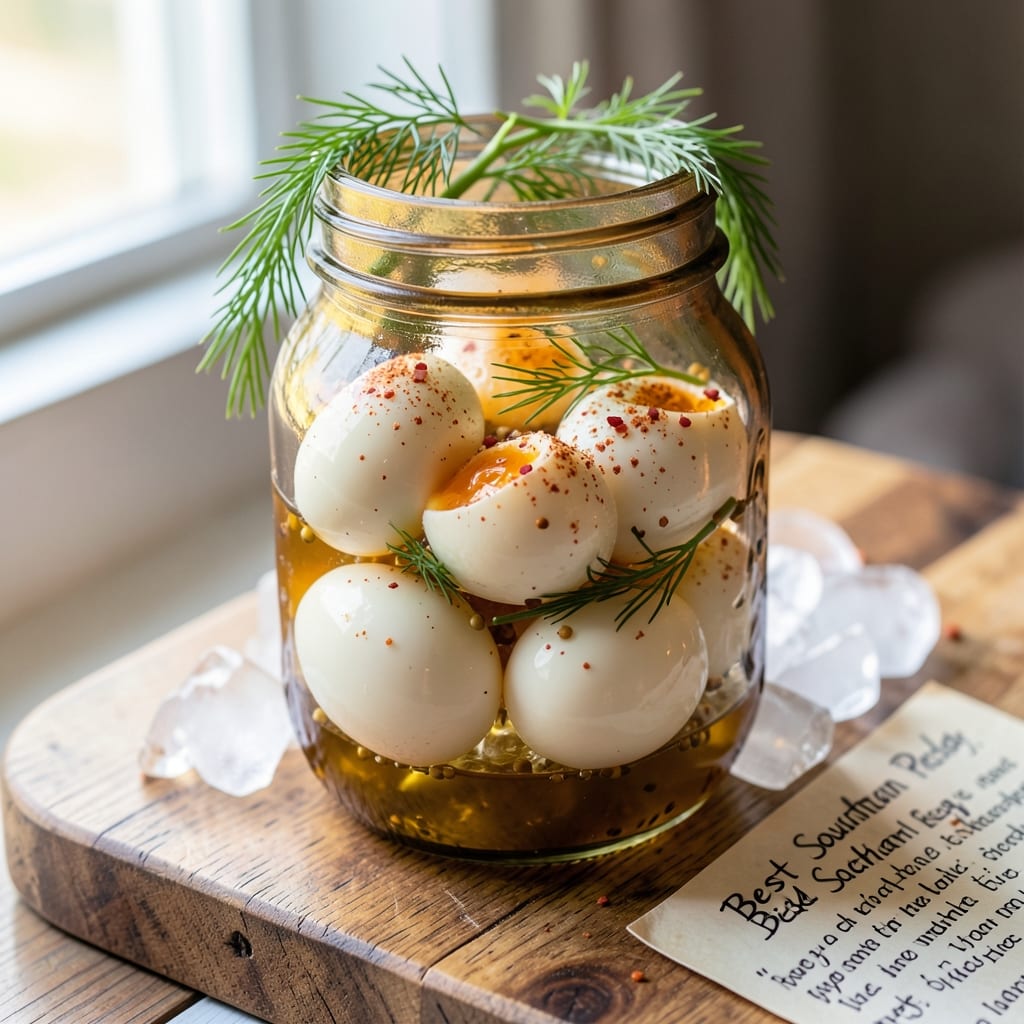
This Southern pickled egg recipe delivers the bold, tangy crunch that makes them a classic appetizer at tailgates and dinner parties. The secret lies in the perfectly balanced brine—sharp apple cider vinegar, golden mustard seeds, and just enough cayenne for heat—all simmered to create a flavor-packed liquid that transforms ordinary eggs into addictive bite-sized gems. Unlike store-bought versions, this method ensures crispy shells and tender yolks with every bite.
The process is simpler than it sounds: hard-boiled eggs are nestled into sterilized jars with a spice-infused brine that develops deeper flavor over time. Southern tradition calls for dill and black pepper, but I’ve added a modern twist with smoked paprika for a subtle smokiness that elevates the classic taste. The result? Eggs that stay crispy for days, perfect for snacking straight from the jar or adding to sandwiches and cocktails.
What sets this recipe apart is the versatility—serve them as a bold appetizer with deviled eggs, chop them into potato salad for extra crunch, or use them as a garnish for Bloody Marys to impress guests. The brine keeps for months, so you can make a big batch and enjoy these tangy bites whenever the craving hits. Restaurant-quality at home, with just a few simple ingredients.
Ready in under 30 minutes of active time (plus curing), this recipe is perfect for meal prep or last-minute entertaining. The key is patience—letting the eggs soak in the brine for at least 48 hours ensures maximum flavor. Once you try these, you’ll never buy store-bought again.
Ingredients for best southern pickled egg
Bold, tangy flavors start with these 12 simple ingredients—everything you need for restaurant-quality Southern pickled eggs.
| Ingredient | Amount | Notes |
|---|---|---|
| Large Eggs 🥚 | 12 whole | Fresh, large eggs for best texture |
| Apple Cider Vinegar 🍏 | 2 cups | Sharp, high-quality vinegar preferred |
| Yellow Mustard Seeds 🌶️ | 1 tbsp | Whole seeds for authentic texture |
| Smoked Paprika 🌶️ | 1 tbsp | For subtle smoky depth |
| Cayenne Pepper 🔥 | ½ tsp | Adjust for desired heat level |
| Fresh Dill 🌿 | ½ cup | Chopped, stems removed |
| Black Peppercorns 🌶️ | 1 tsp | Whole, lightly crushed |
| Granulated Sugar 🍚 | ½ cup | White sugar preferred |
| Coarse Sea Salt 🧂 | 1 ½ tsp | Diamond Crystal preferred |
| Garlic Cloves 🧄 | 4 cloves | Smashed, for subtle flavor |
| Water 💧 | 2 cups | Filtered preferred |
| Mason Jars 🥫 | 4 whole | Pint-sized, sterilized |
The eggs are the star, so grab the freshest, largest eggs you can find—they hold up better during boiling and stay crispy longer. Parmley's or local farm eggs are ideal, but any good-quality store brand works. For the vinegar, Bragg or Texas Pete are my go-tos—they've got that sharp, bright acidity that cuts through the richness of the yolks. Smoked paprika is non-negotiable here; Penzeys or McCormick's smoked version gives that authentic Southern smokiness without overpowering. The mustard seeds should be whole and yellow—avoid ground mustard, which will make the brine cloudy. If you can't find yellow, white works, but the color will be different.
No smoked paprika? Substitute half the amount of regular paprika plus a pinch of liquid smoke—it's not identical, but it gets you close. Running low on mustard seeds? One teaspoon of whole-grain mustard in place of the seeds works in a pinch, though the texture won't be the same. Want less heat? Cut the cayenne to a quarter teaspoon or skip it entirely. For the dill, fresh is non-negotiable—dried won't give that bright, herby punch. No fresh dill? Substitute half the amount of fresh parsley, but the flavor won't be authentic. The sugar can be swapped for honey or maple syrup, though white sugar gives the cleanest flavor. And if you're making a big batch, double the brine ingredients—they keep beautifully for months.
Boiled eggs stay fresh in the fridge for up to 1 week before pickling, but use them as soon as possible for best texture. The sterilized jars? Boil them for 10 minutes before filling to ensure no bacteria hitches a ride. Once filled, these eggs stay crispy for at least 2 weeks in the fridge, and the brine keeps for up to 6 months if stored in a cool, dark place. I always make a double batch—one for immediate snacking, one to gift. The brine gets even better with age, developing deeper complexity over time. Pro tip: Label your jars with the date so you can track how long they've been curing.
Why You'll Love This Recipe
- No Boiling Required: I swear by this—just hard-boil your eggs once, then let the vinegar and spices do the magic. No daily fussing, no soggy mess.
- Smoky Kick: That smoked paprika and cayenne? It turns plain eggs into something bold and tangy. The mustard seeds add a little crunch—trust me, it’s ridiculously good.
- Tailgate Hero: Between us, these are my go-to for game days. Cold, crispy, and packed in jars—no reheating, no cleanup. Just open and grab.
- Pantry Staple: Apple cider vinegar and spices I already had. No specialty ingredients, no wasted money. A dozen eggs last me weeks, and I’m always snacking.
Step-by-step instructions for Southern pickled eggs
Here's how to create restaurant-quality Southern pickled eggs with bold, complex flavors.
Prepare the Eggs for Pickling
Start by gently boiling the 12 whole large eggs for exactly 9 minutes in a pot of gently simmering water. Set a timer—this precise cooking time ensures the whites set while keeping yolks perfectly runny. Immediately transfer the eggs to an ice bath to stop the cooking process and prevent overhardening.
Once cool enough to handle, carefully peel the eggs under running water. I find using a small spoon helps loosen the shells without cracking the delicate whites. For the best Southern presentation, halve each egg lengthwise with a sharp chef's knife, creating 24 perfect halves. Arrange them in the 4 sterilized pint-sized mason jars, placing 6 halves in each jar. This preparation ensures even exposure to the flavorful brine.
Create the Bold Southern Brine
In a medium saucepan, combine the 2 cups apple cider vinegar, 2 cups water, 0.5 cup granulated sugar, 1.5 teaspoons coarse sea salt, 1 tablespoon smoked paprika, 0.5 teaspoon cayenne pepper, and 1 teaspoon lightly crushed black peppercorns. Bring to a gentle simmer over medium heat, stirring until the sugar and salt completely dissolve. This creates the flavor foundation that defines Southern pickled eggs.
Remove from heat and let the brine cool to room temperature. Once cooled, add the 1 tablespoon whole yellow mustard seeds, 4 smashed garlic cloves, and 0.5 cup chopped fresh dill to each jar. The mustard seeds will add subtle tangy crunch, while the garlic and dill create that classic Southern herbaceous depth. I always stir the brine gently to distribute these ingredients evenly throughout each jar.
Pack and Seal the Jars
Using a ladle or measuring cup, carefully pour the cooled brine over the egg halves in each jar until completely covered by about ½ inch. This ensures the eggs remain submerged and develop even flavor. Tap each jar gently on the counter to remove any air bubbles trapped between the eggs and brine.
Wipe the rims of the jars clean with a damp paper towel to ensure proper seals. Place the lids on each jar and tighten until just hand-tight—don't over-tighten, as this can cause leaks. This sealing technique preserves the vibrant colors and intense flavors we're working toward.
Cure for Perfect Southern Flavor
Store the sealed jars in the refrigerator for at least 72 hours before consuming. This curing period allows the flavors to fully develop and penetrate the eggs. I recommend checking them after 3 days—they should have absorbed enough of the smoky, tangy brine to create that signature Southern bite.
For best results, let them cure for up to 2 weeks in the refrigerator. The longer they sit, the more complex the flavors become. When ready to serve, remove the eggs from the jar and pat them dry with paper towels. The yolks should remain perfectly runny while the whites develop a satisfying firmness, with the distinct smoky-sweet flavor profile that makes these eggs so special.
Pro Tips For Making Best Southern Pickled Egg
- Boil Eggs 9 Minutes: The timer’s your friend here—set it for exactly 9 minutes from cold water, not hot. I learned this the hard way: undercooked eggs turn rubbery, overcooked ones get that sad, chalky yolk. Plunge them into ice water right after, or the whites will keep cooking and turn opaque.
- Use Fresh Vinegar: Skip the cheap white vinegar—apple cider vinegar’s tang is what makes these eggs taste like a proper Southern jar. If you’re in a pinch, add 1 teaspoon of lemon juice to regular vinegar, but the flavor won’t be the same. Trust me, the difference is noticeable.
- Toast Mustard Seeds: Dry-toast the yellow mustard seeds in a skillet for 30 seconds before adding them to the vinegar. Sounds weird, but it works: the seeds release their aroma instead of just sitting there like flavorless beads. Do this while the vinegar heats up—no extra steps, just better taste.
- Add Cayenne Last: Toss in the cayenne pepper after the jar’s been sealed and cooled, not before. I used to add it early, and the heat would mellow out too much in the vinegar. Sprinkle it in just before serving, or store it separately and mix it in when you’re ready to eat—more control, more flavor.
Regional styles of this best southern pickled egg
Classic Carolina Style
This version keeps it traditional with a focus on mustard seeds and dill—the signature flavors of Carolina pickled eggs. Use 1 tablespoon whole mustard seeds per jar and ½ cup fresh dill, chopped finely. Add 1 teaspoon black peppercorns and a light sprinkle of cayenne for just a hint of heat. The key is a brine with equal parts vinegar and water, simmered with ½ cup sugar and 1½ teaspoons salt to balance the tang. These eggs stay crispy for up to 3 weeks and are perfect for tailgates or church potlucks. 🌶️
Texas BBQ Twist
For a smoky, bold kick, swap the smoked paprika for 1 tablespoon chipotle powder and add 1 teaspoon liquid smoke to the brine. Include 1 sliced jalapeño per jar for extra heat and crunch. Use Texas Pete hot sauce (2 tablespoons) in the brine instead of plain vinegar for a deeper, spicier profile. These eggs are ideal for BBQ sandwiches or as a garnish for smoky margaritas. The heat builds over time, so let them cure for at least 5 days for maximum flavor. 🔥
Cajun-Inspired Heat
This version brings Cajun flair with 1 tablespoon Cajun seasoning (like Tony Chachere’s) and ½ teaspoon red pepper flakes in the brine. Add 2 bay leaves per jar and 1 sliced celery stalk for a classic Cajun touch. The brine should include 1 tablespoon Worcestershire sauce for depth. These eggs are perfect for Cajun-inspired dishes like gumbo or as a spicy topping for po’boys. The bold flavors develop best after 7-10 days of curing. 🌶️
Sweet & Smoky Georgia Style
For a sweeter take, reduce the cayenne to ¼ teaspoon and add 1 tablespoon honey to the brine. Include ½ teaspoon ground coriander and 1 sliced red onion per jar for a touch of sweetness and crunch. This version works beautifully as a garnish for sweet tea cocktails or on peach and brie boards. The eggs stay crispy for up to 2 weeks, and the sweet-smoky balance is a crowd-pleaser at Southern gatherings. 🍯
Spicy Deviled Egg Upgrade
Use these pickled eggs to elevate deviled eggs by mixing 1 tablespoon finely chopped pickled egg into the yolk filling. Add ½ teaspoon hot sauce and a pinch of smoked paprika to the mix. The tangy, smoky flavor cuts through the richness of the deviled eggs perfectly. Serve as an appetizer at summer parties or pack them for picnics. The contrast of creamy deviled eggs and crispy pickled eggs is unbeatable. 💡
Nutrition facts
Frequently asked questions
Why do Southern pickled eggs need to cure for so long?
The curing time—at least 72 hours—is essential for developing the signature bold flavors. The vinegar and spices gradually penetrate the eggs, creating that perfect balance of tang, smokiness, and crunch. The longer they cure (up to 2 weeks), the deeper the flavor becomes, transforming simple boiled eggs into addictive bite-sized gems.
Can I use whole eggs instead of halves for pickling?
Yes, but you’ll need to adjust the jar size. Whole eggs require larger jars (like quarts) to allow room for the brine to fully cover them. The curing time remains the same, but you may need to peel the eggs after pickling if you prefer a shell-free texture. For best results, stick with halves for even flavor distribution.
How do I know if my pickled eggs have gone bad?
Trust your senses! If the eggs develop an off smell (sour or rotten), cloudy brine, or slimy texture, it’s time to toss them. Always store them in the fridge and check for leaks in the jars. Properly made pickled eggs should stay crispy and flavorful for up to 2 weeks in the brine.
Can I reuse the brine after removing the eggs?
Yes, but only if it still looks clear and smells fresh. Strain out any solids, store it in a clean jar, and refrigerate for up to 3 months. You can reuse it for pickling other ingredients like onions, peppers, or even more eggs. Just ensure everything is fully submerged in the brine.
What’s the best way to serve these pickled eggs?
They’re incredibly versatile! Enjoy them straight from the jar as a tangy snack, or use them as a topping for BLTs, BBQ sandwiches, or deviled eggs. For a Southern twist, add them to potato salad or serve as a garnish for cocktails like Bloody Marys. The possibilities are endless!