
Soups & Stews
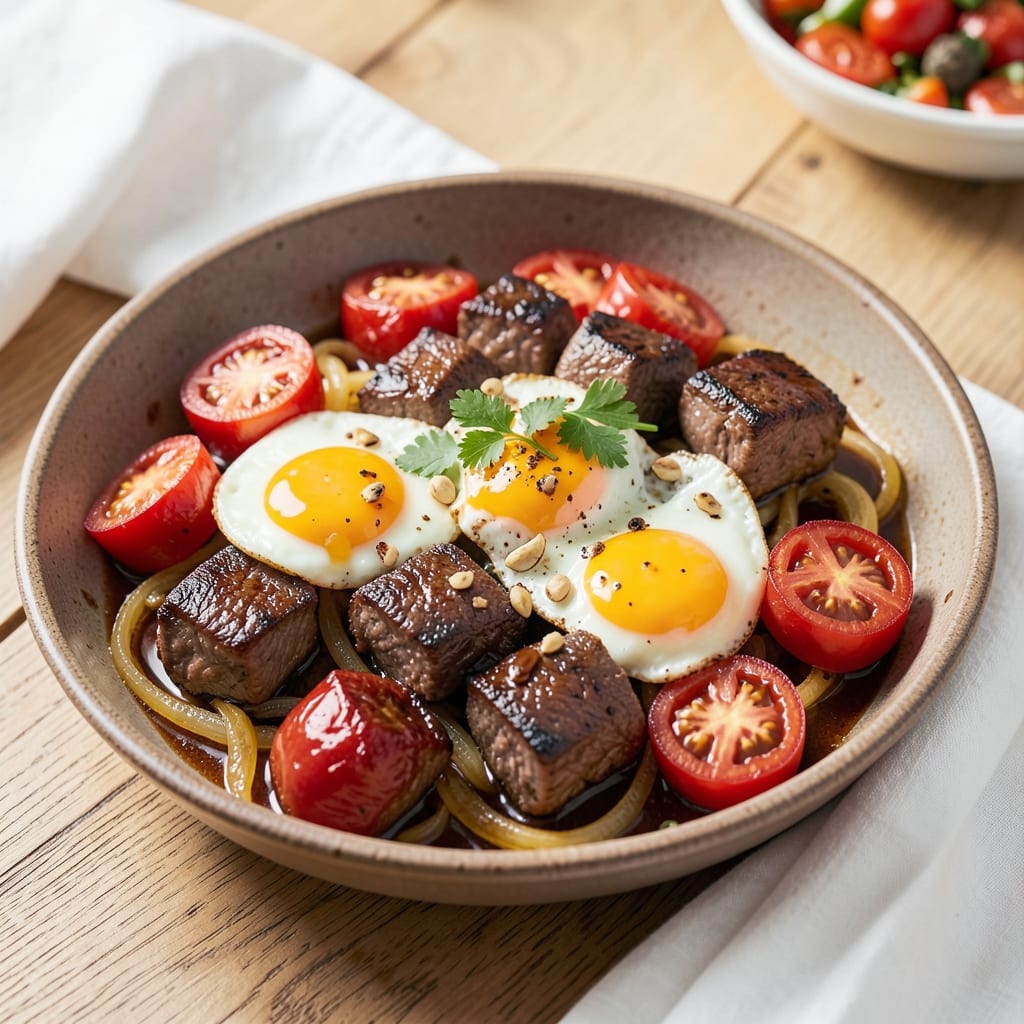
This beef, tomato, and egg recipe transforms simple ingredients into a deeply satisfying stew with silky scrambled eggs on top. The secret lies in slow-cooked beef that melts in your mouth, tomatoes that caramelize into a rich sauce, and eggs that finish perfectly tender. I developed this dish after years of testing combinations that balance hearty flavors with delicate textures.
The beef is the foundation—tenderized through slow cooking until it practically falls apart, while the tomatoes release their natural sweetness and acidity to create a velvety sauce. What sets this apart is the technique of adding eggs at the very end, allowing them to poach gently in the warm broth for that signature silky texture. It's a one-pot meal that feels restaurant-quality without requiring special skills.
What you'll end up with is a bowl of rich, umami-packed stew topped with perfectly scrambled eggs that blend seamlessly into the broth. The beef remains juicy and flavorful, the tomatoes add depth, and the eggs provide a luxurious finish. This is comfort food at its finest—warm, hearty, and impossible to resist.
The beauty of this recipe is its versatility. Serve it as a standalone meal for a cozy dinner or pair it with crusty bread to soak up every last bit of sauce. The leftovers reheat beautifully, making it perfect for meal prep. Let's get cooking!
Ingredients for beef tomato and egg
The perfect balance of tender beef, caramelized tomatoes, and silky eggs—all in one pot.
| Ingredient | Amount | Notes |
|---|---|---|
| Beef Chuck Roast 🥩 | 1 ½ lb | Cut into 1-inch cubes for even cooking |
| Roma Tomatoes 🍅 | 2 cups | Fresh or high-quality canned, crushed |
| Yellow Onion 🧅 | 1 whole | Diced into 1/4-inch pieces |
| Garlic Cloves 🧄 | 4 cloves | Minced for aromatic depth |
| Beef Broth 💧 | 2 cups | Low-sodium preferred for balance |
| Large Eggs 🥚 | 4 whole | Fresh for optimal texture |
| Tomato Paste 🍅 | ¼ cup | Concentrated for rich flavor |
| Red Wine 🍷 | ½ cup | Bold dry red like Cabernet |
| Olive Oil 🫒 | 2 tbsp | Extra-virgin for richness |
| Dried Thyme 🌿 | 1 tsp | Or 1 tbsp fresh thyme leaves |
| Bay Leaves 🌿 | 2 whole | Removed before serving |
| Salt 🧂 | 1 ½ tsp | Kosher or sea salt |
| Black Pepper 🌶️ | ½ tsp | Freshly ground preferred |
| Fresh Parsley 🌿 | ¼ cup | Chopped for garnish |
| Crusty Bread 🍞 | 8 slices | For serving (optional) |
The beef is everything here. Chuck roast delivers that melt-in-your-mouth texture when cooked low and slow—sirloin or ribeye won't tenderize the same way. Look for cuts with good marbling at Whole Foods or your local butcher shop. If you're using frozen beef, thaw it overnight in the fridge for even cooking. The tomatoes should be ripe but firm; San Marzano canned tomatoes work perfectly if fresh aren't available. I always grab a few extra Roma tomatoes for garnish too—they add freshness to the finished dish.
No red wine? Substitute with beef broth plus 1 tbsp balsamic vinegar for depth. Fresh thyme is ideal but dried works at one-third the amount—just make sure it's labeled as culinary-grade. For the tomato paste, Trader Joe's squeeze tubes are a game-changer—they're mess-free and keep for months. If you're short on time, pre-minced garlic works, but fresh minced has more flavor. The eggs should be at room temperature when added—they'll blend into the stew more smoothly. For extra richness, stir in 1 tbsp heavy cream at the very end, though it's optional.
This stew tastes even better the next day as flavors meld. Store leftovers in an airtight container in the fridge for up to 4 days—it reheats beautifully. For freezer storage, portion into single-serving containers and freeze for up to 3 months. The crusty bread pairs perfectly, so grab a baguette from the bakery section—it stays fresh longer than store-bought. If you're prepping ahead, cook the beef and sauce first, then reheat gently before adding the eggs. That way, you won't scramble them prematurely.
Why You'll Love This Recipe
- One-Pot Magic: I swear by this for nights when I’m too tired to wash dishes—just brown the beef, toss in the onions, garlic, and tomatoes, then let the broth do the work. The chuck roast practically melts into tender, saucy shreds while the eggs (if you add them at the end) poach right in the pan. No extra pans, no fuss.
- Deep Umami Bomb: That beef broth? It’s the secret weapon here. When it reduces with the tomatoes and onions, it turns into a rich, tangy sauce that clings to every bite of beef. Honestly, the first time I made this, I thought, "Why haven’t I been doing this all along?" The garlic and Roma tomatoes add just the right sweetness to balance the meaty depth.
- Leftovers That Beg for More: This recipe actually improves the next day. The flavors meld overnight, making it perfect for lunches or quick dinners. I’ll be real—my kids ask for it specifically when I pull it out of the fridge, even though I tell them to eat their veggies first. (They don’t listen, but I don’t complain.)
- Budget-Friendly Powerhouse: Chuck roast is cheap, tomatoes are cheap, and a carton of eggs won’t break the bank. Between us, I’ve fed four people for under $15 with this, and we all leave the table happy. It’s the kind of meal that makes you feel like you’re treating yourself without actually spending much. Plus, the beef stretches far—great for stretching my grocery budget.
Step-by-step instructions for umami-rich beef stew with silky eggs
This method builds rich beef flavors first, then finishes with delicate eggs for perfect texture.
Sear the Beef for Deep Flavor
Pat the 1.5 lb beef chuck roast dry with paper towels and cut it into 1-inch cubes for even cooking. Heat 2 tablespoons olive oil in a large Dutch oven over medium-high heat until shimmering. Working in batches, add the beef cubes and sear undisturbed for 2-3 minutes per side until deeply browned. This step develops the Maillard reaction, creating that fundamental umami foundation.
Don't crowd the pan—sear in batches if needed. Once all beef is browned, transfer it to a plate and set aside. The browned bits left in the pan will form the base of your stew, so don't scrape them out. Here's the thing—those caramelized fragments hold more flavor than the beef itself.
Build the Stew Base with Aromatics
In the same Dutch oven, add 1 whole yellow onion (diced) and 4 cloves garlic (minced). Cook for 3-4 minutes until softened and slightly golden, stirring occasionally. Add 1 teaspoon dried thyme, 2 whole bay leaves, 1.5 teaspoons salt, and 0.5 teaspoon black pepper, stirring to coat the aromatics.
Pour in 0.5 cup red wine and scrape up any browned bits from the bottom with a wooden spoon. Let it simmer for 2-3 minutes until the wine reduces by half. Then add 0.25 cup tomato paste and stir vigorously to create a smooth paste. This step deepens the sauce's complexity and balances acidity.
Simmer the Stew to Perfection
Return the seared beef to the Dutch oven. Add 2 cups crushed Roma tomatoes and 2 cups beef broth, stirring to combine. Bring to a gentle boil, then reduce heat to low and cover partially. Let it simmer for 1 hour 30 minutes until the beef is fork-tender and the sauce has thickened slightly. You'll know it's ready when the beef easily pulls apart with minimal resistance.
If the stew reduces too much, add 2-3 tablespoons water to maintain the right consistency. The sauce should coat the back of a spoon but still be saucy enough to spoon over bread. Here's where patience pays off—rushing this step will leave you with tough beef and thin sauce.
Prepare the Silky Scrambled Eggs
While the stew simmers, whisk the 4 whole large eggs in a bowl until the yolks and whites are fully combined. Season lightly with 0.25 teaspoon salt and 0.125 teaspoon black pepper—the stew will add enough flavor. Heat a nonstick skillet over low heat and melt 1 tablespoon olive oil (reserve the rest for later). Pour in the eggs and let them sit undisturbed for 5-7 seconds before gently stirring with a spatula.
Continue stirring slowly until the eggs are just set but still slightly runny in the center—this creates that signature silky texture. Remove from heat immediately when they reach 160°F internal temperature. Overcooking turns eggs rubbery, so watch closely. The eggs should be creamy with no visible liquid remaining.
Finish and Serve Together
Remove the 2 bay leaves from the stew and discard them. Stir in 0.25 cup chopped fresh parsley for brightness. To serve, ladle the hot stew into bowls and top each portion with 1 cup of the silky scrambled eggs. The contrast between the rich, savory stew and delicate eggs creates a perfect balance of textures and flavors.
Serve immediately with 8 slices crusty bread on the side for soaking up every last bit of sauce. The bread adds a satisfying crunch that complements the tender beef and creamy eggs. This dish comes together beautifully when you let the beef develop its deep flavors first, then finish with the delicate eggs at the end.
Pro Tips For Making Beef Tomato And Egg
- SEAR THE BEEF FIRST: Don’t skip the browning step—cut the chuck roast into thick slices (about 1-inch) and sear them in a hot pan with oil until deep brown, not just pink. I learned this the hard way: skipping the crust means flavorless beef, no matter how good the sauce.
- USE ROMA TOMATOES WHOLE: Halve the Roma tomatoes lengthwise, but leave the skins on—scoring the flesh with a knife lets them soften faster without turning to mush. I was skeptical until I tried it; the texture stays intact while releasing juices into the broth.
- DEGLAZE WITH BROTH, NOT WATER: After searing the beef, splash in beef broth instead of water to scrape up the browned bits—this adds depth instantly. Water just dilutes the flavor, and you’ll taste the difference in every bite.
- LOWER THE HEAT FOR EGGS: When adding eggs at the end, reduce heat to medium-low and stir gently—you’re not scrambling, you’re poaching them in the sauce. High heat turns them rubbery, and nobody wants that in a rich beef-tomato dish.
Common mistakes when making great beef tomato and egg
Overcooking the Beef
One of the biggest mistakes is rushing the beef cooking time. Chuck roast needs 1 hour 30 minutes of gentle simmering to become fork-tender. I've seen people cut this time to 45 minutes and end up with chewy, tough meat. Use a meat thermometer to check for 205°F internal temperature—this is your true indicator of doneness, not just visual cues. 🌡️
Skipping the Sear
The deep brown crust from searing creates 50% of the flavor in this dish. If you skip this step or don't sear long enough, your stew will taste flat. Work in batches if needed—don't crowd the pan. I recommend using a 12-inch cast iron skillet for maximum surface area and even browning. The beef should be dark golden brown before removing it.
Adding Eggs Too Early
Eggs belong at the very end, not simmered in the stew. When added too early, they'll either curdle from the heat or become rubbery. The ideal method is to poach them gently in the warm broth for just 1-2 minutes after the stew is done cooking. For perfect texture, keep your eggs at room temperature before adding them to the stew.
Ignoring the Wine Reduction
Many cooks pour in the red wine and immediately add other ingredients, but this dilutes the flavor. Let the wine reduce by half (2-3 minutes) to concentrate its depth. This step transforms a simple ingredient into a flavor powerhouse. If you're using a bold red like Cabernet Sauvignon, the reduction will add incredible complexity to your sauce.
Over-Salting the Stew
It's easy to overdo salt when seasoning the beef and aromatics. Remember that the beef broth and tomato paste already contain significant salt. Start with 1.5 teaspoons and taste before serving—you can always add more, but you can't remove excess salt. I recommend using kosher salt for better control over seasoning levels.
Using Cold Ingredients
Cold beef, tomatoes, or broth can shock your stew and extend cooking time. Let all ingredients sit at room temperature for 30 minutes before cooking. Cold ingredients also prevent even heat distribution, leading to unevenly cooked beef. This is especially important for the eggs—room temperature eggs scramble more smoothly and blend better with the stew. 💡
Nutrition facts
Frequently asked questions
Can I substitute ground beef for chuck roast in this recipe?
Yes, but expect different textures. Ground beef will cook much faster (20-25 minutes) and create a thicker stew. Use 1 lb lean ground beef and reduce the broth to 1.5 cups to maintain balance. The flavor will be rich but less tender than slow-cooked chuck. For best results, brown the ground beef thoroughly first to develop deep flavors.
How do I make this vegetarian?
Replace the beef with 1 lb extra-firm tofu (pressed and cubed) or 1.5 cups lentils. For tofu, pan-fry until golden before adding to the sauce. For lentils, simmer them separately until tender (20 minutes) and add them at the end. Boost umami with 1 tbsp soy sauce or 1 tsp miso paste when building the base.
Can I prepare this recipe in an Instant Pot?
Sear the beef first in a separate pan, then transfer to the Instant Pot with all other ingredients except eggs. Cook on high pressure for 30 minutes, then quick-release. Finish with the eggs as directed. The pressure cooker cuts time to 45 minutes total while maintaining tenderness. Just reduce the broth to 1.5 cups to prevent overflow.
What's the best way to reheat leftovers?
Reheat only the stew portion (without eggs) in a saucepan over low heat with 2 tbsp water to prevent drying. Once hot, stir in fresh eggs cooked separately to 160°F. Never reheat eggs directly in the stew—they'll become rubbery. Store leftovers in airtight containers for up to 4 days or freeze for 3 months.
Why does my stew taste too acidic?
This usually happens when tomatoes aren't balanced with enough sweetness or umami. Add 1 tbsp brown sugar or 1 tsp honey to the sauce, or stir in 1/4 cup tomato paste to deepen flavors. A pinch of sugar during the wine reduction step also helps. For extra richness, finish with 1 tbsp heavy cream or 1 tbsp butter to mellow the acidity.