
Main Courses
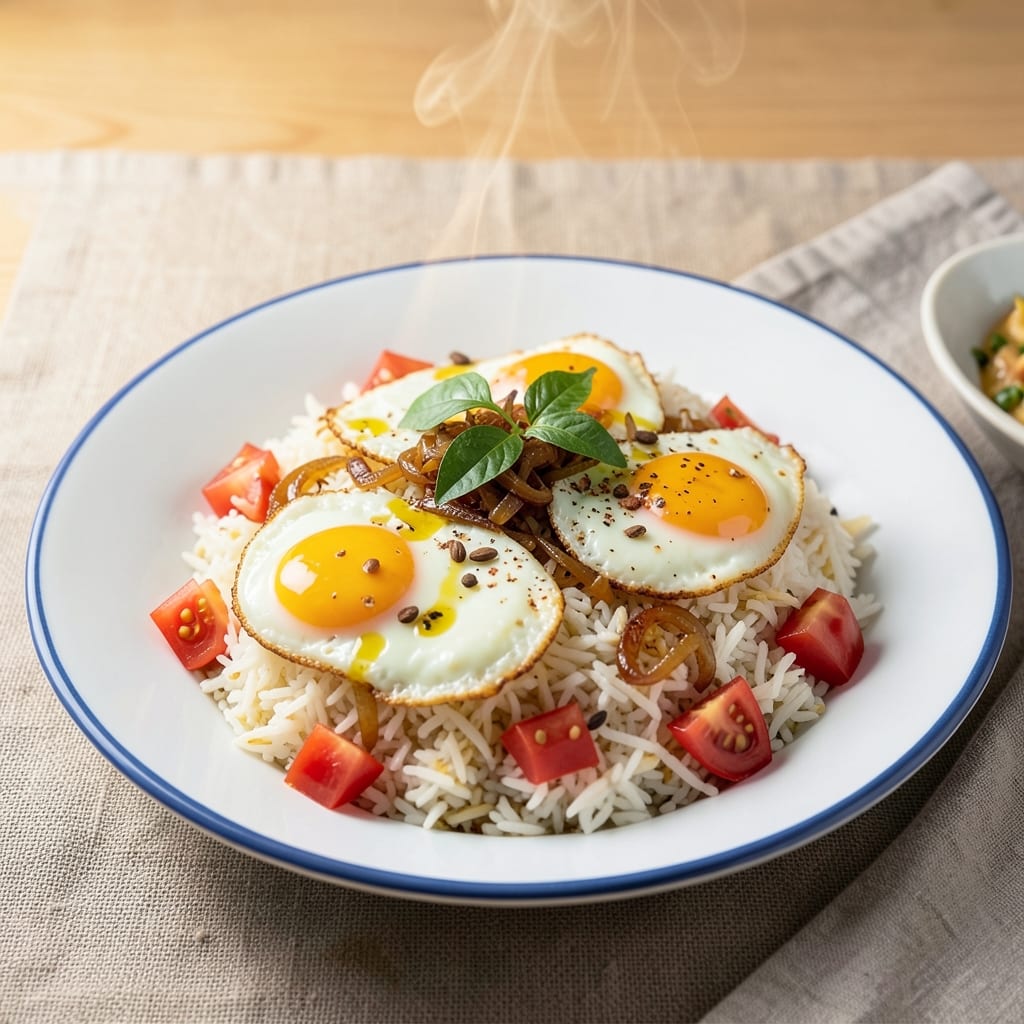
Bangalore egg rice transforms simple ingredients into a fragrant, one-pot South Indian masterpiece where tender rice meets rich, spiced egg curry. This vegetarian staple—born in Karnataka’s bustling streets—combines fluffy rice with a creamy tomato-based curry, crisp fried snacks, and cooling coconut chutney. The secret lies in the aromatic tempering of mustard seeds and curry leaves, which infuses every bite with earthy depth and a subtle tang.
What sets this dish apart is its balance of textures and flavors: soft, fluffy rice absorbs the savory egg curry, while the crisp pakoras or bonda add a satisfying crunch. The coconut chutney cuts through the richness, offering a refreshing contrast. Unlike traditional egg rice, this version incorporates a unique touch—tender onions and tomatoes slow-cooked until they meld into a velvety sauce, creating a dish that’s both comforting and elegant.
The magic happens in the tempering, where mustard seeds sizzle in hot oil until they pop, releasing a nutty aroma that permeates the entire dish. The curry’s richness comes from a blend of spices—cumin, coriander, and turmeric—that dance together in perfect harmony. This recipe delivers restaurant-quality results with minimal effort, making it ideal for weeknight dinners or special occasions.
Serve this Bangalore egg rice with a side of crispy pakoras or bonda, and watch as the flavors come together in every bite. The combination of creamy curry, cooling chutney, and crunchy fried snacks creates a symphony of textures that’s impossible to resist. Perfect for feeding a crowd or enjoying a satisfying solo meal, this dish is a celebration of South Indian cuisine at its finest.
Ingredients for bangalore egg rice
Simple spices, fragrant tempering, and tender eggs create this iconic South Indian one-pot masterpiece.
| Ingredient | Amount | Notes |
|---|---|---|
| Long-Grain Basmati Rice 🍚 | 1 ½ cups | Uncooked, rinsed thoroughly |
| Large Eggs 🥚 | 4 whole | Fresh, room temperature |
| Medium Onions 🧅 | 2 whole | Finely chopped, yellow or red |
| Medium Tomatoes 🍅 | 3 whole | Ripe, chopped, San Marzano preferred |
| Mustard Seeds 🌿 | 1 tbsp | Whole, yellow variety |
| Curry Leaves 🌿 | ¼ cup | Fresh, dried if unavailable |
| Green Chilies 🌶️ | 2 whole | Slit lengthwise, adjust to heat |
| Ginger 🧄 | 1 tbsp | Fresh, grated, or 1 tsp powdered |
| Garlic Cloves 🧄 | 6 cloves | Peeled, minced finely |
| Cumin Seeds 🌿 | ½ tbsp | Toasted lightly for aroma |
| Ground Cumin 🌿 | ½ tsp | Freshly ground preferred |
| Ground Coriander 🌿 | ½ tsp | Freshly ground preferred |
| Turmeric Powder 🧂 | ¼ tsp | Bright yellow, fresh if possible |
| Salt 🧂 | 1 ½ tsp | Diamond Crystal preferred |
| Vegetable Oil 🫒 | ½ cup | High smoke point, or ghee |
| Fresh Coconut 🥥 | ½ cup | Grated, or unsweetened coconut milk |
| Lemon Juice 🍋 | 1 tbsp | Freshly squeezed |
| Fresh Coriander Leaves 🌿 | ¼ cup | Chopped, for garnish |
The curry leaves and mustard seeds are non-negotiable for that authentic Bangalore aroma. Fresh curry leaves are essential—dried won't give the same depth. Grab them at Indian grocery stores or the international aisle of Whole Foods. For mustard seeds, yellow variety works best, though brown adds extra flavor. The tomatoes should be ripe but firm—San Marzano if you want to splurge, but regular beefsteak tomatoes work fine. I always chop mine finely so they melt into the sauce rather than stay chunky. The ginger and garlic? Freshly grated and minced makes all the difference—powdered spices just can't compete here.
No fresh curry leaves? Dried works at half the amount, but it won't have that signature aroma. Short on mustard seeds? Asafoetida powder at one-eighth teaspoon mimics the flavor profile. The coconut can be unsweetened coconut milk if fresh isn't available—just reduce the liquid by half since it's creamier. For the pakoras (fried snacks), gram flour or chickpea flour is essential—don't substitute with regular flour. The green chilies can be omitted entirely if you prefer a milder dish, but I recommend keeping at least one for that signature heat. The rice? Basmati is a must—jasmine gets mushy in this dish.
This dish tastes even better the next day as the flavors meld together. Store the curry in an airtight container for 3-4 days in the fridge—it keeps well thanks to the coconut and tomatoes. The rice can be cooked separately and reheated with a splash of water. For the coconut chutney, make extra—it's perfect with the rice or as a dip for the pakoras. Freeze portions of the curry for up to 3 months—just thaw and reheat gently. The pakoras are best eaten fresh, but you can make the batter ahead and fry as needed. Trust me, the crispy edges are worth the effort.
Why You'll Love This Recipe
- One-Pot Wonder: I swear by this recipe because it’s all in one pan—no fussing with multiple pots or timers. The rice and eggs cook together, so you’re stirring, not stressing, while the mustard seeds pop like fireworks. Honestly, my weeknights thank me every time.
- Crispy Egg Magic: That moment when the eggs sizzle in the tempered onions? Chef’s kiss. The yolks stay runny, the whites get just crispy enough, and the tomatoes melt into a tangy sauce that clings to every grain. Between us, it’s the kind of dish that makes you pause mid-bite.
- Lunchbox Hero: Pack this for work or school—it reheats like a dream. The basmati stays fluffy, the eggs don’t get rubbery, and the mustard seeds add a little kick that keeps it exciting. My daughter picks out the onions (she’s weird about texture), but still asks for seconds in her bento box.
- Pocketbook Friendly: Five ingredients, zero waste. Onions and tomatoes bulk it up, eggs add protein, and basmati stretches for days. I’ll be real: this feeds four for under $5, and the leftovers? Still taste like a restaurant meal the next day. Budget win.
Step-by-step instructions for Bangalore egg rice
Master this South Indian one-pot dish with perfectly cooked rice, tender eggs, and aromatic spices.
Prepare the Spice Base
Heat the 0.5 cup vegetable oil in a heavy-bottomed pot over medium heat. Add the 0.5 tbsp cumin seeds and toast for 30 seconds until they begin to sizzle and release their aroma. This is your signal to add the 1 tbsp mustard seeds next.
Watch carefully—the mustard seeds should pop within 20-30 seconds. Immediately add the 0.25 cup curry leaves and 2 whole green chilies (slit lengthwise). Stir for 10 seconds until the curry leaves darken and the chilies soften slightly. This quick cooking preserves their vibrant flavors while preventing bitterness.
Build the Aromatic Foundation
Add the 2 whole medium onions (finely chopped) and sauté for 4-5 minutes until they turn golden brown. This caramelization forms the flavor backbone of the dish. Stir frequently to prevent burning, especially at the edges of the pot.
Next, add the 1 tbsp ginger (freshly grated) and 6 cloves garlic cloves (minced finely). Cook for 1-2 minutes until the raw garlic smell disappears and the mixture turns fragrant. The garlic should be golden, not browned—this indicates proper cooking without bitterness. Stir in the 0.5 tsp ground cumin, 0.5 tsp ground coriander, and 0.25 tsp turmeric powder, mixing for 30 seconds to bloom the spices.
Cook the Tomatoes and Rice
Add the 3 whole medium tomatoes (chopped) and cook for 5-6 minutes until they soften and release their juices. Stir occasionally to prevent sticking. The tomatoes should break down into a thick, pulpy consistency—this ensures proper flavor infusion into the rice.
Now add the 1.5 cups long-grain basmati rice (thoroughly rinsed) and stir to coat the grains evenly with the tomato-spice mixture. Pour in 2 cups water (measured separately) and add 1.5 tsp salt. Bring to a boil, then reduce heat to low, cover with a tight-fitting lid, and simmer for 15 minutes. Avoid peeking—the steam is crucial for fluffy rice.
Prepare the Eggs
While the rice cooks, crack the 4 whole large eggs into a bowl. Add 1 tbsp lemon juice and 0.5 cup fresh coconut (grated), then whisk vigorously until well combined. The lemon juice prevents the eggs from curdling when mixed with coconut, creating a smooth, creamy texture.
Once the rice has absorbed most of the water (after 15 minutes), remove the pot from heat. Gently fold in the egg mixture using a spatula, ensuring even distribution. The residual heat will gently cook the eggs without scrambling them. Cover again and let sit for 5 minutes to finish cooking.
Finish and Garnish
Fluff the rice gently with a fork to separate the grains. The eggs should be softly set but still slightly runny in the center—this is ideal for Bangalore egg rice. Stir in the 0.25 cup fresh coriander leaves (chopped) for a fresh finish.
Serve immediately in a deep bowl, garnished with additional coriander leaves. The dish should have a balance of flavors: the rice should be fragrant with spices, the eggs creamy yet tender, and the overall texture light and fluffy. Pair with a side of yogurt or pickle for an authentic South Indian experience.
Pro Tips For Making Bangalore Egg Rice
- CRACK EGGS COLD: I learned this the hard way—bangalore egg rice relies on soft, runny yolks, but room-temp eggs scramble too fast. Pop them straight from the fridge into the hot oil, and they’ll cook just enough to set the whites while keeping the yolks creamy. (Yes, even if you’re impatient like me.)
- SOAK RICE 20 MINUTES: This isn’t the prettiest method, but it’s the tastiest: skip the 4-hour soak, but give basmati a solid 20-minute dip in room-temp water. It absorbs enough to cook evenly without turning mushy—your rice will stay separate and fluffy, not gluey.
- TOAST MUSTARD SEEDS FAST: Watch the heat: mustard seeds burn faster than you think. Start them in dry oil on medium-low, then crank to medium once they pop—this takes 10 seconds, not 30. Burned seeds taste bitter, and no one wants that in their egg rice.
- SLICE ONIONS THIN: I was skeptical until I tried it: julienne onions (1/8-inch thick) caramelize in half the time and add sweetness without overpowering the eggs. Use the mandoline if you’re lazy, or stack and slice by hand—just don’t skip this step. Your future self will notice the difference.
Dietary considerations for these flavors
Vegetarian-Friendly
This dish is naturally vegetarian, relying on eggs as the protein source rather than meat or fish. The 4 large eggs provide a rich, creamy texture that pairs beautifully with the aromatic rice and coconut chutney. Unlike many South Indian dishes that include yogurt or dairy, this recipe avoids dairy entirely, making it suitable for lactose-intolerant individuals. 🥚
Gluten-Free Adaptations
Bangalore egg rice is inherently gluten-free, as it uses long-grain basmati rice and avoids wheat-based ingredients. For the traditional fried accompaniments like pakoras or bonda, ensure you use gram flour (besan) or chickpea flour—never wheat flour. These flours are naturally gluten-free and provide the perfect crispy texture. Always check labels on spices and other ingredients to avoid cross-contamination.
Spice Sensitivity Tips
If you're sensitive to heat, reduce or omit the 2 green chilies entirely—they provide most of the dish's spiciness. For a milder flavor, you can also substitute them with 1 tsp mild paprika or ½ tsp cayenne pepper (adjust to taste). The dish still delivers rich, aromatic flavors without the heat. I often keep one chili for balance, then adjust to my tolerance level.
Dairy-Free Options
While the recipe doesn't include dairy, you can enhance it with dairy-free alternatives if desired. Replace the 0.5 cup fresh coconut with dairy-free yogurt for a tangy twist, or add a side of coconut milk-based chutney instead of traditional yogurt. The coconut already provides creaminess, so these swaps maintain the dish's signature texture while accommodating dietary restrictions.
Protein Variations
For a higher-protein vegetarian option, consider adding ½ cup cooked chickpeas or ¼ cup crumbled tofu to the rice mixture. Both ingredients absorb the flavors beautifully and add texture without altering the dish's core character. If you prefer a meat-free but protein-rich alternative, paneer (Indian cottage cheese) works well when cooked until tender and folded into the rice.
Allergen Awareness
This recipe contains eggs and coconut, which are common allergens. If you're serving guests with allergies, clearly label the dish or prepare a separate version without these ingredients. For coconut allergies, substitute with unsweetened almond milk or omit entirely (though the dish will be slightly less creamy). Always double-check spice blends for hidden allergens like nuts or soy.
Nutrition facts
Frequently asked questions
What makes Bangalore egg rice different from regular egg rice?
Bangalore egg rice features a unique tomato-based gravy infused with mustard seeds and curry leaves, creating a richer, creamier texture than traditional egg rice. The eggs are gently folded into the rice rather than scrambled, resulting in a softer, more integrated dish. Plus, it's traditionally served with crispy pakoras or bonda and coconut chutney for that signature South Indian crunch and tang.
Can I make this dish without fresh curry leaves?
Yes, but the flavor won't be authentic. Use half the amount of dried curry leaves (about 1 tsp instead of 0.25 cup fresh) or substitute with ¼ tsp asafoetida powder for a similar aroma. Fresh curry leaves are essential for that signature Bangalore flavor—try to find them at Indian grocery stores or online.
How do I get the rice perfectly fluffy?
Rinse the 1.5 cups basmati rice thoroughly to remove excess starch, then cook it in 2 cups water with the tomato-spice mixture. Use a heavy-bottomed pot and avoid peeking while cooking. After 15 minutes on low heat, remove from heat and let it sit covered for 5 minutes—this steaming process creates perfectly fluffy grains.
Can I make this dish ahead of time?
The curry portion keeps well for 3-4 days in an airtight container. Reheat gently on low heat, adding a splash of water if needed. For the rice, cook it separately and reheat with a bit of water to restore fluffiness. The coconut chutney can be made a day ahead—its flavors actually improve with time!
What's the best way to serve Bangalore egg rice?
Serve it in a deep bowl with the rice topped by the creamy egg curry. Add a side of crispy pakoras or bonda for crunch, a dollop of coconut chutney for cooling contrast, and a squeeze of lemon. For extra authenticity, include a small bowl of yogurt or pickle on the side.