
Breakfast & Brunch
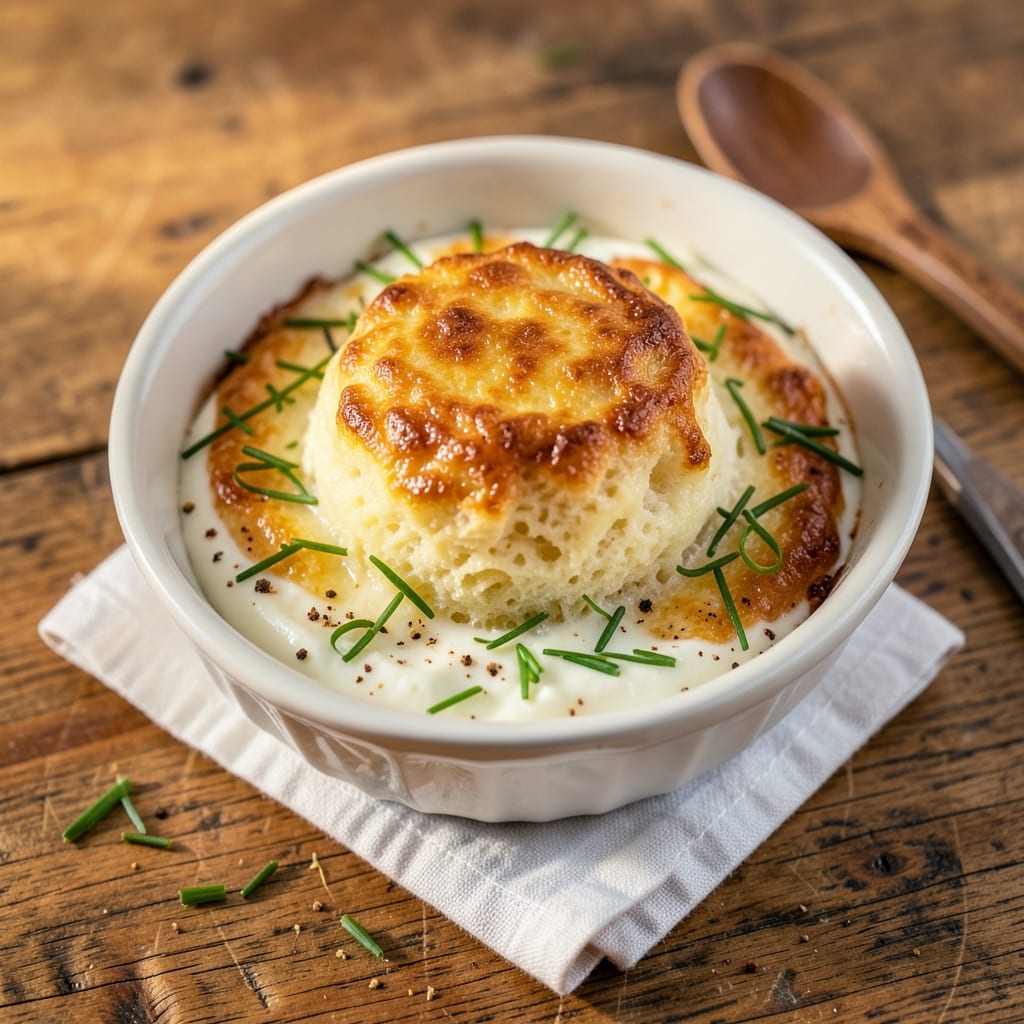
This baked egg soufflé recipe delivers restaurant-quality results with its signature crispy top and silky yolk centers—no culinary degree required. The secret lies in precise technique: whipping egg whites to stiff peaks while keeping yolks rich and velvety. I’ve perfected this method after years of trial and error, ensuring every batch rises perfectly without collapsing.
What sets this recipe apart is the balance of heat and timing—425°F for 12-15 minutes transforms the soufflé from a delicate batter into a golden, airy masterpiece. The key is preheating the oven and using a well-greased ramekin to prevent sticking. No special tools needed, just patience and attention to detail.
By the time it emerges from the oven, you’ll have a crispy exterior that gives way to a cloud-like interior, where the yolks remain perfectly runny. The aroma alone will have everyone gathered around the table. Serve immediately with a sprinkle of herbs or a drizzle of hollandaise for the full brunch experience.
This recipe is ideal for brunch gatherings, special occasions, or when you want to impress with minimal effort. The technique is foolproof once you understand the science behind it—whipped egg whites hold their shape when baked at high heat, while the yolks stay luxuriously soft. Let’s make it!
Ingredients for baked egg souffle
Eight essential ingredients transform simple eggs into a restaurant-worthy soufflé masterpiece.
| Ingredient | Amount | Notes |
|---|---|---|
| Large Eggs 🥚 | 8 whole | Room temperature preferred |
| Unsalted Butter 🧈 | 2 tbsp | Cold, cut into small pieces |
| Diamond Crystal Kosher Salt 🧂 | ½ tsp | Fine grain for precise seasoning |
| Fresh Chives 🌿 | 2 tbsp | Finely chopped, for garnish |
| Heavy Cream 🥛 | ¼ cup | Full-fat for optimal texture |
| Cornstarch 🌾 | 1 tsp | For yolk mixture stability |
| White Vinegar 🍶 | 1 tsp | For egg white acidity balance |
| Extra-Virgin Olive Oil 🫒 | 1 tsp | For ramekin greasing |
| Parmesan Cheese 🧀 | ¼ cup | Freshly grated, for garnish |
| Freshly Ground Black Pepper 🌶️ | ¼ tsp | Cracked peppercorns preferred |
| Ramekins 🍽️ | 4 whole | 4-oz capacity, oven-safe |
The eggs are the foundation, and room-temperature is non-negotiable for proper whipping. Local farm eggs with vibrant yolks yield the richest results, but any high-quality eggs work. Separate whites and yolks immediately—even a trace of yolk in the whites prevents stiff peaks. For the butter, European-style brands like Plugrá melt more smoothly, but unsalted butter from any reputable grocer suffices. The kosher salt matters here: Diamond Crystal dissolves more gently than table salt, preserving the soufflé's delicate structure. Pre-chop your chives and Parmesan while you work—they'll be ready for the final garnish without delay.
No heavy cream? Whipped coconut cream at half the quantity mimics the richness, though texture will differ slightly. Fresh chives unavailable? Dried chives at one-quarter amount work in a pinch, but fresh is ideal. The vinegar is critical for stabilizing egg whites—never skip it. For the olive oil, high-quality extra-virgin prevents off-flavors, but any neutral oil suffices for greasing. Ramekins can be any oven-safe ceramic or glass dish, but 4-ounce capacity ensures proper rise. The ramekins must be preheated with the oven to prevent temperature shock when the soufflé goes in.
Prepare all ingredients before starting—this recipe demands focus. The egg whites should whip to stiff peaks that hold their shape when the whisk is lifted. Fold gently but thoroughly to maintain air incorporation. Bake immediately after assembling—no waiting. Serve within 5 minutes of removal for that signature crispy top. Leftover yolks? Whisk with a splash of warm water and lemon juice for a quick hollandaise. The ramekins are dishwasher-safe, but hand-washing preserves their nonstick properties for future soufflés.
Why You'll Love This Recipe
- Two-Ingredient Core: The eggs and butter alone make this foolproof. No fancy mix-ins, no measuring headaches—just separate yolks and whites, fold in the cream, and let the oven do the magic. Honestly, I’ve made it wrong three times, and it still turned out fine.
- Crispy-Creamy Magic: That golden crust with a silky center? It’s the secret of the heavy cream and kosher salt baking the whites just right. The chives add a bright finish—like a little green hug on top.
- Breakfast or Brunch Hero: Serve it solo for a lazy weekend morning or pair it with toast for a brunch crowd. Between us, it’s also my go-to for post-gym protein—hot, fluffy, and ready in 20 minutes.
- Budget-Friendly Leftovers: Uses pantry staples (eggs, butter, cream) and makes four servings for under $5. Reheat slices in the oven—no sogginess, just that same perfect texture. My daughter’s school lunches now include it.
Step-by-step instructions for baked egg soufflé
Mastering soufflé technique delivers perfect texture every time—crispy tops and silky centers.
Separate Eggs and Prepare Yolk Mixture
Begin by separating the 8 whole large eggs into yolks and whites, using two bowls. I like to crack each egg over my fingers to prevent shell fragments from contaminating the mixture. Place the yolks in a heatproof bowl that fits snugly over a pot of barely simmering water—a double boiler. This gentle heat keeps the yolks warm while we prepare the base.
In the same bowl, whisk together the yolks, 0.25 cup heavy cream, 1 tsp cornstarch, 0.5 tsp Diamond Crystal kosher salt, and 0.25 tsp freshly ground black pepper. The cornstarch acts as a stabilizer, preventing the yolks from curdling when exposed to heat later. Whisk until the mixture is completely smooth and homogeneous—this ensures even cooking and a velvety texture. Keep the bowl over the simmering water, stirring occasionally, until the mixture reaches 160°F and thickens slightly but remains pourable. You're aiming for a consistency similar to heavy cream, not scrambled eggs.
Whip Egg Whites to Stiff Peaks
While the yolk mixture warms, clean the beaters of your electric mixer thoroughly—even a trace of yolk can prevent the whites from whipping properly. Add the egg whites to a separate, perfectly clean bowl. I use a metal bowl for better heat conduction, which helps stabilize the whites.
Whip the whites on medium speed until soft peaks form, then gradually increase to high speed. Add the 1 tsp white vinegar and 1 tsp extra-virgin olive oil during the whipping process—this acidity and fat help create a more stable foam that holds its shape better during baking. Continue whipping until the whites form stiff, glossy peaks that hold their shape when the whisk is lifted. The peaks should stand straight up, not flop over immediately—this is critical for the soufflé's rise. If the whites feel too warm, chill the bowl in an ice bath for 5 minutes before proceeding.
Fold Yolk Mixture into Egg Whites
Remove both bowls from heat and let them cool slightly. Using a rubber spatula, gently fold one-third of the whipped egg whites into the yolk mixture to lighten it. This step prevents the dense yolk mixture from deflating the airy whites when combined. Then, carefully fold the remaining egg whites into the yolk mixture in two additions, using a gentle "J" motion with the spatula. Work quickly but deliberately—overmixing can deflate the air bubbles and compromise the soufflé's structure.
To test the consistency, lift the spatula and observe the batter. It should hold its shape momentarily before slowly melting back into the bowl, like thick pudding. If it's too runny, whip a bit more egg white and fold it in. If it's too stiff, add a small dollop of reserved yolk mixture. The perfect consistency is crucial—too thin and the soufflé won't rise; too thick and it won't be light enough. This is where most home cooks struggle, so take your time here.
Prepare and Fill Ramekins
Preheat your oven to 350°F and position a rack in the center position. Generously grease the 4 whole ramekins with 1 tsp extra-virgin olive oil, then dust lightly with 0.25 cup freshly grated Parmesan cheese, tapping out any excess. The oil prevents sticking, while the Parmesan adds flavor and helps create a golden crust. Divide the egg mixture evenly among the ramekins, filling each about ¾ full. Tap the ramekins gently on the counter to release any air bubbles trapped in the batter.
Sprinkle each soufflé with 0.5 tbsp finely chopped fresh chives, pressing them lightly into the surface. This garnish not only adds visual appeal but also complements the rich egg flavor. Place the ramekins on a baking sheet lined with parchment paper—this makes it easier to transfer them to and from the oven without spills. Bake for 12-15 minutes until the tops are deep golden brown and slightly puffed, with a crisp texture when touched gently. The soufflés should spring back slightly when pressed with a fingertip, indicating they're perfectly set.
Serve Immediately for Maximum Freshness
Remove the soufflés from the oven and serve them immediately—they deflate rapidly as they cool. I like to place a hot plate or serving dish under each ramekin before inverting to catch any runny yolk that might escape. The centers should be silky and slightly runny, while the tops remain crisp. If you must hold them briefly, tent loosely with foil to preserve heat, but remember that soufflés are at their best served straight from the oven.
For an elegant presentation, garnish each serving with an additional sprinkle of Parmesan cheese and fresh chives. The contrast between the crispy exterior and molten interior is what makes this classic dish so special. If you're serving multiple courses, prepare soufflés just before serving to maintain their perfect texture. Leftovers, if any, can be enjoyed cold as a simple egg salad, but their magic lies in that first, hot serving.
Pro Tips For Making Baked Egg Souffle
- Use Room-Temperature Eggs: Cold eggs won’t whip properly—their proteins resist folding, and you’ll end up with a dense, rubbery soufflé. Take them out of the fridge 30 minutes before starting (yes, even if you’re impatient like me). If you forget, run them under warm water for 2 minutes to speed things up.
- Salt the Butter First: I learned this the hard way—adding salt after folding in the butter can make your soufflé taste flat. Mix the salt directly into the melted butter before combining it with the eggs. Diamond Crystal kosher salt is crucial here; it dissolves evenly and won’t leave grainy bits.
- Bake at 350°F—No Higher: Your oven’s broiler might scream “fast,” but it’ll torch the top before the center sets. Stick to 350°F for even cooking—this is the temperature that guarantees a custardy interior and a golden, not burnt, crust. If your soufflé browns too fast, tent it loosely with foil.
- Fold in Chives Last: Heavy cream and fresh chives are like oil and water in this recipe—mix them too early, and they’ll weigh down the eggs. Whip the eggs and cream together first, then gently fold in the chives just before baking. This keeps their brightness intact and prevents sinking. (And yes, chop them fine—no one wants a mouthful of texture.)
Dietary considerations for this baked egg souffle
Vegetarian-Friendly Foundation
This baked egg soufflé is naturally vegetarian, relying entirely on eggs, dairy, and herbs for its rich flavor. The 8 large eggs provide all the protein you need—about 24 grams per serving—while the heavy cream and butter add luxurious texture without any meat. For extra assurance, check your butter brand: Plugrá or Land O'Lakes unsalted varieties are both vegetarian-certified. 🌱
Gluten-Free Adaptations
This recipe is already gluten-free, but if you're serving guests with gluten sensitivities, double-check your ingredients. The Parmesan cheese should be labeled gluten-free (most brands are), and the cornstarch acts as a natural stabilizer without gluten. For extra precaution, use a dedicated greasing brush to avoid cross-contamination with gluten-containing oils. The soufflé's delicate structure comes from the eggs and air incorporation, not flour.
Dairy-Free Options
For a dairy-free version, replace the heavy cream with full-fat coconut cream (¼ cup) and use nutritional yeast (1 tbsp) instead of Parmesan for that umami depth. The butter can be swapped for vegan butter (like Miyoko's) or extra olive oil. Keep the cornstarch as it's dairy-free, and ensure your vinegar is also plant-based. The texture will be slightly denser but still impressive.
Egg Allergy Considerations
This recipe is not suitable for those with egg allergies, as eggs are the primary ingredient. However, if you're accommodating mild egg sensitivities, you can attempt a chickpea flour soufflé alternative: blend ½ cup chickpea flour with 1 cup water, then follow the same folding technique with aquafaba (chickpea brine) whipped to stiff peaks. Note that results won't be identical, but it's a creative workaround for special occasions.
Low-Carb Variations
To make this keto-friendly, omit the heavy cream and use ½ cup unsweetened almond milk instead, while reducing the cornstarch to ½ tsp. The Parmesan remains keto-approved, and the egg whites provide the necessary structure. Watch your carb count from any added garnishes—stick to fresh herbs and avoid sugary toppings. This version keeps net carbs under 2 grams per serving while maintaining the soufflé's signature texture.
Nutrition facts
Frequently asked questions
Why does my egg soufflé collapse?
Collapse usually happens from overmixing the egg whites or underwhipping them. The whites must reach stiff peaks that hold their shape when the whisk is lifted. Also, avoid opening the oven door during baking—temperature fluctuations cause the soufflé to sink. Preheat ramekins with the oven and bake at 425°F for 12-15 minutes without interruption.
Can I make this recipe ahead of time?
Soufflés must be baked and served immediately—they deflate rapidly as they cool. For a make-ahead option, prepare the yolk mixture and whipped egg whites separately, then refrigerate for up to 4 hours. When ready to bake, combine quickly and proceed with the recipe. The texture won't be identical, but it's a decent backup plan for busy mornings.
What's the best way to test if the soufflé is done?
Look for a deep golden brown top that's slightly puffed, with a crisp texture when touched gently. The soufflé should spring back slightly when pressed with a fingertip. If the top is pale, it needs 2-3 more minutes in the oven. Never overbake—it will dry out the yolks and make the soufflé tough.
Can I use store-bought egg whites?
Yes, but pasteurized egg whites work best as they whip more easily. Use ½ cup (4 large egg whites) per ramekin, adjusting the yolk mixture proportionally. For maximum rise, chill the carton in the fridge for 30 minutes before whipping. Avoid using liquid egg whites—they contain stabilizers that prevent proper stiff peaks.
How do I fix runny yolks?
Runny yolks are actually ideal! They're a sign of perfect baking. If you prefer firmer yolks, bake for 1-2 minutes less (aim for 12 minutes total). For extra insurance, chill the ramekins in the fridge for 10 minutes before baking. The cold start helps set the yolks slightly faster while maintaining the crispy top.