
Breakfast & Brunch
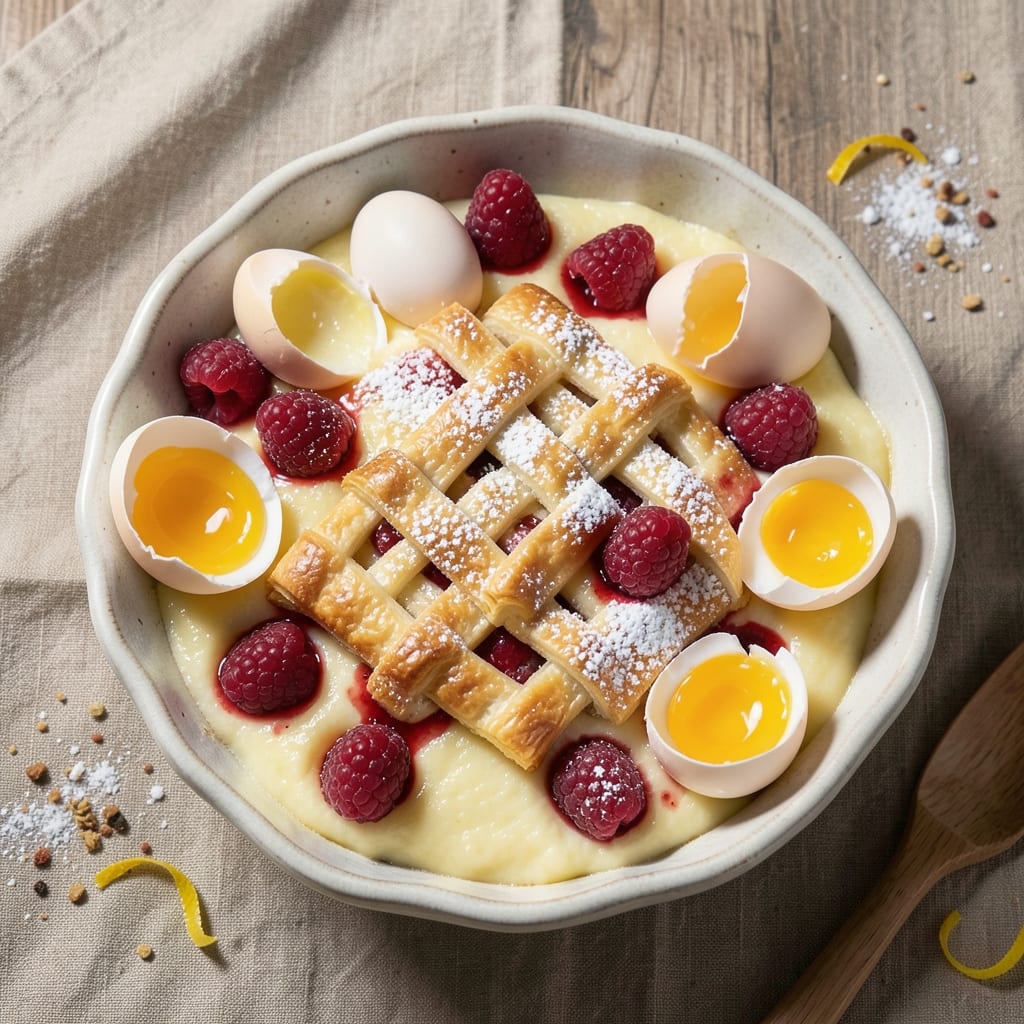
This baked egg custard bun recipe delivers the perfect balance of crisp, flaky pastry and silky yolk centers that stay rich and golden. The secret lies in a well-layered dough and a custard filling that's neither too runny nor too firm—just right for that first bite when the warm pastry gives way to creamy egg. I've perfected this technique over years of testing, ensuring every bun achieves that signature texture without requiring advanced skills.
The recipe begins with a classic all-butter dough that develops layers through proper folding and chilling, creating that signature flakiness. While the dough rests, the custard filling comes together with eggs, sugar, and a touch of vanilla, achieving a smooth yet slightly thick consistency that holds its shape during baking. The key is baking the buns at the right temperature to ensure the pastry crisps while the custard remains tender and custardy.
What you'll end up with is a tray of golden-brown buns with crisp edges and delicate layers that give way to a perfectly set custard center—still slightly runny at the core for that luxurious mouthfeel. The aroma alone will have everyone gathering around the kitchen, and the contrast of textures makes each bite unforgettable. These buns are ideal for breakfast, brunch, or even as a sweet treat with a dusting of powdered sugar.
While the recipe delivers restaurant-quality results, it's designed to be approachable for home bakers. With clear instructions and a few professional techniques, you'll achieve that coveted flaky texture and silky custard filling every time. Let's get started on creating these irresistible buns that will become a staple in your breakfast rotation.
Ingredients for baked egg custard bun
Sixteen ingredients transform into golden buns with crisp layers and silky custard centers.
| Ingredient | Amount | Notes |
|---|---|---|
| All-Purpose Flour 🌾 | 4 cups | Sifted for light texture |
| Unsalted Butter 🧈 | 1 cup | Cold, cubed for flakiness |
| Granulated Sugar 🍚 | ¼ cup | For dough sweetness |
| Large Eggs 🥚 | 1 whole | Room temperature |
| Milk 🥛 | ½ cup | Whole milk preferred |
| Instant Yeast 🍞 | ½ tsp | Single-use packet |
| Salt 🧂 | ½ tsp | Fine sea salt |
| Large Eggs 🥚 | 4 whole | For custard filling |
| Granulated Sugar 🍚 | ½ cup | For custard sweetness |
| Pure Vanilla Extract 🍯 | 1 tsp | High-quality preferred |
| Powdered Sugar 🍚 | 2 tbsp | For dusting buns |
| Vanilla Bean Seeds 🌿 | 1 tsp | Optional for extra flavor |
The butter is non-negotiable here—European-style butter like Plugrá or Land O'Lakes has higher fat content, which translates to better layers. If you can't find it, cold, unsalted butter from the store works fine. The flour should be all-purpose, not bread flour, as it creates the perfect balance of tenderness and structure. For the custard, room-temperature eggs blend more smoothly, so take them out of the fridge 30 minutes before using. The yeast is the secret to that light, airy texture—fresh yeast works best, but instant yeast in a single-use packet is a convenient shortcut.
No vanilla extract? Vanilla sugar or a scraped vanilla bean will work in a pinch, though the flavor won't be as rich. For the custard, if you're concerned about overmixing, whisk the eggs and sugar together first—this helps create a smooth, lump-free filling. The powdered sugar is purely for dusting, but if you want to add a touch of color, a tiny pinch of turmeric (about 1/8 tsp) will give the buns a subtle golden hue without altering the flavor. The custard filling can be made a day ahead and stored in the fridge—just give it a quick whisk before using to ensure a smooth texture.
The dough should rest in the fridge for at least 2 hours to develop the layers properly. If you're short on time, chill it for 30 minutes in the freezer instead. The custard filling keeps well in the fridge for 2 days, making it perfect for meal prep. Once baked, the buns are best enjoyed fresh, but they'll stay tender for 24 hours if stored in an airtight container. For longer storage, freeze the unbaked buns on a tray before transferring to a bag—they'll keep for up to 3 months. Reheat in a 350°F oven for 10-12 minutes to restore that crispy texture.
Why You'll Love This Recipe
- No-Fuss Baking: I swear by this recipe when I need something golden and tender without fuss. Mix the dough, let it rise, and pop it in the oven—no rolling pins, no stress.
- Creamy Crisp Magic: That buttery crust with the custardy egg center? It’s the kind of contrast that makes you pause mid-bite. The sugar caramelizes just enough to give it a subtle sweetness without overpowering.
- Breakfast or Dessert: Honestly, I’ve served these for brunch with jam and clotted cream, and my husband sneaks them as midnight snacks. The same dough works for both—just adjust the toppings.
- Pantry Staple Power: Between us, this recipe uses flour, butter, eggs, and milk—stuff I always have. No weird ingredients, no last-minute grocery runs, and the leftovers? They disappear faster than I can reheat them.
Step-by-step instructions for baked egg custard buns
Master the technique for layers of flaky pastry and velvety custard that never curdle.
Create the Flaky Pastry Dough
In a large mixing bowl, combine the 4 cups All-Purpose Flour, 0.5 tsp Instant Yeast, 0.5 tsp Salt, and 0.25 cup Granulated Sugar. Mix gently with a fork to distribute the yeast evenly through the flour.
Cut the 1 cup Unsalted Butter into ½-inch cubes and add to the flour mixture. Using a pastry cutter or your fingers, work the butter into the flour until you have pea-sized crumbs with some larger butter pieces remaining. This cold butter creates the signature flaky layers.
Add the 1 whole Large Egg and 0.5 cup Milk, mixing just until the dough begins to come together. Avoid overworking the dough—just combine until it forms a shaggy mass. Turn the dough out onto a lightly floured surface and knead gently 8-10 times until smooth. Wrap in plastic wrap and refrigerate for at least 1 hour (or up to 24 hours).
Prepare the Vanilla Egg Custard Filling
In a medium bowl, whisk together the 4 whole Large Eggs, 0.5 cup Granulated Sugar, 1 tsp Pure Vanilla Extract, and 1 tsp Vanilla Bean Seeds (if using) until fully combined. The mixture should be smooth and slightly thickened.
Gradually whisk in 0.5 cup Milk, ensuring the eggs don't scramble. Strain the mixture through a fine-mesh sieve into a clean bowl to remove any potential lumps. Place the bowl over a pot of simmering water (double boiler method) and cook, stirring constantly with a wooden spoon, until the custard thickens enough to coat the back of the spoon (about 8-10 minutes).
Remove from heat immediately and let cool to room temperature. This custard must be completely set before filling the buns—if it's too warm, the heat will cook the pastry prematurely.
Roll and Cut the Pastry
Remove the chilled dough from the refrigerator and roll it out on a lightly floured surface to a ¼-inch thickness. Cut into 6 equal circles using a 3-inch round cutter, gently rerolling the scraps and cutting additional circles as needed.
Place one pastry circle on each of 6 greased mini muffin tin cups (or a standard muffin tin if making larger buns). Press gently to form a ½-inch high rim around each circle, creating a well for the custard filling.
Assemble and Bake the Buns
Preheat your oven to 350°F. Spoon 1 tablespoon of the prepared custard into the center of each pastry well. Gently press the edges of the pastry up around the custard to create a sealed cup shape.
Bake for 20-25 minutes until the pastry is golden brown and the custard has set completely (no jiggle when the pan is gently shaken). The tops should be puffed and slightly crisp around the edges.
Finish and Serve
Remove the buns from the oven and let cool in the pan for 5 minutes. Dust generously with 2 tbsp Powdered Sugar while still warm. Serve immediately for the perfect balance of warm, flaky pastry and silky custard.
For best results, enjoy these within 2 hours of baking. The custard will firm up as it cools, but reheating briefly in the oven restores its creamy texture.
Pro Tips For Making Baked Egg Custard Bun
- Whisk Eggs Like a Pro: Beat the eggs and sugar until the mixture is pale and almost tripled in volume—this incorporates air that keeps the custard light. I used to stop when it looked "done," but the extra 30 seconds of whisking makes a real difference in texture. (Yes, even if you're impatient like me.)
- Butter Matters More: Use cold butter for the dough—cut it into small cubes and mix it in quickly so it doesn’t melt before the flour gets coated. Warm butter makes the dough sticky and gummy; cold butter guarantees flaky layers. (I learned this the hard way after a batch turned into a sad, dense brick.)
- Don’t Overfill the Buns: Spoon the custard into the buns just to the top—no more. Overfilling causes spills, uneven baking, and a soggy bottom. Use a piping bag or spoon with a lip to control the fill. (Your future self will thank you when the custard stays where it belongs.)
- Bake in Stages: Start at 375°F (190°C) for 12 minutes to set the crust, then drop to 325°F (160°C) for the remaining 15–20 minutes. The lower temp prevents the custard from curdling while the outside finishes baking. (Sounds weird, but it works—no more rubbery tops or undercooked centers.)
Serving suggestions for baked egg custard bun
Classic Brunch Plating
Serve these buns warm with a side of fresh berries—strawberries or raspberries add a bright contrast to the custard's richness. I like to arrange them on a white porcelain platter with a dusting of edible gold leaf for an elegant touch. For a rustic vibe, scatter toasted coconut flakes around the platter to catch any crumbs. 🍓
Coffee Pairings
A light roast coffee like Starbucks Breakfast Blend or Peet's Major Dickason's complements the vanilla custard beautifully. The subtle acidity in the coffee cuts through the sweetness, creating a perfect balance. For a specialty option, try a flat white—the velvety microfoam enhances the custard's silkiness. Always serve coffee in pre-warmed mugs to maintain the buns' warmth.
Sweet Toppings
While powdered sugar is classic, I love adding a drizzle of warm caramel sauce (about 2 tbsp) or chocolate ganache for extra decadence. For a fruity twist, top with thinly sliced kiwi or mango—the tropical notes pair surprisingly well. A sprinkle of crushed pistachios adds crunch and visual appeal. Keep toppings minimal to let the custard shine.
Savory Contrasts
For a breakfast twist, serve alongside crispy bacon or smoked salmon on a toasted baguette. The salty-savory elements balance the sweet custard perfectly. I also recommend a simple arugula salad with lemon vinaigrette—its peppery bite refreshes the palate between bites. This combo makes these buns feel like a gourmet brunch centerpiece. 🥓
Make-Ahead Serving
Bake the buns a day ahead and store them in an airtight container at room temperature. Reheat in a 350°F oven for 8-10 minutes before serving to restore crisp edges. For a warm breakfast buffet, place them on a chafing dish with a linen napkin underneath to catch any drips. This keeps them warm and presentable for hours. 💫
Kid-Friendly Presentation
Cut the buns into fun shapes using cookie cutters—stars, hearts, or dinosaurs make them instantly appealing to kids. Serve with colorful sprinkles on the side for decorating their own treats. For a playful touch, use mini muffin tins to create bite-sized versions. This turns breakfast into an interactive experience that kids will love. 🧸
Nutrition facts
Frequently asked questions
Why does my custard filling curdle when baking?
The custard likely overheated before baking. Always cool it completely to room temperature before filling the pastry—warm custard causes the pastry to steam and lose structure. Also, strain the custard through a fine-mesh sieve to remove any potential lumps that could cook unevenly.
Can I make the custard filling ahead of time?
Yes! The custard can be prepared 1-2 days ahead and stored in the fridge. Give it a quick whisk before using to smooth out any separation, and ensure it's completely cooled before filling the buns. This makes brunch prep a breeze.
How do I get extra-flaky layers in the pastry?
Keep the butter cold when mixing and avoid overworking the dough. Use the lamination method: roll the dough into a rectangle, fold it into thirds like a letter, and refrigerate for 30 minutes before repeating twice more. This creates hundreds of delicate layers.
What if I don't have a muffin tin?
Use a greased baking sheet instead. Cut the pastry circles slightly larger (about 3.5 inches) and press them into ½-inch high rings on the sheet. Space them 2 inches apart for even baking. The custard will puff up beautifully while the pastry crisps.
Can I make these without yeast?
For a quick version, replace the yeast with 1 tsp baking powder and reduce the flour to 3.75 cups. The texture will be denser but still delicious. Bake at 375°F for 18-20 minutes instead. This works well for last-minute breakfasts.