
Breakfast & Brunch
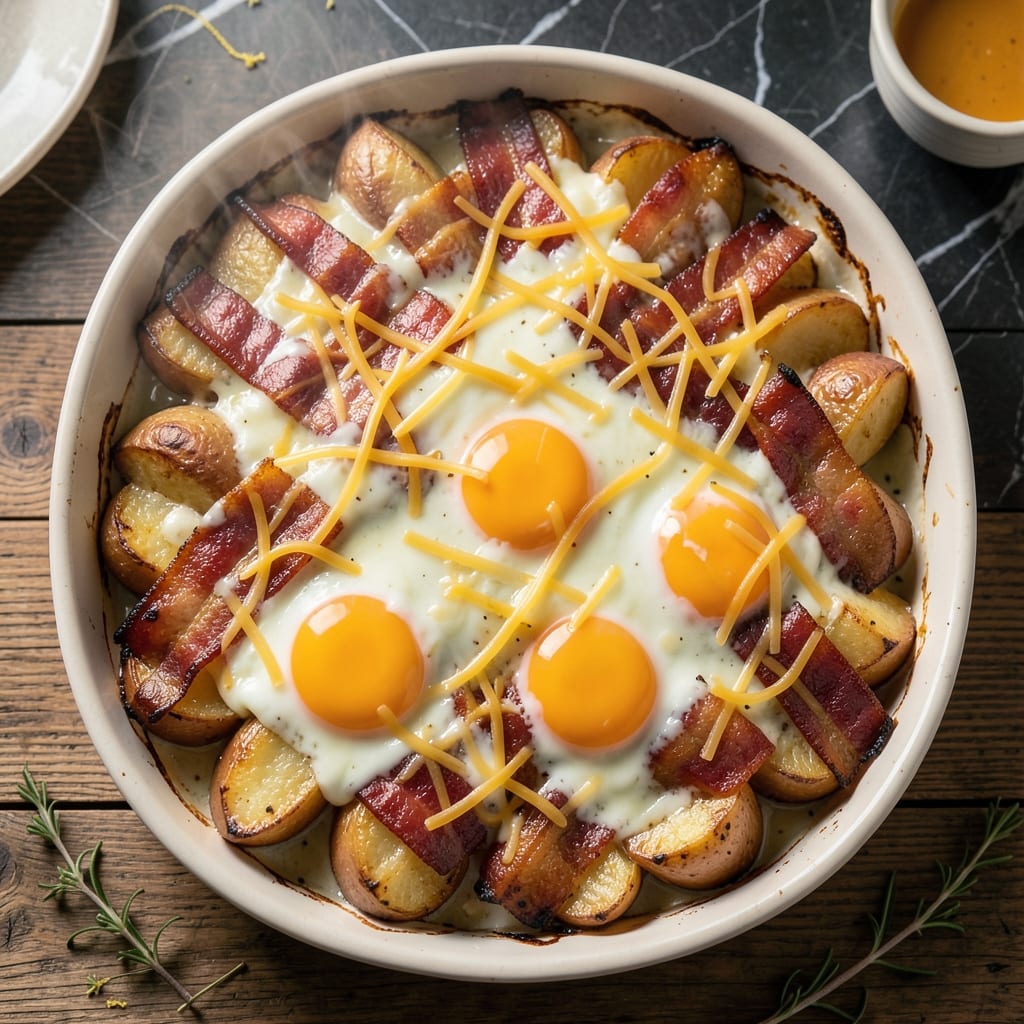
This bacon potato and egg casserole recipe delivers the ultimate breakfast-in-a-dish experience—crispy golden edges, tender potatoes, and that magical runny yolk moment when you cut into it. 🌟 The secret lies in layering ingredients just right: crispy bacon on the bottom for smoky depth, fluffy potatoes soaking up the flavors, and a top layer of eggs that bakes into a custardy, golden finish. I’ve perfected this dish over years of weekend brunch hosting, and it’s become a crowd-pleaser that disappears faster than you can say "second helping."
What sets this casserole apart is the textural contrast—each bite delivers crispy bacon, creamy potatoes, and the velvety richness of perfectly set eggs with that signature runny yolk. The best part? It’s a one-dish wonder that bakes while you sip coffee, making it ideal for lazy mornings or feeding a crowd. The bacon adds a salty, savory punch, while the eggs tie everything together with their custardy magic. No one will believe it’s as simple as layering and baking.
The key to success is layering like a pro: start with bacon to crisp up the bottom, add potatoes to soak up the flavors, and top with eggs for that golden, custardy finish. Bake at the right temperature, and you’ll get a casserole with a crispy top that’s impossible to resist. The result? A dish that’s hearty enough for brunch but easy enough for a weeknight dinner. It’s the kind of meal that makes breakfast feel like a celebration.
For extra flavor, consider adding cheese or herbs to the egg layer, or swap the bacon for sausage if you prefer. The variations are endless, but the foundation—crispy, creamy, and packed with flavor—stays the same. Let’s get baking!
Ingredients for bacon potato and egg casserole
Crispy bacon, tender potatoes, and custardy eggs—just 13 ingredients for brunch perfection.
| Ingredient | Amount | Notes |
|---|---|---|
| Thick-Cut Bacon 🥓 | 12 oz | Thick-cut for crispiness, chopped |
| Russet Potatoes 🥔 | 3 lb | Wax or Yukon gold, thinly sliced |
| Large Eggs 🥚 | 8 whole | Room temperature for even baking |
| Heavy Cream 🥛 | 1 cup | Full-fat for richness |
| Whole Milk 🥛 | ½ cup | Warmed for smooth texture |
| Shredded Cheddar Cheese 🧀 | 1 ½ cups | Sharp cheddar preferred |
| All-Purpose Flour 🌾 | ¼ cup | For thickening egg mixture |
| Salt 🧂 | 1 ½ tsp | Kosher salt preferred |
| Black Pepper 🌶️ | ½ tsp | Freshly ground for flavor |
| Garlic Powder 🧄 | ½ tsp | For subtle depth |
| Onion Powder 🧅 | ½ tsp | Enhances savory notes |
| Butter 🧈 | 4 tbsp | Melted for potato layer |
| Fresh Chives 🌿 | 2 tbsp | Chopped for garnish |
The bacon is non-negotiable here—thick-cut gives the best crispy texture. Costco sells it in bulk for great prices, or grab it from the meat section at Trader Joe's if you want pre-chopped convenience. Potatoes should be waxy or Yukon gold—Russets work but can get gummy. Slice them paper-thin for even cooking. I always buy extra cheese because it disappears fast, and sharp cheddar adds that perfect tangy kick. For the eggs, room temperature makes all the difference—they'll bake more evenly and give you that dreamy runny yolk.
No thick-cut bacon? Regular bacon chopped into smaller pieces works in a pinch, but it won’t crisp as dramatically. Swap the cheddar for Gruyère or Parmesan if you’re feeling fancy—both melt beautifully. Out of heavy cream? Half-and-half or whole milk will work, but the texture won’t be as rich. The flour is just for thickening the egg mixture, so don’t skip it—it’s what gives that golden, crispy top. For extra flavor, add a pinch of smoked paprika to the potato layer or a dash of hot sauce to the egg mixture. And if you’re feeling adventurous, swap half the bacon for crumbled sausage.
This casserole tastes even better the next day, so make a big batch—it keeps well in the fridge for 3-4 days. For leftovers, reheat in the oven at 350°F until warmed through. The top will crisp up again, just like fresh out of the oven. Store in an airtight container to keep it fresh. Freezing isn’t ideal because the texture changes, but you can freeze the baked casserole (without the crispy top) for up to 2 months. Just reheat it gently to avoid drying out.
Why You'll Love This Recipe
- One-Pan Magic: I swear by this recipe when I’m too tired to wash dishes—just slice the potatoes, fry the bacon, dump everything in one pan, and let the oven do the work. No chopping boards to clear, no pots to scrub.
- Crispy-Creamy Balance: That first bite of perfectly crisp bacon crunching into fluffy potatoes and custardy eggs? It’s the kind of contrast that makes you forget you’re eating leftovers. The heavy cream and milk turn the eggs into a velvety blanket, while the bacon keeps it rich and satisfying.
- Meal Prep MVP: I make a double batch every Sunday because it reheats like a dream—just pop it in the oven or microwave, and it’s ready. Honestly, it’s my go-to for lazy mornings or when I need to feed a crowd without stressing.
- Budget Breakfast for Days: Thick-cut bacon and eggs usually cost a fortune, but this recipe stretches them into a hearty meal that feeds four for under $10. The potatoes bulk it up, so you’re not just paying for protein—you’re getting a full, filling plate. Plus, leftovers taste just as good the next day.
Step-by-step instructions for bacon potato and egg casserole
Here's how to build this hearty breakfast casserole with perfect layers and that coveted crispy top.
🔥 Step 1: Cook the Bacon Until Crispy
Place the 12 oz thick-cut bacon in a large skillet over medium heat. Cook for 12-15 minutes, flipping occasionally, until the edges are deep golden brown and the bacon releases easily from the pan. You want it crispy, not greasy—this is the flavor foundation.
Real talk: thick-cut bacon takes longer to render fat, but it's worth it for that smoky depth. Once done, transfer the bacon to a paper towel-lined plate to drain for 2 minutes, then chop it into ¼-inch pieces. Save the bacon fat in the skillet—we'll use it later to cook the potatoes.
🍳 Step 2: Parboil and Layer the Potatoes
While the bacon cooks, peel the 3 lb russet potatoes and slice them into ⅛-inch thick rounds—thin slices ensure even cooking. In a large pot of boiling water, cook the potato slices for 3-4 minutes until just tender but still firm to the bite. Drain immediately and spread them on a clean kitchen towel to remove excess moisture.
In the same skillet with bacon fat (no need to wipe it out), melt the 4 tbsp butter over medium heat. Add the parboiled potatoes in a single layer and cook for 2-3 minutes per side until they develop a slight golden color. This step creates that perfect crispy texture at the bottom of your casserole.
🥘 Step 3: Build the Casserole Layers
In a large bowl, whisk together the 8 whole large eggs, 1 cup heavy cream, 0.5 cup whole milk, 0.25 cup all-purpose flour, 1.5 tsp salt, 0.5 tsp black pepper, 0.5 tsp garlic powder, and 0.5 tsp onion powder until completely smooth. This is your custard base—make sure there are no flour lumps.
In a greased 9x13-inch baking dish, create your first layer by spreading half of the potato slices evenly. Sprinkle half of the 1.5 cups shredded cheddar cheese and half of the chopped bacon over the potatoes. Repeat with the remaining potatoes, bacon, and cheese. Pour the egg mixture evenly over the top—this should come up to about halfway up the potatoes.
🔥 Step 4: Bake Until Golden and Set
Preheat your oven to 350°F. Bake the casserole for 40-45 minutes until the edges are golden brown and the center is just set (it should still have a slight wobble). Here's the thing—you want it to be custardy in the middle, not fully firm.
For the crispy top you're after, broil for 2-3 minutes at the end, watching closely to prevent burning. The top should be deep golden brown with some spots of caramelization. Let it rest for 10 minutes before serving—this allows the custard to set slightly but still stay creamy.
🍽️ Step 5: Garnish and Serve Warm
Remove the casserole from the oven and sprinkle the 2 tbsp chopped fresh chives evenly over the top. The chives add a fresh pop of color and brightness that cuts through the richness. Serve immediately with a side of toasted bread or a simple green salad.
Each bite should deliver that perfect combination: crispy bacon, tender potatoes, rich custard with runny yolks in the center, and that irresistible crispy top. If you're serving a crowd, you can reheat leftovers in the oven at 350°F for 15-20 minutes to restore that crispy texture.
Pro Tips For Making Bacon Potato And Egg Casserole
- Parboil Potatoes First: I learned this the hard way—skipping the 5-minute parboil leaves you with a casserole that’s either mushy or undercooked. Cut your russets into even ½-inch slices, boil them in salted water until just tender (they’ll finish in the oven), then drain and pat ridiculously dry. Wet potatoes steam instead of crisp, and nobody wants soggy spuds in this dish.
- Cook Bacon Until Crisp: Thick-cut bacon needs 12–15 minutes on the stovetop, flipping once, until the edges are deep brown and the fat renders into a puddle. Drain on paper towels but leave the fat—it’s liquid gold for the potatoes. Cold bacon? It’ll turn rubbery in the oven and ruin the texture. Trust me, this isn’t the step to rush.
- Prevent Egg Curdling: Whisk your eggs with the heavy cream and milk before adding them to the hot potatoes. Then, pour the mixture over the casserole just before baking—not hours ahead. The residual heat from the potatoes will start cooking the eggs gently, but if you mix them too early, you’ll end up with scrambled bits instead of a silky custard. Room-temperature eggs blend better too, so take them out of the fridge 10 minutes ahead.
- Bake Low and Slow: This isn’t a 400°F speed run. Set your oven to 350°F and bake for 40–45 minutes, covered with foil for the first 30. The low heat lets the eggs set evenly without curdling, while the foil traps steam to keep the potatoes tender. I used to blast it at 375°F, and the top would brown too fast while the center stayed raw. Patience here makes the difference between a rustic breakfast and a gummy mess.
Essential equipment for this recipe
Baking Dish Essentials
You’ll need a 9x13-inch baking dish—I recommend Ceramic CorningWare for even heat distribution and easy cleanup. If you don’t have one, a heavy-duty stainless steel pan works too. Grease it well with butter or baking spray to prevent sticking, especially since this casserole has a rich, custardy top. For extra insurance, I sometimes line the dish with parchment paper cut to fit, which makes removal a breeze. 🧈
Skillet for Crispy Bacon
A 10-12-inch cast-iron skillet is my go-to for cooking the bacon—it retains heat beautifully and ensures even crispiness. If you don’t own one, a nonstick stainless steel skillet (like All-Clad) works just as well. Avoid nonstick pans with PTFE coatings (like Teflon) for high-heat bacon cooking—they can degrade over time. I also keep a wire cooling rack nearby to drain the bacon fat efficiently after cooking. 🥓
Mixing Tools
For the egg mixture, use a medium-sized mixing bowl (at least 3-quart capacity) and a whisk to combine the eggs, cream, and flour smoothly. A hand mixer (like a KitchenAid stand mixer on low speed) speeds up the process, but whisking works perfectly fine. For the potatoes, a sharp chef’s knife and mandoline slicer (like OXO Good Grips) make thin, even slices—essential for even cooking. 🔪
Measuring and Prep
Precision matters here! Grab a set of stainless steel measuring cups (like OXO Good Grips) for the cream, milk, and flour, and a digital kitchen scale for the cheese if you’re feeling fancy—it’s more accurate than volume measurements. A microplane comes in handy for grating garlic or zest if you’re adding extra flavor. For the bacon fat, a fine-mesh strainer helps filter out any crispy bits before using it to cook the potatoes. 🧂
Oven Thermometer
Your oven’s temperature gauge might be off—trust me, I’ve learned this the hard way! An instant-read oven thermometer (like Thermoworks) ensures your 350°F setting is accurate. This is especially critical for the custardy egg layer; even a 25°F discrepancy can ruin the texture. I also keep a timer (my phone works) to track the 40-45 minutes baking time and the 2-3 minutes broiling at the end. ⏱️
Serving Tools
For serving, a large spatula (like OXO Good Grips) helps slice through the crispy top without tearing it. A small offset spatula works well for garnishing with chives. If you’re feeding a crowd, a serving spoon with a deep bowl makes it easy to scoop portions. For leftovers, store in an airtight glass container (like Pyrex) to keep the casserole fresh for up to 4 days. 🍽️
Nutrition facts
Frequently asked questions
Can I make this casserole ahead of time?
Assemble the casserole in the baking dish, cover it tightly with plastic wrap, and refrigerate for up to 24 hours before baking. For best results, bake it straight from the fridge (add 10-15 extra minutes to the cooking time). The flavors meld beautifully overnight, and it reheats like fresh from the oven.
What if I don't have thick-cut bacon?
Regular bacon works in a pinch, but chop it into smaller pieces for even cooking. Thin bacon will crisp faster, so watch it closely to avoid burning. For extra crispiness, broil the cooked bacon for 1-2 minutes before adding it to the casserole.
How do I get the perfect crispy top?
The secret is broiling at the end! After baking for 40-45 minutes, switch to broil for 2-3 minutes—watch closely to avoid burning. A well-greased baking dish and room-temperature eggs also help create that golden, crackly crust.
Can I use breakfast sausage instead of bacon?
Yes! Swap the bacon for 12 oz cooked breakfast sausage (crumbled or diced). For extra flavor, season the sausage with a pinch of smoked paprika or garlic powder before adding it to the casserole. The texture will be slightly different but equally delicious.
Why did my casserole turn out watery?
Overmixing the egg mixture or using too much liquid (like extra milk) can cause a watery texture. Always whisk just until combined, and stick to the 1 cup heavy cream + 0.5 cup milk ratio. For extra insurance, let the casserole rest for 10 minutes after baking—this helps the custard set properly.